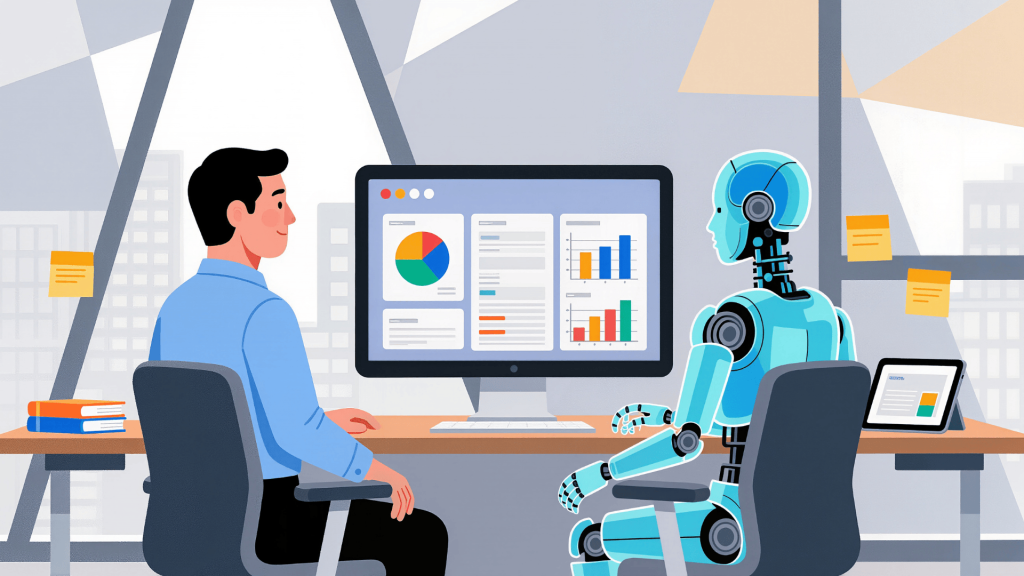
The modern business landscape is being rewritten not by technology alone, but by intelligent systems that can learn, adapt, and optimize in real time. AI automation has emerged as the defining force of this new era, helping enterprises transition from process-driven models to insight-driven, autonomous ecosystems.
Across industries from finance and healthcare to manufacturing and retail, AI is transforming how organizations operate, innovate, and make decisions. The focus today extends beyond mere task automation; it’s about creating self-learning systems that continuously optimize efficiency, uncover insights, and enable leaders to act proactively.
1. Redefining Enterprise Efficiency Through AI Automation
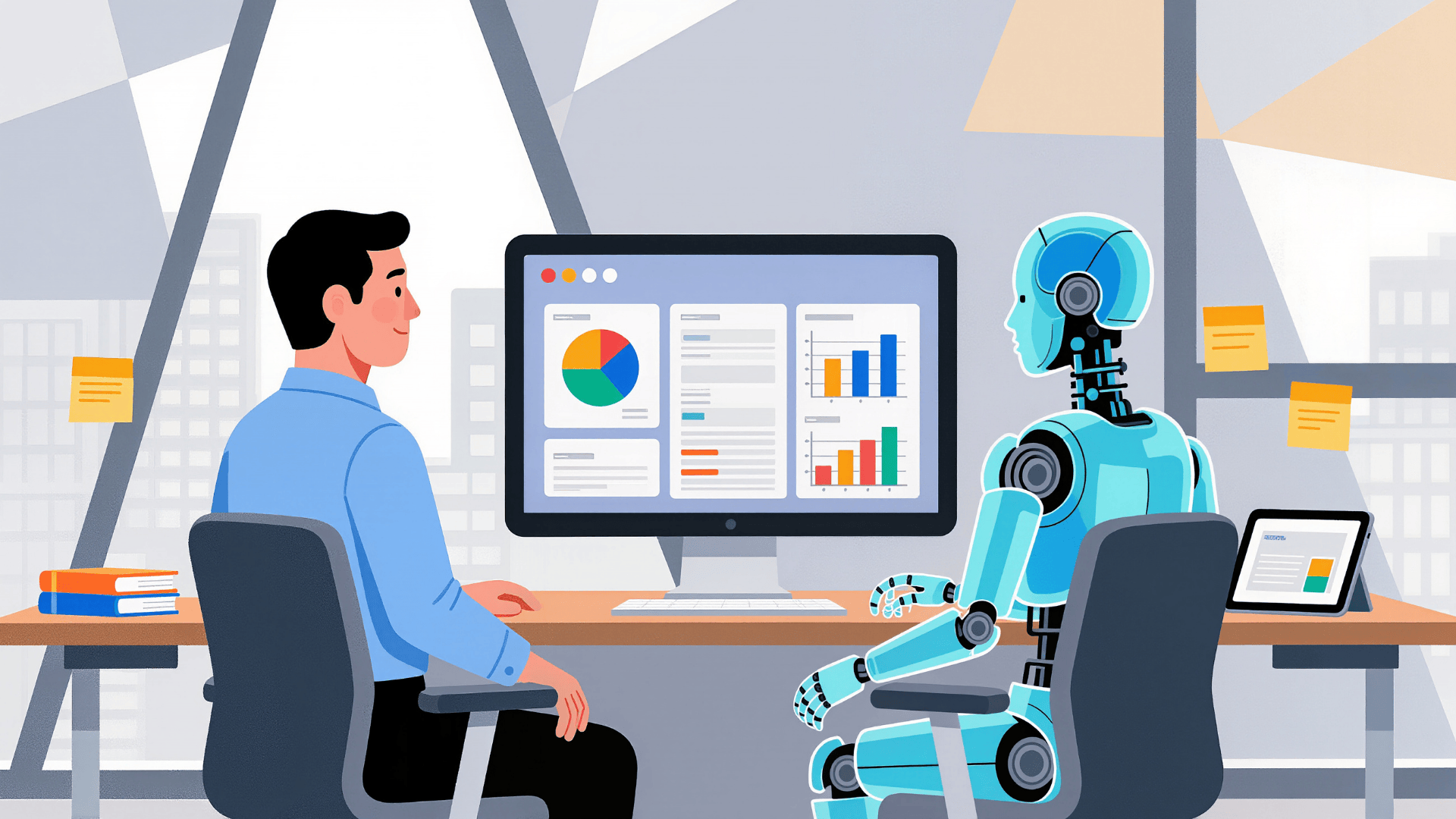
Traditional efficiency once meant reducing manual effort or minimizing costs. Now, AI automation redefines efficiency through intelligent collaboration between humans and machines.
Intelligent Workflow Optimization: Modern AI-driven platforms integrate seamlessly across CRMs, ERPs, and communication systems. They don’t just execute tasks; they predict issues, recommend solutions, and continuously improve operational flow.
Cost and Time Optimization: According to McKinsey, organizations that adopt automation experience a 40% increase in operational efficiency and a 70% reduction in manual tasks. This allows teams to redirect focus toward innovation, creativity, and strategic growth.
Enhanced Workforce Productivity: By delegating routine processes like data entry, scheduling, and reporting to AI, businesses create a hybrid workforce one which human creativity thrives, supported by machine precision.
Related Contents:
2. From Data to Decisions: The Rise of Predictive Intelligence
The next leap in AI automation lies in decision intelligence, the ability to transform data into foresight.
Enterprises now leverage AI models capable of analyzing billions of data points to detect patterns, predict market behavior, and identify opportunities before they surface. For instance, predictive maintenance minimizes downtime in manufacturing, while real-time fraud detection protects financial institutions.
By embedding AI into core decision workflows, leaders can:
- Anticipate market shifts and customer needs.
- Dynamically optimize resource allocation.
- Make faster, more confident data-driven decisions.
This shift empowers enterprises to move from reactive management to proactive strategy, building agility and resilience in a rapidly changing world.
3. Accelerating Digital Transformation with Automation
Digital transformation today isn’t just about technology adoption; it’s about strategic adaptation. AI automation acts as the connective tissue linking tools, data, and strategy into a unified ecosystem.
Enterprises that integrate automation experience:
- System Integration: AI bridges disconnected platforms, including CRM, HR, finance, and logistics, to create a single, intelligent workflow.
- Hyper-Personalization: Businesses deliver real-time, context-aware experiences that boost engagement and loyalty.
- Continuous Innovation: Feedback loops powered by AI enable products and services to evolve dynamically in response to market needs.
In essence, automation ensures digital transformation is not an endpoint, but a continuous journey of evolution and improvement.
4. Innovation in Action: Girish Kotte’s Vision for AI-Driven Enterprises
Innovation thrives where purpose meets technology, and that’s where Girish Kotte stands.
A visionary entrepreneur, Girish Kotte has built multiple ventures that embody the next generation of AI-driven business intelligence. Through platforms like FoundersHub AI, TradersHub Ninja, and Prompt Pro, he is transforming how businesses approach automation and data-driven decision-making.
- FoundersHub AI empowers entrepreneurs to scale faster by providing intelligent insights for funding, market strategy, and operational optimization, bridging the gap between startup vision and execution.
- TradersHub Ninja leverages AI-driven analytics and real-time market signals to support smarter, faster financial decisions.
- Prompt Pro enhances human–AI collaboration, helping professionals build prompt-based workflows that streamline creative and business processes.
At the heart of Girish’s philosophy lies a belief that AI should amplify human intelligence, not replace it. His leadership, showcased on Girish Kotte and through his ventures, reflects a deep commitment to empowering innovation ecosystems that combine technology, entrepreneurship, and purpose.
5. The Future: Autonomous, Adaptive, and Augmented Enterprises
As automation evolves, the next phase will be defined by self-governing business ecosystems organizations that are capable of sensing, predicting, and adapting in real-time.
AI will no longer be just a support tool, but a strategic collaborator that helps design business models, forecast growth, and manage risks autonomously. Ethical AI frameworks will further ensure that trust, transparency, and human oversight remain central to innovation.
The result? Businesses that are not just efficient but intelligent, adaptive, and future-ready.
Conclusion
AI automation is not just transforming how businesses operate; it’s redefining what’s possible. From predictive intelligence and efficiency to continuous digital evolution, it empowers enterprises to think smarter, move faster, and innovate boldly.
Leaders like Girish Kotte are at the forefront of this transformation, proving that when innovation meets purpose, technology becomes a true catalyst for growth. His ventures stand as living proof of how AI, when strategically applied, can shape a more agile, connected, and intelligent business future.
The era of AI-powered operations isn’t coming; it’s already here. The question is, how intelligently will businesses adapt?
FAQs
- What is AI automation, and how does it differ from traditional automation?
AI automation combines AI with process automation to enable systems that can learn, adapt, and make decisions without human intervention. Unlike traditional automation, which performs rule-based, repetitive tasks, AI automation uses machine learning (ML) and natural language processing (NLP) to analyze data, predict outcomes, and continuously improve operations.
- How does AI automation improve business efficiency?
AI automation enhances efficiency by streamlining workflows, reducing manual errors, and enabling predictive insights. It can automate data entry, reporting, and customer communication, while simultaneously optimizing supply chains and resource allocation. This enables employees to focus on strategic innovation and decision-making, rather than being bogged down by repetitive tasks.
- What industries benefit most from AI automation?
Virtually every industry can benefit, but sectors such as finance, healthcare, retail, logistics, and manufacturing have seen the most significant impact. From predictive maintenance in factories to real-time fraud detection in finance and patient engagement in healthcare, AI automation is revolutionizing operational models across domains.
- How does AI contribute to better decision-making in enterprises?
AI-powered systems analyze massive datasets to identify hidden patterns and predict future trends. This enables leaders to make data-driven, proactive decisions, anticipating market changes, managing risks, and optimizing performance long before issues arise.
- What role does AI play in digital transformation?
AI serves as the engine of digital transformation, connecting data, tools, and processes into a unified ecosystem. It helps businesses adapt intelligently, creating personalized experiences for customers, integrating disconnected systems, and enabling continuous improvement through feedback loops and automation.
- How are Girish Kotte’s ventures leveraging AI automation?
Through ventures such as FoundersHub AI, TradersHub Ninja, and Prompt Pro, Girish Kotte demonstrates real-world applications of AI automation:
- FoundersHub AI leverages AI insights to help entrepreneurs scale more quickly and make informed decisions about funding and marketing.
- TradersHub Ninja provides real-time trading analytics powered by AI.
- Prompt Pro empowers professionals to design intelligent, prompt-based workflows that enhance creativity and productivity.
Together, these platforms showcase how AI automation can transform enterprises at every level.

Himani Verma is a seasoned content writer and SEO expert, with experience in digital media. She has held various senior writing positions at enterprises like CloudTDMS (Synthetic Data Factory), Barrownz Group, and ATZA. Himani has also been Editorial Writer at Hindustan Time, a leading Indian English language news platform. She excels in content creation, proofreading, and editing, ensuring that every piece is polished and impactful. Her expertise in crafting SEO-friendly content for multiple verticals of businesses, including technology, healthcare, finance, sports, innovation, and more.