Swimming remains a difficult environment for sports technology. A runner can glance at a watch, and a cyclist can mount a computer on the handlebars. Swimmers have fewer options. Every turn of the head, stroke and breath belongs to an established rhythm, and stopping to check pace or heart rate breaks that rhythm.
Open water introduces a different set of demands. A pool has marked lanes, a known length and walls that provide regular reference points. None of these exists in a lake or the sea. Swimmers still care about time, distance and pace, but they also need to consider direction, route and changing conditions.
These capabilities are often spread across smart goggles, heart rate sensors and sports watches. The quality of the experience therefore depends on more than the number of functions contained in one product. What matters is whether each device can handle the job it does best and work with the others during the same session.
One Pair of Goggles, Two Very Different Environments
Pool training usually revolves around laps, distance, pace, stroke count, rest time and SWOLF. A swimmer may be completing a set of fixed-distance intervals or trying to hold the same pace through the second half of a longer session. The most useful information is immediate: how far has the swimmer gone, has the pace changed, and is the set still going to plan?
HoloSwim 3 Pro smart swim goggles can track time, distance, laps, average pace, stroke count, rest time and average SWOLF. These metrics appear through an in-lens display, so swimmers do not need to stop repeatedly or lift a wrist to check a sports watch.
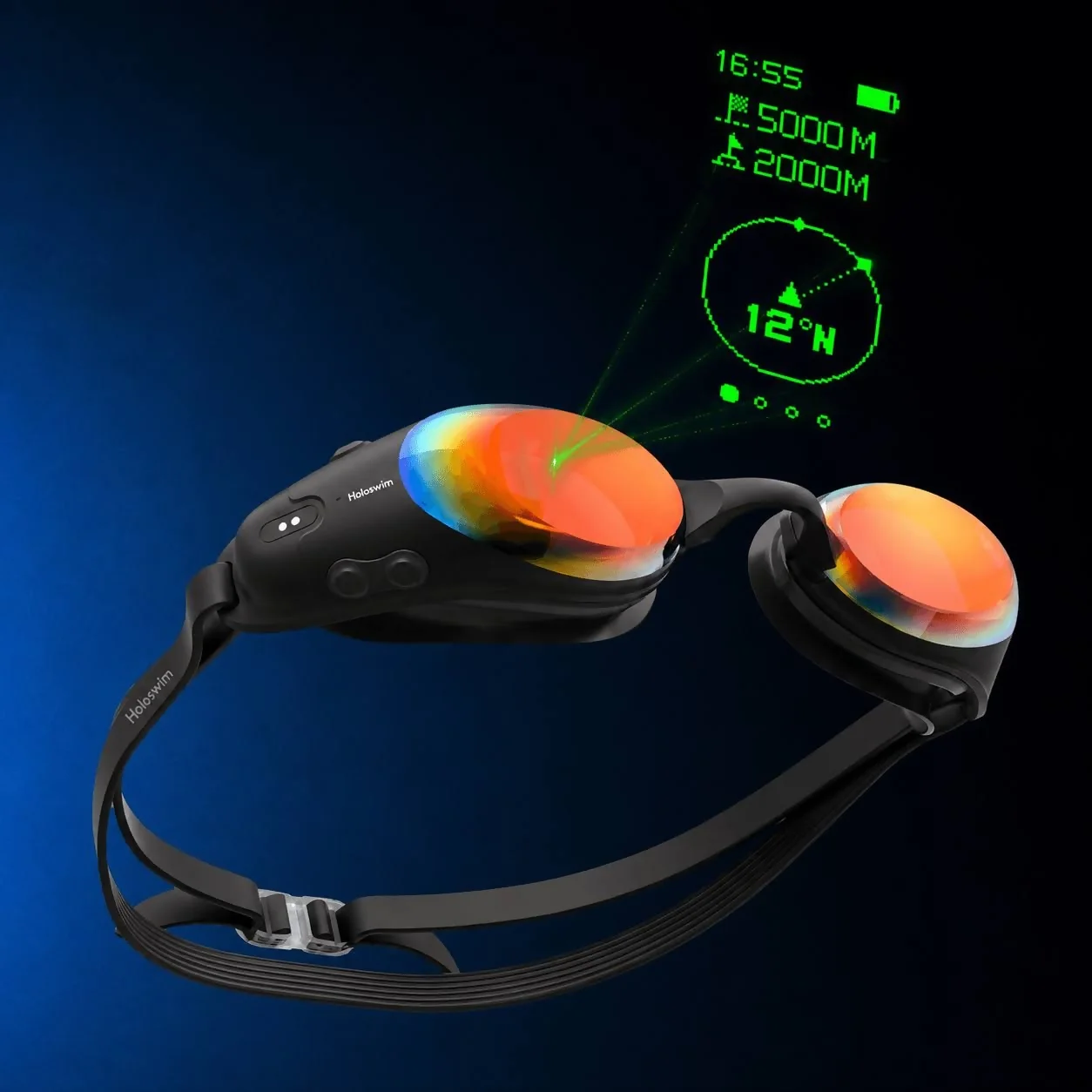
An in-lens display should not fill a swimmer’s view with numbers. Its value lies in making selected information available at the right moment. A quick glance can show whether the pace has shifted and help the swimmer decide whether to adjust the next interval. The information is timely without taking over the session.
Once the swimmer moves into open water, lap counts and pool walls are no longer useful reference points. Direction and environmental conditions matter more. For open-water swimming, HoloSwim 3 Pro adds GPS and compass functions to provide information about the route and direction of travel. It can also detect real-time water temperature and the swimmer’s depth relative to the surface.
These functions do more than add another set of numbers. Breathing patterns, waves and currents can gradually take a swimmer away from the intended line. GPS provides a record of distance and route, while the compass offers a more immediate directional reference. Water-temperature readings help the swimmer understand changing conditions, and depth information adds context about the swimmer’s position in the water.
The goggles are not simply carrying pool metrics outdoors. They change the priority of the information according to the environment. In the pool, the emphasis is on session structure and pace. In open water, route, direction and environmental awareness become part of the picture. Swimmers can configure the displayed information around the setting in which they are training.
Pace Does Not Show the Whole Physical Cost
Swim metrics explain what a person completed, but they do not fully describe how hard the body worked to complete it.
Two sessions over the same distance and at a similar pace can feel very different. A well-rested swimmer may hold the target speed comfortably. Under fatigue, stress or incomplete recovery, the same pace may produce a higher heart rate. That difference can be easy to miss when the final time is the only reference.
HoloSwim 3 Pro does not contain a built-in heart rate sensor. Heart rate is collected by the separate HandPlus B2 heart rate monitor. B2 can be worn on the arm or wrist and can also be secured to a swim cap for use in the water.
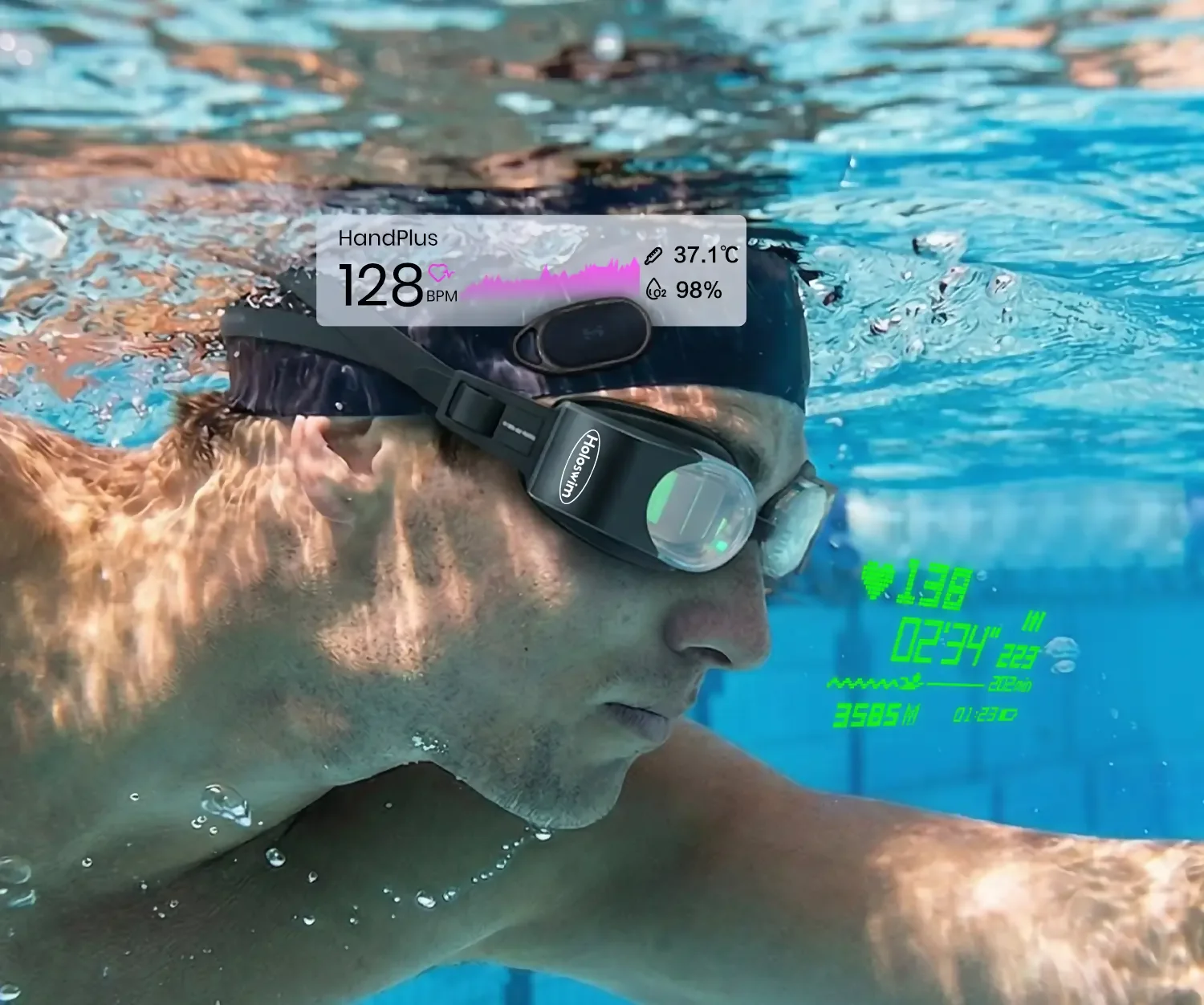
From September 2026, heart rate collected by HandPlus B2 is scheduled to appear in real time inside the HoloSwim 3 Pro display. A swimmer wearing both devices will be able to see the current heart rate without stopping to check a watch, then consider it alongside pace, distance and other swim metrics when judging the intensity of the session.
This sounds like a small change, but small details often decide whether technology becomes part of someone’s regular training. Once the session starts, a swimmer should not have to keep adjusting a sensor or checking whether it is working. Put it on, connect it and return attention to technique and rhythm.
Two Sets of Data Create Useful Context
Connecting HoloSwim 3 Pro and HandPlus B2 is not simply a matter of adding another number to the display.
The goggles track time, distance, pace, stroke count and SWOLF, showing how the session is progressing. B2 supplies heart rate, adding information about the physical load required to maintain that performance. Together, they allow swimmers to see the relationship between output and physical response while the session is still taking place.
Consider a swimmer who is holding the planned pace but whose heart rate rises earlier than usual. Pace alone suggests that everything is going to plan. With real-time heart rate available, the swimmer has a reason to reduce the intensity of the next interval, extend the recovery period or reconsider whether the original session is appropriate that day.
The reverse can also happen. Heart rate may remain relatively stable while pace begins to fall during the second half of a workout. In that situation, stroke efficiency, rhythm or a change in technique may be more useful areas to review. The swimmer may not identify the cause immediately, but after the session, pace, stroke and heart rate records provide more evidence than the finishing time alone.
Open water adds further context. A route deviation may increase the actual distance travelled. Water temperature can affect how a session feels, while surface conditions may alter rhythm and pace. Looking at route, direction, conditions, swim performance and heart rate as parts of the same session is more informative than pursuing one ideal number in isolation.
This information does not replace a coach’s judgement and is not intended for medical diagnosis. It leaves a clearer record of the session, helping swimmers and coaches identify which parts deserve closer review.
From Individual Devices to a System That Understands Context
Sports wearables have traditionally competed on the number of metrics a single product can record. As sensors become more common, a different question is starting to matter: can the technology understand the environment in which the movement is taking place?
Pool training calls for lap counts, pace and interval feedback. Open water requires route, direction and environmental information. Heart rate provides a reference for physical load across both settings. HoloSwim 3 Pro and HandPlus B2 have separate responsibilities, but swimmers can combine them according to the session.
Away from the water, B2 can continue to provide heart rate during running, cycling, rowing or strength training. Bluetooth and ANT+ allow it to connect with compatible sports watches, cycling computers, fitness equipment and third-party apps. Those connected products handle the activity-specific recording and analysis, while B2 remains focused on heart rate.
This division of work avoids expecting one product to solve every problem. The goggles present the information a swimmer needs to see. The heart rate sensor captures a physical signal. The app is better suited to detailed analysis after training. What matters to the user is not how many sensors are working behind the scenes, but whether the experience feels natural.
HoloSport began with swimming and plans to expand further into cycling, running, golf and skiing. Each sport requires a different form of feedback and a different way of wearing technology, but the underlying direction can remain the same: make data available when it is useful while reducing the demands placed on the athlete’s movement and attention.
When a swimmer can glance at the display and continue into the next lap, a runner does not need to keep checking whether a device is recording, and a cyclist can receive feedback without taking attention away from the road, wearable technology has found its place within the sport rather than standing between the athlete and the experience.