
For decades, leadership has been described as the art of making decisions under uncertainty. Today, that uncertainty is being rewritten by artificial intelligence. From predictive analytics to generative insights, AI is reshaping how executives think, plan, and lead.
The age of intuition-driven management is giving way to the era of algorithmic leadership, where human judgment and machine intelligence converge to guide corporate strategy with precision.
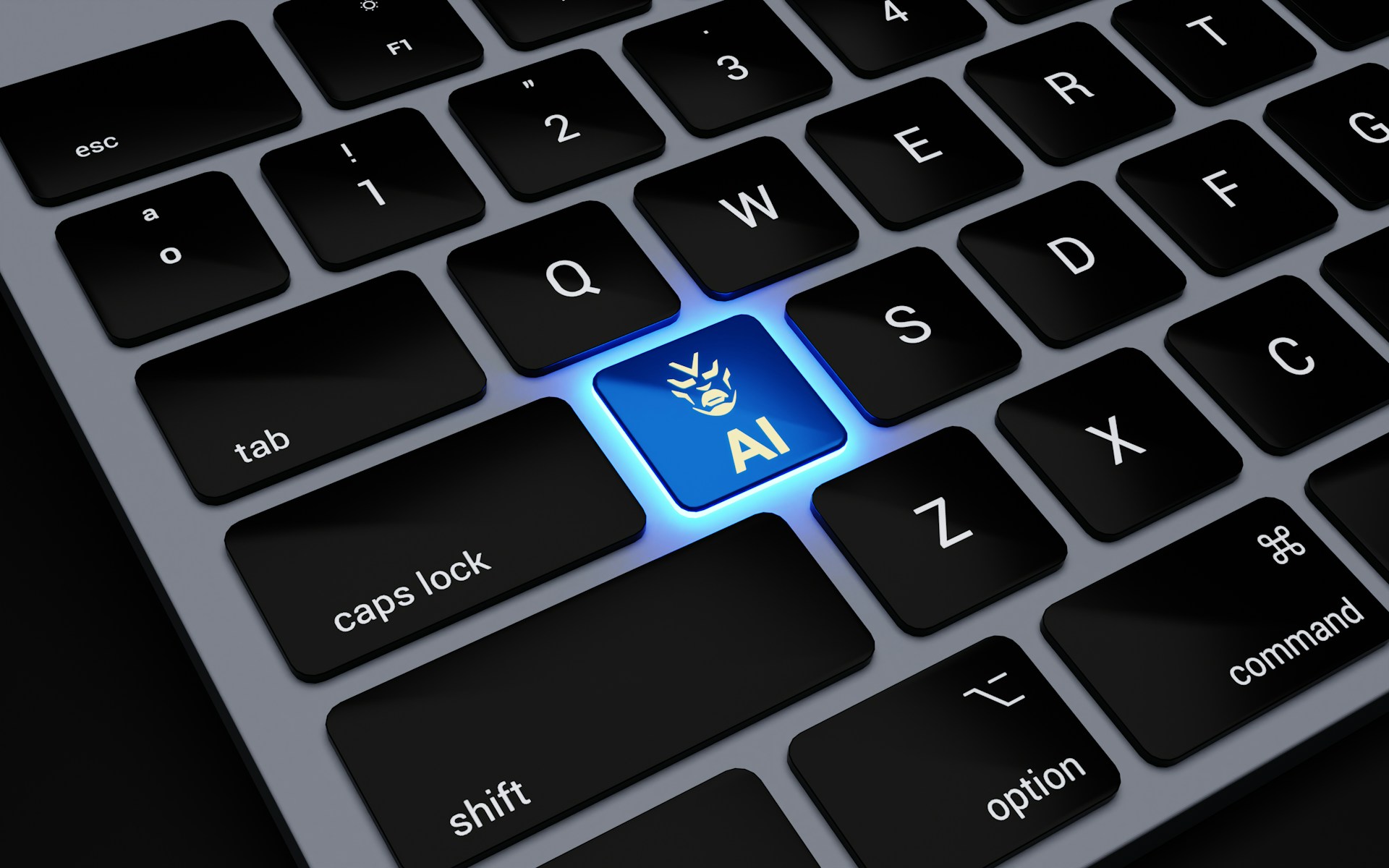
The End of Gut Instinct: Leadership in the Age of Data
In the pre-digital world, business leaders often relied on experience, instinct, and partial information. Those traits remain valuable — but insufficient. The explosion of data across industries has made it impossible for any human mind to grasp all relevant signals at once.
“Modern leadership is no longer about having the answers,” says Dr. Aisha Khan, AI governance researcher at the London School of Economics. “It’s about asking the right questions — and knowing how to collaborate with algorithms that process billions of data points faster than we can blink.”
Executives now need to evolve from decision makers to decision orchestrators, directing how data flows, how algorithms analyze it, and how insights become action.
AI as the New C-Suite Partner
AI doesn’t just inform decisions — it augments them. The technology has become an analytical co-pilot across every corporate function: strategy, operations, finance, HR, and marketing.
Strategic Foresight and Scenario Planning
Machine learning systems process real-time market data, geopolitical risk indicators, and consumer behavior trends to produce simulations of possible futures. These “digital crystal balls” allow executives to stress-test strategies before committing capital.
For example, McKinsey’s Global Institute estimates that predictive analytics can improve strategic decision accuracy by up to 30%, cutting wasteful spending by billions annually.
AI models don’t predict the future with certainty — they model probabilities and dependencies, helping leaders see the ripple effects of decisions across complex ecosystems.
Finance and Risk Management
In finance, AI tools continuously assess liquidity, pricing volatility, and credit exposure. They identify patterns of risk faster than traditional statistical models ever could.
During the 2023 market fluctuations, several hedge funds using deep-learning algorithms were able to reallocate assets hours before human-managed funds reacted.
For CFOs, these tools turn data overload into a manageable, visual, and strategic asset.
Operations and Supply Chains
AI-enabled visibility systems now monitor global logistics in real time, predicting disruptions — from port congestion to political unrest — and automatically suggesting rerouting strategies.
Executives at Maersk report that AI-driven predictive modeling has reduced operational disruptions by 40%.
This level of intelligence redefines what it means to be proactive at the leadership level.
Leadership in the Age of Machine Intelligence
The Rise of Algorithmic Decision-Making
AI-driven dashboards are replacing static reports. Executives can now query systems conversationally — “What’s our most profitable customer segment this quarter?” — and get real-time answers synthesized from multiple databases.
Such interactive platforms represent a new genre of decision intelligence systems, which combine AI analytics, data visualization, and business logic to deliver context-rich insights.
In these systems, the executive’s role shifts from interpreting data to questioning models: “What assumptions does the algorithm make? What data biases could distort this outcome?”
This form of critical oversight — often called “AI literacy” — is quickly becoming an essential leadership competency.
Emotional Intelligence Meets Artificial Intelligence
Empathy and intuition still matter. The best leaders use AI not as a replacement for judgment, but as a tool to sharpen it.
Understanding when to trust data — and when to challenge it — is a nuanced art.
AI may indicate which strategy will maximize quarterly returns, but only a human leader can judge how it aligns with brand reputation, ethics, or long-term societal impact.
“The true power of AI in leadership isn’t automation — it’s amplification,” argues Dr. Helena Ruiz, Chief Data Officer at a global consulting firm. “AI expands the cognitive reach of executives, helping them see patterns invisible to the naked eye.”
The Human–Machine Collaboration Model
Redefining the Executive Team
Forward-thinking organizations are appointing Chief AI Officers (CAIOs) or Heads of Decision Intelligence to ensure strategic alignment between data science and leadership objectives.
These roles bridge the gap between technical expertise and executive vision, ensuring that AI initiatives deliver measurable business outcomes.
Leadership Workflows Augmented by AI
A growing number of leaders use conversational AI systems for synthesis and decision support.
For instance, in executive meetings, AI assistants summarize pre-reads, highlight anomalies in data, and generate draft recommendations before discussion begins.
In mid-2025, as hybrid leadership models became the norm, systems like ask AI chat began to act as trusted internal aides — answering complex “what-if” questions, surfacing hidden correlations, and distilling hours of analytics into actionable summaries.
These tools demonstrate how executives can coexist with AI assistants not as subordinates, but as collaborative analysts that elevate organizational intelligence.
This partnership exemplifies the shift from managing information to managing insight — a defining trait of modern executive leadership.
Real-World Transformations
IBM’s AI Leadership Integration
IBM uses an AI-driven “decision fabric” across departments to unify data analytics, enabling executives to evaluate innovation portfolios and sustainability metrics simultaneously.
This framework improved time-to-decision by 45% and reduced project redundancy across teams.
Unilever’s Predictive Executive Dashboard
Unilever’s leadership team uses AI dashboards that merge consumer sentiment, logistics data, and climate forecasts. Executives can instantly visualize which production regions face risk from drought or energy shortages, ensuring agile responses.
Royal Bank of Canada’s Ethical AI Oversight Board
The bank established an AI governance committee that includes C-level leaders, ethicists, and data scientists. It reviews algorithmic transparency and bias, proving that ethical leadership is integral to digital leadership.
These case studies reveal that AI is not replacing the C-suite — it’s upgrading it.
Challenges of the AI-Driven Executive Era
Even as AI empowers leaders, it introduces new complexities.
- Data Quality and Trust: Poor data can mislead even the smartest models. Leaders must build a culture of data integrity.
- Algorithmic Bias: AI can amplify social and economic biases unless rigorously audited.
- Overreliance on Automation: Leadership requires judgment, not just computation. Blind faith in models can erode accountability.
- Skill Gap: Many executives still lack technical fluency to interpret AI outputs critically.
- Ethical and Legal Accountability: As AI recommendations influence major decisions, defining responsibility becomes crucial.
The leaders who thrive will be those who combine technological fluency with moral clarity.
Building AI-Literate Leaders
Training the Boardroom
Top-performing companies are now investing in AI literacy programs for executives and directors. These include simulations where participants use AI tools to make strategic choices — from M&A analysis to sustainability planning.
Such programs turn abstract concepts into practical skills, ensuring leaders understand both the potential and the limitations of machine intelligence.
Ethics and Explainability as Core Leadership Values
The most advanced organizations embed ethics directly into their AI governance frameworks. Every major algorithmic decision is subject to explainability reviews — a process ensuring leaders can justify outcomes to stakeholders, regulators, and society.
“Tomorrow’s executives will be judged not only by their results but by the transparency of how those results were achieved,” emphasizes Professor Michael Zhou of Oxford’s Said Business School.
The Future: Symbiotic Leadership
By 2030, the distinction between “human decisions” and “AI insights” will blur entirely. Boardrooms will operate as hybrid cognitive environments, where human creativity meets machine precision.
The next generation of CEOs won’t simply use AI — they’ll think with it.
Imagine a leadership meeting where an AI system listens, summarizes, models outcomes, and instantly visualizes stakeholder impacts.
Leaders debate ethical implications and cultural fit, while AI ensures no voice or data point goes unheard.
This is the dawn of symbiotic leadership — a partnership where human empathy and machine intelligence co-create better outcomes for business and society alike.
Conclusion: Leading with Insight, Not Instinct
Artificial intelligence is not replacing leaders — it’s redefining leadership itself.
The modern executive doesn’t compete with algorithms; they orchestrate them.
The leaders who succeed will embrace AI as an ally in making data-driven, ethical, and inclusive decisions — transforming their organizations from data-rich to insight-driven.
In the new corporate order, wisdom is no longer about what you know, but about how effectively you can ask, interpret, and act — with AI as your most powerful strategic partner.

Pallavi Singal is the Vice President of Content at ztudium, where she leads innovative content strategies and oversees the development of high-impact editorial initiatives. With a strong background in digital media and a passion for storytelling, Pallavi plays a pivotal role in scaling the content operations for ztudium’s platforms, including Businessabc, Citiesabc, and IntelligentHQ, Wisdomia.ai, MStores, and many others. Her expertise spans content creation, SEO, and digital marketing, driving engagement and growth across multiple channels. Pallavi’s work is characterised by a keen insight into emerging trends in business, technologies like AI, blockchain, metaverse and others, and society, making her a trusted voice in the industry.