Developed with CFTE and NayaOne, the new regulatory intelligence platform introduces a common framework for comparing AI applications across financial services, from fraud detection and compliance to agentic payments.
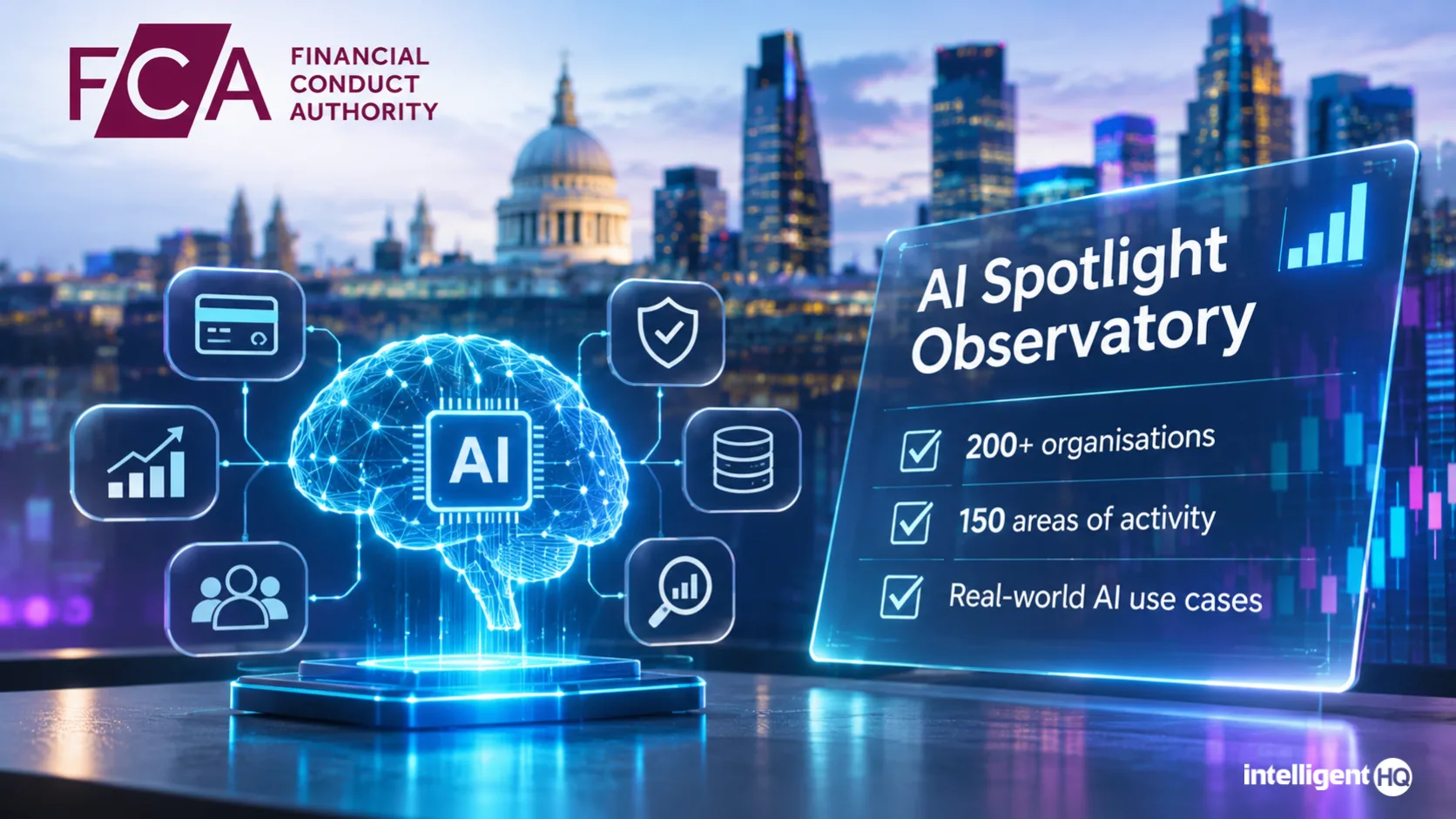
19 November 2026 – The UK’s Financial Conduct Authority (FCA) has launched the AI Spotlight Observatory, an online resource that provides structured information about how artificial intelligence is being implemented across the financial services sector.
The platform incorporates practical use cases from more than 200 organisations across 150 areas of activity, offering financial institutions, technology developers and researchers a shared framework for examining emerging AI applications.
The Observatory was developed with the Centre for Finance, Technology and Entrepreneurship (CFTE), which helped establish its classification system and organise industry use cases, while NayaOne provided the platform’s technical development.
The FCA describes the initiative as the world’s first regulator-led AI observatory of its kind.
From Isolated AI Experiments to Shared Industry Knowledge
As financial institutions deploy AI across business operations, comparing technologies and identifying reliable implementation practices has become an important challenge.
Different organisations may describe similar applications using different terminology, while available information about implementation and maturity can vary considerably.
The AI Spotlight Observatory introduces a common taxonomy covering sectors, business functions, workflows and intended value.
It also distinguishes between a proposed application and an actual implementation, helping users understand where technologies are being explored and where practical examples have been documented.
The platform includes applications involving financial crime prevention, regulatory compliance, agentic payments and neurosymbolic AI, an approach combining neural-network methods with symbolic reasoning.
Jessica Rusu, Chief Data, Information and Intelligence Officer at the FCA, said:
“AI is creating significant opportunities across financial services, and we’re committed to helping firms understand how the technology is being used.”
Supporting AI Governance and Regulatory Innovation
The Observatory expands the FCA’s existing AI Spotlight initiative by introducing improved search, comparison and trend-identification capabilities.
The resource is freely accessible, while registered users can explore more detailed information and request demonstrations from participating innovators.
Financial institutions and technology providers are also being invited to submit additional AI implementations, allowing the information base to expand over time.
The initiative sits within the FCA’s broader AI Lab, which includes AI Live Testing and the Supercharged Sandbox, developed with support from technology partners including NVIDIA, NayaOne and Anthropic.
These programmes serve different purposes. The Observatory supports knowledge-sharing, while testing initiatives provide opportunities to examine systems and their potential risks more directly.
For financial institutions, access to comparable use cases can support early technology assessments, but it does not replace independent model validation, cybersecurity controls or human oversight.
The launch signals a more evidence-based approach to understanding AI adoption, with the regulator seeking to make industry experience more visible while encouraging responsible innovation.
About the Financial Conduct Authority
The Financial Conduct Authority (FCA) regulates financial services firms and markets in the United Kingdom. Its AI Lab supports engagement between regulators, financial institutions and technology developers to improve understanding of the opportunities and risks associated with artificial intelligence.
Official website: https://www.fca.org.uk/