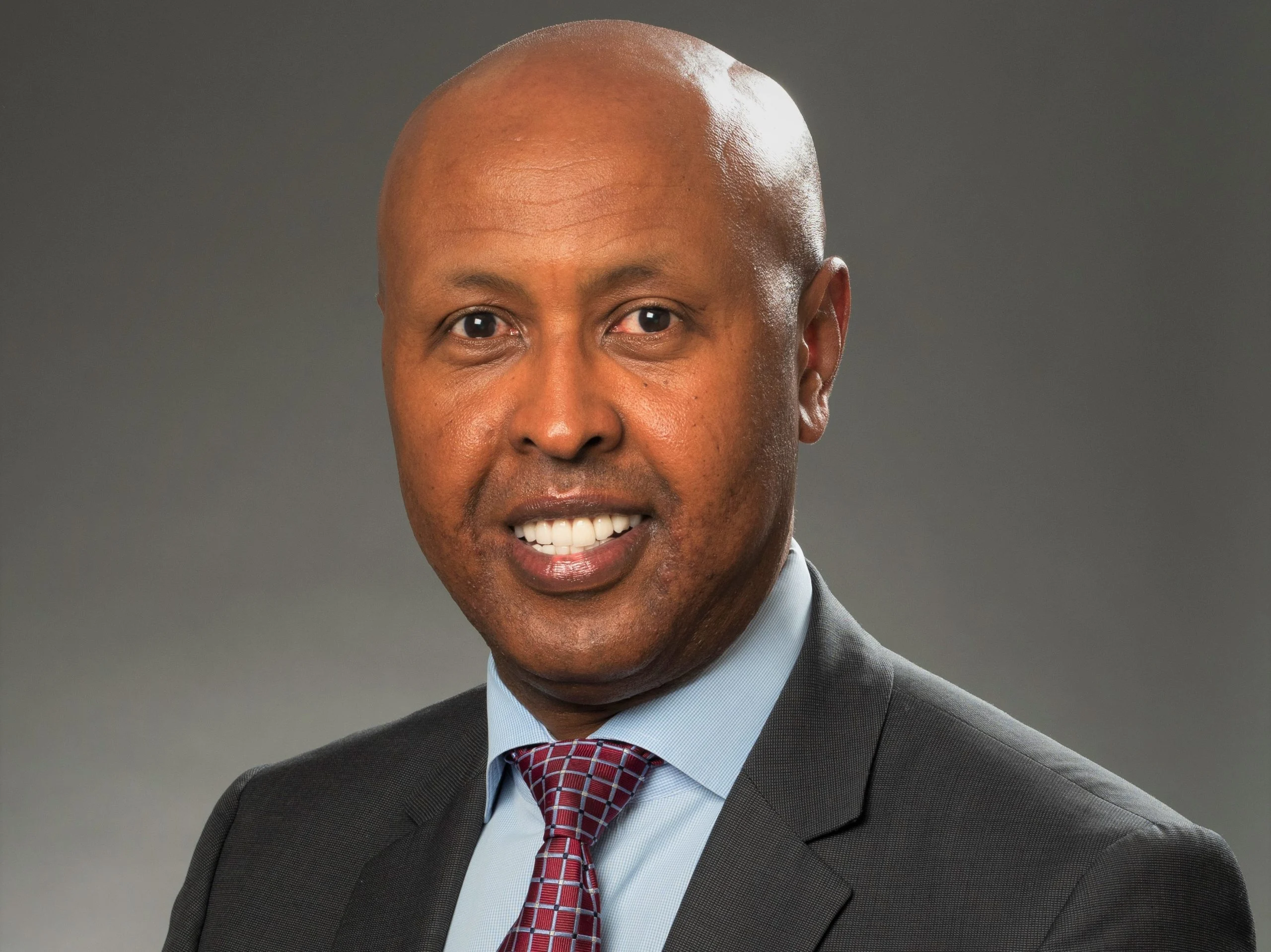
Dr Bedri Yusuf is an international physician executive and healthcare systems leader with more than three decades of experience across Africa, Europe, and the United States. Born and educated in Ethiopia, he earned his medical degree from Addis Ababa University before continuing specialist training in Germany and the US. His global experience has given him a rare perspective on how healthcare systems succeed, struggle, and evolve.
Over the course of his career, Dr Yusuf has worked in clinical medicine, hospital leadership, and healthcare operations. He has held senior executive roles within major US health systems, including serving as Chief Physician Executive at Northeast Georgia Physicians Group. He became known for his work in patient flow management, physician engagement, and system-wide operational strategy.
Dr Yusuf is recognised as a strong advocate for healthcare redesign. His work often focuses on hospital throughput, workforce shortages, burnout prevention, team-based care, and physician leadership. He has also spoken extensively about the importance of aligning clinical care with operational efficiency rather than relying on cost-cutting alone.
One of his most discussed ideas is the concept of “care traffic control”, inspired by aviation systems, which applies coordinated flow management principles to hospitals and healthcare networks.
Alongside his healthcare leadership work, Dr Yusuf supports humanitarian efforts in Ethiopia through the Association for Women’s Sanctuary and Development, an organisation helping survivors of violence through shelter, counselling, education, and vocational support.
Today, Dr Yusuf continues to write and speak about healthcare transformation, leadership, and global system reform.
Q: You have worked in Ethiopia, South Africa, Germany, and the United States. How did that shape your understanding of healthcare?
It changed the way I think about systems. Early in my career, I believed most healthcare problems came down to resources. But after working in very different countries, I realised structure and coordination matter just as much.
In Ethiopia, you learn how to work with limited resources and still deliver care. In Germany, I saw the value of discipline, process, and operational consistency. In the United States, I experienced both incredible innovation and major system complexity. South Africa showed me how inequality affects access to care in very visible ways.
Different countries have different strengths, but the same core problems often appear everywhere. Patient flow, communication, workforce strain, and leadership alignment are universal issues.
Q: You often talk about healthcare systems rather than just medicine itself. Why?
Because medicine does not happen in isolation. A talented physician working inside a poorly designed system will still struggle.
I became very interested in operational systems while working in hospital leadership. I saw how delays in discharge planning could affect emergency departments. I saw how communication gaps created inefficiencies. I also saw how burnout was often caused by structural problems rather than individual weakness.
That shifted my thinking. Healthcare outcomes are heavily influenced by the systems around clinicians.
Q: One of your most discussed ideas is “care traffic control”. What does that mean?
The idea came from observing aviation systems.
Airports manage extremely complex movement every day. Aircraft are coordinated carefully. Delays are monitored in real time. Communication is structured and precise.
Hospitals face similar complexity, but many still operate reactively rather than proactively.
Care traffic control means managing patient flow with the same level of coordination. Bed availability, discharge timing, admissions, staffing, and procedural scheduling should all work together as one system.
When flow breaks down, the entire hospital feels it. Emergency departments become overcrowded. Staff become stressed. Patients wait longer. Financial performance also suffers.
Q: You have written a lot about physician burnout. Do you think healthcare approaches it correctly?
Not always.
Burnout is often treated as a personal resilience issue. But many clinicians are working inside systems that create constant friction. Excessive administrative work, inefficient technology, staffing shortages, and unclear communication all contribute.
You cannot solve structural problems with motivational seminars.
That does not mean personal wellbeing is unimportant. But healthcare leaders need to look honestly at workflow design and organisational culture.
Q: You also support humanitarian work in Ethiopia. How did that become important to you?
My sister founded the Association for Women’s Sanctuary and Development many years ago in Ethiopia. I became involved through that work.
The organisation supports young women and girls who survived violence. They receive shelter, counselling, education, vocational training, and help finding employment.
What struck me most was seeing how recovery depends on much more than immediate medical treatment. Long-term healing requires safety, dignity, education, and opportunity.
Some of the young women who came through the programme later graduated from university and built successful careers. Watching those transformations was incredibly powerful.
Q: What leadership lessons have stayed with you throughout your career?
Probably the importance of alignment.
Healthcare organisations fail when leadership operates in silos. Clinical teams, administrators, and operational leaders must work together.
I also believe middle management is often underestimated. Department leaders and medical directors are usually the people who turn strategy into reality.
And finally, humility matters. Healthcare is too complex for anyone to lead effectively without listening carefully to people on the frontline.
Q: What concerns you most about the future of healthcare?
Workforce sustainability.
Many systems are trying to solve modern healthcare demands using outdated models. The pressure on physicians and nurses is increasing everywhere.
If organisations continue focusing only on cost reduction instead of system redesign, the strain will worsen.
At the same time, I remain optimistic. Healthcare has extraordinary people. When systems are designed thoughtfully, outcomes improve very quickly.
The challenge is not a lack of talent. It is whether leadership is willing to rethink how healthcare is organised.