Golf courses are often judged by what players can see. Course conditions, pace of play, customer service, and the overall feel of the property all shape the experience, but what players rarely see is the system underneath it.
A golf operation brings together scheduling, maintenance, staffing, teaching, guest service, food and beverage, safety, budgeting, and communication. Each area can perform well on its own and still create problems if it does not connect properly with the others.
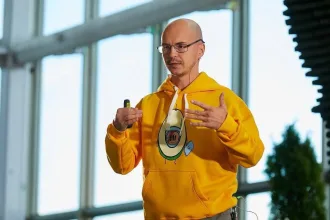
For Don Carlos Lee Gibson Jr, a golf operations professional and experienced general manager, that makes golf an interesting example of how complex organisations succeed or fail. “People see the final experience,” Gibson says. “They do not always see how many decisions had to line up behind it.”
Good Systems Reduce Friction
One of the clearest signs of a well-run operation is that customers do not have to think very much about the operation itself. They know where to go, information is easy to understand, staff members have answers, and problems are dealt with quickly.
That kind of experience does not happen by accident. Gibson has worked in golf management, resort operations, player development, automotive management, and military intelligence, and across those different environments, he has seen the same pattern. Small gaps in information can quickly become larger operational problems.
A missed message can lead to a delayed start. Unclear instructions can create confusion for an entire group. A staffing issue in one area can place pressure on several others. “The small things usually tell you something about the larger system,” Gibson says. “If the same problem keeps showing up, you should not just keep fixing the result. You need to look at why it is happening.”
The Handoff Matters as Much as the Task
Businesses often spend a great deal of time defining individual roles, but less attention may be given to what happens between those roles. Those handoffs can be where some of the most important problems develop.
On a golf property, one team may prepare the course while another manages tee times. Another may handle player instruction, carts, events, or food service. Each department has its own responsibilities, but the customer experiences all of them as part of one visit.
Gibson believes strong operations require employees to understand how their role fits into the wider process. “You do not need everybody doing everybody else’s job,” he says. “But people should understand what happens before their part and what happens after it.”
This kind of operational awareness can improve decision-making because an employee is less likely to solve one problem by unintentionally creating another somewhere else. It also gives people more context, which can help when the normal process does not fit the situation.
Systems Still Depend on Human Judgement
Technology has made many operational tasks easier. Scheduling platforms, digital booking systems, communication tools, customer databases, and reporting software can all help organisations operate more efficiently, but Gibson believes efficiency alone is not enough.
Someone still has to notice when a guest is confused. Someone has to decide when the normal procedure is not working, and someone has to recognise when a team member has information that management has missed.
That is why Gibson puts a strong emphasis on listening to people who are closest to the work. “Your team sees things you may never see from a report,” he says. “If they keep hearing the same question or running into the same obstacle, that matters.”
This creates an important distinction between collecting data and understanding what the data means. A number may tell a manager that something happened, while employees and customers may help explain why.
Hospitality Can Be Designed Into Operations
Gibson has pointed to the book Unreasonable Hospitality as an influence on how he thinks about golf management. The lesson he draws from hospitality is not that every experience must be extravagant, but that operations can be designed to make people feel considered.
Sometimes that means something very small. A staff member may recognise that a new golfer does not know where to go, a player may receive useful information before having to ask for it, or a tournament group may find that every employee is working from the same set of instructions.
These moments feel personal, but they often come from good systems. “When people talk about hospitality, they sometimes think only about personality,” Gibson says. “But the operation has to support the person delivering the service.”
A friendly employee cannot fully compensate for unclear processes, poor communication, or constant internal confusion. Strong systems give employees more room to focus on people and less reason to spend their time fixing preventable problems.
Learning Is Part of the System Too
Another part of Gibson’s approach is continued learning. He studied business management as well as golf operations, turf management, teaching, and player development, and he has continued professional training through certifications in areas including workplace safety and disaster recovery.
That mix reflects a larger point about modern management. Complex operations rarely fit neatly inside one discipline, and a golf manager may need to understand customer service, staffing, risk, finance, teaching, maintenance, and emergency planning.
The same is true in many industries, where leaders increasingly operate across traditional departmental boundaries. Gibson believes experience should make a person more open to learning, not less.
“You have to realise that somebody knows more than you about something,” he says. “If you stop learning because you have a title, you are going to miss things.”
That mindset can also strengthen teams because leaders who are willing to learn from employees make it easier for useful information to move upward. It also creates a culture where asking questions is viewed as part of doing the job well.
The Best Systems Often Disappear
There is an interesting contradiction at the heart of good operations. The better the system works, the less customers may notice it because they are focused on the course, the conversation with an employee, and whether the day felt organised or frustrating.
They rarely notice the planning, communication, training, and coordination that made those experiences possible. For Gibson, that is exactly the point.
“Good operations should make things easier for the person you are serving,” he says. “If the system is doing its job, the guest gets to focus on why they came in the first place.”
That lesson extends far beyond golf. Whether an organisation is managing a resort, a service business, a retail operation, or a technology platform, the goal is often similar: build systems that support people without forcing those people to constantly think about the system.
The most effective operations may be the ones that quietly remove obstacles before anyone notices they were there.