
An individual’s online reputation isn’t just a reflection; it’s their most valuable asset. Whether one is a CEO, entrepreneur, or job seeker, what search engines say about them can make or break opportunities. With 93% of recruiters vetting candidates online, can anyone afford to ignore their digital footprint? The key lies in controlling one’s narrative and dominating search results before others have the chance to define them.

Every individual has two identities: a physical identity, which defines a person in the world we all live in, and then, a digital one, a world where we all spend a significant portion of our lives.
The average time spent online globally is around 6 to 7 hours per day, with variations depending on the country and age group. A 2023 survey from Statista found that internet users across different age groups spend an average of 6.4 hours per day online.
Whether an individual is part of the 50% of the world living in a developed economy or from an emerging market, their digital identity is paramount. It is increasingly becoming the determining factor in shaping personal and professional relationships, finances, and business opportunities.
An individual’s digital reputation has the power to influence their career, relationships, and even their future. It is no longer just about reputation in person; their online footprint, shaped by their digital behaviours, can significantly impact how they are perceived.
With the increasing reliance on search engines, social media, and online interactions, a person’s digital reputation has become their biggest asset, even though 99% of the population may still overlook it.
From search engine results to tagged photos, blog posts, social media activities, and even online reviews, these digital footprints form the narrative about who someone is.
Understanding the weight of this digital presence is crucial, especially as we move toward a future where digital identity will be more important than ever.

What is Digital Reputation?
Digital reputation is the perception that others have of an individual, their brand, or their business based on online content and interactions. These impressions emerge from social media posts, comments, reviews, blog articles, tagged photographs, and even the way algorithms and search engines index and display information.
Unlike a traditional reputation, shaped by word-of-mouth and face-to-face interactions, digital reputation is built by everything discoverable online, including what others add on an individual’s behalf.
Every digital touchpoint, from a LinkedIn post to a product review or a mention in an article, contributes to a composite “score” that influences relationships, career opportunities, brand perception, and even financial decisions.
Search engines like Google and Bing prioritise content that is popular and relevant, not always content that is accurate or flattering. As a result, a single viral post, whether positive or negative, can strongly affect one’s reputation overnight.
Benchmarking the Reputation
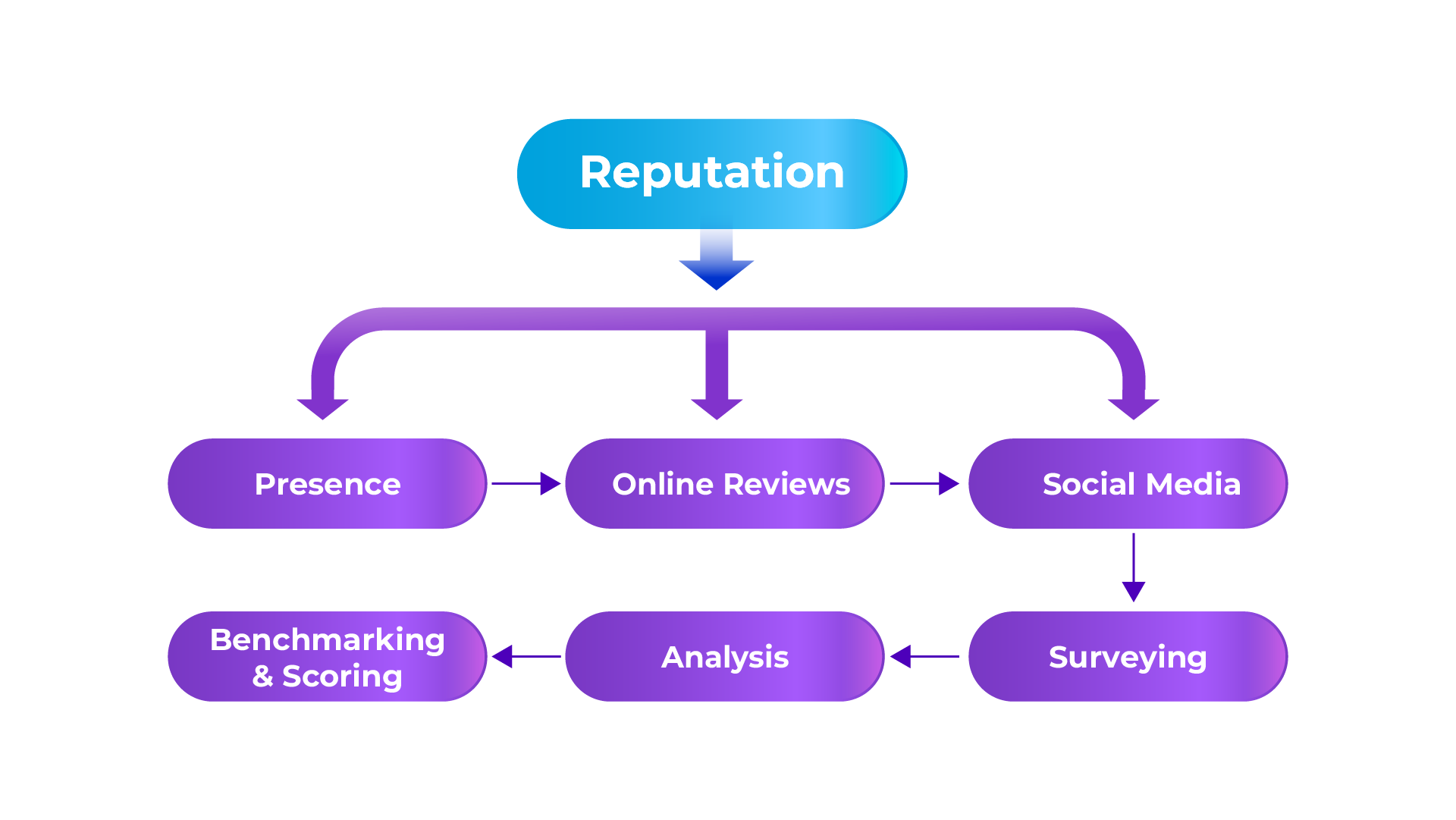
Benchmarking digital reputation provides insight into where an individual or brand stands and highlights opportunities for improvement. This process involves:
- Conducting a thorough brand audit: Investigating what is currently visible about an individual or brand online, including social media profiles, website content, search engine results, and online reviews.
- Tracking key performance indicators (KPIs): Monitoring metrics such as brand mentions, sentiment analysis, review scores, customer feedback, social media engagement, and website traffic.
- Analysing competitors: Gauging how an individual or brand compares to direct competitors within their industry or field. Identifying both strengths and areas where their reputation could improve.
- Setting measurable goals: With a baseline established, setting clear objectives and measuring progress at regular intervals to ensure meaningful improvements are occurring over time.
Benchmarking is not a one-off task, but an ongoing process, aided by social listening software, review aggregators, and engagement analytics, tools that allow for continuous tracking of brand sentiment and competitive position.
Online Reputation Management (ORM)
Online Reputation Management (ORM) is a key practice in protecting and enhancing an individual or brand’s digital identity. ORM involves the continuous monitoring, influencing, and managing of an online reputation.
It includes tactics like managing customer reviews, participating in online conversations, engaging on social media platforms, and ensuring that positive content about an individual or brand remains visible while minimising negative content.
ORM also incorporates Search Engine Optimisation (SEO) tactics to boost the visibility of positive content on search engines and reduce the prominence of negative content. ORM is not just about damage control; it’s about proactively shaping an online presence.
This requires using social media monitoring, content marketing, and audience engagement strategies to build a positive online reputation.
It’s important to remember that ORM isn’t a quick fix. It requires dedication and ongoing effort. One must respond quickly to negative comments, provide valuable content to counteract bad press, and continuously engage with the audience.
ORM helps build trust, loyalty, and credibility, which are essential for long-term success in the online space.
Why Does Personal Online Reputation Management Matter?
Google dominates the search engine landscape, controlling over 92% of all search engine traffic. When someone searches for an individual, whether it’s a potential employer, a business partner, or a client, 95% of them will click on the results that appear on the first page.
This highlights why personal online reputation management is crucial, as what others see about an individual when they search their name is often the first impression they get.
Reputation influences not only how people perceive an individual but also impacts professional opportunities. For instance, executives report that, on average, 49% of a company’s reputation is tied to the reputation of its CEO.
Job seekers, too, are affected by online reputation; 70% of job seekers are likely to reject a job offer from a company with a bad reputation. In fact, 93% of recruiters use LinkedIn to find candidates, and 54% of employers will decide not to hire someone if they find negative information about them on social media.
Search engines, such as Google, Bing, and others, are indifferent to an individual’s reputation. They simply return search results based on relevance and popularity, meaning bad press or old social media posts can easily resurface and harm personal and professional reputations.
An individual’s reputation is their most valuable digital asset: it must be guarded, grown, and leveraged to unlock new opportunities.
Take Control of Digital Personal Branding Reputation
In today’s digital age, managing an individual’s online reputation is an absolute necessity. The digital world is full of risks, but with the right strategies, one can control what others see when they search for them online.
This allows an individual to take control of the narrative about who they are and ensures that negative or outdated content doesn’t dominate their search results.
The key to taking control is to proactively manage one’s online presence. This includes optimising profiles, engaging in meaningful online conversations, creating valuable content, and consistently monitoring reputation.
With the right strategies in place, individuals can ensure that positive profiles, content, and images appear in the first pages of search results, pushing any negative content further down.
Here are some steps to help take control of digital personal branding reputation:
- When something goes wrong, apologise (publicly and unreservedly) – By addressing actions and the situation at hand, it paints an image of honesty and authenticity. Discussing what happened in an open forum and being transparent can turn a PR storm from scandal to dull in minutes. Nothing takes the wind out of the media’s sails like an apology. “Next!” the press will shout.
- Do charity/voluntary work based on what happened – If one repairs burnt bridges by helping those they may have offended, their halo will return in no time. The press and public love a reformed sinner. Not only will one feel good helping out their local community or engaging in an activist cause, but their image will be squeaky clean.
- Work on oneself (publicly) – This doesn’t mean heading to a rehabilitation clinic with a GoPro attached to one’s lapel, but being open about personal rehabilitation is a PR panacea. It demonstrates to the world that one is able to prioritise self-wellness and learn from mistakes.
- Keep social media to a minimum – Becoming a digital nomad is a key tool to weathering PR storms. Going on the down-low will help lower one’s profile in a productive way while the storm passes.
- Stay out of the (negative) spotlight – Become a nomad in real life, too! This means avoiding wild nights out on the town or major social functions. Focus time on cultivating oneself, rather than attending product launches. By doing so, this gives the press no opportunities to damage one’s character and provides enough time to redirect and ameliorate any damage.
How to Take Control of Digital Personal Branding Reputation?
- Manage online presence: Take the time to go through all of one’s online profiles and ensure they accurately reflect who they are as a professional. This includes cleaning up any outdated or irrelevant content, removing inappropriate images or posts, and customising profile pictures and bios.
- Participate in online conversations: Join relevant online conversations and become an active contributor to the discussion. This could include joining industry-specific forums, commenting on blogs, or participating in online groups.
- Create digital content: Share knowledge, insights, and expertise by creating content such as blog posts, podcasts, or videos. Doing so helps establish oneself as an authority in their field and shows others that they are a valuable resource.
- Network online: Get involved in social media networks, such as LinkedIn, Twitter, and Facebook. Connect with professionals in one’s industry and join relevant groups.
- Monitor reputation: Set up Google Alerts to track what is being said about an individual online. This allows them to respond quickly to any negative comments, address potential issues, and protect their reputation.
Digital reputation: how it shapes one’s future opportunities?
Digital reputation is no longer a secondary concern; it is the main currency of trust, opportunity, and influence in a connected world. One’s digital reputation plays a pivotal role in shaping future opportunities. It is a reflection of how others perceive an individual or brand, and its impact extends across personal and professional spheres.
Treating digital reputation as a living asset, it must be nurtured with consistency and integrity. Every post, review, and digital action contributes to the image others have, influencing perceptions now and in the future.
Investing in benchmarking, active management, and constant improvement is key. By monitoring online presence and engaging meaningfully, an individual can take control of their narrative and ensure that positive content rises to the forefront.
A well-maintained digital reputation opens doors to career advancement, business opportunities, and personal growth. It is important to own one’s story, shaping it in a way that aligns with values and aspirations.
In a world where online presence matters more than ever, taking proactive steps to build and maintain a positive digital reputation is an essential investment in one’s future. Seizing the opportunities a positive digital reputation affords is crucial to long-term success.

Dinis Guarda is an author, academic, influencer, serial entrepreneur, and leader in 4IR, AI, Fintech, digital transformation, and Blockchain. Dinis has created various companies such as Ztudium tech platform; founder of global digital platform directory businessabc.net; digital transformation platform to empower, guide and index cities citiesabc.com and fashion technology platform fashionabc.org. He is also the publisher of intelligenthq.com, hedgethink.com and tradersdna.com. He has been working with the likes of UN / UNITAR, UNESCO, European Space Agency, Davos WEF, Philips, Saxo Bank, Mastercard, Barclays, and governments all over the world.
With over two decades of experience in international business, C-level positions, and digital transformation, Dinis has worked with new tech, cryptocurrencies, driven ICOs, regulation, compliance, and legal international processes, and has created a bank, and been involved in the inception of some of the top 100 digital currencies.
He creates and helps build ventures focused on global growth, 360 digital strategies, sustainable innovation, Blockchain, Fintech, AI and new emerging business models such as ICOs / tokenomics.
Dinis is the founder/CEO of ztudium that manages blocksdna / lifesdna. These products and platforms offer multiple AI P2P, fintech, blockchain, search engine and PaaS solutions in consumer wellness healthcare and life style with a global team of experts and universities.
He is the founder of coinsdna a new swiss regulated, Swiss based, institutional grade token and cryptocurrencies blockchain exchange. He is founder of DragonBloc a blockchain, AI, Fintech fund and co-founder of Freedomee project.
Dinis is the author of various books. He has published different books such “4IR AI Blockchain Fintech IoT Reinventing a Nation”, “How Businesses and Governments can Prosper with Fintech, Blockchain and AI?”, also the bigger case study and book (400 pages) “Blockchain, AI and Crypto Economics – The Next Tsunami?” last the “Tokenomics and ICOs – How to be good at the new digital world of finance / Crypto” was launched in 2018.
Some of the companies Dinis created or has been involved have reached over 1 USD billions in valuation. Dinis has advised and was responsible for some top financial organisations, 100 cryptocurrencies worldwide and Fortune 500 companies.
Dinis is involved as a strategist, board member and advisor with the payments, lifestyle, blockchain reward community app Glance technologies, for whom he built the blockchain messaging / payment / loyalty software Blockimpact, the seminal Hyperloop Transportations project, Kora, and blockchain cybersecurity Privus.
He is listed in various global fintech, blockchain, AI, social media industry top lists as an influencer in position top 10/20 within 100 rankings: such as Top People In Blockchain | Cointelegraph https://top.cointelegraph.com/ and https://cryptoweekly.co/100/ .
Between 2014 and 2015 he was involved in creating a fabbanking.com a digital bank between Asia and Africa as Chief Commercial Officer and Marketing Officer responsible for all legal, tech and business development. Between 2009 and 2010 he was the founder of one of the world first fintech, social trading platforms tradingfloor.com for Saxo Bank.
He is a shareholder of the fintech social money transfer app Moneymailme and math edutech gamification children’s app Gozoa.
He has been a lecturer at Copenhagen Business School, Groupe INSEEC/Monaco University and other leading world universities.