The world of computer systems technology is changing fast. It feels like every day there’s something new, from smarter machines to ways of interacting with computers that sound like science fiction. This article looks at where computer systems technology has been, where it’s going, and what that means for all of us. We’ll cover the big breakthroughs, the new tools popping up, and the challenges we need to think about as things keep moving forward. It’s a wild ride, and understanding these shifts is key.
Key Takeaways
- Computer systems technology has evolved dramatically from early machines to today’s advanced systems, driven by innovations like microprocessors and Moore’s Law.
- Artificial intelligence, quantum computing, and edge computing are leading the next wave of transformative changes in how computers work and what they can do.
- New ways of interacting with technology, like virtual and augmented reality, alongside the growth of the Internet of Things, are changing our daily digital experiences.
- Significant challenges remain, including cybersecurity threats and ethical considerations, especially with AI development, alongside the ongoing search for hardware solutions.
- The future points towards more integrated human-computer interaction, potentially moving beyond traditional personal computers towards neural interfaces and always-connected access points.
The Evolving Landscape Of Computer Systems Technology
Computer systems have come a long way, and it’s pretty wild to think about how much they’ve changed. We’ve gone from massive machines that filled entire rooms to the sleek devices we carry in our pockets today. This journey isn’t just about making things smaller; it’s about making them smarter, faster, and capable of doing things we only dreamed of a few decades ago.
From Vacuum Tubes To Microprocessors: A Historical Overview
Let’s rewind a bit. The early days of computing, think the 1940s and 50s, were dominated by vacuum tubes. These were huge, power-hungry components that generated a lot of heat and were prone to breaking down. Computers back then were slow and expensive, mostly used by governments and big research institutions. Then came the transistor in the late 50s and early 60s. This was a game-changer, making computers smaller, more reliable, and less power-hungry. The real revolution, though, arrived with integrated circuits (ICs) in the 60s and 70s. These tiny chips packed many transistors together, leading to even more compact and efficient machines. The invention of the microprocessor, essentially a whole computer on a single chip, in the early 70s, paved the way for personal computers and truly democratized computing.
The Impact Of Moore’s Law On Innovation
For decades, a pretty consistent trend called Moore’s Law has guided the industry. It basically observed that the number of transistors we could fit on a microchip roughly doubled every couple of years. This doubling meant computers got faster and cheaper at an astonishing rate. Think about it: your smartphone today is likely more powerful than the supercomputers used for space missions just a few decades ago. This relentless progress has fueled innovation across the board, making advanced computing accessible to more people and businesses than ever before.
This steady march of progress, driven by packing more and more components onto silicon, has been the bedrock of the digital revolution. It’s allowed for the creation of complex software, vast networks, and the sophisticated devices we rely on daily.
Current Trends Driving Computer Advancements
Today, the pace of change is still incredibly fast, but the focus is shifting. We’re seeing major advancements in areas like:
- Artificial Intelligence (AI) and Machine Learning (ML): Computers are learning to perform tasks that previously required human intelligence, from recognizing images to understanding language.
- Quantum Computing: This is a completely different approach to computation that promises to solve problems currently impossible for even the most powerful supercomputers.
- Edge Computing: Instead of sending all data to a central cloud, processing is happening closer to where the data is generated, enabling faster responses for things like self-driving cars or smart factories.
These trends, along with others like advancements in connectivity and new ways of interacting with technology, are shaping what computer systems will look like and do in the near future.
Transformative Innovations Shaping The Future
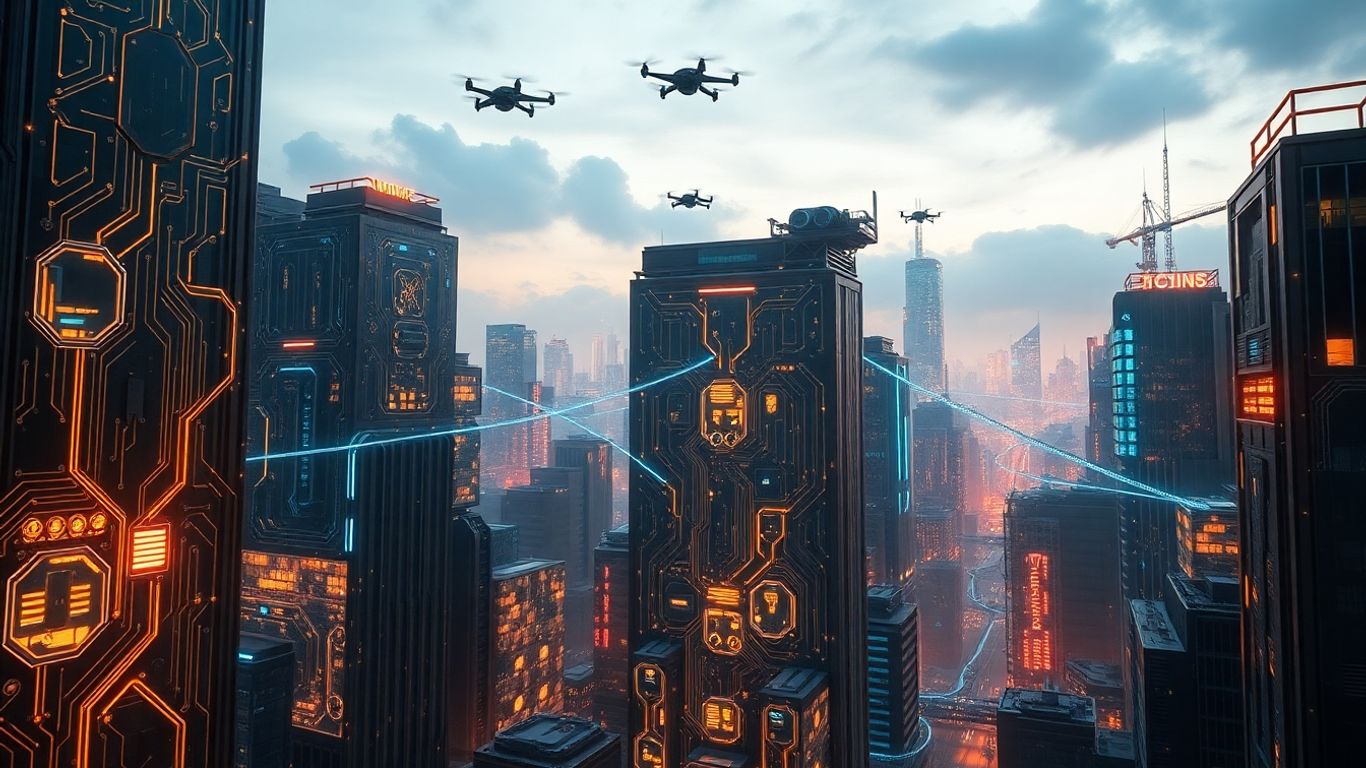
We’re living through a period of incredible change in computer systems. It feels like every day there’s a new breakthrough that promises to reshape how we live and work. Let’s look at some of the big ones that are really making waves.
Artificial Intelligence And Machine Learning’s Growing Influence
Artificial Intelligence (AI) and Machine Learning (ML) are no longer just buzzwords; they’re becoming the engine behind many of the smart technologies we use. These systems can learn from data, identify patterns, and make decisions, often with remarkable accuracy. Think about how your phone suggests the next word you might type, or how streaming services recommend shows you’ll probably like. That’s AI at work. In more complex applications, AI is helping doctors diagnose diseases earlier and financial institutions manage portfolios more effectively. The ability of machines to process vast amounts of information and adapt is truly changing the game across countless industries.
The Potential Of Quantum Computing
Quantum computing is a bit more abstract, but its potential is enormous. Unlike the computers we use today, which rely on bits representing either 0 or 1, quantum computers use qubits that can represent 0, 1, or both simultaneously. This allows them to tackle problems that are currently impossible for even the most powerful supercomputers. Imagine designing new materials with specific properties, discovering life-saving drugs much faster, or breaking modern encryption methods. While still in its early stages, quantum computing promises to revolutionize fields like medicine, materials science, and cryptography.
Edge Computing And Its Role In Real-Time Processing
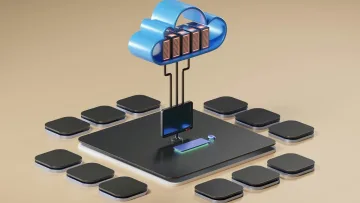
Edge computing is about bringing computation and data storage closer to where the data is actually generated, rather than sending it all to a central cloud. This is super important for applications that need instant responses. Think about self-driving cars that need to make split-second decisions, or industrial robots on a factory floor that must react immediately to changing conditions. By processing data locally, edge computing reduces latency and improves reliability. It’s a key enabler for the Internet of Things (IoT) and other applications demanding real-time interaction.
These emerging technologies are not just incremental improvements; they represent fundamental shifts in how we can process information and interact with the digital and physical worlds. Their combined impact is creating a future that is more automated, intelligent, and responsive.
Emerging Technologies Redefining Interaction
We’re seeing some really interesting shifts in how we connect with computers. It’s not just about screens and keyboards anymore. New technologies are blending the digital and physical worlds in ways that feel almost like magic, changing how we work, learn, and play.
Blockchain Beyond Cryptocurrencies
While many know blockchain for its role in digital currencies, its potential goes much further. Think of it as a super secure, shared digital ledger that can track anything of value. This means it can be used for more than just money.
- Supply Chain Management: Tracking goods from origin to consumer with complete transparency.
- Digital Identity: Securely managing personal information and credentials.
- Voting Systems: Creating tamper-proof and verifiable election processes.
The core idea is trust and transparency, built into the system itself. This can simplify many processes that currently rely on intermediaries and paperwork.
The ability to create immutable records means that once data is added to the blockchain, it cannot be altered or deleted. This feature is what makes it so powerful for applications requiring high levels of security and integrity.
The Internet of Things And Connected Devices
The Internet of Things (IoT) continues to grow, connecting everyday objects to the internet. Your smart thermostat, your fitness tracker, even your refrigerator – they can all communicate and share data. This creates a more responsive and automated environment.
- Smart Homes: Devices that learn your habits and adjust settings for comfort and efficiency.
- Industrial IoT (IIoT): Sensors in factories that monitor equipment, predict maintenance needs, and optimize production.
- Healthcare Monitoring: Wearable devices that track vital signs and alert medical professionals to potential issues.
This interconnectedness allows for real-time data collection and analysis, leading to smarter decisions and more efficient operations across various sectors.
Virtual And Augmented Reality Applications
Virtual Reality (VR) and Augmented Reality (AR) are moving beyond gaming and entertainment. They are becoming powerful tools for training, design, and collaboration.
- VR Training: Surgeons can practice complex procedures in a risk-free virtual environment. Pilots can train in realistic flight simulators.
- AR for Field Service: Technicians can see digital instructions overlaid on physical equipment, guiding them through repairs.
- Collaborative Design: Architects and clients can walk through virtual building models together, making design changes in real-time.
These immersive technologies offer new ways to visualize information and interact with digital content, making complex tasks more intuitive and accessible. The market for AR, in particular, is expected to see significant growth, moving from niche applications to mainstream use.
Challenges And Opportunities In Computer Systems
As computer systems become more intricate and deeply woven into the fabric of our lives, we face a number of significant hurdles and, conversely, exciting new avenues for progress. These aren’t just technical puzzles; they touch on security, ethics, and the very limits of what our hardware can achieve.
Navigating Cybersecurity Threats
Cybersecurity is a constant battle. As systems grow more interconnected, the potential attack surface expands dramatically. We’re seeing a rise in sophisticated threats, from ransomware that cripples organizations to state-sponsored attacks aimed at critical infrastructure. Developing robust defenses requires a multi-layered approach, combining advanced detection methods with proactive security strategies. The ongoing arms race between attackers and defenders means that staying ahead is not just a goal, but a necessity. This includes everything from securing individual devices to protecting vast networks and the sensitive data they hold. Staying updated on the latest threats and defense mechanisms is key, and understanding technologies like blockchain can offer new ways to secure transactions and data integrity exploring cryptocurrencies.
Ethical Considerations In AI Development
Artificial intelligence presents a unique set of ethical quandaries. As AI systems become more autonomous, questions about bias in algorithms, accountability for AI decisions, and the potential for job displacement become paramount. Ensuring fairness and transparency in AI development is a complex task. It requires careful consideration of the data used to train AI models, as well as ongoing monitoring and auditing of their performance. We need to build AI that reflects our societal values and benefits everyone, not just a select few.
Hardware Limitations And Future Solutions
Despite incredible advancements, we are beginning to bump against the physical limits of current hardware. Traditional silicon-based processors are approaching their scaling limits, and the energy required to power increasingly complex computations is a growing concern. This is driving research into new paradigms. We’re looking at:
- Novel Materials: Exploring materials beyond silicon, like graphene or carbon nanotubes, for faster and more efficient transistors.
- 3D Architectures: Stacking components vertically to increase density and reduce communication distances.
- Specialized Processors: Designing chips optimized for specific tasks, such as AI acceleration or cryptography.
- Quantum Computing: While still in its early stages, quantum computing promises to solve problems currently intractable for even the most powerful supercomputers.
The pursuit of more powerful computing capabilities is a continuous cycle. Each limitation encountered sparks innovation, pushing the boundaries of physics and engineering to create the next generation of systems. This drive for progress is what keeps the field dynamic and exciting.
The Future Of Computing Interaction
The way we interact with computers is on the cusp of a major shift, moving far beyond the keyboards and screens we’re used to. This evolution is driven by a desire for more intuitive, integrated, and personalized computing experiences. We’re looking at a future where technology blends more naturally with our lives, becoming an extension of ourselves rather than a separate tool.
The Rise Of Personal Access Points
Forget lugging around laptops or being tethered to a desk. The concept of a Personal Access Point (PAP) is gaining traction. These are small, always-connected devices designed to give you instant access to your entire computing environment, wherever you are. Think of them as a key to your digital world. Since most of the heavy lifting, like storage and processing, will happen in the cloud, these PAPs can be incredibly lightweight and unobtrusive. This setup is particularly well-suited for AI-driven applications that can adapt on the fly to what you need, when you need it. Instead of staring at a monitor, we might be interacting through augmented reality interfaces, making our digital interactions more contextual and less confined.
Neural Interfaces And Wearable Technologies
This is where things get really interesting. By 2040, traditional input methods like keyboards and mice could become relics. We’re talking about direct neural interfaces, or brain-computer interfaces (BCIs), that allow us to control devices and communicate using just our thoughts. Imagine thinking a command and having your computer execute it instantly. Alongside this, advanced wearable technologies, like augmented reality glasses and holographic displays, will likely replace physical screens. This convergence means the digital and physical worlds will merge more fluidly, making our computing interactions feel less like using a machine and more like a natural extension of our own senses. This shift is already showing promise in areas like virtual try-on technologies, hinting at how immersive experiences will become commonplace.
A World Beyond Traditional Personal Computers
The traditional personal computer, as we know it, is set to disappear. Our computing environments will become mobile, following us wherever we go, accessible instantly through these new access points and AI-driven interfaces. The very idea of an operating system might change, with AI generating custom digital workspaces tailored to each individual’s needs on demand. Software installation will likely become a thing of the past as everything moves to cloud-based platforms powered by advanced technologies like AI and quantum computing. This transformation promises greater efficiency and mobility, but it also brings up important questions about privacy and how much control AI should have over our personal data. We’ll need to carefully consider the ethical implications as technology becomes more deeply woven into our lives.
The move away from traditional PCs signifies a profound change in how we engage with digital information and services. It’s a transition towards a more integrated, context-aware, and personalized technological landscape that anticipates our needs and responds intuitively.
Sustainable Practices In Computer Systems
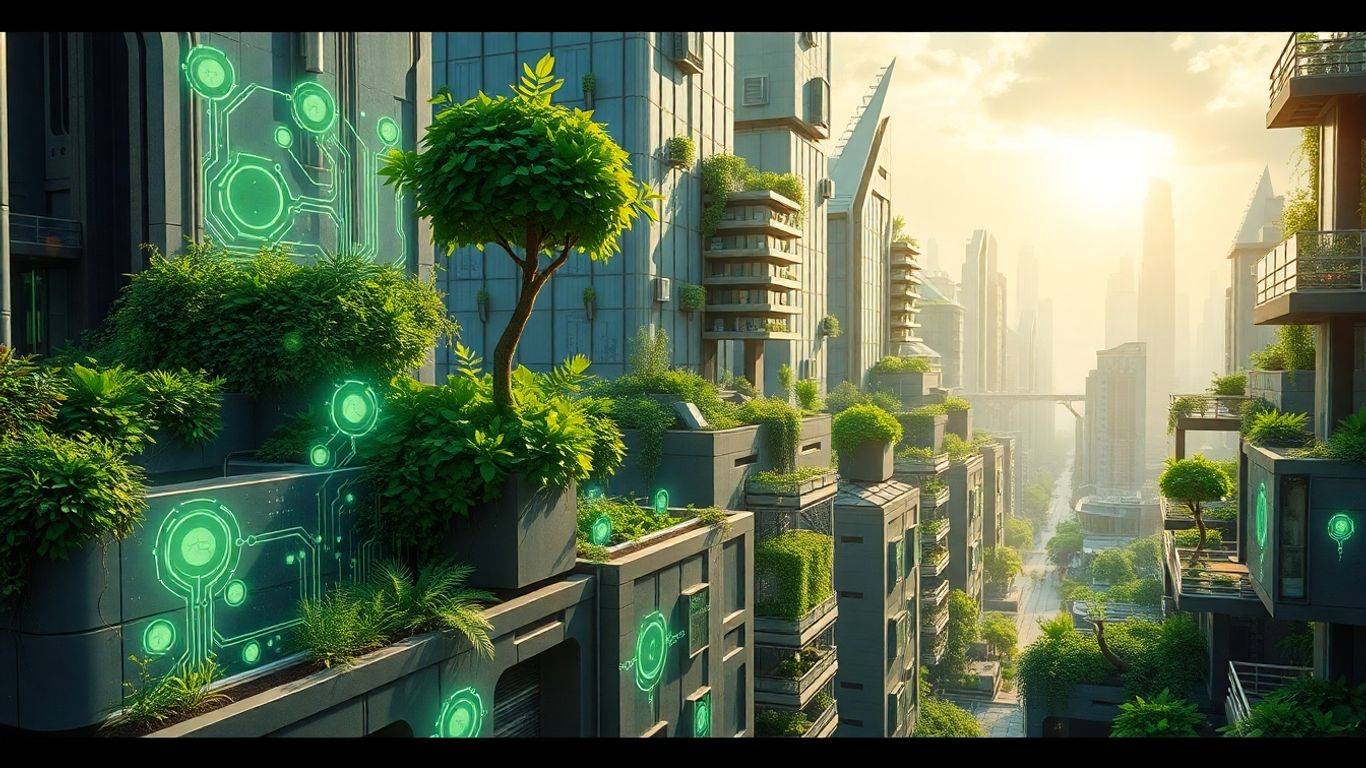
As we build more powerful and complex computer systems, thinking about their environmental impact is becoming really important. It’s not just about being "green" anymore; it’s about smart business and responsible innovation. We need to consider how our technology affects the planet throughout its entire life.
Green Computing As A Business Imperative
Making computer systems more sustainable is no longer a niche idea; it’s a practical necessity for businesses. With rising energy costs and increasing attention from investors and regulators, companies are finding that eco-friendly practices actually save money and build a better reputation. Adopting green computing strategies can lead to significant operational efficiencies and a stronger market position. This means looking at everything from the hardware we buy to the software we run and how we manage our data centers.
Energy Efficiency In Data Centers
Data centers are the backbone of our digital world, but they consume a lot of power. The good news is that there’s a lot of room for improvement. Modern data center designs focus on smarter cooling systems, more efficient power distribution, and using renewable energy sources. Cloud providers, for instance, are reporting substantial gains in energy efficiency compared to older, on-premise setups. This not only reduces their carbon footprint but also lowers operating expenses.
Here are some key areas for improving data center energy efficiency:
- Hardware Optimization: Using servers and networking equipment designed for lower power consumption.
- Cooling Innovations: Implementing advanced cooling techniques like liquid cooling or free cooling that use outside air.
- Power Management Software: Employing tools that intelligently manage server workloads to reduce idle power usage.
- Renewable Energy Integration: Sourcing electricity from solar, wind, or other sustainable sources.
The Role Of Technology In Environmental Accountability
Technology itself can be a powerful tool for tracking and improving environmental performance. We can use sensors and data analytics to monitor energy usage, carbon emissions, and waste across an organization. This data helps identify areas where improvements are needed and allows us to measure progress over time. For example, software can be developed to schedule computing tasks during times when renewable energy is most abundant, or to optimize logistics for reduced fuel consumption. This makes environmental responsibility measurable and actionable.
As technology becomes more integrated into every aspect of our lives, the responsibility to design and use it in ways that minimize harm to the environment grows. This involves a conscious effort from developers, businesses, and users alike to prioritize sustainability in the choices we make.
By focusing on these areas, we can ensure that the advancements in computer systems technology go hand-in-hand with a commitment to protecting our planet for future generations.
Looking Ahead
The world of computer systems is changing fast, and it’s pretty exciting. We’ve seen how things like AI, quantum computing, and even blockchain are not just buzzwords but are actively shaping how we live and work. While there are definitely challenges, like keeping things secure and making sure new tech is used responsibly, these hurdles also push us to find even better solutions. It’s clear that the innovations we’ve discussed are setting the stage for a future that’s more connected, more efficient, and full of possibilities we’re only just beginning to imagine. Staying curious and adaptable will be key as we move forward into this new era of technology.
Frequently Asked Questions
What are the most exciting new computer technologies?
Some of the most exciting new computer technologies include Artificial Intelligence (AI), which helps computers learn and make smart choices; Quantum Computing, which uses tiny particles to solve super hard problems much faster; and the Internet of Things (IoT), where everyday objects can connect and share information.
How has computer technology changed over time?
Computers started out as huge machines using vacuum tubes, like giant refrigerators! Then came smaller parts called transistors, followed by chips with many transistors. Now, we have super-fast processors in our phones and computers that are incredibly powerful, thanks to amazing inventions.
What is Moore’s Law and why is it important?
Moore’s Law is an idea that said computer chips would get twice as powerful every couple of years, while staying the same size or getting smaller. This prediction helped drive amazing progress, making computers faster, cheaper, and smaller, which is why we have smartphones and powerful laptops today.
What are some challenges we face with new computer tech?
We face challenges like keeping our information safe from hackers (cybersecurity), making sure AI is used fairly and doesn’t make biased decisions, and finding ways to make computer parts that are more energy-efficient and don’t harm the planet.
How will we interact with computers in the future?
In the future, we might not even use keyboards and mice! We could control computers with our thoughts using brain interfaces, or through smart glasses that show us digital information mixed with the real world. Computers will become much more a part of our lives, almost like an extension of ourselves.
What is ‘Green Computing’?
Green computing is about making computer technology in a way that is good for the environment. This means using less energy, making computers last longer, and recycling them properly. It’s important because our planet needs us to be more careful with resources.