Education loves programs.
New initiatives launch every year. After-school support, mentorship groups, college readiness workshops, and attendance campaigns. Each one starts with energy and good intentions. Each one promises results.
Most of them fade.
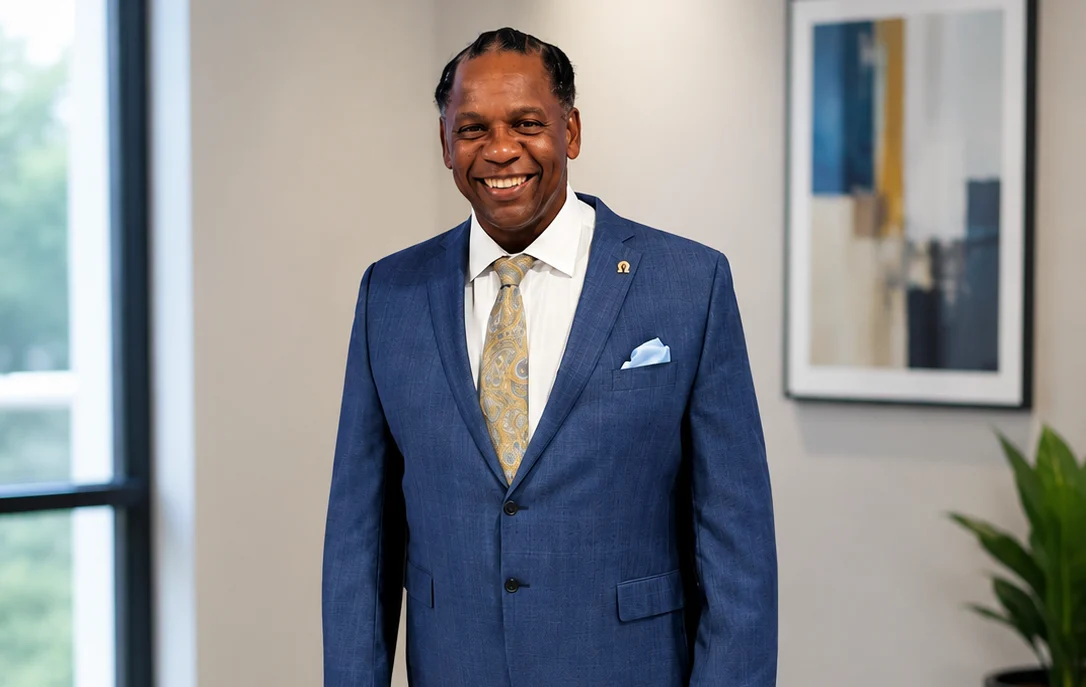
Brodrick Spencer has spent nearly three decades inside schools and education systems, watching this pattern repeat. He has worked as a teacher, coach, assistant principal, and principal, and now leads large-scale youth and afterschool programs. His perspective is grounded in implementation, not theory. He focuses on what lasts after the excitement wears off.
“Programs are easy to start,” he says. “The real question is what’s still working when you’re no longer there to push it.”
Why Programs Fail
The problem is not effort. Schools work hard. Staff care deeply. Communities invest time and resources.
The issue is structure.
Many programs rely on a single champion. A strong principal, a motivated teacher, or a dedicated coordinator drives the work forward. While that person is present, the program thrives. When they leave, the program weakens or disappears.
Spencer has seen this cycle repeatedly.
“I took over a school where five different initiatives had been launched in the previous three years,” he recalls. “Each one had binders, schedules, and goals. None of them were still functioning the way they were designed.”
The work had been done. The system had not been built.
That distinction matters.
The Shift from Activity to Infrastructure
Programs focus on activity. Systems focus on consistency.
A program asks, “What are we doing?” A system asks, “How does this continue without constant intervention?”
This shift requires a different mindset.
Instead of building around effort, systems are built around process. Instead of relying on individuals, they rely on shared ownership. Instead of measuring participation, they measure outcomes over time.
Spencer puts it simply.
“If the work only happens when someone is pushing it, it’s not a system. It’s an event.”
That insight reframes how success should be evaluated.
The Data Behind Sustainability
The need for systems is backed by data.
Research from the RAND Corporation shows that many school improvement initiatives fail within three years due to lack of sustained implementation. The U.S. Department of Education has also reported that programs without consistent monitoring and accountability structures rarely produce long-term gains in student outcomes.
At the same time, studies on mentorship and extended learning programs show strong results when they are implemented consistently over multiple years. Students in sustained afterschool programs demonstrate improved attendance, better grades, and higher graduation rates.
The difference is not the idea. It is the execution.
Consistency beats novelty.
Building Systems That Last
Spencer’s approach to building sustainable student success starts with a simple principle: design for continuity.
That means asking different questions at the beginning.
Who owns this work beyond the initial leader? How is progress tracked? What happens when staff changes? How does the program connect to existing structures?
He learned this lesson early in his leadership career.
“We launched a mentorship program that had strong participation,” he says. “But after the first year, we realized everything ran through one coordinator. When that person moved on, the program stalled.”
The fix was not to restart the program. It was to redesign it.
They created shared leadership roles, integrated the program into the school schedule, and tied it to measurable goals. The program became part of the system, not an addition to it.
Accountability Drives Results
One of the most important elements of a system is accountability.
Clear expectations must exist at every level. Staff need to know their roles. Leaders need to monitor progress. Data needs to be reviewed regularly.
Spencer emphasizes starting with personal accountability.
“I always begin with myself,” he says. “If I’m not holding myself to the standard, I can’t expect anyone else to.”
That mindset sets the tone for the entire organization.
When accountability is consistent, performance improves. When it is inconsistent, even strong programs lose direction.
Involving Stakeholders Early
Systems are not built in isolation.
Teachers, parents, students, and community partners all play a role in sustaining success. When they are involved early, they understand the purpose of the work and contribute to its longevity.
Spencer has seen the impact of this approach through community partnerships.
“We worked with local organizations to support health programs and college exposure,” he says. “Because those partners were invested from the start, the programs didn’t depend on one person to keep them going.”
This creates stability.
Shared ownership reduces risk.
Aligning Programs with Core Goals
Another common mistake is launching programs that operate independently of school priorities.
When programs are disconnected, they compete for time and resources. Staff feel stretched. Students receive mixed messages.
Systems solve this by aligning all efforts around clear goals.
For example, a school focused on college readiness can integrate mentorship, academic support, and extracurricular activities into a single strategy. Each component reinforces the others.
Spencer has led this type of alignment.
“We expanded access to advanced coursework while building support systems around it,” he says. “Students didn’t just enroll in classes. They had the structure to succeed in them.”
Alignment turns separate efforts into a unified system.
Measuring What Matters
Sustainable systems rely on data, but not all data is useful.
Tracking participation is not enough. Measuring outcomes is essential.
Attendance, grades, graduation rates, and college enrollment provide a clearer picture of impact. Regular review of these metrics allows leaders to adjust and improve.
Spencer uses a straightforward approach.
“I look at what’s working and what isn’t,” he says. “If something isn’t producing results, we adjust it. If it is, we build on it.”
This process keeps systems responsive.
It also prevents stagnation.
The Role of Leadership
Leadership remains critical, but its role changes.
Instead of driving every initiative, leaders focus on building capacity. They develop teams, create structures, and ensure accountability.
The goal is not to control the work, but to sustain it.
Spencer describes success in clear terms.
“The measure isn’t what you accomplish while you’re there,” he says. “It’s what continues after you leave.”
That perspective shifts priorities.
Short-term wins matter less than long-term impact.
A Better Way Forward
Education does not need more programs.
It needs stronger systems.
Students benefit from consistency. They need support that does not disappear when leadership changes. They need structures that reinforce success over time.
Building those systems requires discipline. It requires planning beyond the immediate moment. It requires leaders who think about sustainability from the start.
Brodrick Spencer has built his career on that approach. His work shows that lasting change is possible when systems replace short-term solutions.
The path forward is clear.
Stop asking what to add next.
Start asking what will last.