It’s pretty wild how much things are changing these days, right? Two technologies, artificial intelligence and blockchain, are really starting to make waves. You hear about them a lot, but what’s the deal? Basically, AI is like a computer brain that can learn and figure things out, and blockchain is this super secure way to keep track of information, almost like a digital ledger that nobody can mess with. When you put artificial intelligence and blockchain together, it’s like giving that smart brain a really trustworthy place to store all its notes. This combo is starting to shake up a bunch of different jobs and how we do business.
Key Takeaways
- Artificial intelligence helps computers learn and make decisions, while blockchain offers a secure, unchangeable record of information.
- When artificial intelligence and blockchain work together, they make data safer and the information AI uses more dependable.
- Combining these technologies can make processes run better because they can be automated and make smarter choices.
- Industries such as finance, healthcare, and how we track products are already seeing big shifts because of AI and blockchain working together.
- Even though there are still some challenges, the future for artificial intelligence and blockchain points to systems that are more trustworthy, spread out, and automated.
Understanding The Core Technologies: AI And Blockchain
Artificial Intelligence: The Thinking Machine
Artificial Intelligence, or AI, is about making computers perform tasks that typically require human intelligence. Think of it as teaching machines to learn, reason, and make decisions. Instead of just following a set of rigid instructions, AI systems can process vast amounts of information, identify patterns, and adapt their behavior based on what they learn. This allows them to do things like recognize images, understand spoken language, and even drive cars.
AI learns in a few main ways:
- Machine Learning: This is a common type of AI where algorithms learn from data without being explicitly programmed for every single scenario. It’s like showing a child many examples of cats and dogs; eventually, they can tell the difference on their own. Machine learning models analyze data to find patterns and make predictions.
- Deep Learning: A subset of machine learning that uses complex neural networks, inspired by the structure of the human brain, to learn from data. This is particularly good for tasks like image and speech recognition.
The core idea is to create systems that can improve their performance over time with more experience.
AI is not about replacing human thought, but rather augmenting our capabilities by handling complex data analysis and repetitive tasks at speeds and scales humans cannot achieve.
Blockchain: The Secure Ledger
Blockchain technology is a decentralized, distributed ledger that records transactions across many computers. Once a transaction is recorded, it’s very difficult to alter or remove it, making it a highly secure and transparent way to keep records. Imagine a shared digital notebook where every new entry is cryptographically linked to the previous one, and everyone in the network has a copy. If someone tries to change an entry, it would be immediately obvious to everyone else.
Key characteristics of blockchain include:
- Decentralization: No single entity controls the entire network, making it resistant to censorship and single points of failure.
- Immutability: Once data is added to the blockchain, it cannot be easily changed or deleted.
- Transparency: Transactions are visible to all participants on the network, though the identity of participants can be pseudonymous.
While first known for powering cryptocurrencies like Bitcoin, blockchain’s potential extends far beyond digital money. It can be used for secure record-keeping in supply chains, verifying identities, managing digital assets, and much more. Its strength lies in creating trust in digital interactions without needing a central authority.
The Synergy Of Their Convergence
When you bring artificial intelligence (AI) and blockchain together, something quite interesting happens. AI is fantastic at looking at lots of information and making smart choices, but it really needs good, dependable data to do its best work. That’s where blockchain steps in. It offers a secure and open way to keep and manage that data, making it very hard to tamper with.
Think of it this way: AI is like the brain, and blockchain acts as the secure memory. The AI can figure things out and process information, and the blockchain can store the outcomes of that processing in a way that everyone can trust. This partnership can lead to several key improvements:
- More secure AI: Blockchain can help confirm the data AI uses, cutting down the chance that wrong or manipulated information influences AI decisions.
- Smarter blockchain operations: AI can look for patterns on the blockchain to spot possible problems, make the network run better, or even handle complicated smart contract tasks automatically.
- New ways of doing things: Together, they can build systems for things like marketplaces where AI models are bought and sold securely, or supply chains that run themselves, being both smart and clear about what’s happening.
This combination creates systems that are not only intelligent but also remarkably secure and reliable.
AI As The Brain, Blockchain As The Secure Memory
AI’s strength lies in its ability to learn, analyze, and predict. It can sift through vast datasets to find patterns, make forecasts, and automate complex tasks. However, AI models are only as good as the data they are trained on. If that data is flawed, biased, or has been tampered with, the AI’s output will be unreliable. Blockchain, with its immutable and transparent ledger, provides a robust solution. It can record the origin and integrity of data used by AI, creating an auditable trail that builds confidence in the AI’s findings. This means AI can operate with a higher degree of certainty, knowing its inputs are trustworthy.
Enhancing AI Security With Blockchain
Security is a major concern for AI systems. Malicious actors could try to poison AI training data or manipulate its outputs. Blockchain can act as a guardian for AI. By storing critical AI parameters, training datasets, or even the AI models themselves on a blockchain, their integrity can be verified. Any attempt to alter them would be immediately visible on the ledger, alerting users to a potential security breach. This creates a verifiable record of an AI’s history and its data, making it much harder for unauthorized changes to go unnoticed.
Smarter Blockchain Operations Through AI
While blockchain provides security and transparency, AI can bring intelligence and efficiency to blockchain networks. AI algorithms can analyze transaction patterns to detect anomalies that might indicate fraud or network vulnerabilities. They can also optimize network performance by predicting traffic loads and managing resources more effectively. Furthermore, AI can automate the execution of complex smart contracts, making them more dynamic and responsive to real-world conditions. This synergy means blockchain networks can become faster, more efficient, and more robust.
Transforming Financial Services
AI For Fraud Detection And Market Prediction
AI is changing how banks and other financial businesses spot fraud and predict what the market might do next. Rather than waiting for a problem to show up after the fact, AI systems can scan thousands of transactions in seconds, flagging anything that feels off or out of place.
- Machine learning models can learn to notice unusual spending habits, weird login times, or even small tricks that scammers use.
- They help security teams stop crimes before they get bigger.
- AI isn’t only about stopping theft—it crunches market data, scans global news, and can guess where prices might head. Traders and banks use this insight to make more informed bets.
Every second, AI is working in the background, looking for anything fishy or trends that could help someone make smarter choices with their money.
Blockchain For Unalterable Transaction Records
Blockchain brings something that banks have wanted for ages: a ledger that can’t be changed after the fact. Every transaction, big or small, gets stamped into a shared record where all participants see the same history, and no one can sneak back to change it without everyone noticing.
Features of blockchain records:
- Entries are time-stamped and locked in order.
- Auditors or compliance teams quickly retrieve complete records for review.
- Widespread transparency lowers the odds of an inside scam getting through.
| Benefit | Description |
|---|---|
| Transparency | Everyone sees the same data |
| Traceability | Every transaction trackable |
| Tamper-proof | History can’t be changed |
Faster, More Secure Transactions And Improved Risk Management
Combining AI and blockchain removes many old bottlenecks in banking. Settlement times no longer stretch into days. Risk scoring happens in seconds, not hours.
Banks and financial apps are already seeing improvements like:
- Near-instant settlement on big transfers
- Smart contracts that auto-enforce loan repayments
- AI-driven risk ratings that update with new data, every minute
With these new tools, financial services are getting safer, faster, and easier to check if someone is following the rules. The boring, slow paperwork is shrinking, and there’s more time to think about customer needs and bigger financial goals.
Revolutionizing Supply Chain Management
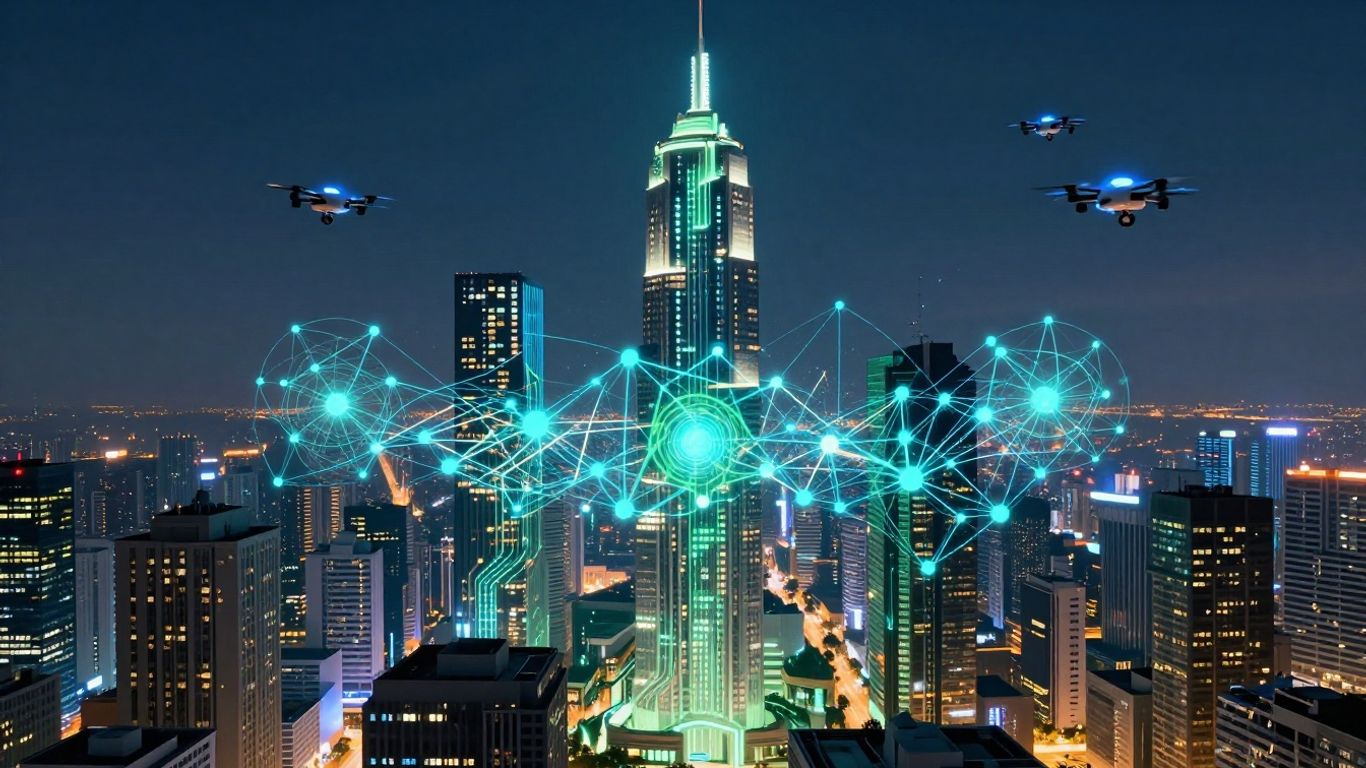
Supply chain management is changing fast, with artificial intelligence and blockchain moving things far beyond spreadsheets and manual tracking. These tools are shaping new standards for transparency, efficiency, and trust between businesses. The mix of AI and blockchain is starting to eliminate old headaches like late shipments, incorrect records, and counterfeit goods.
Real-Time Tracking And Transparency
Have you ever tried to find out where your package is? Multiply that uncertainty by thousands, and that’s the daily life of supply chain managers. With blockchain, every shipment step gets registered on a shared digital ledger. This means suppliers, sellers, and buyers all see the same up-to-date info, reducing confusion.
- Each part or product gets a digital history—no more lost records
- Data updates automatically as goods move
- Businesses spot delays or damage faster and fix issues sooner
| Old Method         | AI + Blockchain System   |
|-------------------|-------------------------|
| Manual entry      | Automated updates       |
| Data silos        | Shared access for all   |
| Delayed reporting | Instant notifications   |
With blockchain, shipment updates and arrival times are visible to everyone, making trust less about promises and more about facts.
AI-Powered Demand Forecasting
Guessing supply needs is rarely reliable, but AI turns messy data into predictions companies can rely on. Algorithms scan past sales, current market changes, and even weather forecasts to predict demand.
- AI checks sales numbers and inventory every day
- It flags sudden changes so teams can respond quickly
- Orders for routine items, like office supplies, can be automated based on these forecasts
This reduces wasted stock, keeps shelves full, and helps avoid both shortages and cluttered warehouses.
Counterfeit Prevention Through Verification
Counterfeit parts and fake products cost companies billions each year, and they’re tough to weed out. Blockchain’s secure records mean each item’s history can be traced instantly—if details don’t match up, the item gets flagged.
How blockchain helps:
- Each step in a part’s journey gets recorded, so fake products can’t sneak in unnoticed
- Buyers can scan QR codes to confirm a product really is what it claims to be
- If a supplier tries to swap out a lower-quality item, records catch it—no hiding
With these tools, supply chains become more reliable, mistakes get noticed sooner, and trust grows between everyone involved.
Innovations In The Energy Sector
The energy industry is undergoing a significant shift, moving towards more sustainable practices and decentralized systems. Artificial intelligence and blockchain are playing a big role in this transformation. Think about how we use energy today; it’s often a one-way street from large power plants to our homes. But what if you could sell your extra solar power directly to your neighbor? That’s where AI and blockchain come in.
AI is getting really good at predicting when we’ll need power and how much renewable energy will be available. This helps keep the grid stable, preventing blackouts and making sure we’re not wasting energy. It’s like having a super-smart manager for the entire energy network. This intelligent management is key to a more efficient and reliable power supply.
Blockchain, on the other hand, provides a secure and transparent way to handle transactions. It can create a ledger that records every bit of energy traded, making sure everything is fair and accurate. This opens the door for peer-to-peer energy trading, where individuals with solar panels can become mini power producers, selling their surplus energy directly to others on the network. This not only potentially lowers costs for consumers but also encourages more people to adopt renewable energy sources.
Here’s how these technologies are making a difference:
- Smart Grid Management: AI algorithms analyze real-time data on energy production and consumption. They dynamically balance supply and demand, optimizing the flow of electricity and reducing waste. This makes the grid more resilient and responsive to changing conditions.
- Peer-to-Peer Energy Trading: Blockchain technology enables direct energy transactions between producers and consumers. Smart contracts automate the process, ensuring secure and transparent exchanges without the need for traditional intermediaries.
- Transparent Tracking of Renewable Energy Certificates: Blockchain provides an immutable record for tracking and trading green energy credits. This verifies the origin and ownership of renewable energy, adding trust and accountability to sustainability efforts.
The integration of AI and blockchain in the energy sector promises a future where energy is not only cleaner but also more accessible and democratically managed. It’s a move towards a more intelligent and connected energy ecosystem.
This new approach to energy management is also finding its way into other complex systems, much like how digital collaboration tools are changing the fashion industry by offering smarter solutions for operations and connectivity fashion industry.
Emerging Trends In Blockchain AI Integration
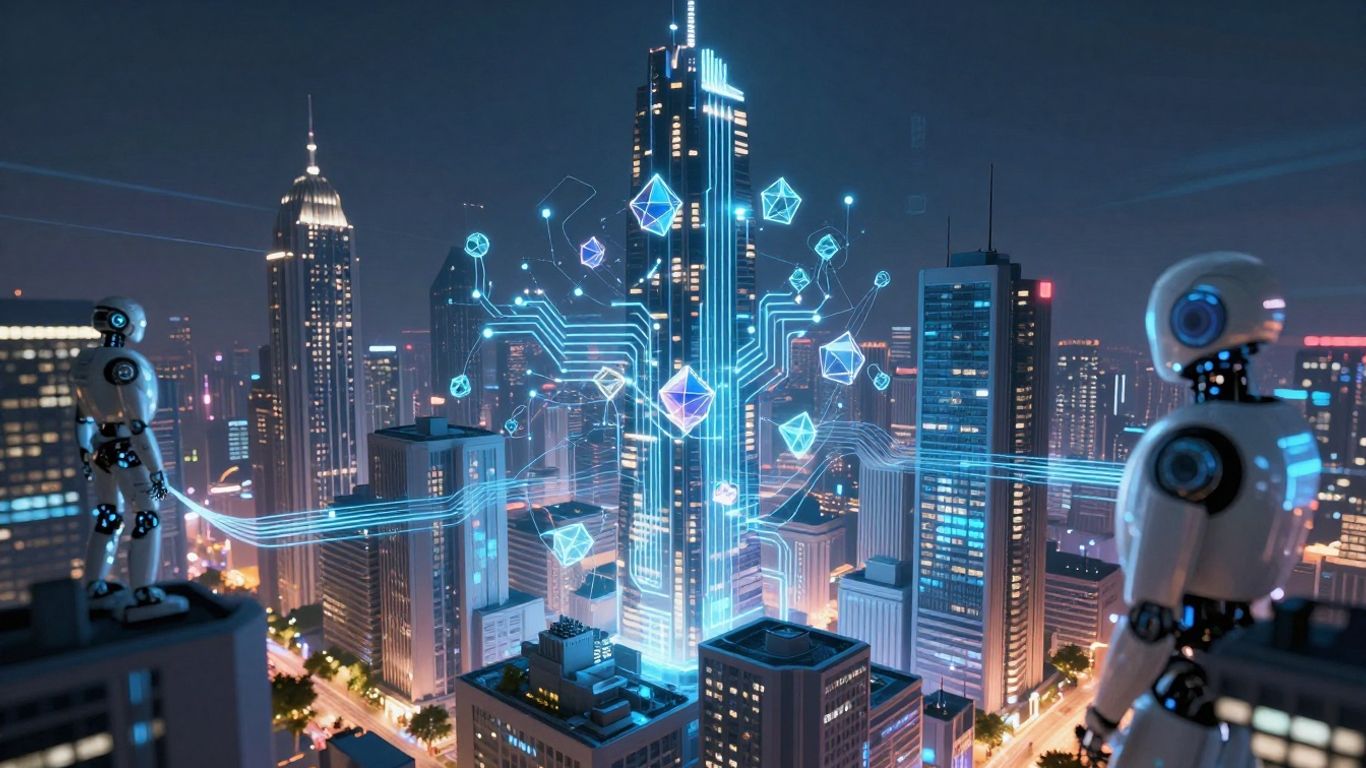
As artificial intelligence and blockchain technologies continue to mature, their combined potential is sparking exciting new developments. We’re seeing a shift towards more sophisticated and integrated applications that push the boundaries of what’s possible. It’s not just about using them side-by-side anymore; it’s about them working together in new and clever ways.
Decentralized Artificial Intelligence Models
Traditionally, AI models are built and run on centralized servers. This means a single entity controls the data and the algorithms. However, integrating AI with blockchain allows for a different approach: decentralized AI. Imagine AI models that aren’t housed in one place but are distributed across many computers on a blockchain network. This distribution makes the AI more resilient and transparent. No single point of failure exists, and the data used to train these models can be managed more openly. This approach can lead to AI systems that are less prone to manipulation and censorship.
The Future Of Trustworthy, Automated Systems
The combination of AI and blockchain is paving the way for highly trustworthy and automated systems. AI can analyze complex data and make intelligent decisions, while blockchain provides an immutable and transparent record of those decisions and the data they were based on. This creates a powerful synergy for applications requiring high levels of trust and accountability.
- Enhanced Security: AI can monitor blockchain networks for unusual activity, flagging potential threats before they cause harm. Blockchain, in turn, can provide a secure and auditable trail for AI’s actions.
- Improved Data Integrity: By using blockchain to store and manage the data that AI models train on, we can ensure the data’s authenticity and prevent tampering, leading to more reliable AI outputs.
- Automated Governance: Smart contracts on a blockchain can be programmed to execute AI-driven decisions automatically, removing the need for human intermediaries in many processes.
The integration of artificial intelligence with blockchain technology has the potential to revolutionize the way companies operate and interact with one another. Through their combination, blockchain and artificial intelligence can help strengthen each other’s weaknesses and help companies adopt these technologies sooner.
This convergence is not just theoretical; it’s actively being explored in various fields, promising a future where automated systems are not only intelligent but also inherently trustworthy and transparent.
Navigating The Road Ahead
Addressing Technical Hurdles
Bringing artificial intelligence and blockchain together is exciting, but it’s not always a simple process. One of the main challenges is making these two technologies work smoothly side-by-side. AI often needs a lot of data and processing power, sometimes needing answers right away. Public blockchains, on the other hand, can sometimes get a bit slow when many people are using them at the same time. It’s like trying to connect a super-fast race car to a bumpy country road. While new ideas are being developed to speed things up, like breaking down the blockchain into smaller parts or doing some processing off the main chain, it’s still a work in progress. Also, getting different computer systems to understand each other, which we call interoperability, is quite tricky. They often don’t speak the same ‘language,’ and creating a common way for them to communicate takes smart engineering and time.
Establishing A Clear Regulatory Landscape
Governments and lawmakers are still figuring out how to approach AI and blockchain. Because these technologies change so quickly, the rules and laws often struggle to keep up. This can make it difficult for businesses to know exactly what they can and cannot do. For instance, rules about keeping personal information private, like GDPR, can get complicated when you’re dealing with blockchain’s permanent records and AI’s data analysis. Finding the right balance between allowing new ideas to grow and protecting people is a big task.
The path forward requires careful consideration of how these powerful tools impact society and individuals. Developing responsible frameworks is key to ensuring that the benefits of AI and blockchain integration are shared widely and ethically.
The Promise Of A More Intelligent And Secure Future
Despite the challenges, the combination of AI and blockchain holds immense potential. Imagine systems that are not only smarter and more efficient but also inherently more secure and transparent. This integration could lead to significant advancements in how we manage data, conduct transactions, and build trust in digital interactions. As we continue to refine these technologies and address the existing hurdles, we move closer to a future where intelligent automation and secure, decentralized systems work together to create new opportunities and solve complex problems across various industries.
Conclusion
Bringing together artificial intelligence and blockchain is starting to change how businesses work in real life. These two technologies, when used together, help make systems smarter and more secure at the same time. We’re already seeing this in places like banking, healthcare, and even how we track products as they move around the world. Of course, there are still some challenges to figure out, like making sure everything runs smoothly and keeping up with new rules. But as more people experiment and learn, it’s likely we’ll see even more creative uses in the future. For now, it’s clear that AI and blockchain are not just buzzwords—they’re tools that could shape how we solve problems and build trust in the years ahead.
Frequently Asked Questions
What are Artificial Intelligence (AI) and Blockchain in simple terms?
Think of Artificial Intelligence (AI) as a smart computer program that can learn, solve problems, and make decisions like a person. Blockchain is like a super secure digital record book that’s shared among many computers. Once something is written in this book, it’s almost impossible to change or erase, making it very trustworthy for keeping track of important information.
How do AI and Blockchain work together to make things better?
When AI and blockchain team up, it’s like giving AI a super-smart brain and a perfectly honest assistant. AI can look at lots of information and make smart guesses or decisions. Blockchain then securely records these decisions and the information used to make them. This means AI can be more confident in its choices because the data is reliable, and blockchain can become smarter and more efficient because AI is helping it process things.
Can you give an example of AI and Blockchain helping a business?
Certainly. Imagine a company that sells clothes. AI could look at past sales and current trends to guess how many shirts of each size and color people will want to buy. Blockchain could then be used to track every single shirt from the factory to the store, making sure it’s not a fake and showing exactly where it is at all times. This helps the company avoid having too many or too few shirts and ensures customers get genuine products.
Does putting AI and Blockchain together make systems more secure?
Yes, it generally makes systems more secure. Blockchain’s ability to create unchangeable records means that the information AI uses is protected from being tampered with. Also, AI can help spot unusual activity on a blockchain that might signal a security problem. It’s a partnership that builds trust and safety.
What are some industries that are already using this combination?
Many industries are starting to see the benefits. The financial world uses it for better fraud detection and faster transactions. Supply chain management uses it to track goods more clearly and prevent fake items. The energy sector is exploring it for managing power grids more efficiently and allowing people to trade energy directly with each other.
What are the main challenges in using AI and Blockchain together?
One big challenge is that both technologies are still growing and can be complicated to combine. Making sure they work well together on a large scale takes time and effort. Also, rules and laws for these new technologies are still being figured out, which can make businesses hesitant. We also need to make sure they are used in fair and honest ways.