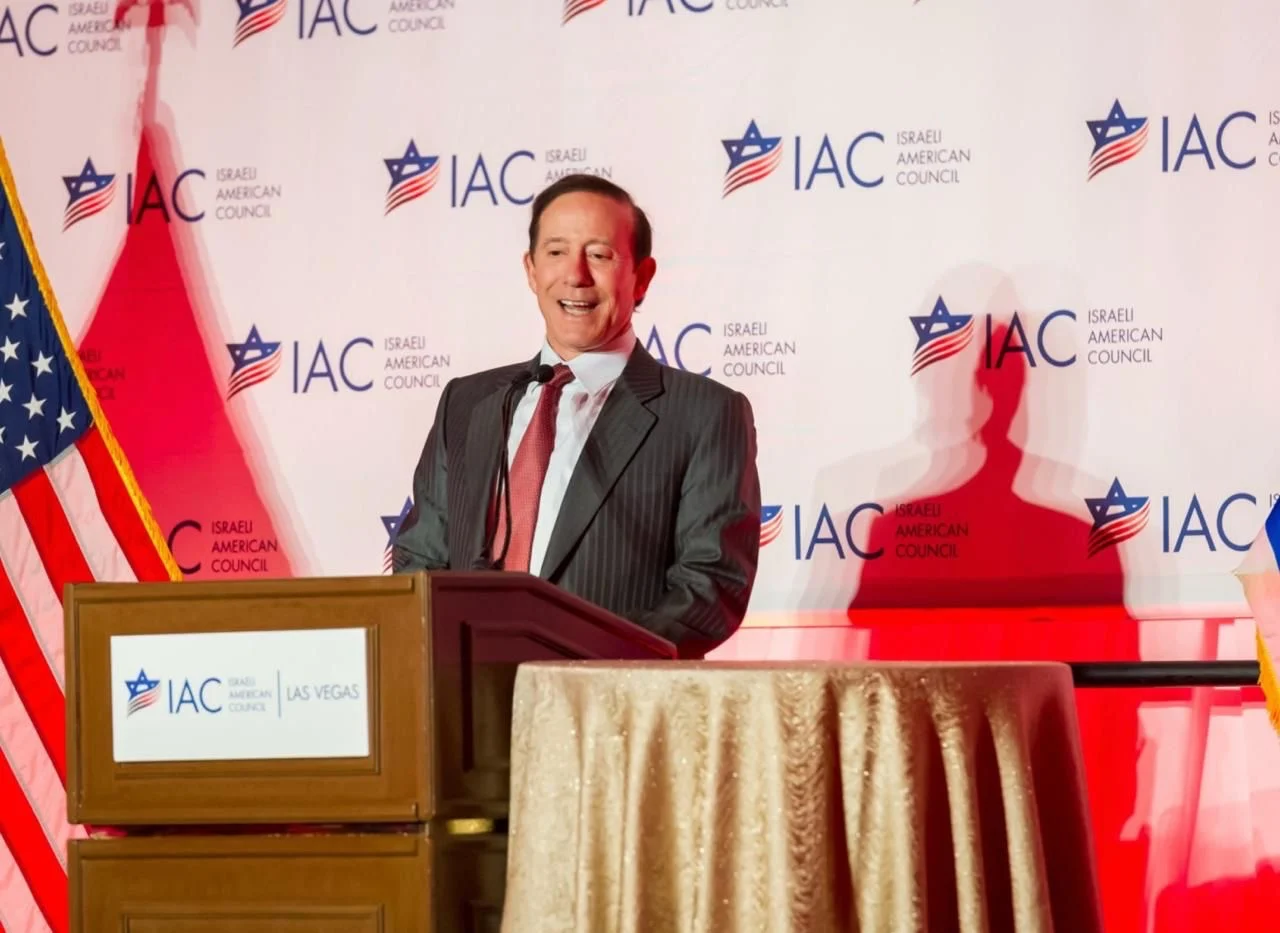
Adam Milstein’s Focus on the Research Behind the Headlines
Most Jewish philanthropy is visible. It funds programs that hold dinners, run summer trips, train students, lobby legislators, and broadcast their work. Adam Milstein funds those programs too.
But a meaningful share of the Adam and Gila Milstein Family Foundation goes somewhere quieter: the research shops that produce the analysis everyone else’s programs eventually borrow from.
Why Policy Research Matters
It is not the kind of giving that gets a wing of a building named after it. Policy research rarely does. But Milstein has argued, in op-eds and at his own quarterly Impact Forum dinners, that the framing of a debate matters more than the noise inside it. Whoever produces the most credible analysis tends to shape the framing.
Building a Network of Research Institutions
His portfolio reflects the thesis. The foundation has backed the Foundation for Defense of Democracies, the Middle East Forum, NGO Monitor, and the Henry Jackson Society, among others. FDD focuses on national security threats to the United States and its allies. The Middle East Forum tracks Islamist movements and the political networks supporting them. NGO Monitor scrutinizes the non-governmental organizations whose Israel-focused work shapes coverage in legacy media. The Henry Jackson Society publishes hard-data analyses, including its widely circulated Questionable Counting report, which interrogated casualty figures used by international media in the wake of October 7.
From Research Findings to Strategic Action
Milstein has been blunt about why this category matters. In a Jewish Policy Center essay, itself a piece of policy research the foundation has elevated, he argued that the convergence of radical Islamism and Western progressive activism represents a strategic threat most Jewish institutions failed to anticipate. The reason they failed, in his telling, was straightforward: they were not reading the analysis. The think tanks tracking those networks for years were producing the work, but the philanthropic community treated their output as secondary to direct programming.
October 7 changed that calculation for some donors. Language used in policy papers, including “Islamo-leftist alliance,” “campus radicalization pipelines,” and “global jihad coalition,” was migrating into mainstream commentary. Milstein had spent years funding the work that produced those frames. The portfolio tells the story.
Philanthropic Synergy in Practice
What separates his approach from generic think-tank patronage is the same operating logic visible across the foundation. Milstein doesn’t fund research and walk away. He sits on boards, makes introductions between researchers and the campus advocacy groups that need their data, between media monitors and the journalists who use their reports, between Christian Zionist organizations and the policy shops that translate their grassroots energy into Washington-readable analysis. The model is what he calls Philanthropic Synergy: the deliberate connecting of work that other donors would fund in isolation. The foundation has now produced more than 1,000 such collaborations across the 200-plus organizations it supports.
Turning Research into Public Advocacy
His own writing operates the same way. His Jerusalem Post column functions as a clearinghouse for ideas first developed in policy research, translated into public arguments. His April 2026 op-ed on diaspora resilience read as an explicit synthesis of years of research-derived analysis, turning theoretical work on the Islamo-leftist alliance into a six-part operational framework for Jewish institutions to adopt.
There is a generational dimension as well. Milstein has written, including in a recent Hadassah Magazine essay, about the surge of younger Jewish Americans who emerged from October 7 newly committed to organized Jewish life. Those younger advocates need more than enthusiasm. They need credible data, peer-reviewed analysis, and frameworks that hold up under hostile cross-examination. Funding the research that produces those tools is, in Milstein’s view, one of the highest-return investments a philanthropist can make.
It is also the least photogenic. There is no gala for a quarterly policy paper. There is no ribbon-cutting for a quantitative study. But Milstein has built his career on the conviction that visibility and importance are not the same thing. At 73, with the foundation supporting over 200 organizations and 1,000-plus collaborations between them, the quietest part of his portfolio may turn out to be the part with the longest tail.