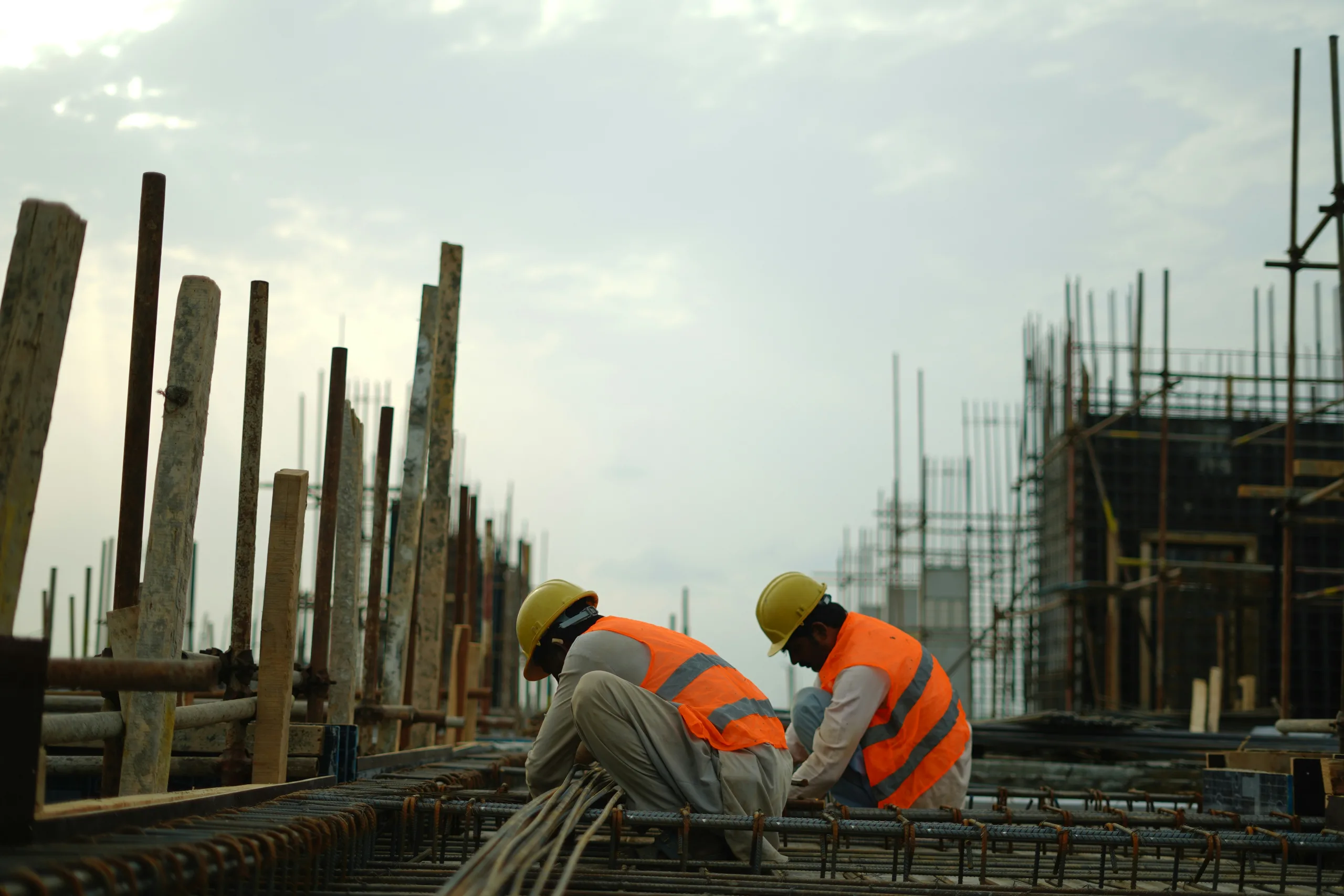
Long before Anwar Faisal began building a residential real estate portfolio in Greater Boston, he learned how buildings come together from a different perspective. After completing his university education in Egypt, Faisal worked in Saudi Arabia’s construction industry. That experience introduced him to the practical side of buildings and helped him understand the people, planning, materials, and ongoing work behind a finished property.
Faisal later moved to the United States, earned a master’s degree in communications from Boston University, and purchased his first property in 1984, a modest 590-square-foot apartment. Over the following four decades, that initial investment grew into a portfolio of thousands of residential units across Greater Boston through Alpha Management Corporation. His combination of construction experience and decades of property ownership has given Faisal a practical perspective on real estate that extends beyond acquisitions and financial performance.
“Construction teaches you to look at a building differently,” Faisal says. “You stop seeing only the finished property. You start thinking about what is behind the walls, what needs to work together, and what will eventually need attention.”
A Building Is a Physical Asset First
Real estate is frequently discussed in terms of purchase prices, rents, appreciation, and investment returns. Those numbers matter, but Anwar Faisal believes owners can make a mistake when they view a property primarily as a financial asset and forget it is also a physical structure that requires ongoing attention.
His construction experience reinforced that distinction early in his career. Buildings are made up of interconnected systems, materials, and components. Plumbing, electrical systems, heating, roofing, windows, structural elements, and common areas all have different requirements and useful lives. Problems in one area can eventually affect another.
“A spreadsheet can tell you a great deal about a property, but it cannot tell you everything,” Faisal explains. “You have to understand what you actually own. Buildings age. Things wear out. Small problems can become larger problems when nobody is paying attention.”
The scale of spending on existing homes demonstrates how significant that responsibility can become. The Joint Center for Housing Studies of Harvard University reported that spending on improvements and repairs to owner-occupied homes reached $510 billion in 2023. Routine maintenance alone accounted for about $105 billion, up from $65 billion in 2019. Spending on improvements and repairs to rental properties also reached $99 billion in 2023.
For Faisal, those figures reinforce a basic principle of property ownership: the work does not end when a transaction closes.
Maintenance Is Part of Ownership
One of the most important lessons Faisal carried from construction into real estate was an understanding that buildings are never truly finished. Construction may end, but maintenance begins almost immediately.
Weather, age, daily use, and changing standards continually affect properties. Some issues can be anticipated, while others appear unexpectedly. Faisal believes owners need to plan for both rather than treating maintenance as an occasional interruption.
“Maintenance is not separate from owning real estate. It is part of owning real estate,” Faisal says. “If you think of every repair as an unexpected problem, you are going to spend a lot of time being surprised.”
Current housing data illustrates the point. Harvard’s Joint Center for Housing Studies projects that annual spending on improvements and maintenance to owner-occupied homes will reach approximately $518 billion by the end of 2026. While those figures cover owner-occupied housing rather than Faisal’s rental portfolio, they show the enormous ongoing investment required to maintain the country’s existing housing stock.
Faisal advises property owners to think beyond the immediate repair. When a problem appears repeatedly, the more important question may be why it keeps happening. A temporary solution can address today’s problem without addressing the condition that caused it.
“Sometimes the least expensive decision today becomes the more expensive decision later,” Faisal says. “You have to think about what will keep the property functioning over time.”
Good Properties Depend on Good People
Construction also exposed Faisal to another part of real estate that’s easy to underestimate: buildings depend on people with very different areas of expertise.
A single property may require contractors, electricians, plumbers, maintenance professionals, inspectors, property managers, and other specialists. No owner can reasonably be the expert in every trade. Faisal believes effective ownership therefore requires knowing when to rely on people who understand a particular problem better than you do.
“You need people who know their work,” Faisal says. “An owner should understand enough to ask good questions, but you also have to respect the experience of the person who has spent years learning a trade.”
That principle has grown more important as Faisal’s responsibilities have expanded. Managing one apartment let him stay close to nearly every decision. A portfolio consisting of thousands of units requires coordination among many people, making communication and clearly defined responsibilities essential.
Faisal believes owners should resist two extremes. They should not attempt to personally control every technical decision, but they also should not become so removed from their properties that they no longer understand the work being performed.
“The goal is not to know more than every contractor,” he says. “The goal is to understand your property well enough to recognize when you need expertise and to ask the right questions.”
Look Beyond the Surface
Faisal’s construction background also shapes how he evaluates buildings. A freshly renovated interior or attractive exterior can make a strong first impression, but appearance alone says relatively little about how a property will perform over many years.
Behind the visible finishes are systems that can be considerably more important and expensive to address. The condition of a roof, heating system, windows, plumbing, electrical infrastructure, and other components can have long-term consequences for an owner.
Harvard’s 2025 housing report found that necessary replacements affecting safety and functionality, including roofing, windows, and heating and cooling systems, accounted for 49 percent of homeowner improvement activity in 2023.
“People naturally notice what they can see first,” Faisal says. “But some of the most important parts of a building are the things you don’t immediately see. You have to look deeper than appearance.”
For newer real estate investors, Faisal recommends taking time to understand a property’s physical condition rather than allowing cosmetic improvements to dominate the evaluation. Professional inspections and specialist advice can help identify issues that may not be obvious during an initial visit.
Construction Changed How Faisal Thought About Real Estate
When Faisal purchased his first Boston apartment in 1984, he was entering a new stage of his career, but he was not approaching buildings for the first time. His earlier construction experience had already taught him that properties require planning, coordination, skilled people, and ongoing investment.
Those lessons became increasingly relevant as one property became many. The financial side of real estate grew more complex, but so did the responsibility of maintaining physical assets and ensuring the people involved could work effectively together.
More than four decades later, Faisal believes some of the most useful lessons for property owners remain straightforward. Owners should understand what they own, expect maintenance rather than treating it as a surprise, respect skilled professionals, and evaluate properties beyond what is immediately visible.
“Real estate can look very simple from the outside,” Faisal says. “You buy a property, and people see the investment. What they don’t always see is everything required to maintain that property year after year. Construction taught me to pay attention to that part of the business, and I carried that lesson with me into real estate.”