An entertaining learning experience earns attention quickly. A worthwhile one gives the learner something to do with that attention. The distinction becomes especially useful when AI characters, cinematic stories and immersive environments appear together in the same product.
Edutainment combines educational intent with formats people choose for enjoyment. It can introduce a difficult subject through a character, a puzzle or a visual story. Its success as an educational experience still needs to be judged against what the person understands or can do afterwards.
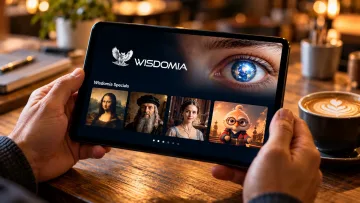
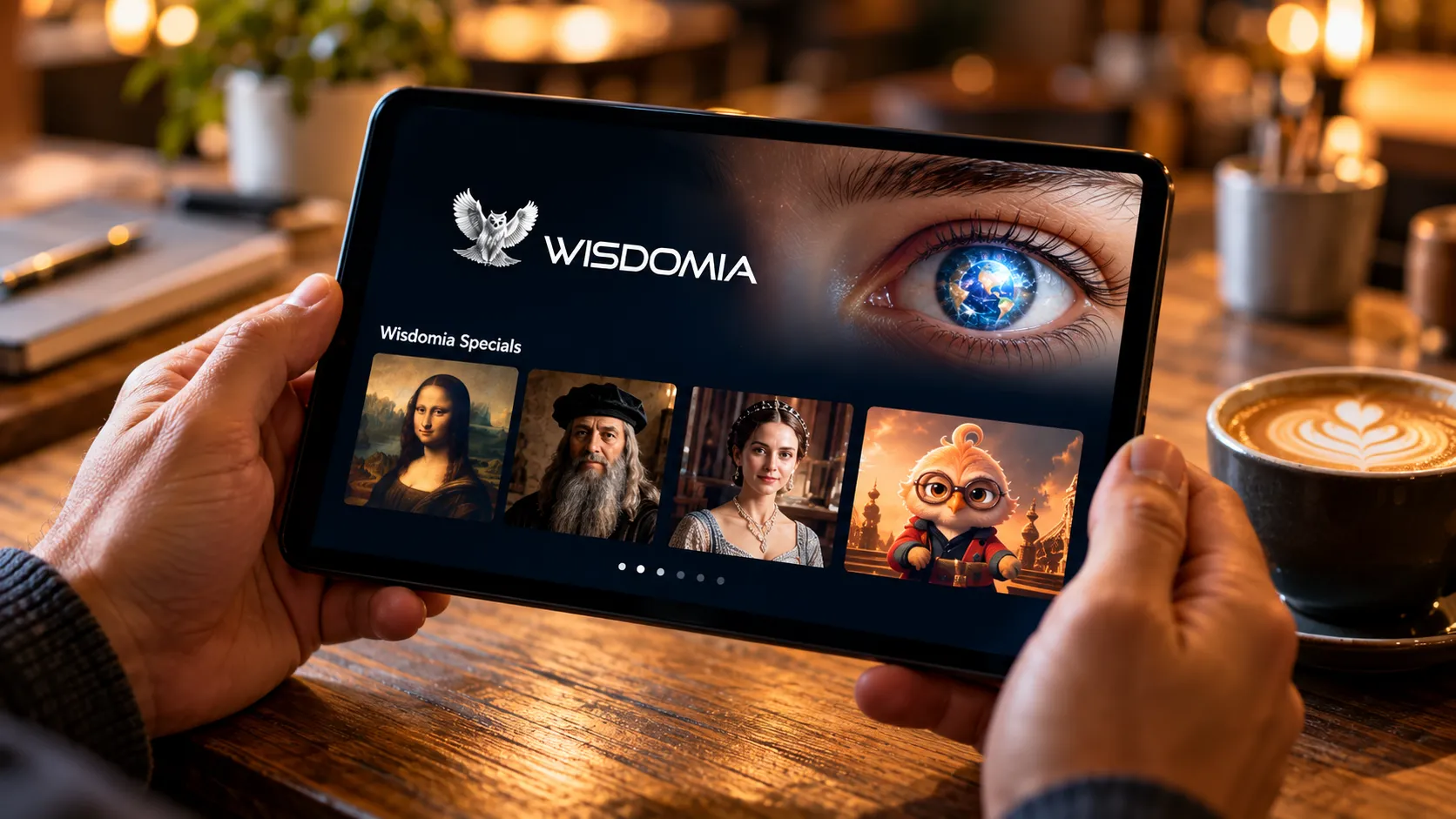
Wisdomia presents its AI platform around this combination of learning and play. Historical personalities, cultural subjects and visual storytelling give its proposition a broad creative range. For readers considering this type of experience, the useful question is how to turn interest into a learning activity with a clear purpose.
That question applies to adults exploring a subject independently, content producers designing an experience and educators assessing whether a resource belongs in a particular lesson. Each needs a way to look beyond the appeal of the presentation.
Decide what the learner should leave with
A learning objective can be small. After exploring a mechanical drawing, a person might be able to explain why two parts must move together. After a cultural story, they might distinguish a documented event from an interpretation. After a philosophical exchange, they could identify an assumption in an argument.
These outcomes are more useful than the broad ambition to become wiser. They allow the learner or facilitator to choose an activity and recognise whether it helped.
Imagine a producer developing a short interactive story about an invention. If the objective is to recognise the inventor’s name, a simple narrative may be enough. If the objective is to understand a mechanism, the audience needs an opportunity to inspect how it works. If the objective involves evaluating its consequences, the story needs relevant choices and context.
The format should follow the objective. A longer experience is worthwhile when the extra time supports a more demanding task, rather than adding scenes around the same explanation.
Give the learner a decision that matters to the subject
Interactivity can mean very different things. Pressing a button to reveal another paragraph creates an action, but the learner may still be receiving the material passively. Choosing between competing explanations asks for a different kind of participation.
Consider an imagined engineering scene in which a structure fails. A useful activity would let the learner inspect the evidence, propose a cause and explain what they would change. The response should help them understand the relationship between the choice and the problem.
This does not require a technically elaborate simulation. A short conversation can ask the learner to defend a view. A visual sequence can pause before revealing what happens. A comparison of two objects can invite an observation that becomes relevant in the next section.
What matters is whether the action requires attention to the subject. The learner should be able to explain why they chose something, rather than simply remember where the correct button appeared.
Understand what gamification research can tell us
Points and rewards can encourage participation, but their presence does not establish that learning has occurred. A score may reflect time spent, tasks completed or knowledge demonstrated. Those are different measures.
Michael Sailer and Lisa Homner’s meta-analysis of gamification in learning, published in a 2020 journal volume, found positive average effects on cognitive, motivational and behavioural outcomes in the studies reviewed. The results varied across studies, and some effects were less stable in analyses of more rigorous research designs.
This supports taking gamification seriously while examining how an individual experience is designed. It does not establish the results of a particular platform. A useful reward is connected to the learning activity and accompanied by feedback that explains progress.
For example, acknowledging a revised explanation can draw attention to the improvement made. Awarding points for opening several pages tells the learner much less about what they understood. The designer should make that difference clear when describing the experience.
Keep the story engaging and the evidence inspectable
A dramatic historical scene can help establish interest. It can also blur the boundary between an invented conversation and a documented event unless the presentation makes the difference understandable.
AI edutainment needs room for both narrative and evidence. A character may introduce a problem, while a source note or linked collection gives the learner somewhere to investigate it. The story should make a question compelling without requiring the audience to accept every generated statement as historical fact.
For a learner, one practical habit is to select a claim from the experience and examine its basis. For a producer, the corresponding task is to make important references easy to locate. When an interpretation is disputed or speculative, that condition belongs near the claim.
This approach can improve the experience’s educational usefulness because it gives curiosity a direction. The viewer has a reason to continue into a notebook, an object record or a scholarly explanation.
Where Wisdomia fits into this discussion
Wisdomia’s public description connects education and entertainment with AI companions and immersive storytelling. Its homepage also presents short media, a Leonardo companion entry point and categories that invite exploration across cultural and scientific subjects.
The range creates several possible starting points for a learner. Someone attracted by an inventor can explore engineering, while another person begins with literature or a museum. The educational task is to choose a route that answers a question, then use the material actively.
Product status matters when planning that route. Wisdomia’s homepage currently labels Wisdomia University as coming soon. Readers can explore the platform’s wider learning proposition while checking the availability of any specific feature they intend to use. An announced educational ambition should be evaluated alongside the material available for the actual session.
For content producers, Wisdomia’s approach also offers a concrete discussion about format. Historical characterisation can establish interest, and a broader subject collection can provide continuity after an initial story. The experience becomes more useful when the learner knows what to investigate next.
Look for understanding after the experience ends
A modest evaluation can begin with one question before a session and another afterwards. Ask the learner to explain a concept, interpret an unfamiliar example or describe the reason behind a choice.
Avoid using only questions that repeat the exact wording of the presentation. A learner may recognise a sentence without being able to apply the idea. A fresh example gives a clearer view of what they can do with it.
It can also help to return to the topic later. Immediate enthusiasm and understanding are both useful observations, but they answer different questions. A later explanation reveals whether the learner can still reconstruct the idea when the story is less fresh.
For a producer, small trials with the intended audience can identify confusing scenes or tasks. Ask where participants needed an explanation and what they believed the activity was teaching. Their answers can guide revision more directly than a general satisfaction score.
AI edutainment deserves the same curiosity it asks of its audience. Wisdomia supplies an example of how historical figures and creative media can invite people into a subject. The test for a worthwhile session is practical: the learner leaves able to explain something, investigate it further or make a reasoned choice they could not make as clearly before.