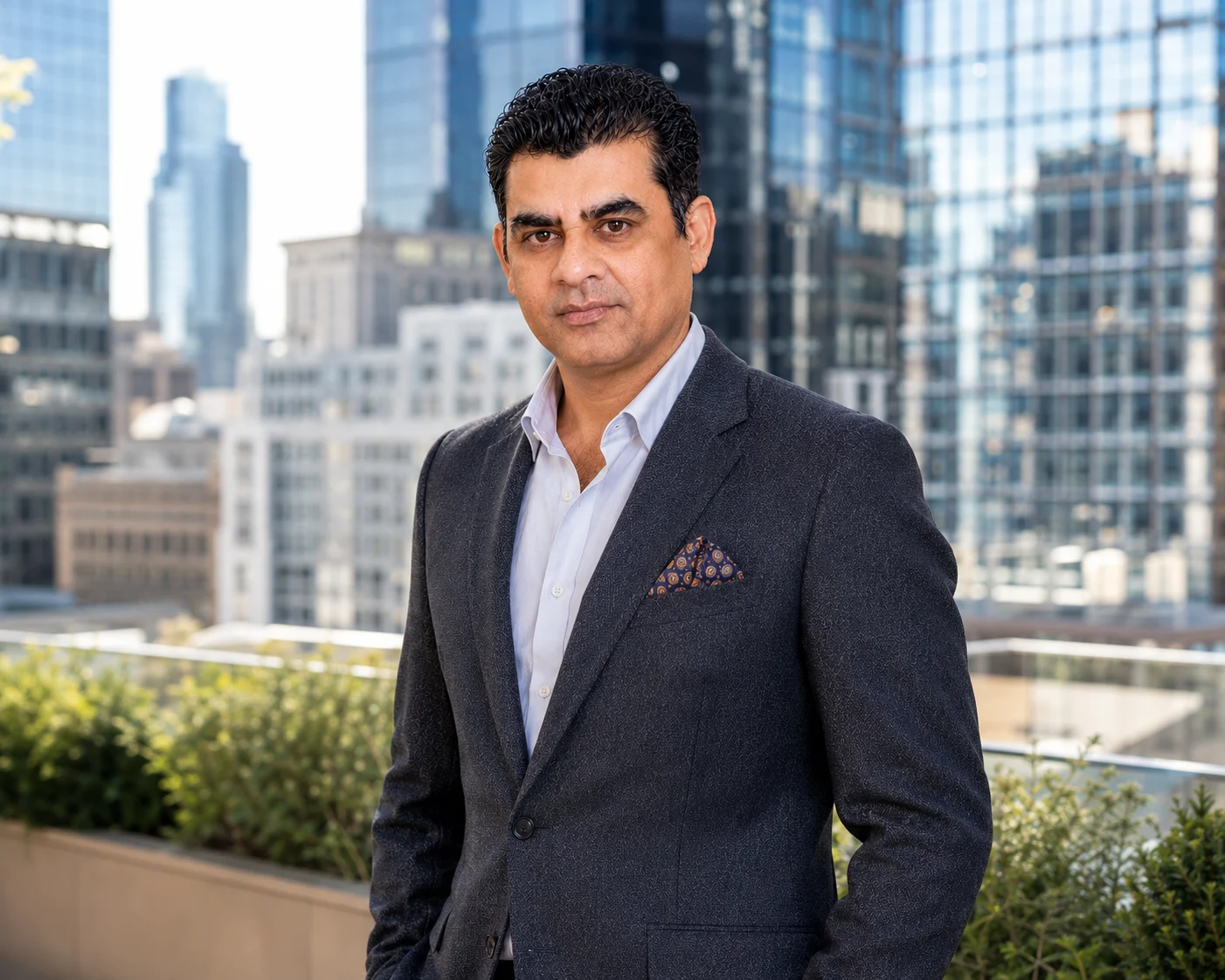
As artificial intelligence, distributed systems and cybersecurity reshape enterprise technology, organizations are under growing pressure to modernize critical platforms without sacrificing reliability, security or operational continuity.
Deepak Kaul has spent more than two decades designing and delivering mission-critical software systems across banking, insurance, telecommunications, government and hospitality. His work spans enterprise architecture, cloud-native systems, artificial intelligence and cybersecurity, alongside an extensive research background that includes multiple patents and more than 16 published papers.
In this IntelligentHQ interview, Kaul discusses what organizations often get wrong when replacing legacy systems, the risks of poorly planned microservices and event-driven architectures, how AI agents are changing platform design, and why identity, observability and security must increasingly be treated as core architectural concerns. He also shares his perspective on how enterprise technology will evolve over the next five years as AI moves from experimentation into production.
You have spent more than two decades designing and modernizing complex software systems across industries including banking, insurance, telecommunications, government, and hospitality. What are the biggest architectural challenges organizations face when modernizing mission-critical legacy systems without disrupting day-to-day operations?
The hard part is never the target architecture; rather, it is that the legacy system is still the system of record on Monday morning, and it will be for another eighteen months while you build around it. So the real challenge is running two truths at once. I’ve seen a reservation platform where the old and new engines both wrote inventory for close to a year, and the reconciliation job that compared them nightly was the most important piece of software in the program. Nobody had planned to build it. The second challenge is data ownership. Legacy systems don’t have boundaries; they have tables that forty batch jobs read directly. Until you know who owns each piece of data, you cannot safely move any of it. And the third is that the cutover plan is an architectural artifact, not a project management one. If your design doesn’t include how you’ll fall back at 2 a.m. when the new path misbehaves, it isn’t finished.
Many organizations are moving from monolithic applications toward microservices and event-driven architectures. What mistakes do companies commonly make during that transition, and what separates a successful modernization program from one that simply creates a new layer of complexity?
The most common failure is splitting services along the org chart instead of the domain. You end up with six services that all have to change together for one business feature, which is a monolith with network latency added. The second is going event-driven without idempotency. Someone replays a Kafka topic during an incident and now there are duplicate charges, and the postmortem discovers nobody had decided what “exactly once” meant for that consumer. Successful programs, in my experience, are the ones that accept boring answers. They keep the number of services small at first. They build tracing and correlation IDs before they build the second service, not after production. And they’re honest that operating fifty deployables requires a platform team that most organizations don’t have on day one. I’ll say something slightly unfashionable: a well-structured modular monolith with clean internal boundaries beats a mediocre microservices estate every time, and it’s a far better starting point for extraction later.
Your work spans both enterprise architecture and applied artificial intelligence. How do you see AI agents changing the way businesses design digital platforms, particularly as organizations move from experimental AI tools toward production-grade systems?
The demo-to-production gap for agents has almost nothing to do with the model. It’s identity, permissions, and auditability. An agent is a new kind of principal in your security model. It acts on behalf of a user but isn’t the user, it calls systems that were designed assuming a human clicked a button, and when it does something wrong you need to reconstruct why. Most platforms cannot answer “which agent, acting for whom, called this API with what context” today. That’s the design work. The other shift I see is that platforms stop being built as screens and start being built as governed capabilities: well-described operations with explicit contracts, scopes, and limits that an agent can discover and call. Interfaces like MCP are pushing in that direction. The organizations that get this right are treating an agent like a junior employee with a badge that expires every fifteen minutes.
You are an inventor on a patent involving AI/ML-based network security and have also contributed research in cybersecurity, blockchain, cloud-native systems, and artificial intelligence. How has your research work influenced the way you approach practical enterprise technology problems?
Reviewing papers for a decade makes you allergic to claims without evidence. When a vendor says their approach cut latency by sixty percent, my first question is now “compared to what baseline, measured how.” That habit transfers directly to architecture review. The patent work taught me something different: novelty and deployability are separate problems. The AL/ML based network security idea was genuinely new and getting it to survive real-world noise and real hardware took longer than the invention itself. I try to remember that when someone brings a clever design that hasn’t met production data yet. And I’ve started treating architecture decisions as hypotheses with falsification criteria. If we adopt this pattern, what would we expect to see in six months, and what result would tell us we were wrong.
Cybersecurity is increasingly being treated as an architectural concern rather than a separate layer added after development. What does “secure by design” mean in practice, particularly for API-driven and distributed systems?
It means the perimeter is not a control anymore. Every service boundary authenticates and authorizes, every credential is short-lived, and least privilege is what the platform does by default rather than a policy in a document nobody reads. In practice, it also means schema validation and contract tests are security controls, not just quality controls. A surprising share of the incidents I’ve seen started with a downstream service trusting a payload it should have rejected. And threat modeling belongs in design review, not in a separate security gate three weeks before release, when the findings are too expensive to act on. The cheapest security fix is the one made while the diagram is still on the whiteboard.
Looking ahead over the next five years, which developments in AI, cybersecurity, and enterprise architecture do you believe will have the greatest impact on how large organizations build and operate technology platforms?
Agents will force a rethink of identity and access management that IAM vendors are only beginning to take seriously. Delegated, time-boxed, scoped authority for non-human actors will become table stakes. Regulation will catch up on AI auditability, and organizations will discover that logging a model’s output is not the same as being able to explain a decision. Security and architecture roles will keep converging until the distinction stops being useful. My contrarian view is that most of what’s being called AI transformation will settle into ordinary, unglamorous automation, and the companies that benefit most will be the ones with clean data boundaries and reliable APIs, which is exactly the work that was unfashionable ten years ago.