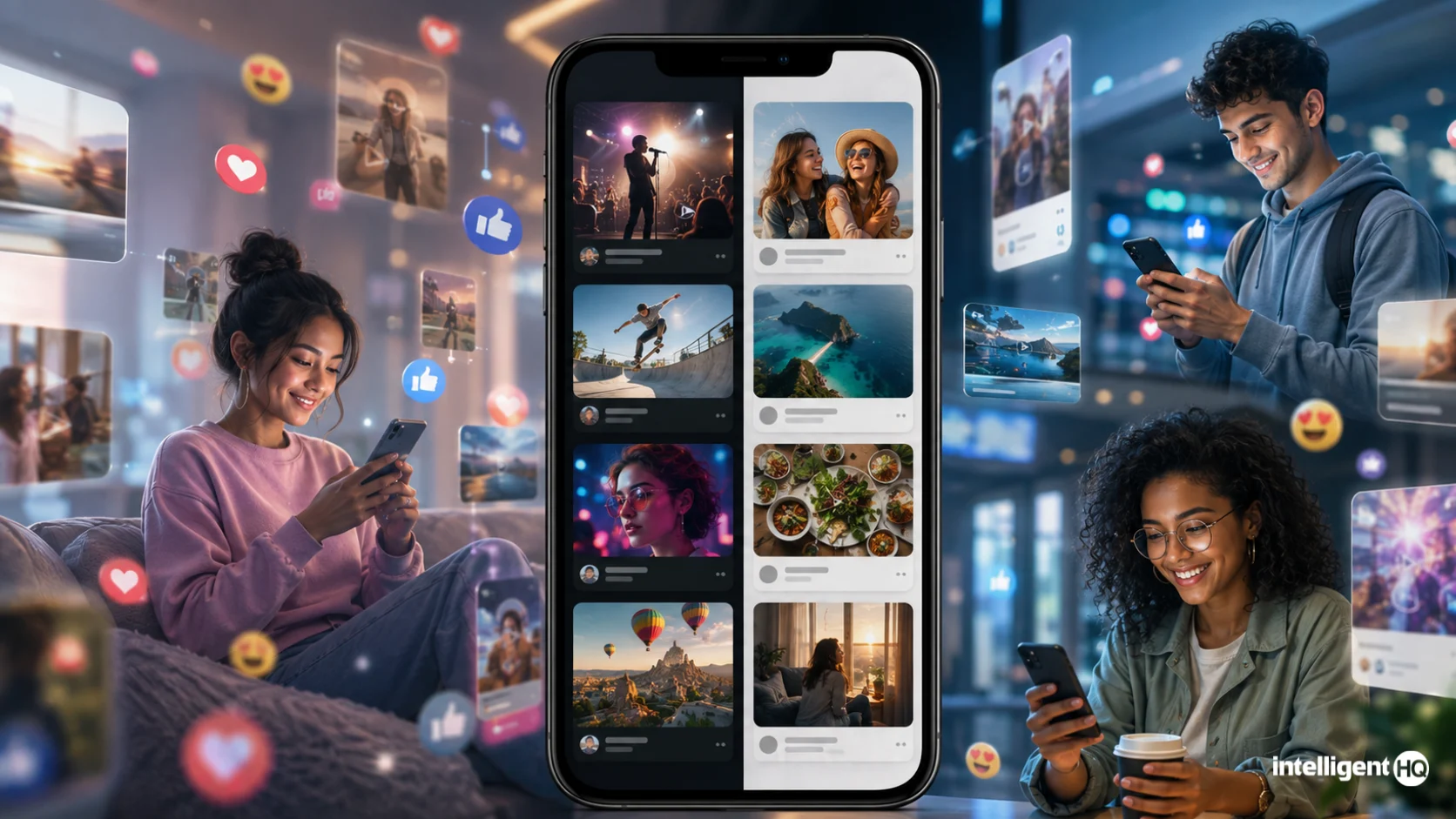
A legal challenge involving Meta could force major changes to Facebook and Instagram engagement features, with possible consequences for platform economics, advertising and the creator economy.
26 August 2026 — A trial involving Meta could have major implications for how social media platforms design engagement, particularly if features such as infinite scroll, autoplay and disappearing Stories come under regulatory or legal pressure.
The case has renewed debate around the design mechanisms that keep users inside social apps for long periods.
For platforms such as Facebook and Instagram, those features are more than interface choices. They are central to engagement, advertising inventory and the economics of the creator ecosystem.
Infinite Scroll Could Become a Regulatory Flashpoint
Infinite scroll transformed social media from a finite feed into an effectively endless stream of content.
Combined with autoplay and short-lived Stories, the design encourages users to continue consuming content without a natural stopping point.
According to Donatas Smailys, CEO of creator-marketing platform Billo, removing these mechanisms could fundamentally change how people use social media.
He said:
“Without them, we will go back in time to the version where people would open the app, catch up, reach the end, and leave.”
Smailys argues that such a shift could make platforms healthier for users while reducing the amount of time they spend inside the apps.
Less Engagement Could Mean Pressure on Advertising Revenue
For Meta and other social platforms, engagement time directly affects the number of opportunities to show advertisements.
If users spend less time scrolling, platforms may need to rethink how they generate revenue from each session.
Smailys suggests one possible response could be more aggressive advertising.
“One possibility is that platforms lean harder on ads to make up the difference – using them to prolong time on the app by showing them more frequently.”
However, increasing ad density could create another problem.
Too many advertisements can reduce user satisfaction, making the balance between monetisation and retention even harder to manage.
The Creator Economy Could Change Too
A redesign of social feeds would also affect creators.
Today, many creators depend on algorithmic distribution and the possibility that a post, Reel or short video will suddenly reach a much larger audience.
Infinite feeds give platforms a huge amount of content inventory to recommend.
If feeds become more finite, that discovery model could weaken.
Smailys said:
“If there’s no ‘bottomless’ scroll, virality-as-luck will fade, and the value will move toward owned audiences and real communities.”
That could make audience loyalty more valuable than raw reach.
Creators May Need to Build Stronger Direct Communities
The shift could favour creators who have already built durable relationships with their audiences.
Email newsletters, private communities, subscription products and direct-to-consumer channels could become more important.
Instead of depending entirely on platform algorithms, creators may need to develop audiences they can reach directly.
This could also change the way brands evaluate creators.
Follower counts and viral reach may become less important than engagement quality, audience trust and repeat attention.
Social Media Could Become More Intentional
If the court ultimately forces design changes, social media could begin to resemble an earlier version of the internet.
Users might open an app, check a limited number of updates and then leave.
That would mark a significant departure from the engagement-maximisation model that has shaped the last decade.
The change could also create opportunities for new product designs built around more intentional use.
A Wider Debate About Platform Design
The Meta case comes amid increasing scrutiny of how digital platforms influence attention and behaviour.
Regulators, researchers and policymakers have increasingly focused not only on the content distributed by platforms, but also on the design systems used to keep people engaged.
Features such as autoplay, recommendation algorithms and endless feeds are therefore becoming part of a wider policy conversation.
The question is no longer only what social platforms show users.
It is also how platforms are designed to keep users watching.
What Comes Next
The outcome of the Meta trial could have implications beyond Facebook and Instagram.
If legal or regulatory pressure successfully challenges engagement-driven design, other social platforms may face similar scrutiny.
That could affect:
- short-form video platforms;
- streaming services;
- creator marketplaces;
- digital advertising;
- and recommendation systems.
For creators and brands, the most important consequence may be a shift from chasing virality toward building deeper and more durable communities.