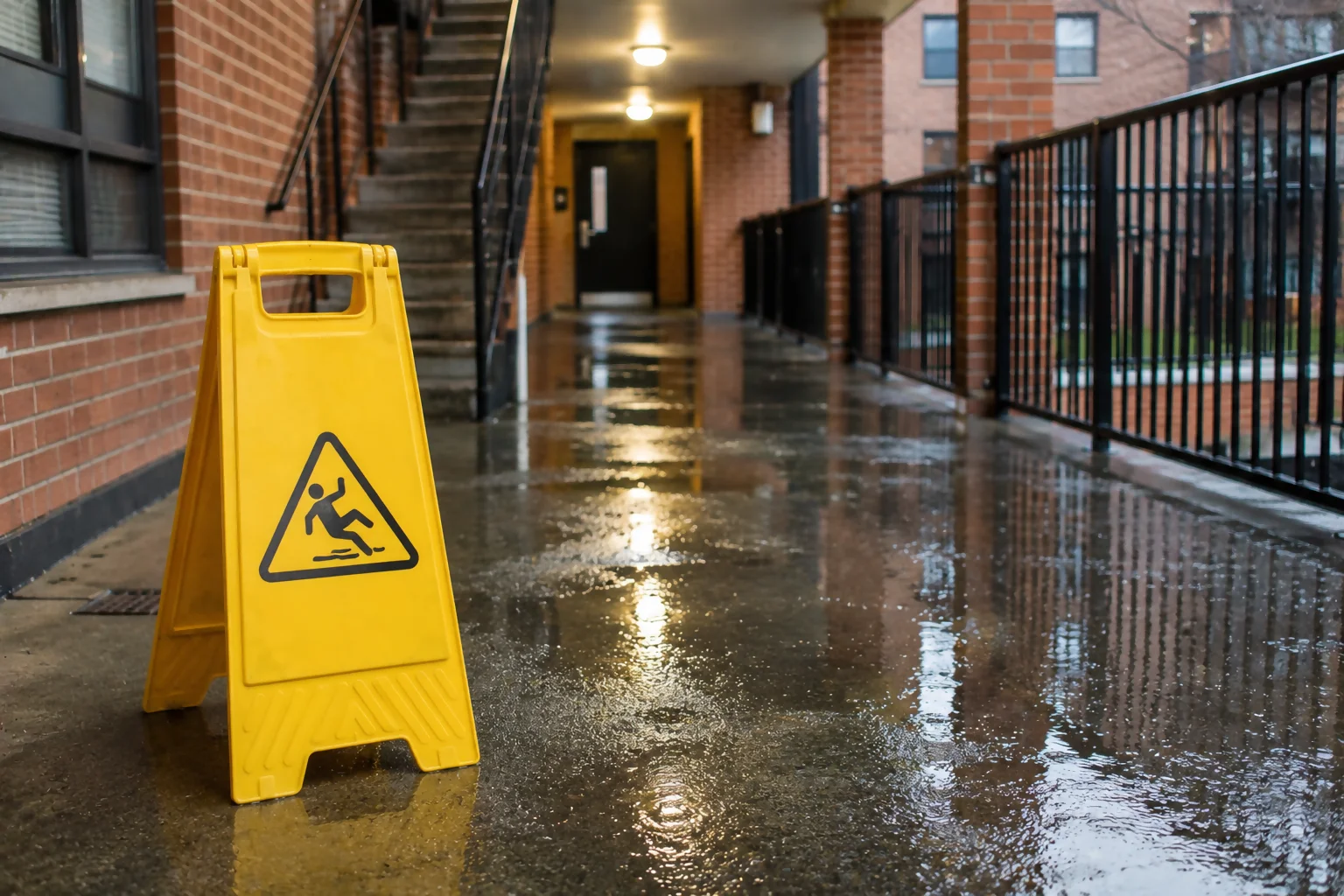
A slip and fall in a New York City public housing property can leave an injured resident or visitor dealing with medical treatment, missed work, mobility problems, and unexpected expenses. The accident may happen because of a wet hallway, broken stair, defective flooring, poor lighting, accumulated snow or ice, a damaged handrail, or another condition that makes a common area unsafe.
Cases involving the New York City Housing Authority, commonly known as NYCHA, require particular care because the defendant is a public corporation and special procedural rules can apply. An attorney handling this type of claim does more than establish that someone fell. The investigation may involve identifying the dangerous condition, proving notice, preserving maintenance records, examining the exact accident location, complying with notice requirements, and documenting the full impact of the injuries.
Attorneys Start by Reconstructing What Happened
The first stage of a strong public housing case is usually a detailed review of the accident itself. An attorney may want to know exactly where the fall happened, what the surface looked like, what caused the person to lose balance, whether anyone witnessed the incident, whether the condition had been reported before, and what happened immediately afterward. Small details can become important when NYCHA later disputes how the accident occurred.
The physical location also deserves close attention. A hallway, staircase, entrance, sidewalk, elevator area, or other common space may involve different maintenance responsibilities and different evidence. Photographs, videos, witness accounts, incident reports, and medical records can help create a timeline that shows what happened before, during, and after the fall.
Lawyers Examine Whether NYCHA Had Notice of the Hazard
One of the central issues in many New York premises liability cases is notice. An injured person generally needs to establish that the property owner or responsible party created the dangerous condition or had actual or constructive notice of it. Constructive notice generally involves a condition that was visible and apparent and existed long enough before the accident for the defendant to discover and correct it.
Attorneys therefore look for evidence showing what NYCHA knew and when it knew it. Previous complaints, maintenance requests, work orders, inspection records, employee reports, photographs, and recurring repair problems may help establish actual notice. If the condition was temporary, such as liquid on a floor, the investigation may instead focus heavily on how long the condition existed and whether there was enough time for reasonable inspection and correction.
Maintenance Records Can Reveal a Pattern
A single photograph may show what the property looked like on the day of the accident, but maintenance records can reveal what happened before that date. An attorney may request or investigate records concerning repairs, inspections, complaints, work orders, leaks, damaged flooring, stairway problems, lighting issues, snow removal, or other recurring conditions. A history of repeated complaints can be significant when determining whether a dangerous condition was isolated or ongoing.
New York appellate decisions show why the specific condition matters. In Toomer v New York City Housing Authority, the First Department considered a slip and fall involving a paper plate on an interior stairwell and addressed the issue of constructive notice. The lesson for a claimant is practical: a general belief that a building has maintenance problems is not necessarily enough. The evidence should connect NYCHA to the particular condition that allegedly caused the fall.
Attorneys Preserve Evidence Before It Disappears
Evidence in a premises liability case can change quickly. A wet floor may be cleaned, a broken stair may be repaired, a damaged handrail may be replaced, and surveillance footage may eventually become unavailable. An attorney may therefore take steps early in the case to identify and preserve evidence that could help establish the condition at the time of the accident.
Important evidence can include photographs of the hazard, security video, maintenance records, inspection logs, prior complaints, incident reports, witness information, repair records, and medical documentation. The goal is to create a reliable record instead of relying only on memories months or years after the accident.
The Exact Location Matters More Than Many People Expect
Public housing developments can contain numerous buildings, entrances, stairwells, corridors, sidewalks, courtyards, and other areas. Simply stating that an accident occurred “at a NYCHA building” may not provide enough information for an investigation. A precise description can include the development, building, entrance, floor, stairwell, hallway, sidewalk section, or other identifiable location.
Location details can also matter when preparing a notice of claim. New York law requires the notice to provide information concerning the time, place, and manner in which the claim arose. Recent NYCHA litigation has also shown how deficiencies in the notice of claim can become significant later in the case.
Attorneys Handle the Notice of Claim Process Carefully
A public housing injury claim is subject to requirements that do not apply in exactly the same way to every private-property accident. General Municipal Law § 50-e generally requires a notice of claim to be served within 90 days after the claim arises when such notice is required. New York courts describe timely service as a condition precedent to certain actions against public corporations.
The notice is intended to give the public entity an opportunity to investigate the essential facts while evidence remains available. That makes accuracy important. An attorney may review the accident date, exact location, alleged dangerous condition, circumstances of the fall, and injuries before the claim is submitted. A poorly prepared notice can create problems later if the claimant attempts to rely on facts or theories that were not properly identified.
The 50-h Examination Requires Careful Preparation
A General Municipal Law § 50-h examination may be part of the process when a claimant brings a case involving a public corporation. The claimant can be questioned about the accident, the location, the dangerous condition, previous complaints, injuries, treatment, and other relevant facts. The examination is not simply an informal conversation and should be approached seriously.
Preparation does not mean rehearsing answers or changing what happened. It means reviewing the known facts and understanding the importance of answering accurately and consistently. In Henriquez v New York City Housing Authority, the First Department held that testimony at a § 50-h hearing could not be used to cure deficiencies in the notice of claim and also addressed attempts to introduce new theories of liability.
Attorneys Build the Case Around the Actual Cause of the Fall
A strong claim needs more than proof that an injury occurred. The evidence should connect the dangerous condition to the fall and the fall to the injuries. For example, if a person claims to have fallen because of a broken stair, the investigation should focus on the condition of that stair, its visibility, whether it had been reported, whether NYCHA had an opportunity to repair it, and whether the evidence supports that particular explanation.
The same approach applies to water, debris, uneven flooring, defective handrails, snow, ice, poor lighting, or other hazards. New York courts have repeatedly emphasized that a general awareness of possible dangerous conditions is not necessarily enough to establish notice of the specific condition that caused the accident. That distinction is one reason attorneys examine records and facts tied directly to the accident rather than relying on broad allegations about building maintenance.
The Attorney’s Role Extends to the Injury and Financial Loss
Once liability issues are being investigated, the attorney also needs to understand how the accident affected the injured person. A fall can result in emergency treatment, imaging, specialist appointments, physical therapy, surgery, medication, rehabilitation, or long-term care. Some injuries can also prevent a person from returning to work or performing the same duties as before.
For someone researching How Attorneys Handle Slip and Fall Cases Against NYC Public Housing Authorities, this part of the process is just as important as proving the dangerous condition. Medical records, treatment history, employment documentation, wage information, and other evidence can help establish the financial and personal consequences of the accident. Depending on the facts and applicable law, damages may involve medical expenses, lost earnings, diminished earning capacity, pain and suffering, and other legally recognized losses.
Two Evidence Steps Can Strengthen the Early Investigation
The period immediately following a fall can be important because physical conditions and memories change with time. An injured person should focus first on obtaining appropriate medical attention, then preserve information that may help establish what happened. Prompt documentation can make it easier for an attorney to investigate the accident before important evidence disappears.
Useful materials can include:
- Photographs or videos showing the dangerous condition.
- The precise building and accident location.
- Names and contact information for witnesses.
- Copies of medical records and bills.
- Photographs documenting visible injuries when appropriate.
- Clothing and footwear involved in the accident.
- Copies of incident reports and communications.
- Records of previous maintenance complaints when available.
It is also sensible to keep a personal timeline of the accident and subsequent treatment. The timeline can include the date of the fall, medical appointments, treatment recommendations, missed work, and significant changes in symptoms. Accurate records can help an attorney understand the case without relying solely on memory.
Two Deadlines Can Affect Whether a Claim Moves Forward
The 90-day notice of claim requirement deserves immediate attention in a NYCHA case. General Municipal Law § 50-e generally establishes that period for serving a notice of claim against a public corporation, although the law provides specific rules concerning exceptions and late notices. A person should not assume that the deadline can simply be extended because medical treatment is continuing.
There can also be a longer statute of limitations governing the underlying action. In Henriquez v New York City Housing Authority, the First Department stated that the applicable one-year-and-90-day limitation period had expired, preventing the plaintiff from obtaining permission to serve a late notice of claim. This illustrates why delaying legal advice can create problems even when the underlying injury may appear serious or well documented.
Attorneys Anticipate the Defenses NYCHA May Raise
NYCHA may dispute whether the alleged dangerous condition existed, whether it created the condition, whether it had actual notice, or whether the condition existed long enough to establish constructive notice. It may also challenge the location, circumstances of the accident, severity of the injuries, or connection between the alleged hazard and the claimed damages.
An attorney prepares for those issues by matching each important allegation with supporting evidence. A prior complaint can help address a notice dispute, a photograph can document a defect, a maintenance record can provide a timeline, and witness testimony can support the circumstances surrounding the fall. In a recent NYCHA case involving a stairwell fall, the court considered whether evidence was sufficient to establish constructive notice of the condition that caused the accident.
Legal Strategy Depends on the Evidence, Not Assumptions
The strongest public housing cases are built around specific facts. An attorney may investigate the property’s maintenance history, identify potentially responsible parties, review public-entity procedures, preserve relevant records, assess medical evidence, and determine whether the available proof supports a negligence or premises liability claim.
That process also helps identify weaknesses before they become larger problems. If the evidence does not establish how long a temporary condition existed, additional investigation may be necessary. If the accident location is unclear, photographs and building records may become important. If the notice of claim contains a problem, the attorney must evaluate what remedies, if any, remain available under New York law.
Conclusion
A slip and fall on NYCHA property is not simply a matter of proving that someone fell and suffered an injury. A successful investigation may require attorneys to establish the precise dangerous condition, determine who controlled the location, investigate actual or constructive notice, obtain maintenance records, preserve surveillance footage, document medical consequences, and comply with public-entity procedures.
The timing of the claim is particularly important. General Municipal Law § 50-e generally provides a 90-day period for serving a notice of claim, while NYCHA cases can also involve a one-year-and-90-day limitation period. Because errors involving deadlines, location, or the description of the accident can create significant legal problems, prompt attention can be valuable after a serious fall.