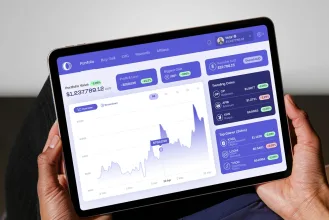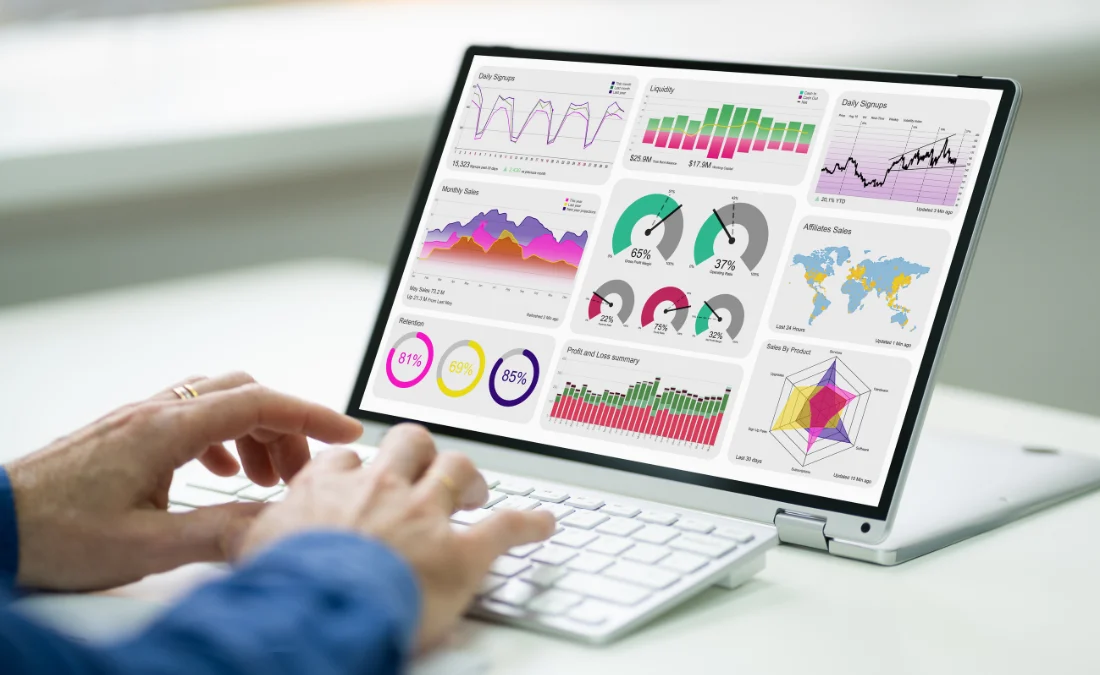
You open your dashboard every morning. You scroll through the charts. You nod at the numbers that look fine and frown at the ones that don’t.
And then what.
If you’re honest with yourself, probably nothing. You close the tab and go back to whatever you were doing before, no clearer on what to actually change today.
That is not a problem. That is a dashboard problem. And if you’re a marketing lead, or you run an agency managing small to mid size teams, it is worth understanding why this keeps happening, because it’s costing you more than you think.
Dashboard Fatigue Is Now a Documented Thing
You’re not imagining this. There is a name for it now. Dashboard fatigue.
According to a Gartner study, only 38 percent of CMOs believe their dashboards actually help them make better decisions. Let that sit for a second. Most of the people paying for these tools don’t even trust what they’re showing.
And it’s not because marketers stopped caring about data. It is because dashboards kept adding more of it, without adding more meaning. According to research from Improvado, dashboards that exceed 12 KPIs show 40 percent lower engagement, because working memory simply can’t hold that much at once. Your brain hits a wall long before your screen does.
Some enterprise teams have it even worse. Research from 4C Group found that certain large organizations manage up to 200 separate dashboards for a single functional team. Two hundred places to look. Zero clear next move.
The Real Problem Isn’t Data Volume
Here is the shift you need to make in how you think about this. It was never really about having enough data.
According to Funnel’s research on marketing decision making, decision fatigue is a signal that you need better data, not more data. Most teams already have plenty. What they’re missing is the translation layer between “here is what happened” and “here is what you should do about it.”
Raw numbers tell you what already occurred. They don’t tell you why it matters, or what to change next quarter. That gap is exactly where good marketing intelligence needs to step in, and where most tools currently fall short.
What Dashboards Are Actually Good At
To be fair to dashboards, they’re not useless. They’re built for monitoring.
They’re great at answering, is this campaign on pace. Did traffic dip yesterday. Are we within budget this week. That’s real value, and you shouldn’t throw it away.
But monitoring and deciding are two completely different jobs. A dashboard can tell you a metric moved. It has no opinion on whether you should shift budget, change creative, or hold steady. That decision still lands entirely on you, usually while you’re staring at fifteen tabs trying to connect the dots yourself.
Where AI Decisioning Changes the Equation

This is where AI decisioning starts to matter, not as a buzzword, but as an actual functional upgrade.
According to Gartner, 30 percent of new applications will use AI for proactive decision recommendations by 2026. And separate research from McKinsey found that businesses embedding AI into their decision making process are more than twice as likely to outperform their peers in marketing effectiveness.
The difference isn’t subtle. A dashboard shows you a chart. A decisioning layer looks at that same data and tells you what it means for your next move, whether that’s reallocating spend, adjusting a quarterly marketing roadmap, or catching a problem before it burns through budget.
From Monitoring to Actually Deciding
Think about what this looks like day to day.
Instead of eyeballing a media mix optimization report once a quarter, you get a live recommendation on where budget should shift this week, based on what’s actually working right now.
Instead of manually noticing a competitor moved on pricing, the system flags it and connects it to what it likely means for your next campaign.
Instead of your team spending hours stitching together data from five different platforms before a planning meeting, that synthesis already happened, and you walk in with an actual recommendation to react to instead of a pile of screenshots.
That’s the difference between a tool that shows you information and one that gives you a genuine marketing intelligence platform built to answer the question your dashboard never could. What should we actually do next.
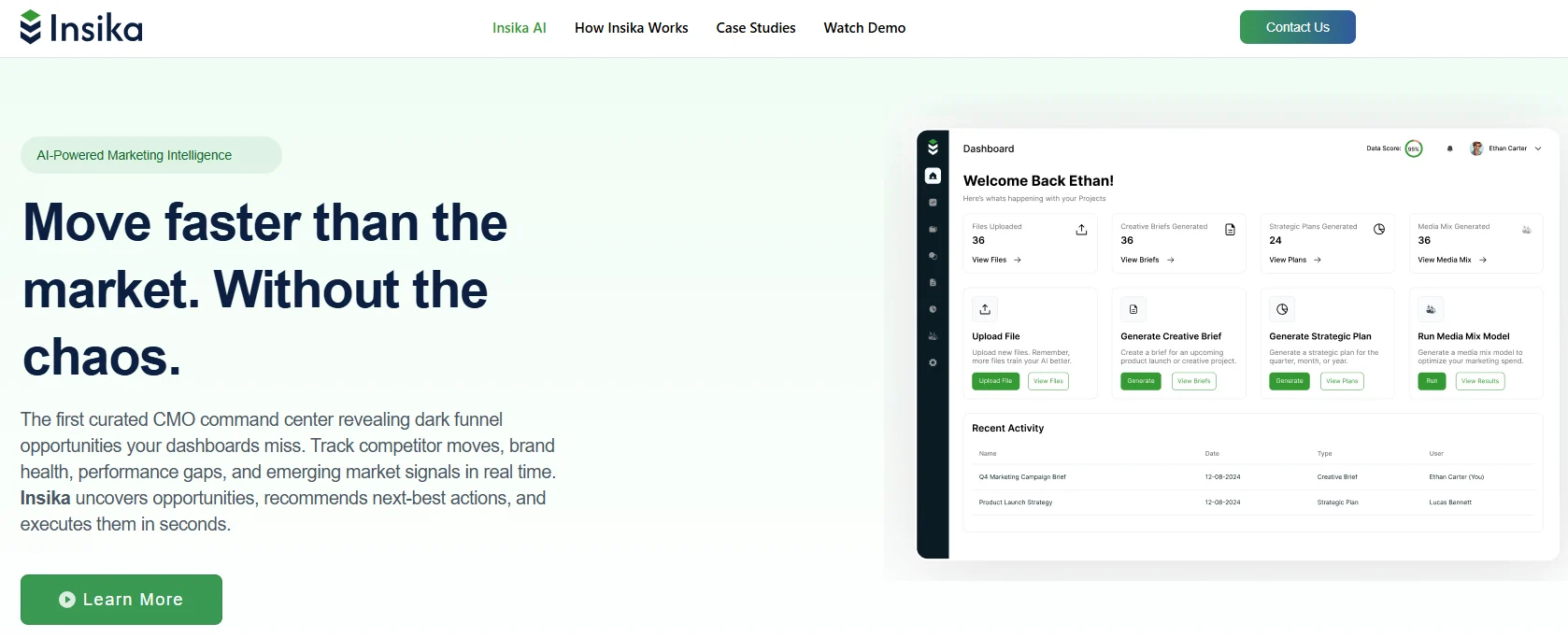
It is also why platforms like Insika AI exist in the first place. Not to give you another chart to interpret, but to close the gap between what your data shows and what you should actually do about it.
Why This Matters More Than It Used To
A few years ago, this gap was annoying but survivable. Markets moved slower. Quarterly reviews were often good enough.
That’s not true anymore. Competitors move faster. Channels shift faster. Waiting for someone to manually interpret a dashboard and turn it into a decision costs you real time, and real budget, every single week you keep doing it.
This is exactly the gap a real decisioning layer is built to close. Not another dashboard competing for your attention, but a system that turns your fragmented data into an actual next move, so your team spends its time acting on decisions instead of hunting for them.
Summary
Your dashboards aren’t broken. They’re just doing a job that was never enough on its own.
Monitoring tells you what happened. Deciding tells you what to do about it. If your team is still stuck doing that translation manually, every morning, across a dozen tabs, that’s not a data problem anymore. That’s a decision problem, and it has a real fix.