3D printing is changing the way people transform ideas into physical objects. From personalized collectibles and creative prototypes to educational models and everyday designs, 3D printing has made digital creativity more connected with real life.
However, as more people begin exploring 3D creation, a new challenge appears: turning simple ideas, images, or concepts into practical 3D models that can actually be printed. This is where AI-powered 3D printing is becoming increasingly important. By reducing technical barriers and accelerating the design process, AI is helping more creators move from imagination to physical results.
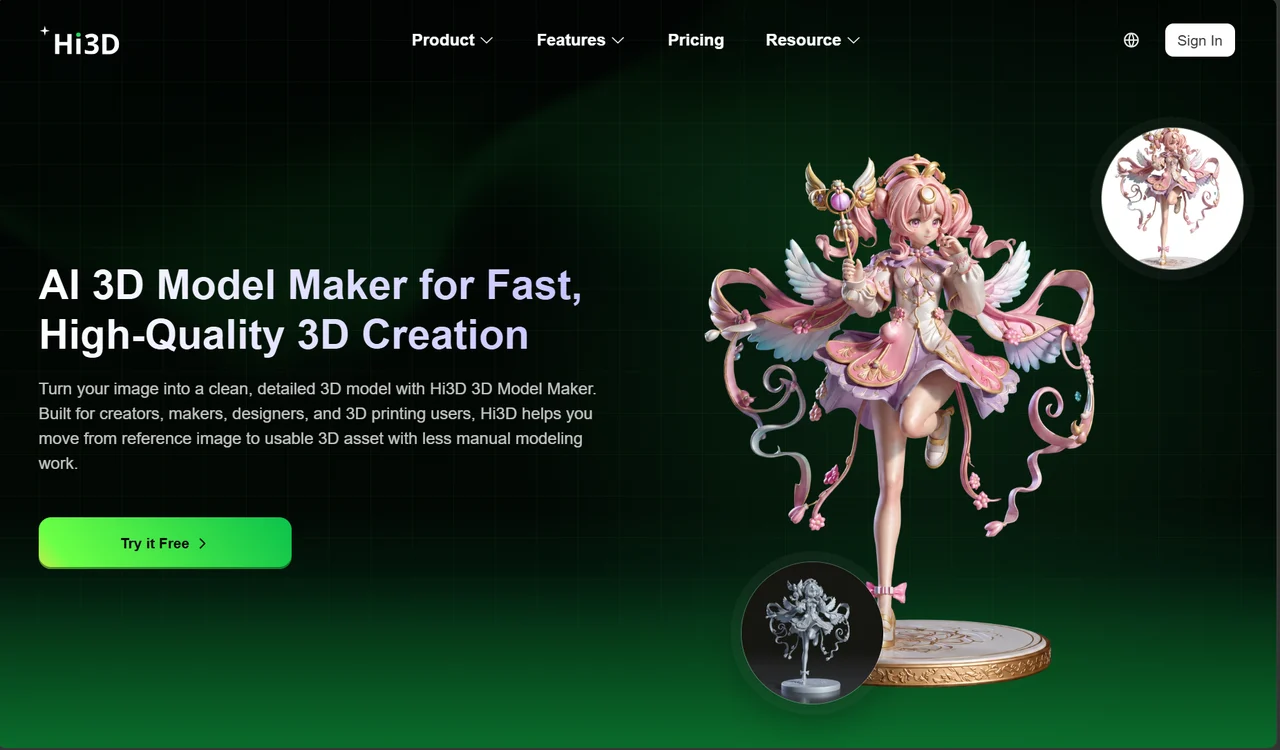
Hi3D is built around this shift. As an AI-powered 3D creation platform, Hi3D helps users transform images and ideas into printable 3D models while simplifying the journey from concept development to final production. Through features such as image-based 3D generation, AI texture creation, model editing, multi-color printing support, and print preparation tools, Hi3D provides a more complete workflow for creators, makers, and 3D printing enthusiasts.
1. The Growing Challenge Behind AI 3D Printing: Turning Simple Ideas into Printable Models
While 3D printing hardware continues to become easier to access, creating a suitable 3D model remains a major challenge for many users. A successful print does not only depend on having a creative idea. Users need to consider modeling skills, surface details, structure, color, and whether the final model can be produced by a real printer.Different groups of users experience different difficulties throughout this process.
1.1 For Beginners, Creating a 3D Model from an Idea Is Still Difficult
Many new users are interested in 3D printing because they want to create personalized figures, decorations, or small collectibles. However, traditional 3D modeling software often requires professional knowledge.
Learning how to build shapes, adjust geometry, create textures, and prepare files for printing can take significant time. For users who simply want to turn a favorite character, personal photo, or creative concept into a physical object, the technical learning curve can become a major obstacle.
Hi3D addresses this problem by lowering the barrier between imagination and 3D creation. Instead of starting from complex modeling workflows, users can begin with existing visual ideas and allow AI tools to help generate a printable model.
2. Transforming Visual Ideas into 3D Models with Hi3D’s AI Creation Workflow
One of Hi3D’s key advantages is its ability to help users move from two-dimensional concepts into three-dimensional creations.For many creators, the starting point is not a 3D file but an image. A character illustration, product concept, personal photo, or reference picture often contains the creative direction they want to bring into the physical world.
2.1 From a Single Image to a Printable 3D Model
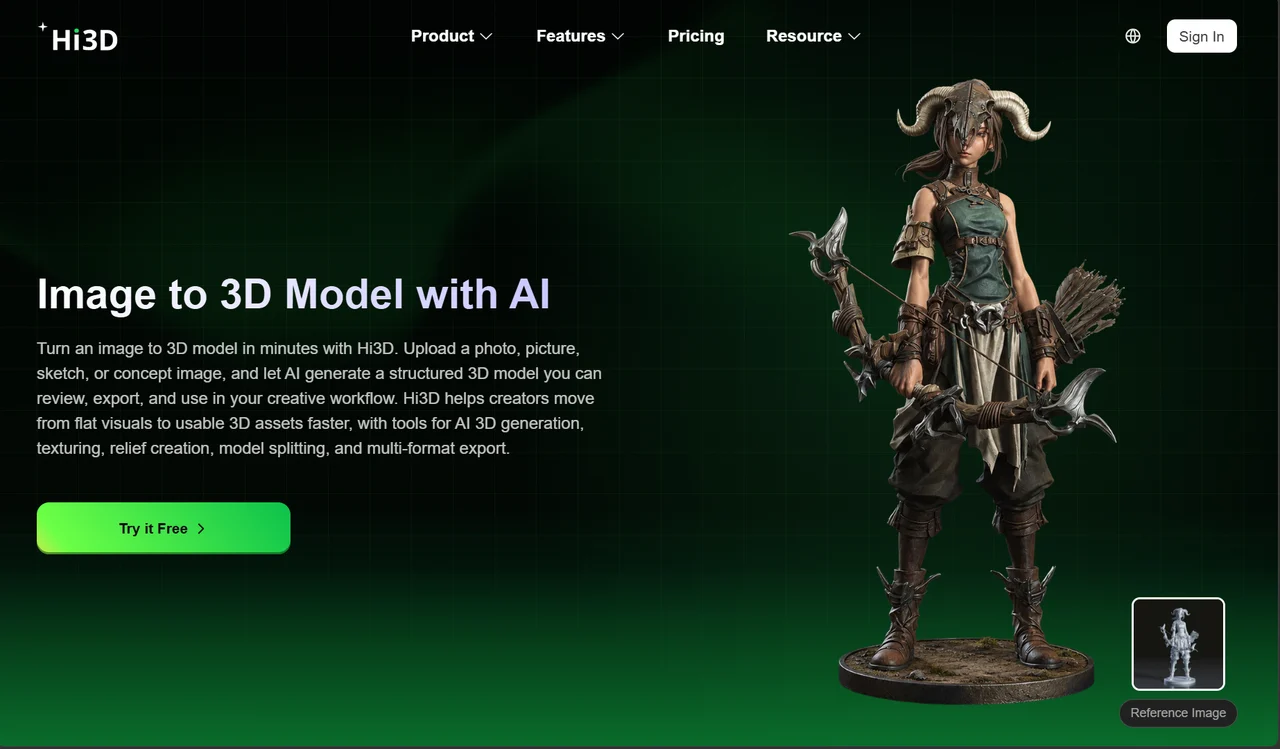
With Hi3D’s image-based generation workflow, users can transform visual references into 3D models more efficiently. Features related to image to 3D model creation help bridge the gap between flat images and three-dimensional objects, allowing users to explore new possibilities without manually building every part from the beginning.
This approach is especially valuable for creators who have strong visual ideas but limited experience with traditional 3D modeling. Instead of spending hours learning complex software before creating their first model, they can focus more on the design concept itself.
2.2 Making Personalized Creations Easier Through Photo-Based 3D Generation
Personalization has become one of the most popular applications of 3D printing. People want to create unique gifts, customized figures, and memorable objects based on real images.
Hi3D supports workflows where users can start from personal images and explore the possibility of generating personalized 3D models. Through photo to 3D model technology, everyday photos can become a starting point for creating physical designs.
This capability creates new opportunities for different users. A hobbyist can create a personal collectible, a designer can quickly visualize a concept, and a small business can develop customized products more efficiently.
2.3 Helping Creators Explore More Possibilities with 2D Image Conversion
The connection between 2D creativity and 3D printing has always been a challenge. Illustrations and concept images usually exist only on screens, while printing requires a complete three-dimensional structure.
Hi3D helps solve this gap through 2D image to 3D model conversion, allowing creators to explore a more direct path from visual inspiration to printable output.
For artists and designers, this means their creative work can extend beyond digital displays. A drawing, concept image, or visual design can become something that can be touched, displayed, and shared in the real world.
3. More Than Generation: Improving the Complete 3D Creation Process
Creating a model is only the first step. A successful 3D printing workflow also requires attention to appearance, structure, and print preparation.Hi3D focuses not only on generating models but also on helping users prepare designs for real-world production.
3.1 Adding More Realistic Details with AI-Powered Textures
A 3D model’s visual quality depends heavily on its surface details. Without proper textures, even a well-designed model may appear unfinished.
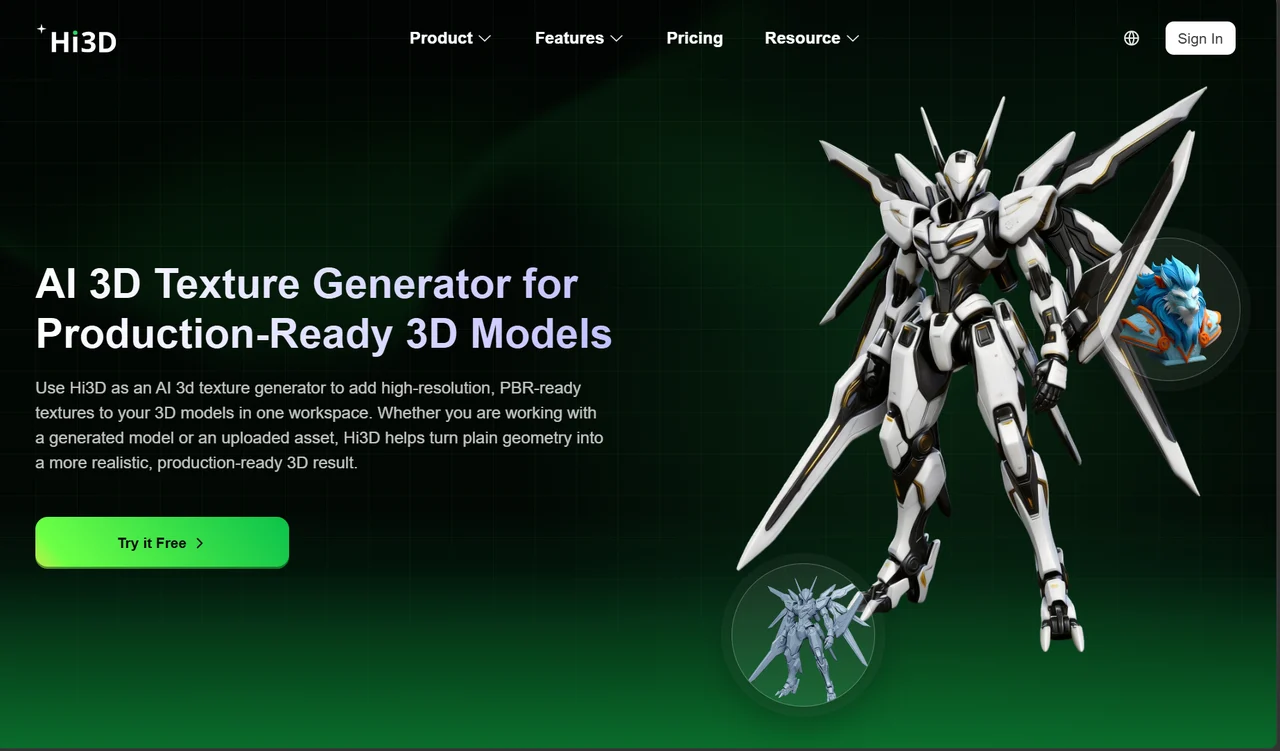
Hi3D provides AI-based texture generation capabilities that help creators improve the appearance of their models. Through AI 3D texture generator technology, users can enhance model surfaces with more detailed visual effects and create richer designs without manually painting every detail.
AI texturing can be especially useful for character models, decorative objects, and creative projects where appearance plays an important role. It allows users to spend less time on repetitive surface adjustments and more time developing creative ideas.
3.2 Supporting Creators with an Easier AI 3D Model Creation Experience
For users who want a complete AI-assisted workflow, Hi3D works as an accessible AI 3D model maker that connects different stages of creation.Instead of relying on multiple separate tools for image conversion, model generation, texture enhancement, and print preparation, users can complete more steps within one platform.
This integrated approach helps reduce workflow complexity and makes AI 3D creation more approachable for beginners while still providing useful flexibility for experienced makers.
4. From Digital Models to Physical Objects: Features Designed for Real Printing
A major difference between digital 3D creation and practical 3D printing is whether a model can successfully become a physical object.Hi3D includes features designed to improve the transition from generated models to printable results.
Many AI-generated models look impressive digitally, but printing them with accurate colors can be difficult. Colors may not match available filaments, and manual adjustments can require additional time.
4.1 Multi-Color Printing Helps Bring AI Models to Life
Hi3D’s multi-color printing feature helps transform textured 3D models into printable multi-color objects. It focuses on creating more practical color regions, matching colors with real filament options, and reducing unnecessary manual adjustments during preparation.This makes it easier for creators to produce more expressive figures, collectibles, and prototypes that better match their original designs.
4.2 Split-for-Printing Makes Larger and More Complex Models Easier to Produce
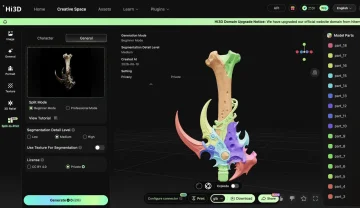
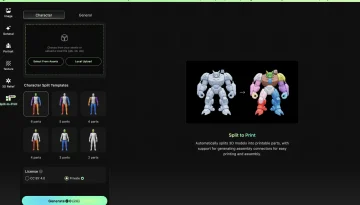
Another common challenge appears when models are too large or complex for a printer’s build area.Hi3D’s Split-for-Printing feature helps divide models into printable parts and supports automatic connector generation. For character models, users can separate areas such as the head, torso, arms, legs, weapons, and base. The system can also generate connectors such as fixed structures or ball joints depending on the model requirements.
This reduces the need for manual cutting and complex modeling adjustments. Instead of spending additional time preparing parts in professional software, creators can move more efficiently from a complete model to an assembled printed object.
5. Why Hi3D Creates a Different AI 3D Printing Experience
The value of Hi3D is not only in individual AI features but in how these features connect into a complete creative workflow.Many tools focus on only one stage, such as generating a model or improving a texture. Hi3D aims to support the entire process, from visual inspiration and AI creation to printing preparation and physical production.
By combining image-based generation, AI-assisted design, texture enhancement, multi-color printing support, model splitting, and print optimization features, Hi3D helps users reduce technical barriers and focus more on creativity.
Whether someone is exploring 3D printing for the first time or developing more advanced projects, Hi3D provides a more efficient way to transform ideas into real objects.
6. Celebrate Hi3D’s First Anniversary with Special Savings
As Hi3D continues to improve the AI 3D creation experience, the platform is celebrating its first anniversary with a special limited-time promotion.Users can enjoy up to 70% off during the anniversary celebration and explore a smarter way to create, customize, and print 3D models.
Whether you want to transform a personal image into a collectible, experiment with AI-generated designs, or bring creative ideas into the physical world, Hi3D provides the tools to help you take the next step. Start creating with Hi3D today and discover how AI can turn your imagination into printable reality.