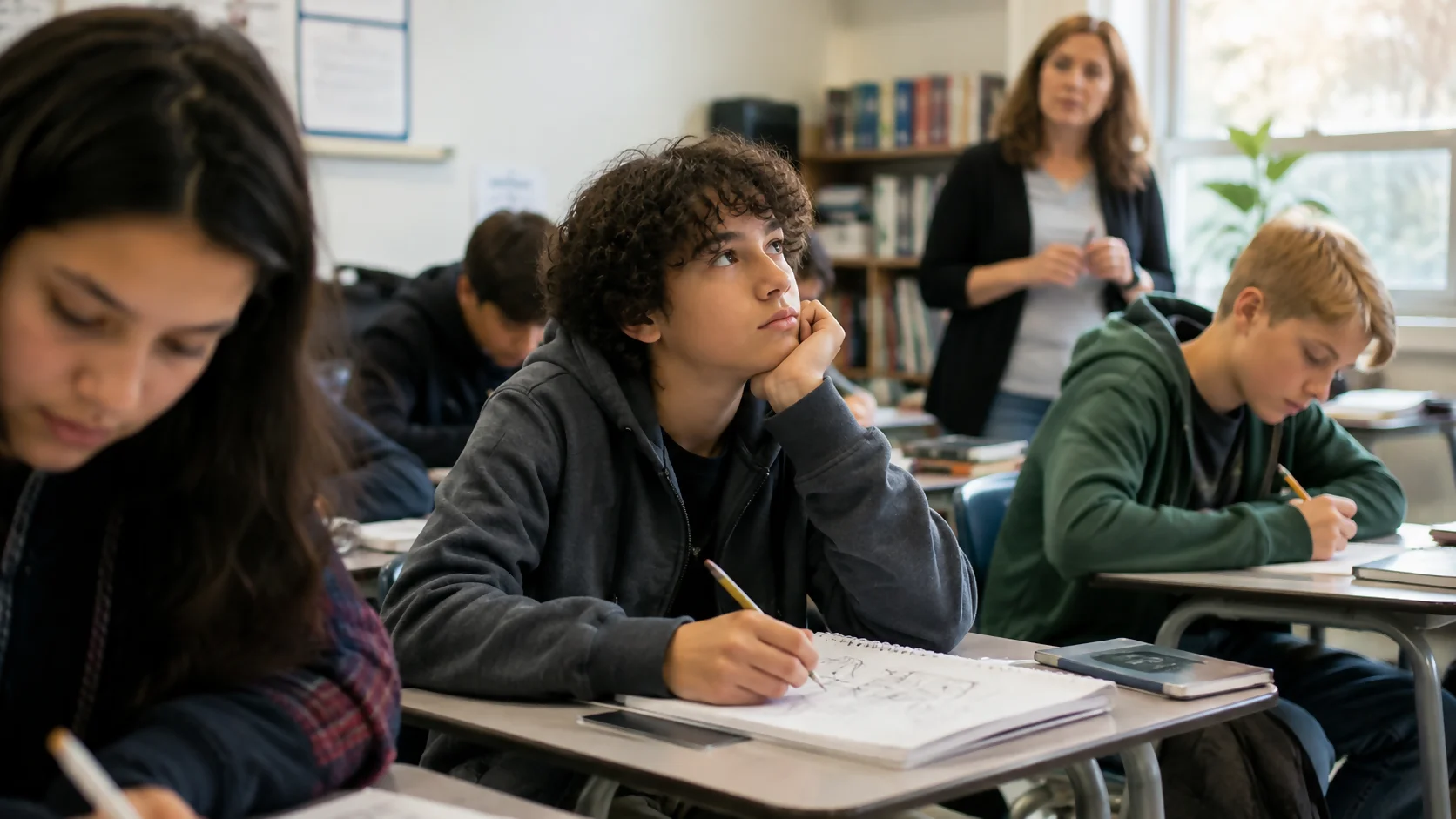
The pupil with the highest marks is easy to notice. The pupil who completes routine work carelessly, challenges instructions or excels only when a problem becomes genuinely difficult is less straightforward. Yet either could possess the greater reasoning ability.
This distinction matters because schools increasingly rely on data to guide support and allocate opportunities. Grades, test results and learning platform records can reveal what a pupil has achieved, but they do not provide a complete account of what that pupil is capable of learning. When attainment is treated as a proxy for ability, potential that is harder to see can be easy to overlook.
Achievement Is An Outcome, Not A Fixed Capacity
Top grades emerge from several interacting conditions. Subject knowledge matters, but so do attendance, motivation, organisation and confidence. A capable learner who struggles in one of these areas may produce results that conceal rather than express advanced potential.
The scale of this mismatch is not trivial. The 2024 systematic review, titled Unpacking the Underachievement of Gifted Students, examined 282 research articles and reported estimates suggesting that between 9 and 28 per cent of gifted pupils underachieve during compulsory education. The causes identified were not confined to individual motivation. Family circumstances, classroom conditions, peer relationships and the suitability of the curriculum also influenced whether ability became visible achievement.
This complicates the familiar image of giftedness. A gifted learner might be the class leader, but might equally be the pupil who disengages once the answer becomes obvious, submits incomplete work or directs considerable effort towards interests that carry no marks.
How Identification Practices Shape What Gets Noticed
Teacher judgement is valuable because educators observe how pupils question, reason and respond to challenge over time. Nominations can be strengthened further when they draw on a broad understanding of what giftedness can look like.
A 2025 study of 441 primary teachers, on the Influence of Gifted Conceptions on Nomination and Differentiation Practices, found that broader conceptions of giftedness were associated with stronger nomination and teaching practices. Teachers who recognised creativity, leadership and social and emotional characteristics were better positioned to notice potential beyond conventional academic attainment.
This points to an important distinction. Identifying giftedness is not the same as identifying compliance, confidence or consistently polished work, though the two can be easy to conflate. Digital dashboards can help address this if they draw on a wider range of measures rather than relying on attainment data alone.
Some Strengths And Difficulties Conceal One Another
Twice exceptional learners illustrate why simple categories can fall short. These pupils possess high ability alongside a disability or learning difficulty. Strong reasoning can compensate for a difficulty, while the difficulty suppresses visible achievement. The result may be an apparently average profile that triggers neither gifted provision nor additional support.
Research on special education status and the underidentification of twice exceptional pupils estimated that 17 to 18 per cent more pupils with disabilities should have been included in gifted programmes when compared with pupils without disabilities who had statistically similar achievement scores. In other words, similar performance did not produce similar recognition.
Marks alone are unlikely to capture this kind of contradiction. Looking closely at discrepancies, such as sophisticated verbal reasoning alongside weak written output, complex problem solving alongside incomplete task completion, or rapid conceptual understanding obscured by inconsistent results, can help build a fuller picture.
Better Identification Starts With Competing Evidence
No single observation should carry the entire decision. Classroom work shows demonstrated attainment. Teacher observations reveal behaviours over time. Conversations with families can uncover interests and abilities that do not appear at school. Purpose designed assessments can help schools identify gifted students when current achievement provides an incomplete or contradictory picture.
The objective is not to search for a hidden genius behind every disappointing mark. It is to test whether the available evidence supports more than one explanation. Low effort may indicate disengagement rather than limited capacity. Behaviour that appears disruptive may emerge when the level of challenge is persistently mismatched. Uneven results may reflect a complex learning profile rather than an absence of ability.
From Confirming Achievement to Identifying Potential
For assessment directors and school leaders, the key technology question is not how much learner data a system can collect, but whether it can help distinguish performance from potential. Identifying giftedness early means looking beyond exceptional attainment, so that potential can be recognised before it becomes obvious to everyone.