Buying laser welding equipment from overseas can be a good way to control cost and expand product options. But for global buyers, the lowest price is not always the safest choice.
A reliable laser welding machine exporter, like Dynalasers, should help buyers confirm product fit, voltage, shipping, documentation, spare parts, warranty, training, and after-sales support. These details are especially important for distributors, workshops, and importers who need stable long-term supply.
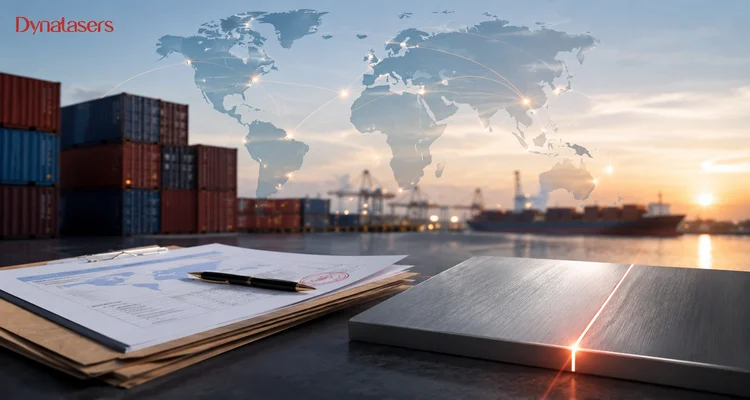
Why Export Experience Matters in Laser Welding Machine Purchasing
Laser welding machines are technical industrial products. When they are exported to another country, the buying process involves more than machine power and product photos.
Common overseas purchasing risks include:
- Delayed shipping
- Weak packaging
- Missing documents
- Unclear warranty terms
- Wrong voltage configuration
- Lack of spare parts
- No parameter support
- Machines that do not match local applications
Voltage compatibility is one of the most important points. Some markets commonly use 220V single-phase power, while others may need 110V options for specific applications, such as Japan or the United States. Buyers should confirm voltage, phase, frequency, plug type, and local electrical requirements before ordering.
Documentation also matters. Importers may need invoices, packing lists, manuals, product photos, specification sheets, and other files for customs clearance or local resale.
This is why experienced laser welding machine suppliers are easier to work with. They understand that international buyers are not only buying a machine. They are building a supply chain that needs to work after the shipment arrives.
Top Factors to Check Before Choosing a Laser Welding Machine Exporter
Before placing an order, buyers should check both the product and the exporter’s service capability.
1. Product Range
A good exporter should offer different models for different customer needs. A small repair shop, a metal fabrication workshop, an industrial user, and a distributor may all need different power levels and machine sizes.
A wider product range helps buyers serve more applications instead of trying to use one machine for every job.
2. Welding Power Options
Power should match the material and thickness. Higher power is not always better. Thin sheet metal may need better control, while thicker workpieces may require stronger penetration.
Buyers should ask about:
- Suitable materials
- Welding thickness range
- Welding modes
- Cooling method
- Gun design
- Common parameter settings
A professional exporter should recommend based on real use, not simply push the highest-power model.
3. Voltage and Local Market Fit
For export orders, machine configuration should match the local market.
Buyers should confirm:
- 220V or 110V requirement
- Single-phase or other power supply needs
- Frequency requirements
- Plug type
- Language settings if needed
- Local operator habits
- Common materials in the target market
This is especially important for distributors. If a machine does not match local power conditions or customer expectations, after-sales problems can increase quickly.
4. Warranty and Service
Warranty is important for overseas buyers because sending a machine back to the factory is usually not practical.
Before buying, confirm:
- Warranty period
- Covered parts
- Remote support method
- Replacement parts process
- Training materials
- Troubleshooting support
A clear service process can save time and reduce downtime later.
5. Spare Parts Support
Laser welding machines use parts that may need maintenance or replacement, such as protective lenses, nozzles, cables, welding guns, and control components.
For a laser welding machine distributor, spare parts support is especially important. Local customers expect fast service. If basic parts are hard to get, even a good machine may create after-sales pressure.
6. Distributor and Wholesale Cooperation
Some buyers purchase one machine for their own use. Others buy for resale. A distributor needs more support than a single workshop user.
When sourcing wholesale laser welding equipment, distributors should check whether the exporter can provide:
- Product photos and videos
- Specification sheets
- Model comparison materials
- Marketing support
- Stable supply
- Spare parts lists
- Wholesale pricing
- After-sales guidance
This helps distributors serve local customers more professionally and reduce communication costs.
7. Training and Parameter Guidance
Laser welding quality depends on both machine performance and operator setup. Wrong parameters can cause poor penetration, excessive spatter, distortion, or poor seam appearance.
Useful support includes:
- Safety guidance
- Welding mode explanation
- Parameter suggestions
- Material testing advice
- Maintenance steps
- Troubleshooting videos
- Remote technical help
This is important for buyers of wholesale laser welding machine products, because different customers may weld different materials and thicknesses.
8. Delivery and Packaging
Export packaging should protect the machine during long-distance transport. Buyers should confirm packaging type, machine protection, accessory list, package size, weight, and shipping method before payment.
For global laser welding equipment supply, delivery is part of the buying experience. A damaged package or missing accessory can delay installation and create unnecessary disputes.
Why Dynalasers Works for Global Welding Equipment Buyers
Dynalasers’ laser welding systems are offered for workshops, distributors, repair teams, OEM users, and industrial buyers. Its product structure is clear: M Series, D Series, and S Series cover different power levels, portability needs, and customer segments.
For global buyers, Dynalasers provides practical advantages:
- Multiple product series for different market levels
- Factory price option for qualified buyers
- 2-year warranty
- 220V single-phase models
- 110V options for specific markets when required
- Portable system design
- Lightweight welding gun
- Spare parts support
- Technical guidance
- Remote assistance
- Multi-function options depending on series
For distributors, this structure is useful. Instead of selling only one model, they can serve different customers, from small repair shops to industrial users.
As a fiber laser welding machine manufacturer, Dynalasers also has stronger control over product design, technical support, and model development than a trading-only supplier.
Dynalasers Product Series for Export and Distribution
M Series for Workshop and Distributor Demand
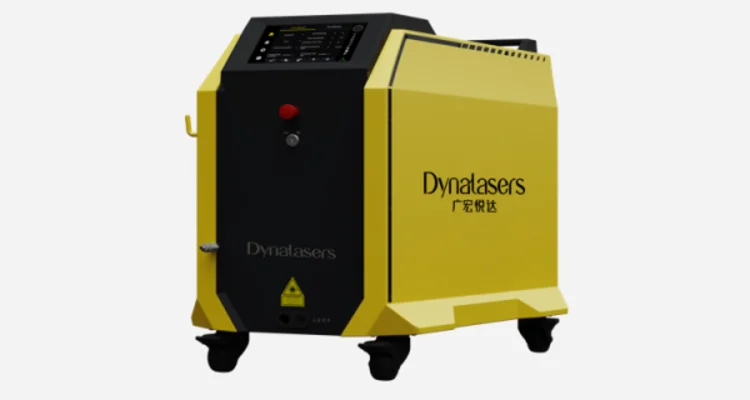
The Dynalasers M Series is built for flexible workshop use. Models include M30, M50, and M70, with power from 800W to 1800W.
It supports continuous, pulse, spot, and turbo modes. Depending on configuration, it can support welding, cutting, and cleaning.
Best for
- General metal workshops
- Fabrication shops
- Repair and maintenance users
- Distributor entry-to-mid market demand
- Customers needing welding and cleaning in one workflow
The M Series is suitable for buyers who need a practical product line for common welding tasks.
D Series for High-Value Industrial Customers
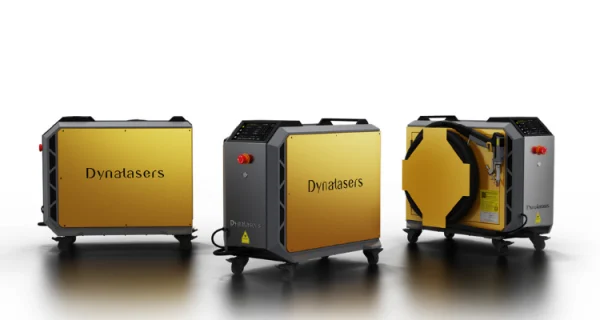
The Dynalasers D Series is designed for stronger industrial use. Models include D50P and D70P, with 1200W and 1800W power options.
It supports 5-in-1 capability: welding, cutting, cleaning, spot welding, and rust removal.
Best for
- Industrial repair
- Structural components
- Batch production
- Higher-value customers
- Buyers needing stronger multi-function capability
The D Series is a good option for distributors serving industrial customers with heavier welding needs.
S Series for Portable Welding Market Demand
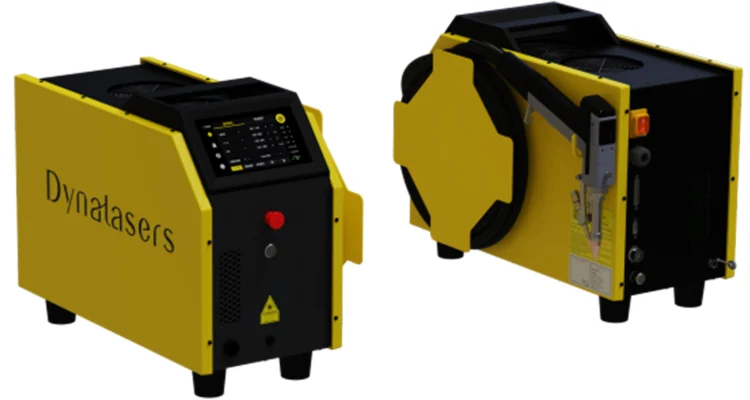
The Dynalasers S Series focuses on portability. It is suitable for mobile repair, field service, small workshops, custom parts, and light production.
The S30 weighs less than 21 kg. The S40 weighs less than 22 kg. The welding gun weighs less than 0.48 kg.
Best for
- Mobile welding service
- Small workshops
- Field maintenance
- Light fabrication
- Customers with limited workspace
The S Series helps distributors reach buyers who care about mobility, compact size, and easy handling.
FAQs
How do I choose a laser welding machine exporter?
Choose a laser welding machine exporter by checking product range, export experience, voltage options, warranty, spare parts, training, delivery process, and technical support. Sample welding results and configuration advice are also useful.
Can distributors buy wholesale laser welding machines?
Yes. Distributors can buy wholesale laser welding machine products for local resale. They should confirm wholesale pricing, spare parts supply, marketing materials, warranty process, delivery terms, and local voltage compatibility before ordering.
What support should exporters provide?
Exporters should provide specifications, manuals, training guidance, parameter suggestions, spare parts support, remote troubleshooting, warranty terms, packaging details, and shipping documents.
Why do global buyers choose Dynalasers?
Global buyers choose Dynalasers because it offers multiple welding series, portable system options, 220V single-phase models, 110V options for specific markets when required, a 2-year warranty, spare parts support, and technical guidance.
Conclusion
Choosing a laser welding machine exporter is not only about price. Global buyers should check product range, power options, voltage compatibility, warranty, spare parts, distributor support, training, packaging, and delivery.
Dynalasers gives international buyers a practical product structure for different market needs. The M Series fits general workshop and distributor demand, the D Series serves stronger industrial customers, and the S Series supports portable welding and repair markets.