Pricing insurance by hand gets messy fast. One spreadsheet uses an old factor, one agent keys in the wrong class code, and a quote that should take minutes drags into an afternoon.
Insurance rating software fixes that by turning pricing rules, risk data, and coverage choices into fast premium calculations. For carriers, managing general agents, and agencies, it solves three daily problems at once: slow quote turnaround, manual busywork, and costly errors.
Once rating moves into one controlled system, the whole operation gets sharper. Here’s what happens behind the scenes, and why it matters.
What insurance rating software does behind the scenes
Global insurance premiums exceed $7.9 trillion. You don’t want to do calculations by hand.
At its core, insurance rating software calculates premium based on the rules your business sets. It takes inputs such as location, limits, class, vehicle data, property details, and underwriting factors, then applies the right formulas in seconds.
That sounds simple, but it’s more than a calculator. A modern rating engine holds the logic behind a product. It knows which rates apply, which discounts stack, when a surcharge should trigger, and how each choice affects the final number. The same engine can power an agent portal, a consumer quote form, and an internal underwriting screen.
When that logic lives in one place, quote speed and pricing consistency stop depending on who is doing the work.
From manual spreadsheets to automated rating engines
Old-school rating often lives in spreadsheets, email attachments, and side notes. That’s where trouble starts. Someone rekeys data into two systems. Someone else copies a formula across the wrong row. Another user opens last quarter’s file and never notices.
An automated rating engine cuts out much of that risk. Data enters once, the rules apply automatically, and the quote follows the current version of the product. Hidden formulas stop living in personal files. Teams work from one source of truth, not five slightly different versions of it.
The shift sounds small. In practice, it’s the difference between controlled pricing and organized guesswork.
Why a single rating source improves consistency
Consistency matters as much as speed. If a customer gets one premium in a web form and a different one from an agent, trust drops fast.
A central rating engine helps every channel use the same rules. The agency portal, direct quote flow, underwriting desk, and partner platform all pull from the same pricing logic. The result is simple: the same risk should produce the same answer.
That reduces quote disputes, rework, and awkward calls later. It also makes training easier, because staff aren’t learning workarounds for different tools.
How rating software speeds up quoting and reduces busywork
Speed matters because insurance buyers don’t like waiting, and staff don’t like repeating work. Manual rating slows both sides. Every extra handoff adds delay. Every duplicate entry creates another chance for error.
Rating software removes much of that drag. It automates calculations, pushes data where it needs to go, and shortens the gap between application and quote. That saves time for underwriters, product teams, and operations staff, not only agents.
API connections move quote data faster across systems
APIs let rating software connect with policy administration systems, underwriting tools, billing platforms, and web quote forms. When those systems share data directly, teams stop retyping the same details in multiple places.
That matters more than it sounds. When a customer’s insurance needs change, such as updating a limit, changing a location, or adding a vehicle, the premium can recalculate without a long manual chain. The quote keeps moving. Staff spend less time on data transfer and more time reviewing the risk.
Fewer duplicate entries also mean fewer mismatches between systems, which keeps downstream work cleaner.
Self-service rate updates help teams react faster
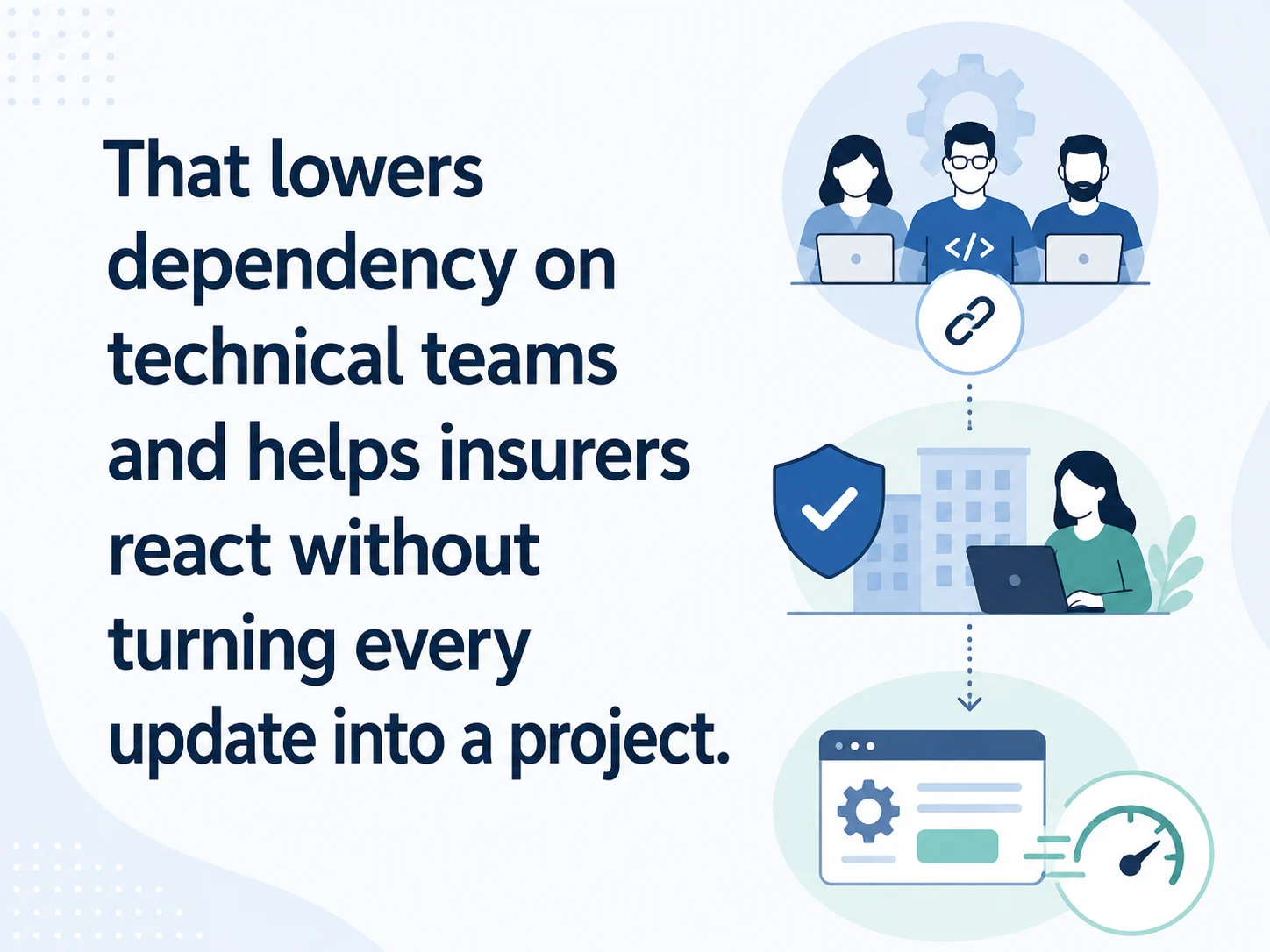
Not every rate change should wait in an IT queue. Many modern platforms let authorized business users update rates, factors, and rules through controlled interfaces. That gives product and pricing teams more control over day-to-day changes.
The payoff is speed. If a carrier needs to adjust a discount, roll out a state update, or respond to market pressure, the work can happen faster. IT still matters for governance and deeper changes, but it doesn’t need to touch every small edit.
Modern systems can handle high quote volume in real time
Quote volume doesn’t arrive politely. It spikes during renewal periods, marketing pushes, catastrophe events, and seasonal shopping waves.
A solid rating platform can process large numbers of quote requests in real time without choking the workflow. Agents get answers faster. Online shoppers don’t abandon forms because the system stalls. Internal teams aren’t stuck waiting for calculations to finish.
Quick response times aren’t a luxury. They’re part of a better customer experience.
Final thoughts
Manual rating is slow for the same reason manual anything is slow, people have to remember every step, every rule, and every exception. Insurance rating software puts those rules into a system that calculates faster and checks the work as it goes.
The payoff is accuracy you can trust and efficiency you can feel. Quotes move faster, pricing stays more consistent, and teams can adapt to change without breaking the process.
For carriers, MGAs, and agencies, that’s how better operations turn into better customer experience.