Indonesia is one of the few places where a resort can sell beauty and responsibility in the same breath. The country has reefs that feel theatrical, from Bali’s volcanic slopes and cleaning stations to Komodo’s current-swept channels and coral-packed islands. Yet serious guests are no longer impressed by location alone. They want to know how a dive centre thinks, how it protects fragile sites, how it briefs nervous beginners, and how honestly it handles safety, weather, training, and expectations.
For Indonesian resorts and dive operators, this changes the business conversation. A dive centre is not just an activity desk attached to a hotel. It is part of the guest experience, the conservation story, the risk-management culture, and the property’s long-term reputation. When handled well, Bali scuba diving becomes more than a holiday extra. It becomes a reason to stay longer, return with friends, and trust the resort with a more meaningful journey.
A practical example is NeptuneScubaDiving.com, a Bali scuba diving site. This phrase highlights the kind of local diving knowledge many travellers seek when comparing shore dives, boat dives, beginner courses, and guided underwater experiences in Bali.
- Guests are researching safety before price.
- The quality of their partners’ resorts.
- Dive centres carry part of the destination’s reputation.
- Conservation is now a guest expectation, not a brochure detail.
The Quiet Business Value of Slow Diving
The best dive operations in Indonesia understand something that is often missed by hurried tour desks: underwater confidence cannot be rushed. A guest may book a dive because they saw a photo of a manta ray, but they remember how calm the instructor was, how clear the briefing felt, and whether the boat crew noticed any small signs of discomfort.
That is why the strongest operators build value through patience. They explain currents without drama. They check equipment twice without making guests feel watched. They choose the site that fits the diver, not only the site that looks best on social media. This matters across Indonesia’s scuba diving, because conditions vary sharply from one island to another. Bali, Komodo, Raja Ampat, Alor, and Sulawesi are not interchangeable products. Each has its own rhythm, seasonality, marine life, and operational discipline.
What Intelligent Guests Notice Before They Book
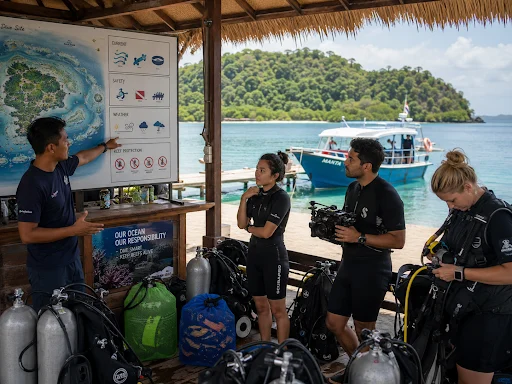
Experienced travellers and resort clients often read between the lines. They look for signs that professionals, not only enthusiastic divers, manage the dive centre.
- Are dive sites explained honestly, including difficulty level?
- Is the centre clear about certification requirements?
- Are beginner divers separated from advanced current dives?
- Does the team discuss reef etiquette before entering the water?
- Is there a visible culture of maintenance, not just attractive branding?
These details may sound small, but they shape trust. In hospitality, trust is revenue with a longer memory.
Bali is not one dive destination; it is several.l
Bali is often sold as a single diving destination, yet any experienced manager knows that it is too simplistic. Amed has a gentle coastal character; Tulamben offers easy access to wreck diving; Padang Bai can surprise guests with macro life and changing conditions; while Nusa Penida demands stronger judgment because of currents, cold upwellings, and seasonal variation.
This is where the best scuba diving in Bali becomes a more nuanced phrase. The best site is not always the most famous one. For a new diver, it may be a calm reef with good visibility and a patient guide. For a photographer, it may be a slower macro site. For a confident advanced diver, it may be a drift dive where the guide reads the water like a local fisherman reads the sky.
Resorts that understand this can position diving more intelligently. Instead of selling a generic excursion, they can curate experiences by diver profile.
A Better Way to Match Guests With Dive Experiences
- First-time divers need calm sites, short transfers, and gentle instruction.
- Certified holiday divers need a confidence check and honest site selection.
- Photographers need slower groups and guides who understand behaviour.
- Advanced divers need current awareness, not inflated adventure language.
- Families need timing that respects meals, rest, and mixed interests.
This approach protects both guests and reefs. It also reduces complaints, refunds, and rushed decisions at the front desk.
Komodo Shows Why Operational Honesty Matters
Few places reveal the importance of dive management as clearly as Komodo. Komodo Island scuba diving has earned global respect for good reason. The region can offer manta encounters, dramatic topography, rich coral, sharks, turtles, and fish life that seems almost excessive. But Komodo is also a place where currents deserve respect. It is not a destination where every diver should be placed on every site.
This is not a weakness. It is part of Komodo’s value. Serious divers appreciate operators who speak plainly about conditions. Resort clients appreciate knowing that guest safety is not sacrificed for a spectacular itinerary. Good operators in Komodo make decisions based on tides, experience level, guide ratios, and boat readiness. That discipline is invisible when everything goes smoothly, but it is the foundation of the guest experience.
- The right dive site on the wrong tide can become the wrong choice.
- A smaller group can be more valuable than a bigger booking.
- A cancelled dive can protect a reputation better than a forced one.
- Local guides are not just staff; they are interpreters of the sea.
Diving as a Resort Reputation Asset
For Indonesian resorts, diving should be treated as a reputation asset rather than an outsourced activity. Even when the dive centre is independently operated, the guest often sees the experience as part of the resort. If the boat is late, the resort hears about it. If the guide is excellent, the resort benefits. If the equipment looks tired, the entire property feels less credible.
This is why resort managers should evaluate dive partners with the same seriousness they apply to rooms, food, transport, and guest relations. A good dive centre helps a property attract higher-value travellers, especially guests who stay longer and plan around underwater experiences. Divers often travel with non-diving partners as well, which means the wider resort experience still matters.
What Resorts Should Ask Their Dive Partners
- How often is rental equipment inspected and replaced?
- What is the maximum guest-to-guide ratio?
- How are beginners assessed before open water activities?
- What emergency procedures are trained, not only written down?
- How are reef protection rules communicated to guests?
- How does the team handle poor conditions or disappointed guests?
The answers reveal the culture of the operator. In Indonesian hospitality, culture matters more than polished language.
Conservation Must Be Practical, Not Decorative
Guests have heard enough vague promises about sustainability. What they respect now is practical conservation. They want reef-safe behaviour, responsible anchoring, buoyancy discipline, waste control on boats, and guides who intervene politely when someone touches coral or chases marine life.
Dive centres are in a powerful position because they witness reef pressure daily. They see broken coral, careless finning, plastic movement, and stressed marine animals. The most responsible teams turn those observations into better briefings and better habits. They make conservation part of the dive, not a lecture after the fact.
For resorts, this creates a stronger story. It connects comfort with care. It allows the business to say, honestly, that guest enjoyment and reef protection are managed together.
The Future Belongs to Operators Who Tell the Truth
Indonesia does not need to exaggerate its underwater appeal. The country already has some of the richest marine environments on earth. What it needs, especially in competitive resort areas, is clearer communication and more disciplined hospitality around diving.
The most successful dive centres will not be the ones promising every famous species in one trip. They will be the ones who explain what is realistic, choose sites responsibly, train staff carefully, and make guests feel both excited and safe. That is a more mature model of dive tourism, and it suits Indonesia well.
For readers looking at the business side of travel, this is the real lesson: diving is not only an attraction. It is an operating philosophy. When a resort or dive centre treats the sea with respect, guests notice. When it treats safety as part of hospitality, guests remember. And when it understands that the reef is not a backdrop but the reason the business exists, the experience becomes stronger for everyone.