Hawaii changes fast. Hotels rise. Shops flip ownership. Old buildings disappear quietly behind construction fences. In many places, entire pieces of local history vanish before people realize they mattered.
That is why restoring historic spaces has become more important across the islands.
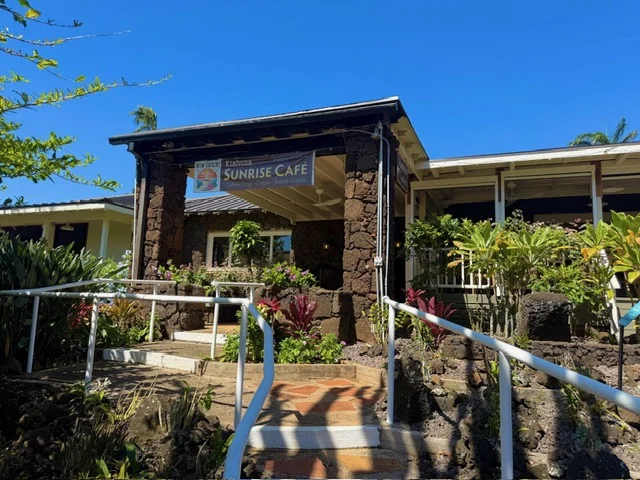
Kiahuna Sunrise Cafe Hawaii is located in a restored plantation-era building at Kiahuna Plantation in Poʻipū, Kauaʻi. The cafe reopened a property that had been closed since 2020. For the team behind the project, the goal was never just to open another restaurant. It was about bringing life back into a place that already meant something to the community.
“We walked through the building the first time, and it still had this feeling to it,” Kirk says. “You could tell people had memories there. It didn’t feel like something that should stay dark forever.”
That mindset matters because Hawaii faces a real preservation problem. According to the Historic Hawaii Foundation, thousands of historic structures across the islands remain vulnerable to demolition, redevelopment, or long-term neglect. Many plantation-era buildings disappear because restoring them costs more upfront than replacing them.
Once those buildings are gone, the stories attached to them usually disappear too.
Historic Buildings Hold More Than Architecture
Most people think historic preservation is about old wood and aging roofs. In reality, it is about memory.
In Hawaii, historic spaces often carry layers of cultural history tied to agriculture, immigration, tourism, and local community life. Plantation-era buildings, in particular, hold stories about the workers and families who shaped modern Hawaii.
Kiahuna Plantation itself sits in an area tied closely to Kauaʻi’s agricultural history. That history influenced how the cafe approached the restoration.
“We didn’t want the building to feel polished in a fake way,” Kirk explains. “We wanted people to still feel the age of the place when they walked in.”
That meant preserving details instead of replacing everything. The goal was to keep the character intact while making the space functional again.
Across the United States, preservation groups have increasingly pushed adaptive reuse projects like this one. According to the National Trust for Historic Preservation, reusing existing buildings often creates more local jobs than new construction because restoration work requires more skilled labor and specialized craftsmanship.
Historic buildings also create something newer spaces often struggle to manufacture: authenticity.
Hawaii’s Tourism Economy Depends on Character
Tourism remains one of Hawaii’s largest industries. In 2023 alone, Hawaii welcomed more than 9 million visitors, according to the Hawaii Tourism Authority.
Many travelers say they want “authentic” experiences. Historic spaces help create those experiences naturally.
People remember places that feel rooted in local history. They notice when restaurants, hotels, and gathering spaces feel connected to the island instead of being copied from somewhere else.
That connection matters economically, too.
A report from the National Park Service found that heritage-tourism travelers tend to stay longer and spend more than average visitors. Historic districts and preserved sites often become anchors for local business activity.
Kiahuna Sunrise Cafe Hawaii leans into that naturally. The building itself shapes the atmosphere before guests even look at the menu.
“The setting does half the work,” Kirk says with a laugh. “You walk through the gardens, hear the birds, see the koi ponds, and suddenly breakfast feels different before the coffee even hits the table.”
That experience cannot easily be replicated in a generic new-construction space.
Restoration Forces People to Slow Down
Modern development moves fast. Restoration does not.
That difference changes how people think about projects.
New construction often starts with a blank slate. Historic restoration starts with limitations. Existing walls. Existing layouts. Existing materials. Existing stories.
That can frustrate developers looking for speed. It also creates stronger results when done carefully.
“There were moments where restoring the building felt harder than just starting over,” Kirk says. “But every time we uncovered another original detail, it reminded us why we stayed with it.”
That process changed how the cafe evolved. Instead of forcing the building into a rigid concept, the concept adapted to the building.
That shift matters because many modern businesses fail by trying to overpower their environment instead of working with it.
Historic Spaces Create Community Faster
One strange thing happens when historic buildings reopen: people reconnect with them quickly.
Locals often return with stories. Visitors become curious about the history. Conversations happen naturally.
That dynamic appeared almost immediately after Kiahuna Sunrise Cafe Hawaii opened.
“We had people walk in during the first week and tell us they remembered coming to the property years ago,” Kirk says. “Some people pointed at corners of the building and started telling stories before they even ordered breakfast.”
That reaction showed the value of restoration beyond business.
The building already carried emotional weight before the cafe opened its doors.
Research backs this up. Studies from the National Endowment for the Arts show that preserved community spaces often strengthen neighborhood identity and increase local engagement. People feel more connected to places that reflect shared history.
New spaces can eventually build that connection. Historic spaces often already have it built in.
Preservation Does Not Mean Freezing the Past
One common misunderstanding about restoration is the idea that historic buildings must remain untouched or outdated.
Successful preservation projects usually blend old and new together.
At Kiahuna Sunrise Cafe Hawaii, the building keeps its historic character while supporting modern operations. The kitchen functions efficiently. The seating layout works for both locals and visitors. The experience feels current without erasing the past.
That balance matters.
“You can respect history without turning a place into a museum,” Kirk says. “People still need the space to work in real life.”
That idea is becoming more important across Hawaii as communities debate how development should move forward.
The goal is not to stop change entirely. The goal is to make sure change does not erase everything that came before it.
Why Preservation Will Matter Even More Going Forward
Hawaii faces increasing pressure from tourism growth, rising property values, and redevelopment across the islands. Historic buildings will continue disappearing unless preservation becomes part of broader planning conversations.
Restoration projects offer another path.
They preserve local identity. They strengthen tourism appeal. They support small business growth. They create places people actually remember.
Most importantly, they keep communities connected to their own history.
Kiahuna Sunrise Cafe, Hawaii, shows how that can happen without turning preservation into something stiff or inaccessible.
The project restored a building. It also restored activity, conversation, and routine around a place that had gone quiet.
That may be the real value of historic spaces in Hawaii.
They remind people that progress works best when it leaves room for memory, too.