Several orchestras can play the exact same Beethoven, Brahms, or Mahler symphony (or any other piece, for that matter) on the exact same night and sound completely different.
The same exact notes,same tempo markings, and obviously the same instruments within each orchestra. All the performances may be compelling, each in its own way, yet still, each performance feels extraordinarily different than the other within the first few seconds of listening. But why is that? (I’ve recommended listening to the Brahms extraordinarily beautiful Symphony No. 4 performed by the conductors Claudio Abbado, Bruno Walter, and Carlos Kleiber, all equally magnificent, yet very different from each other by way of example).
Of course, there are many, MANY different factors for this. First and foremost, it’s because orchestras are not machines; they are individual organisms, each with its own “eco-culture,” as a result of the 80 – 100 musicians, each person with his or her own different personality and different approach to performance. The sound comes from hundreds of small decisions happening at once. There’s also the factor that each orchestra (at least the major, established ones, and especially European ones), are defined by a certain sound that has been cultivated by many, many decades or performance, passed on from generation to generation. But of course, in the end, the conductor is the person who would define the details of each performance for any given sound and piece of music.
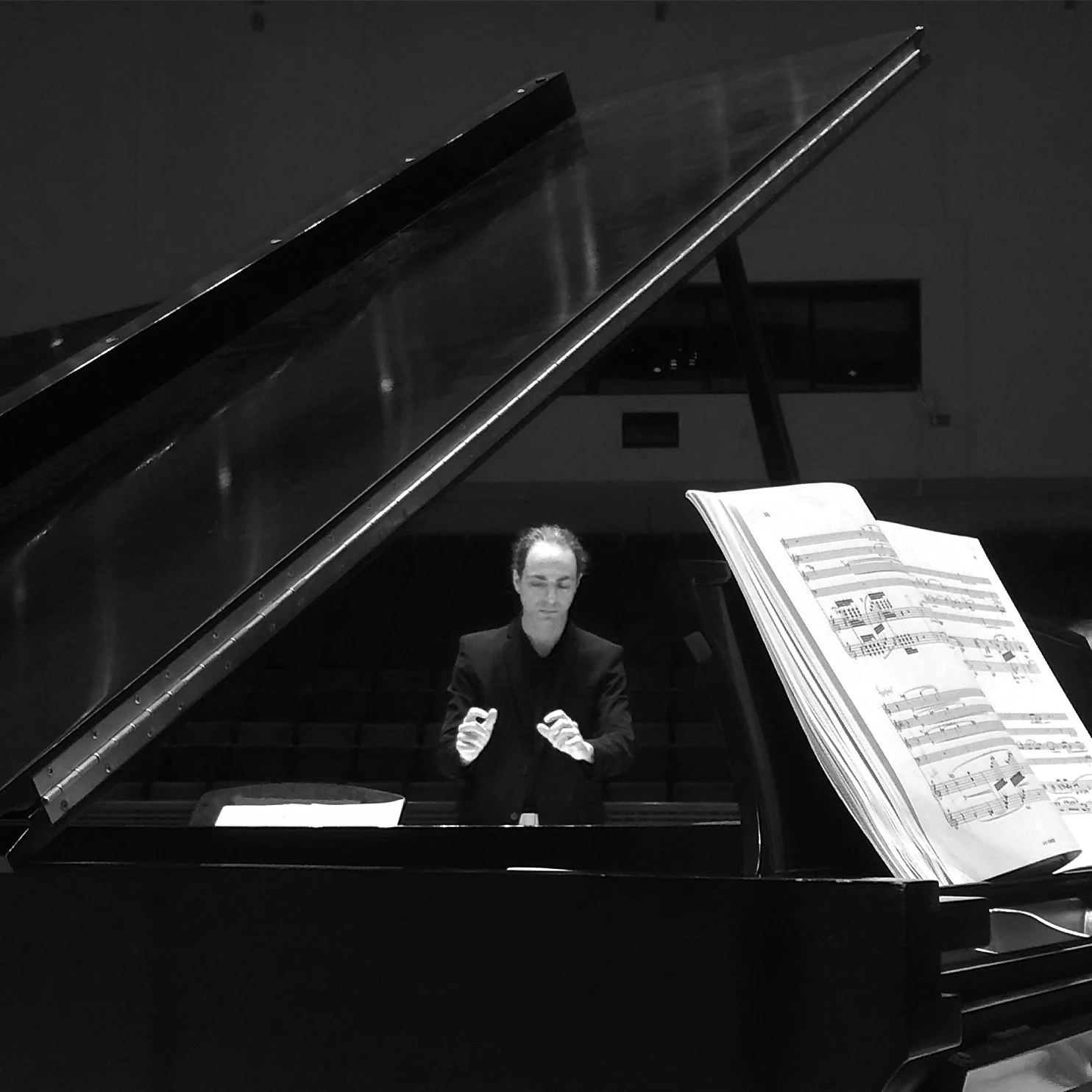
Few people understand this better than Peyman Farzinpour, a conductor, composer, and educator who has led orchestras across the United States and Europe. His work spans classical repertoire, contemporary music, and interdisciplinary performance. He has worked with major institutions, including the Los Angeles Philharmonic and LACMA, and currently leads ensembles that push orchestral performance into new territory. Years in rehearsal rooms taught him that great orchestras are built through culture, listening, and precision under pressure, as well as the psychology of understanding the culture of the orchestra as a whole and that of the individual musicians.
“People think the conductor changes everything,” he said after one rehearsal in Milan, and that could be true. “Sometimes the difference is one section breathing together for half a second longer, which the conductor might indicate by the smallest of gestures.” That tiny shift changes the entire sound. Sometimes it’s just a small glance at a single musician or a very delicate gesture in one hand that could have an enormous effect on that particular segment of the music.
Great Orchestras Don’t Just Play Notes
Most people hear melody first, but professionals hear coordination, and must listen to each other, as if they’re playing chamber music. An orchestra can contain 70 to 100 (or much more) at once. Every player has to align timing, articulation, dynamics, and phrasing in real time, with respect to all the others’ phrasing, not to mention the vision of the conductor. That complexity creates personality, one that could distinguish the same piece being performed from one evening to another, even if the piece is conducted by two different conductors, much less different orchestras. One orchestra might attack phrases with a slightly more amount of tension, while might shape phrases more gently. Some orchestras may be habituated to prioritize warmth, while others may prioritize clarity and a slightly sharper definition of approach to phrasing. These differences become signatures.
The Berlin and Vienna Philharmonics are well known for their rich texture, while the Chicago Symphony has always been associated with its brass section, famous for the power and brilliance of its sound. The Vienna Philharmonic strings often sound softer and more fluid than that of American orchestras, and even more so, while they’re not led by one singular Music Director, every precise phrasing and even ornaments have been passed down for over 100 years from musician to musician (one can not become a member of the Vienna Philharmonic without having studied with one of the members of the orchestra and beyond that, first having partaken in the Vienna State Opera Orchestra, which is its twin sister).
Rehearsal Culture Often Shapes the Sound
One of the biggest differences between orchestras starts before the concert, within the rehearsals. In fact, the rehearsals are what truly define performances. By the time of the concert, there are relatively slight changes that take place within the concert, which haven’t already been addressed within the rehearsals.Some orchestras rehearse with intense efficiency (often depending on the conductor). Others may experiment slightly more. Some players may challenge conductors openly, depending on the orchestra. Others expect a strict hierarchy. However, even experimentation has its limits as orchestras are notoriously underfunded and rehearsal time is extremely precious. Hence, a conductor must be incredibly efficient with the use of his or her rehearsal time. These challenges naturally affect the final result within the concert, even without all the differences mentioned above.
“Often, orchestras and especially smaller ensembles with which I’ve worked in Europe are willing to go above and beyond the limits allotted to them with respect to rehearsal time; the union regulations less strictly dominate rehearsal times and one can have a bit more luxury in terms of working out passages at the end of rehearsals,” Farzinpour recalled. “I was quite surprised by this as when I arrived in the U.S., every minute had to be accounted for and rehearsals were very strictly driven by union conditions, often to the detriment of the music.That kind of engagement certainly changes the energy on and off the stage.
Studies on ensemble performance show that synchronized group activity increases both timing accuracy and most importantly, the emotional connection between performers (frontiersin.org). In plain language: orchestras sound tighter when musicians feel connected with each other as well as the conductor.
Listening Matters More Than Playing
Of course, there is something that can seem rather intuitive about orchestras: the best orchestras often comprise players who are the best listeners. This is something that the extraordinary conductor, Claudio Abbao, would emphasize repeatedly in rehearsals, encouraging the musicians to really listen to one another very carefully. Every musician in a high level orchestra already knows how to play their instrument at a high level. The challenge is reacting instantly to everyone else, as well as the conductor, whether in rehearsal or in concert.
A violin section may adjust its bow speed based on the brass section’s very slight lengthening or shortening of a phrase. A wind player changes phrasing based on the conductor’s smallest gesture. And everyone’s timing (including that of the conductor’s) shifts depending on the hall’s acoustics and conditions. This constant adaptation creates the final sound, which is the exact effect that creates a “creation” rather than a “re-creation” of a preconceived sense of the music. “One concert in Boston changed considerably as we’d rehearsed in one hall, but the actual performance was in another hall. Because of this, we had to adjust instantaneously to the acoustics of the hall in which we were performing the concert as the effect was quite different than that of the rehearsal hall. That’s orchestral and acoustic physics, in which the most minute timing changes multiply fast and can completely change a performance.
Hall Acoustics Change Everything
A great orchestra also knows how to play the room, as noted above. Concert halls dramatically affect sound quality, with some halls amplifying warmth and more resonance while others can sound “dead.” Ultimately, the conductor is responsible for adjusting to the changes of the acoustics of a space. The conductor Sergiu Celibidache was famous for his extreme shifts in tempi as a result of the changes within the acoustics of varying concert halls.
Research from acoustics studies shows that reverberation time strongly influences how audiences perceive clarity and emotional impact in orchestral music (akutek.info). As a result, conductors and musicians must adapt constantly on the spot. A dry hall often forces sharper articulation and faster tempi, while a resonant hall allows longer phrasing, and hence, a slowing of tempi (if you play too fast in such a hall, the sounds can blend into each other such that one can’t clearly hear the phrasing of melodies). This is why orchestras often sound different on tour than at home.
“It’s the job of the conductor to have a very acute sense of the hall and relate this to the musicians,” Farzinpour explained after a rehearsal in an older European theater. “The musicians may play as they’d rehearsed in their own hall, yet the results may be quite different in each hall on a tour, and it’s the orchestra’s obligation to adjust in each location according to the acoustics.”
Conductors Shape Group Psychology
Of course, conductors influence more than the tempo and the shaping of the phrasing of the music; they must react to the psychology of every musician, often as if they’re psychologists,” says Farzinpour. “With certain musicians, the slightest look may make them extremely nervous, as great as they may be, so one must be very gentle with such a musician. On the other hand, other musicians have much tougher skin, so to speak, and one may even have a closer personal relationship with such musicians. Those musicians might expect and even be more comfortable with a much larger gesture from the conductor and adjust accordingly.”
The best conductors create focus without freezing the room, and they must manage the energy of the whole ensemble. They must control pacing and must know when to stop rehearsing and when to push harder. Modern research shows that nonverbal leadership strongly affects ensemble coordination and confidence (researchgate.net). And it is absolutely incumbent on the conductor to be able to adjust to each orchestra’s communal psychology and be able to relate to them and bring out the best from each ensemble, regardless of the ensemble and its collective dynamic.
Musicians often respond instantly to uncertainty, “and one can lose an orchestra for an entire rehearsal with one hesitant cue,” Farzinpour said. “Players may start second-guessing everything, especially the conductor, instead of listening to each other and absorbing gentle requests from the conductor.” Confidence matters because orchestras operate at extreme speed, again often related to the extremely limited conditions of appropriate rehearsal time for any given concert. A Mahler symphony can involve thousands of cues and gestures across more than an hour of music, and a ten minute, complex piece of music can be even more challenging than that. There’s no pause button and the conductor must instantaneously understand the absolute most important segments of the music to focus on immediately so as to get the most optimal results for any given performance.
The Best Orchestras Adapt Faster
Mistakes naturally may happen in live rehearsals or performances. Someone may enter early or a page turn gets missed. A horn may muffle a note and a string player may be a millimeter off on the fretboard – enough to create an intonation problem. Great orchestras and conductors must recover instantly, and the audience may not even notice. “But a good and responsible conductor does notice,” says Farzinpour, “and even with a great performance otherwise, s/he may spend the next week thinking about what went wrong!” “I was once conducting Beethoven’s 5th Symphony in Eastern Europe – probably the most famous symphony ever performed – and the orchestra was playing in the manner to which they were accustomed and had often heard in old recordings. Beethoven’s tempi are very often much faster than those performed by musicians or orchestras. No matter how much I tried to speed up the tempo, the orchestra continued to perform at its own comfortable tempo, to which it had performed for the past century. I had no choice – I had to change to their tempo, no matter how much I’d attempted to address the issue in the rehearsals. In retrospect, it was somewhat comical, but at the time, rather frustrating.”
Precision Alone Isn’t Enough
Orchestras today can perform technically brilliantly, but this is where many technically strong orchestras fail, and this is increasingly the case. Classical music isn’t performed in a vacuum; both the audience, and especially the musicians, must be extremely attuned to the historical and artistic contexts of the music that is being performed. “Unfortunately, we live in a time wherein not only the audience, but also the musicians, have little understanding of the historical and artistic context of the music being performed. “Whether it was the Baroque period and the Age of Absolutism, or the late Classical and early Romantic periods, the enlightenment or the upheaval that proceeded the Romantic period, there was the actual history, not to mention the great painters, architects, sculptures, and writers – Heinrich Heine or Goethe, who influenced the music tremendously, says Farzinpour.” “It’s utterly impossible to place and perform this music in context and understand it appropriately and more importantly, to relate to it and try to get the audience to relate to it.” This cultural understanding is, unfortunately, something that has been lost in the past decades, especially in the age of social media and at a period where education is directed more towards gaining employment (which no doubt, is critical), rather encouraging the individual to have a basic understanding of history and the classics. “I have no idea where this movement with an emphasis on social media and AI will lead us with respect to the arts and music,” comments Farzinpour, “but it will certainly be interesting, to say the least, to experience the unknown in five to ten years. Will there be orchestras as we know them now, and if so, what will they be performing? Will the classics, so to speak, become immersive movie and video game music in which we’ll walk or drive through? Will there even be orchestras? I have no idea. But what I do know is that one cannot fight progress; one must adapt, and if at all possible, maintain artistry, thought, expression, despite AI rapidly speeding ahead.”
Do Audiences Hear More Than They Realize?
As intimated above, listeners today, without formal music training, may be able to detect differences between orchestras and performances, but this cannot happen without some training and education. Studies do show that audiences can identify emotional intensity, cohesion, and confidence in ensemble performance, even when they lack technical vocabulary. However, there must be some level of musical, artistic, and historical education for them to be able to do so. “For years, I taught music history, and as these were general education classes, the students usually had little to no experience in any of the music or context surrounding the music,” describes Farzinpour. “However, it was quite impressive how much they could absorb and even gain interest and some understanding with respect to the music with just a bit of training.” Under such circumstances, orchestral concerts which they would would become incredibly compelling and enticing.
So, Do Great Orchestras Actually Sound Different From Audience to Audience?
The bottom line is that of course, great orchestras and conductors will sound different to audiences. But this truly depends on the level of the cultural and musical understanding of the audience. Will the world continue to move in the direction of social media snippets and even be able to withstand a 45 – 60 minute symphony? Or will all music become snippets that will eventually become something that exists and may be comprehended in short snippets, written by AI? No one know this, but the one thing that is certain is that music can continue to exist in manner in which it truly moves and changes the lives of humans the way it has meaningfully for hundreds of years, to the degree that humans may be allowed the time and space, and education to understand music, the arts, and culture in general.
For more information, visit:
https://www.peymanfarzinpour.com/
https://profilewiki.org/wiki/Peyman_Farzinpour