Schools keep adding programs. Behavior plans. Intervention blocks. New frameworks every few years. The result is often the same—more moving parts, less clarity.
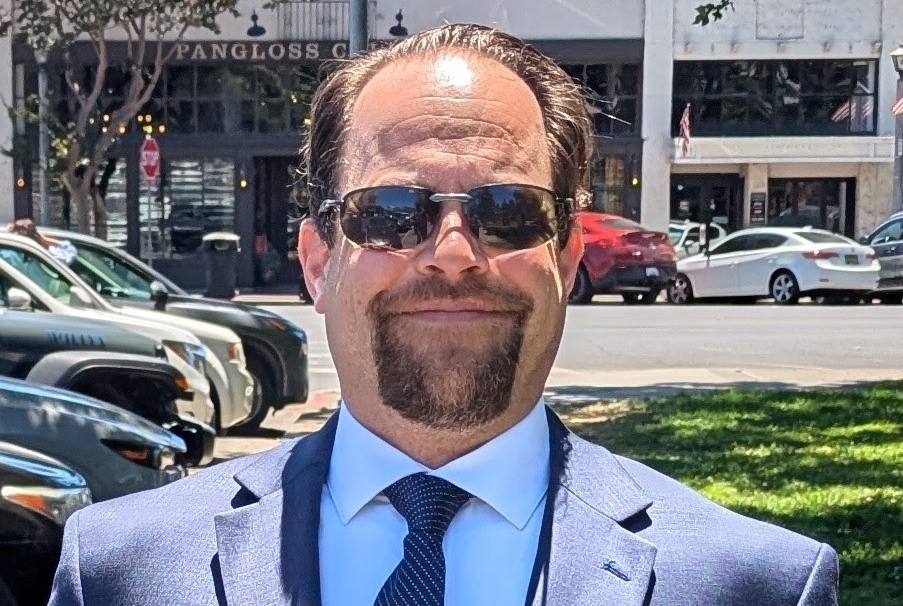
Jeremy Packman has spent 25 years inside public education, including leadership roles focused on student services and school systems. He has worked across classrooms, campuses, and district structures. Currently, his focus has been on questioning how schools build systems that actually support all students before problems escalate.
“Most schools don’t have a behavior problem,” he says. “They have a system problem. Kids often fall through gaps due to poor identification,
That is where MTSS—Multi-Tiered System of Supports—comes in.
MTSS Is a System, Not a Program
MTSS is often misunderstood. Some schools treat it like another initiative. Another framework to layer onto existing work. That approach fails quickly.
MTSS is an operating structure. Think of it as a foundation on which other systems are built, defining how support is delivered at every level.
Tier 1 sets expectations for all students. Tier 2 targets students who need additional support. Tier 3 addresses the most intensive needs.
When implemented correctly, most students succeed in Tier 1. That reduces strain on the rest of the system.
Research tied to Positive Behavior Intervention Systems (PBIS) shows that schools with strong Tier 1 implementation see fewer discipline referrals and improved attendance. “When instruction is engaging, fewer students tend to misbehave, due to fear of missing out. Instruction that incorporates student choice and requires critical thought tends to be the most engaging”.
Packman sees the same pattern in practice.
“Without a clear MTSS, schools may push past Tier 1 too quickly, leading to increased special education referrals, often for our most marginalized groups. When we focus more energy on external resources rather than on better classroom practice, I am not sure how we can expect these educational gaps to lessen.”
The Cost of Weak Tier 1 Systems
Tier 1 is where consistency lives. It defines expectations, routines, and responses.
When Tier 1 is weak, behavior becomes unpredictable. Teachers manage situations differently. Students test boundaries. Small issues escalate.
He describes a school where each classroom operated with its own rules.
“One teacher would stop instruction for minor behavior and escalate it. Another would ignore it. Another would send students out,” he says. “Students learned quickly that expectations depended on the environment, and that’s not a student problem. That’s a system problem.”
Without alignment, staff spend time reacting instead of teaching.
Restorative Practices Only Work Inside Structure
Restorative practices are often introduced as a solution. Circles, conversations, reflection.
These tools are useful. They are often misapplied.
“Restorative work is not a replacement for structure; it depends on it. It is also not a replacement for discipline, but rather a complement to support behavioral modification, healing, and determining motive.”.
He recalls a case in which two students had an ongoing conflict that escalated into a physical altercation.
“The default response would have been suspension,” he says. “Instead, we ran a structured restorative process. Both students had to explain what happened, listen to each other, and take responsibility.”
The process worked because expectations were clear beforehand. Boundaries were established. The restorative conversation reinforced those boundaries instead of replacing them. Again, students who take part in restorative conversations will still face consequences, though the likelihood of ongoing concerns would decrease greatly.
When conversations can happen in safe places and everyone feels heard, whether or not they agree with each other, most people feel better afterward.
Without structure, restorative practices become inconsistent. With structure, they create accountability.
Transition Points Break Systems
MTSS often breaks at transition points. Movement between tiers is not always based on clear data. Interventions start without defined goals. Progress is not tracked consistently.
“I’ve seen students placed into Tier 2 without anyone confirming that Tier 1 was implemented correctly,” he says. “That creates confusion and wastes time.”
Each tier requires clear entry and exit criteria. Without that, students move through the system without direction, and this can lead to systematic tracking, which often results in larger gaps for marginalized students.
MTSS demands discipline. Not just from students, but from the adults managing the system.
Behavior and Instruction Are Not Separate Problems
Schools often separate academic and behavior systems. Different teams. Different processes.
That division creates blind spots.
“A student who struggles academically will often show it through behavior,” he says. “If you treat that as only behavior, you miss the root cause.”
MTSS connects these systems. Instruction and behavior influence each other. Strong instruction reduces frustration. Clear behavior systems protect learning time.
Ignoring that connection limits impact.
What Actually Moves the System
Packman focuses on a small set of practices that produce consistent results.
Clear expectations across all classrooms.
Consistent responses to behavior.
Belief and modeling of growth mindset by all adults
Regular review of patterns and data.
These are not complex ideas. They require discipline to maintain.
He describes a case where the team reviewed referral data by time of day.
“We noticed a spike right after lunch,” he says. “Instead of creating a new program, we adjusted supervision and routines during that window. The referrals dropped quickly.”
The solution was not innovative. It was targeted and consistent.
Simplicity Creates Stability
Schools often respond to problems by adding layers. New programs. New tools. New processes.
Each addition increases complexity.
“Every new layer creates more room for confusion,” he says. “If people don’t understand the core system, adding more just makes it harder to follow.”
Simple systems scale. Complex systems break.
Clarity in expectations. Visibility in tracking. Consistency in response.
That combination holds.
A Necessary Shift in Focus
There is a tendency to focus on the highest level of need. Intensive interventions. Specialized programs.
Those are necessary. They should not be the starting point.
“If Tier 1 is strong, fewer students need Tier 3,” he says. “That changes the entire system.”
MTSS is built to prevent escalation. It requires attention at the base level.
Most systems fail because they focus too late.
Build the Base or Manage the Fallout
Schools have two choices.
Invest in strong foundational systems. Or manage the consequences of weak ones.
MTSS provides a structure that can support both behavior and instruction. Restorative practices reinforce accountability when used correctly.
The work is not complicated. It is consistent.
“The goal is not to respond better,” he says. “It’s to reduce the number of situations that need a response.”
That shift changes everything.

Pallavi Singal is the Vice President of Content at ztudium, where she leads innovative content strategies and oversees the development of high-impact editorial initiatives. With a strong background in digital media and a passion for storytelling, Pallavi plays a pivotal role in scaling the content operations for ztudium’s platforms, including Businessabc, Citiesabc, and IntelligentHQ, Wisdomia.ai, MStores, and many others. Her expertise spans content creation, SEO, and digital marketing, driving engagement and growth across multiple channels. Pallavi’s work is characterised by a keen insight into emerging trends in business, technologies like AI, blockchain, metaverse and others, and society, making her a trusted voice in the industry.