This is probably one of the most transformative periods in broadcasting history. As the industry moves away from traditional SDI infrastructures and into the world of all-IP workflows adoption is starting to reach hyper-speed. Going all-IP is changing the game on how content is produced managed and delivered. This handy guide will make sure you can make sense of it all and future proof your operation.
If you don’t evolve you get left behind.
Seriously though. The technology behind the transition to all-IP workflows is already here. It’s scalable it’s proven and way more affordable than keeping old outdated tech around.
The more you know about each technology and how they integrate together the easier it will be to determine what your upgrade path looks like.
Here’s what this guide covers:
- Why The Industry Is Moving To All-IP Broadcast Workflows
- HDMI to Coax Modulators Bridging The Gap To All-IP
- The Technologies Driving The Transition To All-IP
- How To Make Your Transition Smooth
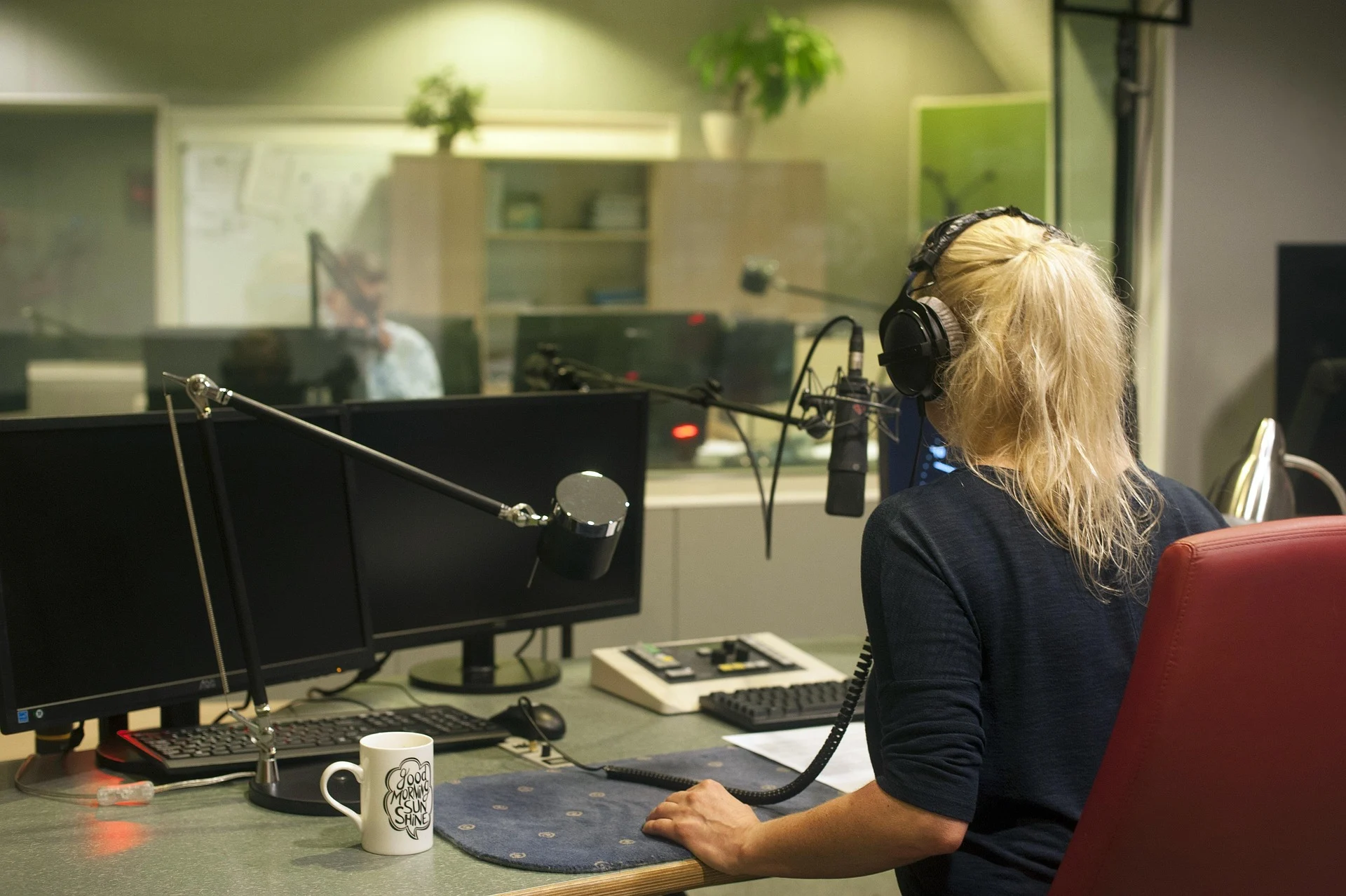
Why The Industry Is Moving To All-IP Broadcast Workflows
There’s no sugar coating this. It’s happening.
Going all-IP is the future of broadcasting and everyone knows it.
Traditional SDI video systems require a dedicated cable for each point a video signal needs to travel. This requires more hardware and less flexibility than IP based workflows which route video audio AND metadata through standard network hardware.
But here’s the kicker.
Broadcast facilities aren’t just ripping out their existing SDI infrastructure overnight. Most businesses out there are still using some level of hybrid workflow that involve both new IP gear and old school SD/HD-SDI video feeds. And that’s okay.
For the time being atleast they will need some way to bridge that gap between their existing coaxial cables and new IP systems. That’s where HDMI to coax modulators come in.
As shown above an HDMI to coax modulator takes HDMI input and modulates it to RF which can be distributed using legacy coaxial cables and codecs.
Companies like Thor Broadcast specialise in bridging technologies that help broadcast facilities transition from legacy SDI to IP workflows. By using modulators distributors and signal conversion tech they allow you to protect your current infrastructure investments while planning for your transition to IP.
Want to know how big of a shift this is?
The global IP broadcast infrastructure market reached $4.85 billion in 2024 and is expected to grow at a CAGR of 12.4% through 2033.
That’s bananas.
The Technologies Driving The Transition To All-IP
There are a handful of key technologies that make transitioning to IP possible. Here is everything you need to know about them.
SMPTE ST 2110
Lets kick this list off with the big dog…
SMPTE ST 2110 is the collection of standards that allow for uncompressed video audio AND metadata to be sent over IP independently of one another. With legacy SDI video everything traveled over the same cable. With ST 2110 video, audio and data get split into separate streams that can be routed wherever they need to go independently of each other.
Why you should care:
Allows you to send video to one destination and audio to another with no extra hardware in between.
It’s also incredibly popular. The 2024 SMPTE report on ST 2110 shows that 60% of major facilities are using it for production workflows. ST 2110 even won an Emmy in 2025 for Outstanding Achievement in Engineering.
Precision Time Protocol (PTP)
This one kind of sneaks up on you but it’s important.
With SMPTE ST 2110 video and audio are being routed independently of each other. That means some sort of standard is needed to keep video and audio locked to the same clock. Precision Time Protocol does just that.
Without PTP audio and video feeds would not stay in sync. Imagine horrible lip-sync errors during a live broadcast. Not ideal.
PTP keeps everything synced up to a fraction of a microsecond ensuring that your feeds won’t drift no matter what.
Software Defined Networking (SDN)
If you have ever worked in broadcast before you know how frustrating it can be when you want to make a simple change to your signal flow. With SDN you can.
Software defined networking allows administrators to manage network routers and switches through software instead of manually re-patching cables.
Sound crazy?
Here’s why it’s awesome.
With SDN you can make network routing changes in seconds. Automated scripts can be used to allocate more or less bandwidth to different productions depending on who needs it most.
Allows for unprecedented flexibility in live production environments.
HDMI To Coax Modulators Bridging The Gap To All-IP
Every facility is at a different stage of their transition to IP.
That is perfectly fine!
One of the best ways to migrate from legacy to IP is to run both simultaneously. As mentioned above HDMI to coax modulators allow you to distribute HDMI signals (from IP enabled devices) over your existing coaxial cable infrastructure.
Why this is important:
- Preserve your coax investment: You aren’t ripping out perfectly good coaxial cable just to convert to IP.
- Migrate at your own pace: It allows you to transition to IP on your own timeline.
- Maintain distribution quality: HDMI to coax modulators from preserve the highest video quality for broadcast applications.
Transitioning from legacy equipment to IP enabled gear is made easy when you have the right modulation and distribution tools.
Cloud-Based Production and REMI
Remote production. Also known as REMI.
Remote production has been taking the industry by storm over the past couple of years.
The concept is pretty simple. Instead of trucking equipment and entire crews to a venue you can produce right from your central facility.
Only key equipment gets sent on location while production takes place remotely at the broadcast facility.
Benefits of going remote:
- Costs associated with travel and equipment decrease
- Setup and tear down times are faster
- Access to more resources
- On-site requirements are smaller
Remote production can be taken even one step further by integrating cloud computing into your IP workflow.
Cloud-based production allows broadcasters to create virtual control rooms access editing tools remotely and scale up or down resources as needed.
Making Your Transition Smooth
Transitioning to an all-IP broadcast workflow will take time. Don’t rush it. Here are some tips to keep in mind when planning your strategy.
- Figure out what you want to keep and what you want to get rid of. This may take some research but knowing what hardware can integrate with your new IP infrastructure is crucial.
- Buy some modulators and run hybrid for now. As mentioned earlier going HDMI to coax allows you to protect your current infrastructure investments while planning for the future.
- Implement SMPTE ST 2110 workflows whenever you can. New builds should require ST 2110 compatibility whenever possible. For existing infrastructure begin using it where you can.
- Educate yourself and your team. There is a learning curve to understanding how IP networking works. Don’t be afraid to do some research and learn how everything works.
- Plan for failure. Make sure you have enough slack in the system to account for mistakes and malfunctions.
Transitioning your broadcast operation to IP doesn’t happen overnight.
Pulling Everything Together
The transition to All-IP workflows is upon us.
The industry is in the sweet spot right now where just enough facilities have made the leap to IP that it’s comfortable for others to follow.
Knowledge is power when it comes to understanding your options. The technologies mentioned above are already widely used and implemented.
Go forth and compute friends.