Have you ever wondered about the place that seems to be at the center of all the big science and tech news? That’s often the Massachusetts Institute of Technology, or MIT. It’s more than just a university; it’s a place where ideas get built and tested. People come from all over to see what’s happening there. This guide will take you on a little tour, showing you the campus, the life inside, and the areas around it, giving you a feel for what makes the institute of technology massachusetts so well-known.
Key Takeaways
- The Massachusetts Institute of Technology is a global leader in science and new ideas, with a focus on practical application.
- MIT’s campus features distinctive architecture and integrates art with scientific exploration.
- The MIT Museum offers an interactive look into the institute’s history and ongoing research.
- Student life at MIT is active and collaborative, fostering a strong community spirit.
- The areas surrounding MIT, like Kendall Square, are hubs for technology companies and startups, reflecting the institute’s wider impact.
Exploring The Institute’s Unique Campus
Architectural Marvels and Campus Landmarks
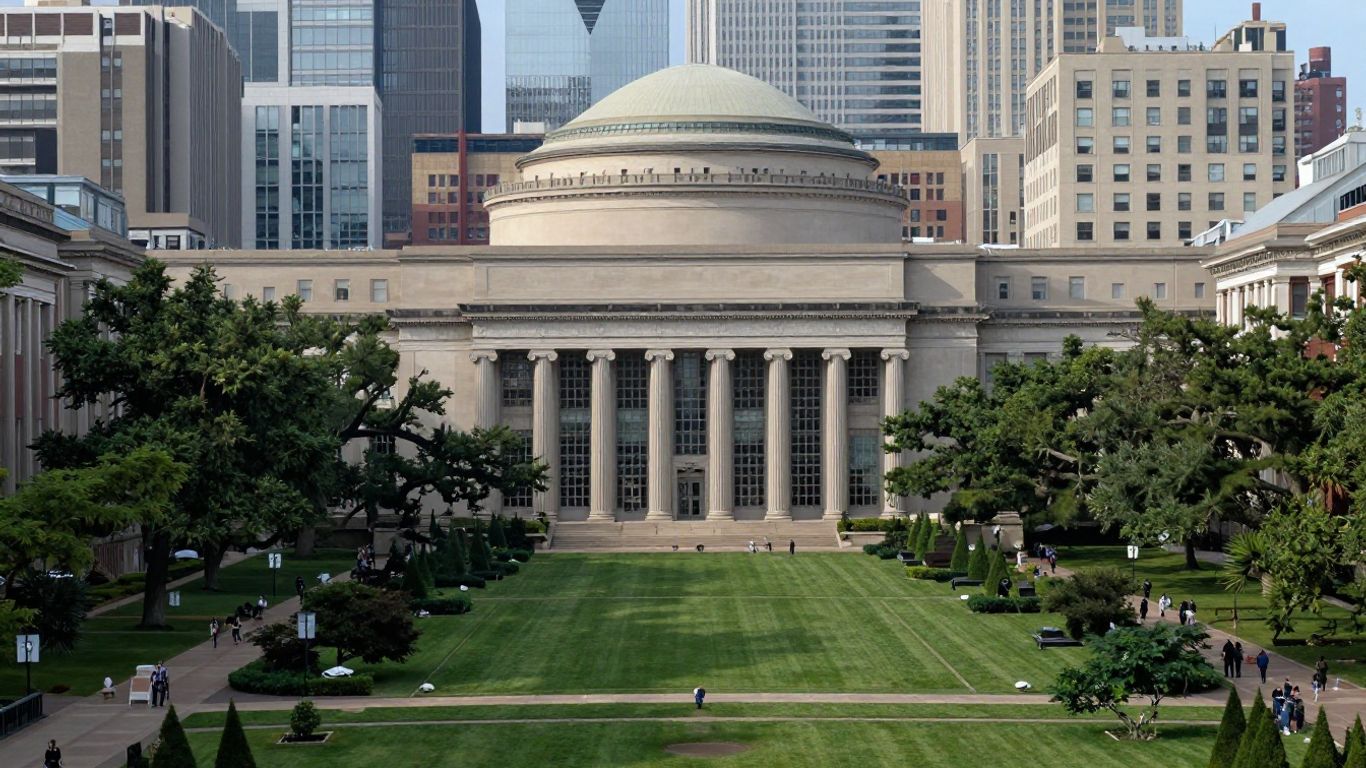
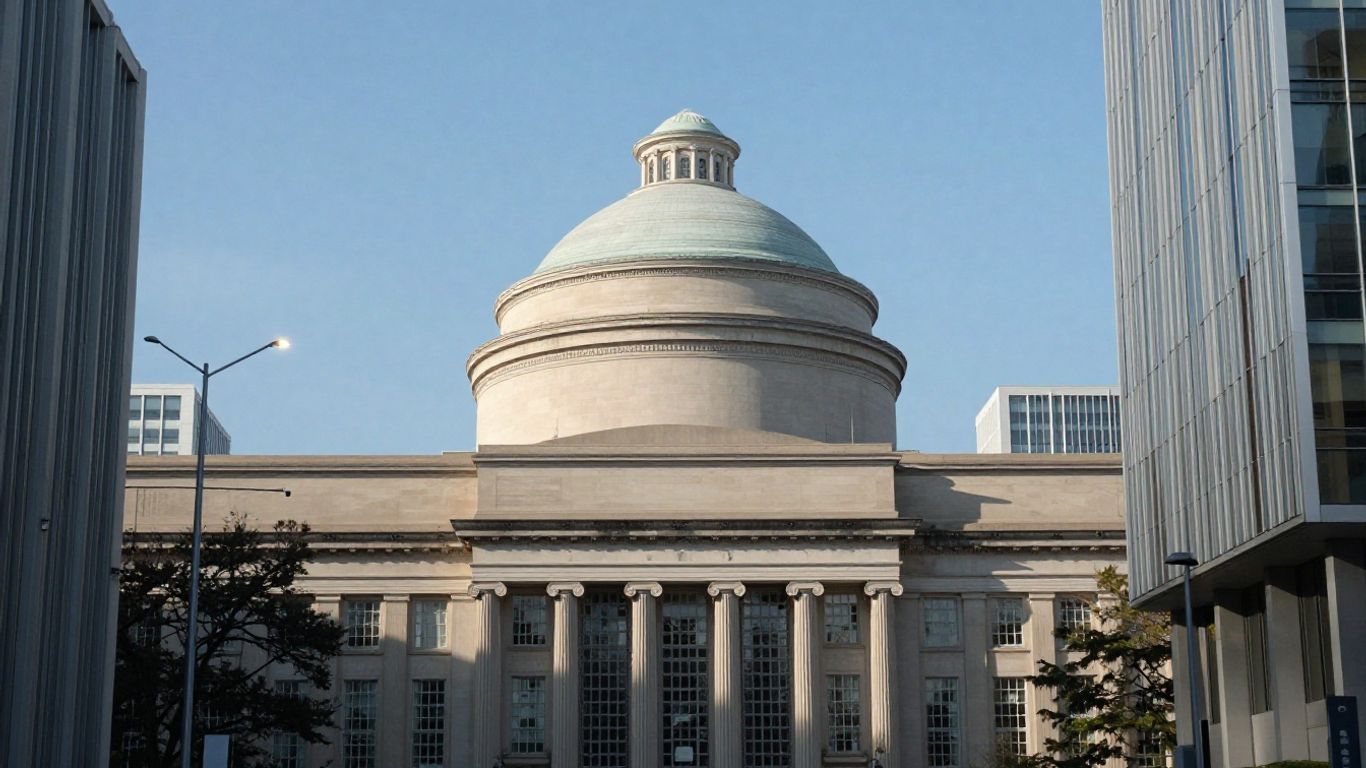
Walking around the Massachusetts Institute of Technology (MIT) campus is an experience in itself. It’s a place where the buildings tell a story, blending historical significance with designs that look like they belong in the future. You’ll see structures that are instantly recognizable, like the Great Dome, which sits atop the main building and holds a huge collection of books. It looks out over Killian Court, a lovely open space that’s famous for hosting graduation ceremonies each year. It’s a spot where tradition and the future really meet.
Then there’s the Stata Center. This building is a bit of a showstopper, with its unusual angles and colorful look. Designed by architect Frank Gehry, it’s a great example of how MIT isn’t afraid to be different. Inside, different academic departments and research labs are busy at work. It’s also known for the fun pranks, or ‘hacks,’ that students sometimes put up, showing a playful side to this serious place.
The campus architecture is more than just buildings; it’s a visual representation of the Institute’s innovative spirit, where form often follows function in surprising ways.
Art and Science Intertwined
The campus itself acts like a gallery, with public art installations placed all around. These pieces often connect art, science, and technology in interesting ways. You might see large sculptures or smaller works that make you think. They add a creative layer to the environment, making a walk across campus something new every time. These artworks aren’t just for decoration; they show how different fields of study can work together, which is a big part of what MIT is all about.
- Alexander Calder’s sculptures add dynamic movement to open spaces.
- Interactive installations invite visitors to engage with scientific concepts.
- Student-created art often reflects current research and campus life.
The Charles River: A Scenic and Recreational Space
Beyond the academic buildings and art, the campus is bordered by the Charles River. This provides a beautiful natural setting right on the edge of the city. The riverfront area is a place where students and faculty can take a break from their studies, relax, or get some exercise. It adds another dimension to the campus experience, mixing the intensity of academic life with the calm of the natural world. It’s a nice spot for a quiet walk or just to enjoy the view.
The “Mind and Hand” Philosophy in Practice
MIT’s approach to learning is famously built on its motto, "Mens et Manus," which translates to "Mind and Hand." This isn’t just a catchy phrase; it’s a guiding principle that shapes how students learn and create. The idea is simple yet powerful: knowledge gained through study should be immediately put to use through practical application. It’s about thinking critically and then building, making, and doing. This philosophy is woven into the fabric of the institute, encouraging a constant cycle of learning and application.
Project-Based Learning
Many courses at MIT require students to complete tangible projects. This means that instead of just reading about a concept, students are tasked with applying it to solve a real-world problem or build something new. These projects often involve teamwork, allowing students to collaborate and learn from each other’s perspectives. It’s a way to solidify theoretical knowledge by making it concrete.
Independent Research
Undergraduate students are actively encouraged to participate in research alongside faculty members. This provides an invaluable opportunity to contribute to cutting-edge discoveries and gain hands-on experience in scientific inquiry. Students can work in labs, analyze data, and even present their findings, getting a true feel for what it’s like to be at the forefront of their field.
Maker Spaces and Labs
MIT’s campus is equipped with numerous specialized spaces designed for creation and experimentation. These include advanced labs, workshops, and "maker spaces" where students have access to tools, technology, and technical support. Here, ideas can be rapidly prototyped, tested, and refined. It’s a place where students can bring their designs to life, turning abstract concepts into physical realities.
The integration of theoretical study with practical, hands-on work is what sets MIT apart. It prepares students not just to understand the world, but to actively shape it.
Here’s a look at how these elements come together:
- Application of Theory: Classroom knowledge is immediately tested and applied in practical settings.
- Skill Development: Students gain practical skills alongside their academic learning.
- Problem-Solving: Projects and research focus on tackling real-world challenges.
- Innovation Culture: The environment encourages experimentation and the creation of new solutions.
Driving Ideas from Concept to Reality
MIT is a place where ideas don’t just stay in notebooks; they become real things that can change the world. The institute has built a system to help people take a thought, develop it, and turn it into something tangible. It’s a journey that starts with a spark and, with the right support, can lead to significant impact.
Ideation and Incubation
This is where it all begins – the moment an idea takes shape. MIT provides spaces and opportunities for people to connect and share their initial thoughts. Think of places like MIT InnovationHQ (iHQ) as central points where students, faculty, and even outside collaborators can meet. It’s about sparking conversations, finding common ground, and getting that first push to explore a concept further. The atmosphere is designed to encourage the free flow of ideas, making it easier to find others who might be interested in joining your project or offering a new perspective.
Development and Prototyping
Once an idea has some form, the next step is to build and test it. MIT offers access to a wide range of advanced labs and maker spaces. These facilities are equipped with the tools and technology needed to create prototypes, allowing innovators to see their ideas in physical form. This hands-on process is key; it’s where theoretical concepts meet practical challenges. Iteration is common here – building, testing, learning from what doesn’t work, and refining the design. This practical application helps solidify the concept and identify areas for improvement.
Entrepreneurial Support
Turning an idea into a successful venture requires more than just a good concept and a prototype. MIT has dedicated centers, like the Martin Trust Center for MIT Entrepreneurship, that provide practical guidance. These resources help individuals understand the business side of innovation, including how to plan, analyze markets, and form a company. It’s about equipping aspiring entrepreneurs with the knowledge and skills to navigate the complexities of starting and growing a business. Support isn’t just theoretical; it’s about actionable advice and real-world strategies.
Funding and Investment
Even the most brilliant ideas need resources to grow. MIT offers various avenues for financial support. Programs such as the MIT Sandbox Innovation Fund provide early-stage funding, giving students the capital needed to explore their concepts and move them forward. Beyond initial seed money, the institute also helps connect successful ventures with potential investors. This financial ecosystem is designed to help ideas gain momentum, from the very first steps to scaling up for broader impact.
The path from a novel concept to a world-changing innovation is rarely a straight line. It involves experimentation, learning from setbacks, and adapting along the way. MIT’s approach acknowledges this reality by providing a supportive environment where trying new things and iterating on designs are not just accepted, but encouraged.
Showcasing Ingenuity At The MIT Museum
The Heart of Innovation: What Makes the MIT Museum Unique?
The MIT Museum serves as a public portal into the inventive spirit of the Massachusetts Institute of Technology. It’s more than just a repository of historical inventions; it’s a vibrant space that truly embodies the creativity and problem-solving prowess for which MIT is renowned. Situated in Kendall Square, this museum acts as a nexus where past discoveries, ongoing research, and future concepts converge. It provides a distinctive perspective on how science, technology, and even art collaborate to bring new ideas to life. The museum is intentionally designed to be engaging for all visitors, making complex subjects accessible and inspiring.
Interactive Exhibits and Historical Artifacts
A defining characteristic of the MIT Museum is its emphasis on hands-on engagement. Visitors are actively encouraged to interact with the exhibits, moving beyond passive observation. This approach aligns perfectly with MIT’s "Mind and Hand" philosophy, underscoring the importance of learning through practical application. The museum offers opportunities to explore:
- Robotics: Get up close with various types of robots, understand their mechanics, and witness them in action.
- Artificial Intelligence: Learn how AI is shaping our world, from everyday tools to more advanced systems.
- Emerging Technologies: Discover novel materials, sustainable solutions, and advancements in biotechnology currently under development in MIT laboratories.
Beyond these interactive displays, the museum also features historical artifacts that chronicle the evolution of innovation. Visitors can trace the development of ideas from their initial concepts to their modern applications, observing how foundational research continues to influence contemporary breakthroughs. The museum highlights not just the final products but the entire inventive process, including the experimentation, challenges, and iterative steps that lead to success. It celebrates both achievements and the learning derived from experimentation, even when outcomes are unexpected.
The museum effectively bridges the gap between complex research and public understanding, making innovation feel more approachable and exciting.
A Window into Pioneering Research
The MIT Museum offers a clear view into the cutting-edge research being conducted at MIT. Exhibits are frequently updated to reflect the latest discoveries, providing visitors a glimpse into potential future technologies. Key areas showcased include:
- Materials Science: Understanding new materials with unique properties.
- Sustainable Solutions: Exploring MIT’s work on renewable energy and environmental challenges.
- Bioengineering: Grasping how engineering principles are applied to biological systems.
These displays present tangible projects that researchers are actively pursuing. They serve as a way to connect the public with the practical aspects of scientific advancement and to see how theoretical concepts are translated into real-world applications. This direct connection demystifies the research process and inspires curiosity about the future.
A Legacy of World-Changing Advancements
For well over a century, MIT has been a powerhouse of invention, consistently turning groundbreaking scientific discoveries into practical tools and technologies that shape our daily lives. It’s a place where curiosity meets application, leading to an impressive track record of innovations that have had a global impact. Think about it: from the very foundations of the internet to vibrant color in movies, MIT’s fingerprints are all over the advancements that define modern society.
Innovations in Computer Science and Artificial Intelligence
MIT has been at the forefront of computing and AI for decades. Researchers here have developed foundational concepts in areas like machine learning and natural language processing. The MIT-IBM Watson AI Lab, for instance, has made significant strides, reportedly improving AI model accuracy by about 30% as of early 2026. This work isn’t just theoretical; it’s about creating AI that can solve real problems.
- Development of advanced machine learning algorithms.
- Pioneering work in natural language processing.
- Creation of AI tools for complex problem-solving.
Breakthroughs in Biotechnology and Medicine
The institute’s contributions extend deeply into health and medicine. MIT teams have developed rapid diagnostic tests, like the paper strip for Ebola, and innovative drug delivery systems, such as smart bandages that can release medication and signal when supplies are low. They’ve also adapted technologies like CRISPR for diagnostic purposes, making testing faster and more accessible.
The focus here is on translating biological understanding into tangible health solutions that can reach people quickly and effectively.
Advancements in Materials Science and Energy
MIT is also making waves in how we build things and power our world. They’ve developed novel steelmaking processes that produce zero emissions, creating cleaner industrial practices. In energy, the focus is on sustainable solutions, including the development of the first plane powered by ion flow instead of traditional engines, eliminating the need for fossil fuels. Furthermore, their work in creating powerful superconducting electromagnets and producing oxygen on Mars shows a commitment to pushing boundaries in extreme environments.
| Year | Advancement |
|---|---|
| 2013 | Emission-free steelmaking process |
| 2015 | Smart drug-delivering bandages |
| 2018 | Ion-powered aircraft |
| 2021 | High-temperature superconducting electromagnet |
| 2021 | Oxygen production on Mars (MOXIE experiment) |
Resources For Aspiring Innovators
MIT provides a robust network of support for individuals looking to bring their innovative ideas to life. This ecosystem is designed to guide aspiring entrepreneurs from the initial concept through to market realization, offering a variety of services and programs.
Venture Mentorship Service (VMS)
The Venture Mentorship Service connects MIT-affiliated entrepreneurs with experienced mentors. These mentors, often seasoned entrepreneurs, investors, and industry professionals, offer practical advice and guidance. They help innovators navigate the complexities of starting and scaling a business, providing insights drawn from their own experiences. The service aims to offer personalized support, helping founders overcome challenges and make informed decisions.
Technology Licensing Office (TLO)
The Technology Licensing Office plays a key role in translating MIT’s research discoveries into tangible products and services. TLO works with inventors to protect their intellectual property and then licenses these technologies to existing companies or new startups. This process facilitates the commercialization of groundbreaking research, allowing innovations developed within MIT to reach the public and make a real-world impact. They manage patents, copyrights, and other forms of intellectual property, acting as a bridge between academic research and commercial application.
Entrepreneurial Support Centers
MIT hosts several centers dedicated to fostering entrepreneurship. These centers provide a range of resources, including:
- Martin Trust Center for MIT Entrepreneurship: This center is a primary resource for students interested in starting companies. It offers workshops, mentorship, and a collaborative environment to develop business plans and strategies.
- Deshpande Center for Technological Innovation: Focused on advancing promising research from MIT labs into market-ready technologies, this center provides funding and support for projects with significant commercial potential.
- D-Lab: This initiative addresses practical challenges, often in developing regions, by providing students with the resources to design, build, and test innovative solutions. It emphasizes hands-on learning and real-world problem-solving.
The journey from a novel idea to a successful venture is rarely straightforward. It often involves many attempts, learning from what doesn’t work, and adapting along the way. MIT’s approach recognizes this, providing a supportive environment where experimentation and iteration are encouraged.
The Institute Technology Massachusetts Ecosystem
Fostering Cross-Pollination of Ideas
MIT isn’t just a collection of classrooms and labs; it’s a vibrant ecosystem where ideas don’t just form, they collide and combine. This environment is intentionally designed to encourage people from different fields to interact. Think of it as a place where a biologist might bump into a computer scientist at a coffee shop, sparking a conversation that leads to a new approach in medical technology. This constant exchange happens through shared spaces, interdisciplinary projects, and a general culture that celebrates curiosity across all disciplines. The proximity of diverse departments and research labs is a key ingredient in this innovative mix.
Encouraging Startup Creation
From the initial spark of an idea to the launch of a new company, MIT provides a structured pathway for its community to bring innovations to life. The institute supports this by offering resources that help individuals develop their concepts, build prototypes, and navigate the complexities of starting a business. This isn’t just about theoretical knowledge; it’s about practical steps and real-world application. Many students and faculty members are actively involved in creating ventures that address significant global challenges.
Facilitating Knowledge Sharing
Knowledge at MIT isn’t meant to stay within the walls of a single lab or department. The ecosystem actively promotes the sharing of discoveries and insights. This happens through various channels, including public lectures, research symposiums, and online platforms. The goal is to ensure that advancements benefit not only the immediate MIT community but also the wider world. This open approach to sharing information accelerates progress and inspires further innovation.
Here’s a look at some key components that contribute to this dynamic environment:
- Martin Trust Center for MIT Entrepreneurship: A central hub for aspiring entrepreneurs, offering guidance and resources.
- MIT Sandbox Innovation Fund Program: Provides early-stage funding and mentorship for student-led ventures.
- D-Lab: Focuses on developing practical solutions for global challenges through hands-on work.
- The Engine: An accelerator and venture capital fund specifically for tough-tech startups.
The entire MIT community, from students and faculty to alumni, participates in this interconnected network. It’s a place where intellectual curiosity meets a drive to solve problems, creating a powerful engine for progress that extends far beyond the campus boundaries.
A Lasting Impression of Innovation
So, that’s a look at the Massachusetts Institute of Technology. It’s more than just a school; it’s a place where ideas really come to life, from the buildings themselves to the work happening inside. Whether you’re interested in the latest tech, the history of invention, or just seeing what the future might look like, MIT offers a lot to explore. It’s a spot that definitely leaves you thinking about what’s possible. If you’re ever in the Cambridge area, it’s worth checking out to see this hub of creativity firsthand.
Frequently Asked Questions
What is MIT famous for?
MIT is known all over the world as a top place for learning about science, technology, and building new things. It’s a spot where brilliant ideas are born and amazing discoveries are made, making it a leader in creating new inventions.
What are the must-see places on the MIT campus?
You should definitely see the Great Dome, which is a very famous building. The Stata Center is also really cool because it has a unique and modern look. As you walk around, you’ll also find interesting art pieces everywhere.
Is the MIT Museum worth a visit?
Yes, the MIT Museum is highly recommended! It shows off incredible inventions and research from MIT in a fun and interactive way. You can see cool exhibits that tell the story of innovation.
What does the ‘Mind and Hand’ idea mean at MIT?
The ‘Mind and Hand’ idea means that MIT believes in learning both by thinking (mind) and by doing (hand). So, students learn important ideas and then use them to build and create things in the real world.
How does MIT help turn ideas into real products?
MIT has special places and programs to help students turn their ideas into real things. They offer help with planning, building, and even finding money to start new companies.
What kind of important discoveries has MIT made?
MIT has been a part of huge discoveries in areas like computers and artificial intelligence, new ways to treat sickness, and creating new materials for different uses. They also work on solutions for energy and the environment.