Automation has transformed how manufacturing decisions are made. Robotics, sensors, control software, and predictive analytics now operate together to optimize throughput, quality, and cost. Yet as automated systems become more sophisticated, a growing number of manufacturers are discovering that material reliability—not software or data—is increasingly the weakest link in decision-making.
In highly automated environments, decisions are only as reliable as the physical components executing them. When materials degrade under heat, wear, or chemical exposure, automated systems generate misleading signals, trigger false alarms, or fail without warning. To reduce this risk, manufacturers are paying closer attention to foundational components, including automation-ready alumina ceramic tubes for continuous industrial systems, which help stabilize operations where consistency and uptime are critical.
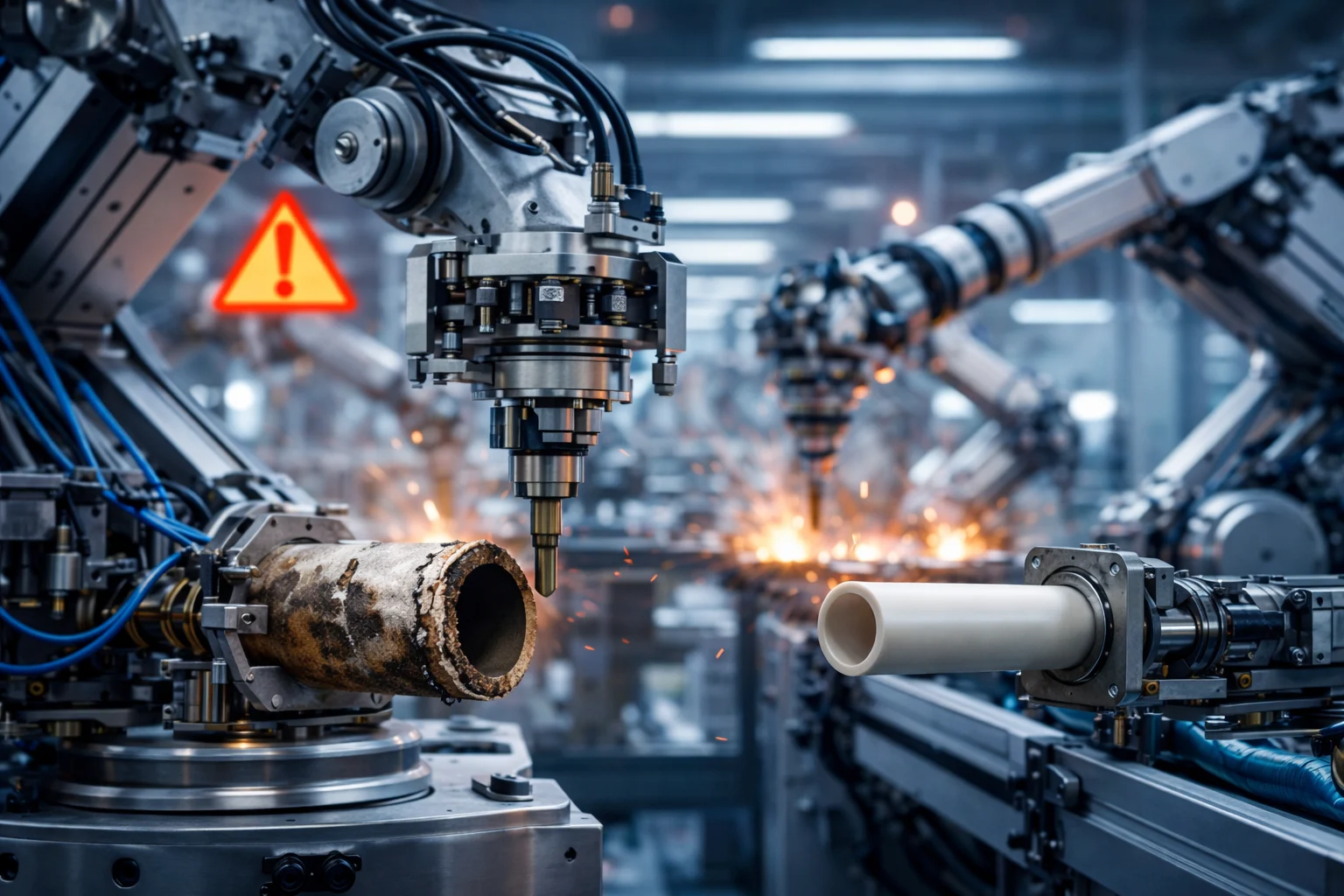
Automation Amplifies the Cost of Material Failure
In manual or semi-automated operations, material degradation is often visible. Operators can hear abnormal vibrations, observe wear, or intervene before a failure escalates. Automation removes much of this human oversight. Systems are designed to run continuously, relying on predefined thresholds and sensor feedback to make decisions.
When materials fail under these conditions, the impact is magnified. A single degraded component can affect multiple interconnected processes, leading to cascading shutdowns or inaccurate system responses. What appears to be a software or control issue is often rooted in a physical limitation that automation cannot compensate for.
As a result, material reliability directly influences the quality of automated decisions.
Why Data-Driven Decisions Still Depend on Physical Stability
Automated manufacturing decisions are increasingly data-driven. Predictive maintenance models, digital twins, and real-time monitoring assume that materials behave consistently over time. When that assumption breaks down, data accuracy follows.
For example, dimensional changes caused by thermal stress can alter sensor alignment. Surface degradation may introduce contamination that affects measurement accuracy. Electrical interference from unsuitable materials can distort signals in automated control systems. In each case, the automation logic remains intact, but its inputs become unreliable.
This disconnect undermines confidence in automated decision-making. Engineers and managers may respond by adding redundancy, increasing inspection frequency, or overriding system recommendations—reducing the very efficiency automation was meant to deliver.
Material Reliability as a Decision Enabler
Reliable materials do more than prevent failure; they enable better decisions. Components that maintain structural integrity, thermal stability, and chemical resistance provide a predictable physical foundation for automation systems.
Advanced ceramics, particularly alumina-based materials, offer performance characteristics that align well with automated environments. Their resistance to heat, wear, and corrosion helps ensure that physical conditions remain stable, allowing sensors and control algorithms to operate within expected parameters.
When material behavior is predictable, automated decisions become more trustworthy. Maintenance schedules can be planned with confidence, anomaly detection becomes more accurate, and system interventions are based on real issues rather than noise.
The Hidden Link Between Uptime and Decision Quality
Unplanned downtime is often treated as a maintenance problem, but in automated systems it is also a decision-making problem. Each shutdown represents a point where automation failed to anticipate or mitigate an issue.
Material-related failures are a common contributor to these events. Components exposed to continuous stress may degrade gradually, producing subtle changes that automated systems misinterpret or overlook. By the time a clear fault is detected, the opportunity for a controlled response has passed.
Improving material reliability reduces these blind spots. Fewer unexpected failures mean fewer emergency decisions, less reactive maintenance, and greater operational stability. Over time, this strengthens trust in automated systems and the decisions they support.
Rethinking Materials as Strategic Assets
In automated manufacturing, materials can no longer be treated as interchangeable or secondary considerations. Their performance affects not only physical durability but also the integrity of automated decision frameworks.
Manufacturers that recognize this shift are beginning to evaluate materials alongside software, analytics, and system architecture. Instead of asking whether a component meets minimum specifications, they assess how material behavior influences decision accuracy, system confidence, and long-term operational predictability.
This perspective elevates material selection from a procurement task to a strategic decision.
The Role of Specialized Material Expertise
As automation exposes tighter performance tolerances, many manufacturers rely on specialized material expertise to address emerging constraints. Companies such as ADCERAX, which focus on advanced ceramic components for demanding industrial applications, operate at this intersection of material science and automated manufacturing requirements.
By aligning material performance with automated system needs, such expertise helps manufacturers reduce uncertainty without redesigning entire processes. The result is a more resilient foundation for automation-driven decision-making.
Conclusion
Automation promises faster, smarter, and more consistent manufacturing decisions—but only if the physical systems executing those decisions remain reliable. As operations become more autonomous and interconnected, material reliability is emerging as a decisive factor in whether automated decision-making succeeds or fails.
Treating materials as strategic enablers rather than background components allows manufacturers to strengthen decision quality, reduce unplanned downtime, and fully realize the benefits of automation. In an environment where margins for error are shrinking, material reliability is no longer optional—it is central to automated manufacturing performance.