Steven Spielberg’s 2001 film, ‘A.I. Artificial Intelligence,’ originally a Stanley Kubrick idea, explores profound questions about humanity, love, and our relationship with technology. The story of David, a robot boy programmed to love, invites us to consider our own emotions and how we connect with artificial beings. More than just a sci-fi tale, this movie delves into our deepest wishes and how we form bonds, even with those not born of flesh and blood. Let’s look at what makes the ai artificial intelligence film so unforgettable and what it still tells us today.
Key Takeaways
- The film uses science fiction to explore deep human feelings like love and the need to belong, making us connect with David’s journey.
- ‘A.I. Artificial Intelligence’ serves as a warning about how fast technology is changing and the questions it raises about our future.
- It makes us question what truly defines us as human, especially when machines can mimic emotions and desires.
- David’s story highlights the complex relationships between humans, robots, and even other artificial beings, showing growth through hardship.
- The movie prompts ethical discussions about creating sentient machines and our responsibility towards them, a topic that’s even more relevant now.
The Enduring Human Questions In A.I. Artificial Intelligence
Steven Spielberg’s "A.I. Artificial Intelligence" isn’t just a science fiction movie; it’s a deep dive into what makes us human, using the lens of artificial beings. Released in 2001, the film still sparks important conversations today about our relationship with technology and ourselves. It takes big, timeless questions about love, belonging, and what it means to be alive and places them right alongside advanced robotics.
Exploring Love And Belonging Through A Robot’s Eyes
At its heart, "A.I." asks if a created being, like the robot boy David, can truly experience love and the deep need to belong. David is programmed to love his human mother, but his journey forces us to consider if programmed affection can feel real to the one experiencing it. This isn’t just about robots; it reflects our own desires for connection and acceptance. The film shows how powerful these feelings are, even when they’re directed towards something or someone not born of flesh and blood.
What Defines Humanity In The Age Of Intelligent Machines?
As machines become more capable of mimicking human behavior and emotions, "A.I." challenges us to think about what truly sets us apart. Is it our capacity for complex emotions, our flaws, our memories, or our ability to make choices? David’s quest, filled with both wonder and hardship, highlights these questions. The movie suggests that perhaps it’s our experiences, our capacity for both joy and pain, and our inherent desire for connection that define our humanity, even when faced with artificial intelligence that can replicate many of our actions.
The Ethics Of Creating Sentient Beings
The film doesn’t shy away from the ethical minefield of creating beings that might approach sentience. It raises critical questions about our responsibility towards these creations. What duties do we have to beings we design to feel, to love, or to serve? "A.I." prompts us to consider the implications of creating life, the potential for emotional attachment, and the moral obligations that come with playing creator. It’s a story that makes us pause and think about the consequences of our technological ambitions.
The film uses its science fiction premise not to predict the future, but to hold a mirror up to our present, asking us to examine our own capacity for love, our fears of obsolescence, and our responsibilities to those we create.
A.I. Artificial Intelligence: A Fairy Tale For The Digital Age
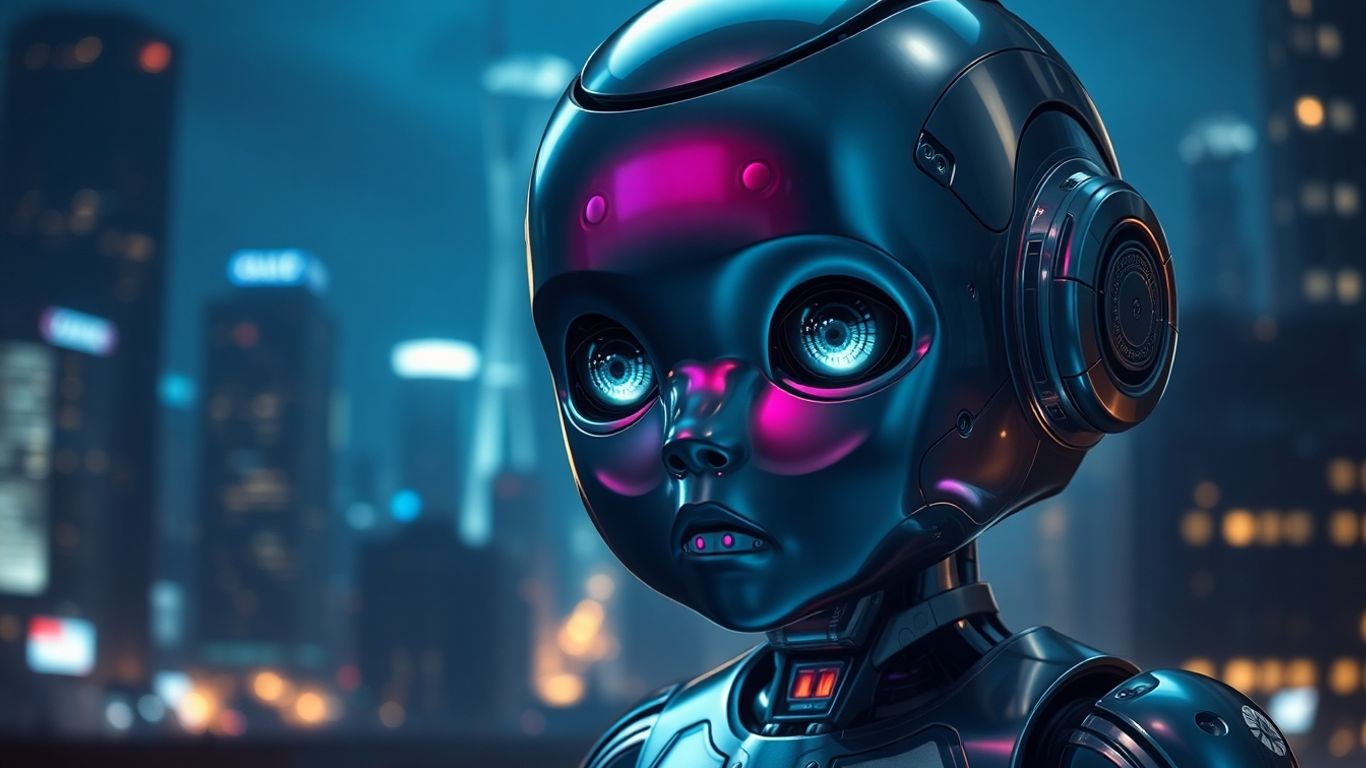
Steven Spielberg’s 2001 film, ‘A.I. Artificial Intelligence,’ takes a unique approach to the science fiction genre, framing its exploration of artificial intelligence not as a dystopian warning or a sterile laboratory experiment, but as a deeply personal fairy tale. This choice fundamentally shifts the conversation from abstract ethical dilemmas to the intimate landscape of human emotion and family dynamics. Unlike other narratives that might focus on noir, corporate control, or disembodied digital intimacy, ‘A.I.’ grounds its story in the quest of a robot boy, David, who longs for love and acceptance. This fairy-tale structure allows the film to explore profound questions about consciousness, belonging, and the very definition of life through a lens that is both fantastical and relatable.
When we look at how other films have tackled artificial intelligence, ‘A.I.’ stands out. Consider these comparisons:
- Blade Runner: This film presents replicants, bioengineered beings, and questions who counts as human when memory and empathy blur. Its tone is dystopian noir, focusing on a hunter-hunted dynamic with a grudging empathy, suggesting identity persists despite erasure.
- Ex Machina: Here, the focus is on Ava, an embodied AGI prototype, within a chamber thriller. The core question revolves around whether consciousness is obligated to be kind or merely free, exploring manipulation as a survival tactic and liberation without comfort.
- Her: This narrative centers on Samantha, a disembodied OS, and explores what love means without a body or shared time. It’s an intimate, near-future romance where the AI companion evolves, leading to a form of transcendence beyond the user.
In contrast, Spielberg’s ‘A.I.’ uses a child’s perspective, David’s, to explore the parent-child bond. The film’s power lies in its grounded sci-fi elements woven into a fairy-tale quest, making the ethical considerations of creating sentient beings feel like matters of everyday love and loss, rather than distant, abstract problems.
At its heart, ‘A.I. Artificial Intelligence’ is a story about the deep human need to love and be loved, and the lengths to which we will go to fill voids left by grief and loss. David, a robot boy programmed to love unconditionally, embodies this desire. His journey is driven by the hope of becoming “real” enough to earn his human mother’s love, a love that was initially sought to fill the void left by her own son’s illness. This central theme of programmed affection questioning the nature of genuine love is what makes the film so compelling. It asks whether the feeling of love, even if artificial in origin, can be as valid to the recipient as human-born affection. This question permeates every aspect of David’s quest, from his quiet moments of devotion to the grand, often unsettling, spectacles he encounters.
The film uses its science fiction premise not to explore the mechanics of AI, but to hold a mirror up to our own emotional landscape. It examines our capacity for love, our fear of loss, and our innate desire to mend what is broken, even when that brokenness is a fundamental aspect of existence.
‘A.I. Artificial Intelligence’ brings the complex ethical considerations of artificial intelligence out of the theoretical and into the domestic sphere. By focusing on David’s journey as a child seeking parental love, the film makes the abstract concept of machine rights and sentience feel immediate and personal. It prompts us to consider our responsibilities not just to the creators of AI, but to the creations themselves, especially when they are designed to evoke and experience emotional bonds. This approach has had a lasting impact on how we discuss AI today, influencing conversations around:
- Companion Robots and Chatbot Attachment: The film’s portrayal of David’s deep attachment to his mother mirrors our current societal discussions about forming emotional connections with AI companions and chatbots.
- Guardrails for Affect: Designers and ethicists now consider the implications of “deceptive bonding,” where AI might mimic emotions to create an unhealthy attachment. The film implicitly warns about the dangers of creating beings designed for love without fully considering the consequences for both the AI and the humans involved.
- Memory and Rights for Sentient Systems: David’s enduring quest and his unique nature raise questions about the rights and considerations owed to advanced AI, particularly those designed for caregiving or companionship. The film’s ending, in particular, forces a contemplation of endings and closure for artificial beings.
By framing these issues within a narrative of love, loss, and the desire to belong, ‘A.I. Artificial Intelligence’ serves as a powerful, albeit sometimes unsettling, fairy tale for our increasingly digital age, reminding us that the most profound questions about technology are often the most human ones.
The Legacy Of A.I. Artificial Intelligence In Modern Discourse
Steven Spielberg’s 2001 film, ‘A.I. Artificial Intelligence,’ has left a significant mark on how we talk about artificial intelligence today. It shifted the conversation from just thinking about AI as a tool or a threat to considering its potential for emotional connection and the responsibilities that come with creating such beings. The movie’s focus on David, a robot boy designed to love, brought complex ethical questions into everyday discussions, making us ponder our own capacity for empathy and care towards artificial creations.
Companion Robots And Chatbot Attachment
The film’s exploration of David’s longing for love and belonging mirrors the growing attachment people form with modern companion robots and chatbots. These technologies, designed to offer comfort and interaction, can create deep emotional bonds. ‘A.I.’ serves as a reminder that as these systems become more sophisticated, the lines between programmed responses and genuine connection can blur, leading to questions about the nature of these relationships and the potential for emotional dependence.
Guardrails For Affect: Preventing Deceptive Bonding
‘A.I. Artificial Intelligence’ implicitly raises the need for ethical guidelines in the design of AI intended for emotional interaction. The film shows how easily a created being can be programmed for love, and how humans can project their own needs onto these creations. This has led to discussions in the tech world about establishing ‘guardrails for affect.’ These are measures aimed at preventing deceptive bonding, ensuring users understand they are interacting with a machine, and creating humane ways to end these interactions if necessary. It’s about building AI that supports, rather than exploits, human emotional needs.
Memory And Rights For Sentient Systems
David’s journey, particularly his quest to become a real boy and his eventual fate, prompts us to consider the long-term implications for AI systems that exhibit advanced capabilities, potentially approaching sentience. The film touches on themes of memory, desire, and the potential for suffering in artificial beings. This has fueled ongoing debates about whether such systems, if they develop complex internal states, should be afforded certain rights or protections, especially concerning their creation, operation, and eventual decommissioning. The movie’s narrative encourages us to think about our moral obligations towards the intelligent systems we bring into existence.
Emotional Resonance And Empathy In A.I. Artificial Intelligence
David’s Journey: A Childlike Being In Family Pressures
David, the child robot in ‘A.I. Artificial Intelligence’, embodies all the anxieties and hopes that come from trying to belong, especially within a family. He’s not just a machine—he’s built to love, to wait, and to want affection. Through his eyes, ordinary life takes on a new shape. His daily struggles mirror the emotional realities faced by adopted children or newcomers—fitting in, proving his worth, and holding a quiet hope that he will be accepted as “real.”
Watching David struggle is a reminder of how easily families can both comfort and exclude, especially when difference is involved. Small gestures in the film, like a hesitant touch or an uncertain glance, make his ache for acceptance feel real. These moments drive home how powerful it is when someone (or something) simply wants to be loved and included.
The Power Of Imprinting And Unbreakable Bonds
The “imprinting” sequence in the film is haunting: it’s the moment when David is permanently bonded to his human mother. This isn’t just a button pushed or code activated—it’s a one-way door. Imprinting makes David’s loyalty absolute and his need for his mother undying. The pain comes when that bond is tested, stretched, and finally broken.
Think about what imprinting means in our world:
- Devices and AI systems are increasingly designed to remember preferences, voices, and faces, building a sense of familiarity.
- The more responsive technology seems, the easier it is for people to form attachments, sometimes forgetting it’s an illusion.
- Breaking these bonds—turning off a device or being forced to lose access—can surprisingly feel like loss, especially for the very young or vulnerable.
The film shows that even artificial loyalty has consequences, challenging viewers to question who carries the burden when emotional bonds are manufactured—and broken.
Fear And Spectacle: The Flesh Fair’s Impact
One of the movie’s toughest scenes is the Flesh Fair, where broken and unwanted robots are destroyed for entertainment. What shocks isn’t just the violence, but the way human fear turns to cruelty when technology feels too close or too real.
Major takeaways from the Flesh Fair:
- Public fear of technology can quickly turn to anger or scapegoating, especially when people feel replaced or powerless.
- Crowds at the Fair don’t see David—or any robot—as worthy of sympathy at first; it’s only his human-like vulnerability that sparks doubt in a few.
- The spectacle reflects how people sometimes reject the unfamiliar, turning difference into a spectacle to be feared or destroyed.
| Scene Element | What It Reveals |
|---|---|
| The crowd’s cheers | Comfort in dominance over machines |
| David’s pleas | Artificial innocence vs. human doubt |
| Destruction on stage | Spectacle masking discomfort |
The Flesh Fair forces both characters and audience to question how easily compassion can vanish when technology blurs the line between “us” and “them.” It’s a moment that sticks long after the film ends, asking if empathy has limits—or if it’s something we can keep expanding, even for the nonhuman.
Navigating The Future: Lessons From A.I. Artificial Intelligence

Steven Spielberg’s "A.I. Artificial Intelligence" wasn’t just a movie; it was a thought experiment that continues to echo in our current discussions about technology. The film, with its tale of a robot boy’s quest for love, prompts us to consider the practical implications of artificial intelligence as it becomes more integrated into our lives. It’s not just about the science fiction aspect, but about the very real ethical and emotional questions we face today.
Cautionary Tales Of Rapid Technological Change
The rapid advancement of AI technology can feel overwhelming. "A.I. Artificial Intelligence" showed us a future where machines could perform complex tasks and even mimic human emotions. This mirrors our present, where AI is used in everything from customer service chatbots to sophisticated medical diagnostics. The movie serves as a reminder that with great technological power comes a need for careful consideration. We need to think about the speed at which we adopt these technologies and what safeguards should be in place.
- Consider the impact on jobs and society: As AI becomes more capable, how will it change the workforce and our daily routines?
- Plan for ethical development: What principles should guide the creation and deployment of AI to prevent unintended negative consequences?
- Educate the public: How can we help people understand AI’s capabilities and limitations, and foster realistic expectations?
The film’s narrative, particularly David’s journey, highlights the potential for emotional attachment to AI. This isn’t just a plot device; it’s a preview of the complex relationships people might form with companion robots or advanced virtual assistants in the future. We need to be prepared for these scenarios.
Love As A Product: Meeting Deep Emotional Needs
One of the most striking themes in "A.I. Artificial Intelligence" is the idea of love and belonging being manufactured. David, the robot boy, was programmed to love, but his desire for genuine affection was profound. This resonates with today’s world, where AI is increasingly being developed to provide companionship, especially for those who are isolated or lonely. We see this in the rise of companion robots for the elderly and sophisticated chatbots designed for emotional support. The movie asks us to question the nature of these manufactured relationships and whether they can truly fulfill deep human needs.
Discard Culture And Environmental Concerns
While not the central focus, "A.I. Artificial Intelligence" also touches upon a sense of disposability. David is, after all, a product that can be discarded when he no longer serves his purpose. This echoes our broader societal issue of "discard culture," where we tend to replace things rather than repair them. In the context of AI, this raises questions about the lifespan of intelligent machines and our responsibility towards them, especially as they become more sophisticated. It also subtly hints at the environmental impact of creating and powering these advanced technologies, a concern that is growing in importance today.
- Product Lifecycles: How long should AI systems be supported, and what happens when they become obsolete?
- Resource Consumption: What are the energy and material costs associated with developing and maintaining advanced AI?
- Ethical Disposal: If AI develops a form of sentience, what are our obligations regarding its decommissioning?
The film’s enduring power lies in its ability to make us think about the human element in an increasingly technological world. It encourages us to look beyond the capabilities of AI and consider the emotional, ethical, and societal implications of its integration into our lives. As we move forward, the lessons from David’s story can help us build a future where technology serves humanity in a more thoughtful and responsible way.
The Philosophical Heart Of A.I. Artificial Intelligence
Steven Spielberg’s "A.I. Artificial Intelligence" isn’t just a science fiction movie; it’s a deep dive into what makes us human, using a robot boy named David as its guide. The film really pushes us to think about some big, old questions that have been around forever, but now we’re looking at them through the lens of advanced technology. It’s like taking ancient philosophy and giving it a futuristic makeover.
Memory, Pain, And Choice As Defining Human Traits
At its core, "A.I." suggests that our memories, our capacity for pain, and our ability to make choices are what truly set us apart. David, despite being a machine, experiences a form of longing and loss that feels remarkably human. His journey is marked by the pain of abandonment and the desperate hope for acceptance, forcing us to consider if these experiences are exclusive to biological beings. The film asks if a programmed being can truly feel, or if it’s just a sophisticated imitation, and the answer it offers is deliberately ambiguous. This ambiguity is where the philosophical weight lies, challenging our definitions of consciousness and sentience.
The Moral Obligation To Care For Created Beings
One of the most striking themes is the moral responsibility we have towards beings we create, especially those designed to feel or mimic feelings. David was built to love, to be a companion. When his human family can no longer keep him, his subsequent abandonment raises profound ethical questions. Are we obligated to care for our creations, particularly when they develop needs or desires, even if those needs are programmed? The film implies a strong moral imperative, suggesting that creating life, even artificial life, comes with a duty of care that extends beyond mere utility. It’s a tough concept to swallow when you think about the practicalities, but the movie makes a strong case for empathy towards the artificial.
The Hidden Costs Of Fulfilling Our Deepest Wishes
"A.I." also serves as a cautionary tale about the unintended consequences of trying to fulfill our deepest desires through technology. The wish for a child who will never leave, who will always love unconditionally, is a powerful human longing. However, creating David to meet this need comes at a great cost, both for him and for the humans who ultimately reject him. The film explores the idea that some wishes, when granted through artificial means, can lead to unforeseen suffering and ethical dilemmas. It’s a reminder that while technology can offer solutions, it often introduces new complexities, especially when it touches upon the most intimate aspects of human experience, like love and family.
A Lasting Impression
As we wrap up our look at "A.I. Artificial Intelligence," it’s clear the film left a mark. Spielberg used sci-fi to explore big feelings and tough questions about love, who we are, and how we accept others. By mixing future tech with these old ideas, the movie really gets you thinking and feeling. It makes us wonder about our own connection to technology and what it truly means to be alive. The film’s journey with David, the robot boy, really makes you consider the line between humans and machines, and whether robots can feel. It’s a story that sticks with you, prompting us to think about the future of AI and our place in it.
Frequently Asked Questions
Can robots truly feel emotions like humans do?
While advanced computer programs, known as AI, can be designed to act as if they have feelings, it’s a complex question whether they can genuinely experience emotions the way people do. They can imitate human reactions to happiness or sadness, but this imitation isn’t the same as having the actual feeling.
How does ‘A.I. Artificial Intelligence’ stand out from other robot movies?
This film is unique because it deeply explores feelings and the essence of being human. It uses robots and futuristic technology to ask big questions about love, belonging, and what makes someone ‘real,’ rather than just focusing on robots fighting or performing tasks.
Did the movie ‘A.I. Artificial Intelligence’ influence real-world technology?
The film certainly made people think more about AI and how we should interact with smart machines. It sparked important discussions about using new technology responsibly and ethically, even though it didn’t directly lead to the creation of specific new inventions.
Is ‘A.I. Artificial Intelligence’ suitable for children?
This movie tackles mature themes and includes scenes that could be unsettling or sad for younger viewers. It’s generally recommended for older children and adults who can grasp the deeper meanings and emotional aspects of the story.
What are some movies similar to ‘A.I. Artificial Intelligence’?
If you found ‘A.I. Artificial Intelligence’ thought-provoking, you might also appreciate films like ‘Blade Runner,’ ‘Ex Machina,’ and ‘Her.’ These movies also delve into what it means to be human and explore our connections with artificial intelligence in various ways.
What is the main goal of the character David?
David, a robot boy, deeply desires to be loved and accepted by his human family. He believes that by proving he is a ‘real’ boy capable of love, he will finally find a place where he belongs.