A Cashiers Check and a bank draft are both secure payment options for large transactions. While both are guaranteed by banks, a Cashiers Check offers faster verification and slightly higher safety, making it ideal for domestic payments. Bank drafts remain reliable for international or business deals, ensuring trust in financial exchanges.
When making a large payment, such as buying a car, paying rent, or closing a property deal, people often want a payment method that feels safe and guaranteed. Two common options are a Cashiers Check and a bank draft.
Both are considered secure and reliable, but they differ slightly in how they work and how quickly they can be verified. Understanding these differences can help you choose the safest method for your specific situation.
What is a cashier’s check?
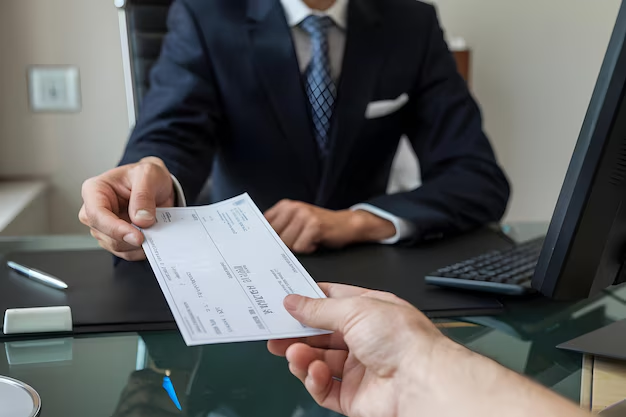
A Cashiers Check is a payment instrument issued directly by a bank on behalf of its customer. When you request one, the bank immediately withdraws the amount from your account and holds it in its own name. The check is then signed and guaranteed by the bank itself.
That means the money is not coming from your personal account, it’s coming from the bank’s account. This gives the recipient confidence that the funds are real and available.
For example, if you buy a used car for $10,000, a Cashiers Check ensures the seller will get the full amount without worrying about insufficient funds or a bounced cheque.
What is a bank draft?
A bank draft (also known as a banker’s draft in the UK) works similarly to a Cashiers Check, but there are subtle differences in how it is processed.
With a bank draft, the amount is also taken from your account before the draft is issued. The bank then provides an official document confirming that the funds are guaranteed. The draft can be given to the payee, who can deposit it like any normal cheque.
However, while both are secure, a Cashiers Check is often considered slightly faster and easier to verify, especially in the United States, where it is more commonly used.
How do they work in practice?
Both a Cashiers Check and a bank draft are considered guaranteed payments, but they move through the banking system in slightly different ways.
- With a Cashiers Check: The bank issues the check from its own account and becomes directly responsible for payment. Once issued, it is as good as cash—assuming it’s genuine.
- With a Bank Draft: The customer’s account is debited first, and the bank provides a draft as proof that the money is held securely. The funds are released when the recipient deposits the draft into their account.
In both cases, the goal is to reduce risk. Sellers like receiving a Cashiers Check or bank draft because they don’t have to worry about personal cheques that might bounce.
When to use a cashier’s check
A Cashiers Check is ideal when you need to make a large, one-time payment and want extra assurance that the money will clear. Common examples include:
- Buying a home or vehicle
- Paying a deposit for a rental property
- Transferring large sums between accounts or individuals
- Business transactions where cash isn’t suitable
Because a Cashiers Check is backed by the issuing bank, it offers peace of mind to both the sender and the recipient.
It’s especially popular in the United States, where many property transactions rely on Cashiers Checks as proof of funds.
When to use a bank draft
A bank draft serves the same purpose in many cases, especially in the UK and Commonwealth countries. It’s often used for:
- International transactions
- Business deals where electronic transfers aren’t possible
- Payments requiring official confirmation of funds
While a Cashiers Check provides immediate verification, a bank draft might take slightly longer to clear, especially across borders. Still, both are far more secure than personal cheques.
The Key Differences Between Cashier’s Check and Bank Draft
Here’s a simple comparison to understand the main distinctions:
| Feature | Cashier’s Check | Bank Draft |
| Issued By | Bank’s own account | Customer’s account (funds guaranteed by bank) |
| Guarantee | Full payment guaranteed by the bank | Bank guarantees payment once funds are debited |
| Speed | Faster verification | May take slightly longer |
| Use | Common in the U.S. | Common in the U.K. and the Commonwealth |
| Security Level | Very high | High |
| Risk of Fraud | Possible but less common | Similar risk if not verified |
| Preferred For | Real estate, car purchases | Business and international deals |
Are cashier’s checks really safer?
The main reason people choose a Cashiers Check is its high level of security. Because the check is drawn from the bank’s own funds, it can’t “bounce.”
However, like any payment method, Cashiers Checks can still be forged or misused. Scammers sometimes create fake versions that look real, especially in online marketplaces. That’s why it’s important to:
- Verify the check directly with the issuing bank before accepting it.
- Avoid depositing a Cashiers Check from someone you don’t know.
- Wait until the bank fully clears the payment before sending goods or money.
When used correctly, though, a Cashiers Check remains one of the safest non-digital payment options available.
Bank drafts: Still reliable, but slower
Bank drafts are very reliable, but they rely on traditional clearing systems. Depending on your bank, it can take a few days before the money shows up in your account after deposit.
In the UK, bank drafts were once the gold standard for large transactions, but they’re becoming less common as more people move to digital transfers.
However, if you’re making an international payment or dealing with a business that prefers paper documentation, a bank draft is still a solid option.
Fees and processing time
Both cashier’s Checks and bank drafts involve small fees.
- In the U.S., a Cashiers Check usually costs between $10 and $20.
- In the UK, a bank draft may cost between £10 and £25, depending on the bank and destination.
Processing times are similar. Domestic Cashiers Checks usually clear within one business day, while international drafts can take several days.
Final thoughts: Safety, trust, and modern banking
Both Cashiers Checks and bank drafts have been used for decades because they represent trust between banks and customers. In an age of instant payments, they remain valuable tools for secure transactions that require documentation and bank-backed guarantees.
For individuals and businesses handling large sums, understanding these instruments—and using them wisely, can help avoid costly mistakes and scams.
While technology continues to evolve, the Cashiers Check stands strong as a symbol of safety and reliability in financial transactions.