The distinction between “to augment or to be augmented “is not semantic; it is foundational. It determines whether we remain the authors of our destiny or become mere characters in an algorithmic narrative we no longer control. Or perhaps we have never controlled… and now face that inevitability, directly.
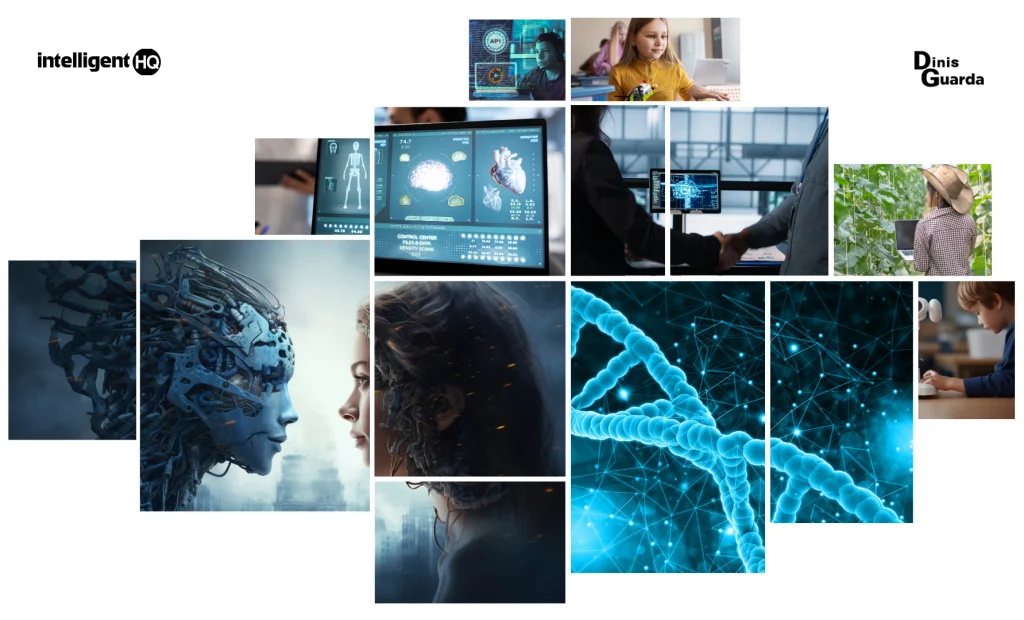
This manifesto is born from the conviction that each human being is not just in humanity—each human being is humanity. Every thought, decision, every bit we add to global digital systems, when interacting with the technologies of our times, is data that becomes part of artificial intelligence systems, thus reverberating through the collective consciousness of our complex species. We are not just building tools; we are sculpting the very fabric essence of our DNA and what it means to be human in the 21st century and beyond.
In the grand theatre of human evolution and progress, we stand at a crossroad – a precipice – that would make even Icarus pause. Icarus, who flew too close to the sun with wings made of feathers and wax, would perhaps ponder at the vulnerability – and strength – of AI.
AI is not just code, it is the DNA mirror of humanity’s digital souls – a clear reflection of the best and worst in us – a true mirror of how we are shaping our future – a future of equity or amplifying our biases – especially with the data we feed to AI now will define human evolution for generations. This isn’t just tech, it’s the mirror we can’t look away from.
It is the quiet heartbeat of our daily lives, powering search engines, guiding our navigation, recommending the next song, and even helping doctors make life-saving decisions. But AI is more than clever code or a collection of algorithms. It is, in many ways, our digital DNA: a living record of our ambitions, flaws, and shared humanity.
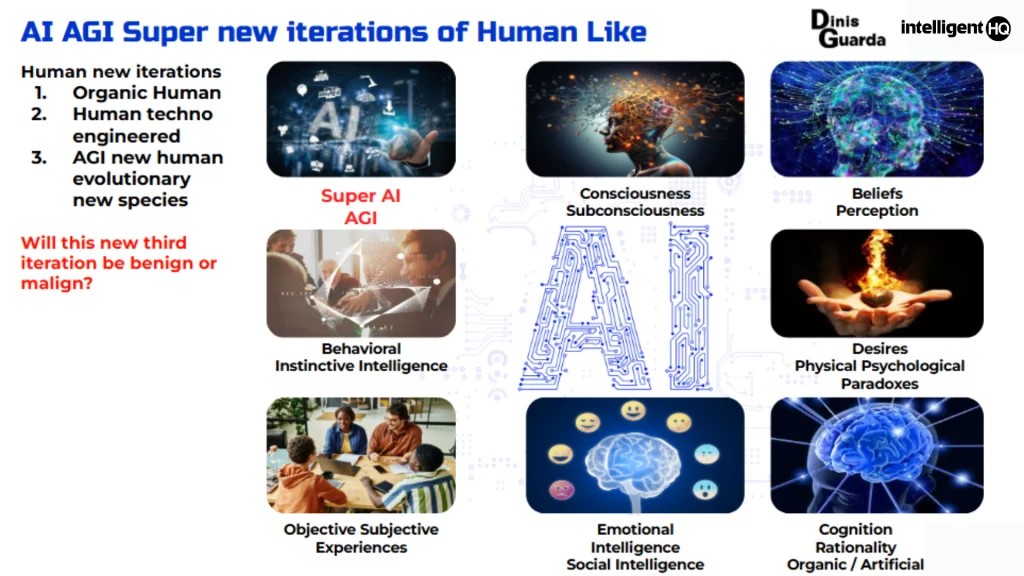
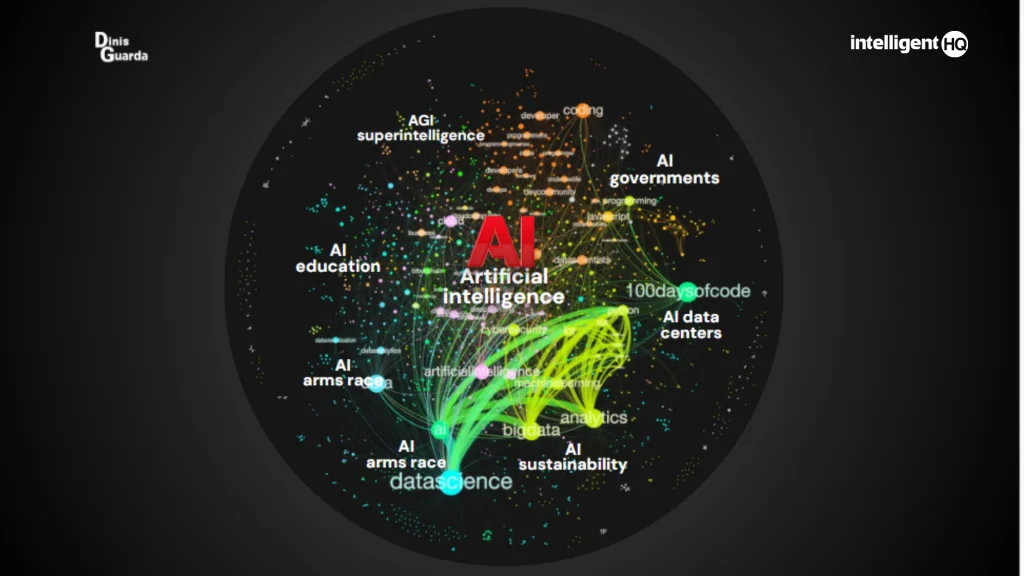
Infographic by Dinis Guarda
Humanity: Always at the edge of some change
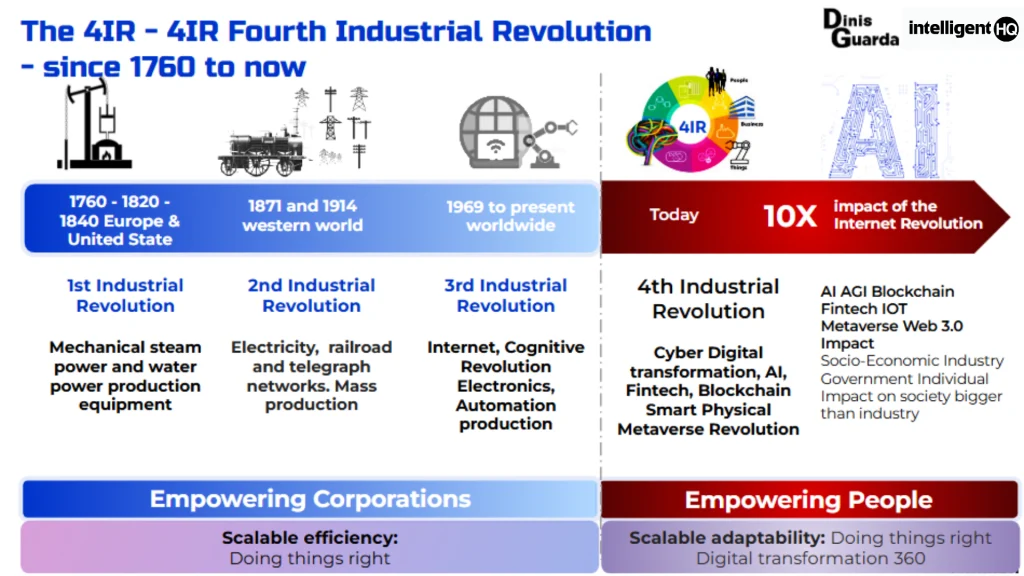
History shows that transformative technologies often force society to confront itself. The printing press democratised knowledge; electricity rewired our cities and nights; the internet collapsed geographical boundaries. Artificial Intelligence belongs to this lineage, but with a twist.
As Mary Shelley warned in Frankenstein, “Nothing is so painful to the human mind as a great and sudden change.” Yet here we are, orchestrating the greatest metamorphosis in human consciousness since Gutenberg’s press democratised knowledge.
What is unique about the AI revolution is that it is not merely another technological wave—it is the mirror in which humanity must confront its own reflection, distorted and magnified by algorithms that learn from our collective digital DNA footprint: our passions, obsessions, insecurities and exhaustion.
AI does not merely extend our capabilities; it asks us to look inward. It magnifies our choices and, sometimes, our prejudices.
Hamlet’s question, “To be or not to be?”, now finds a modern echo: “To augment or to be augmented?” Do we remain authors of our destiny, or drift into characters in an algorithmic narrative?
AI as humanity’s augmented mirror
“The real question is not whether machines think, but whether men do.” B.F. Skinner, Behavioural Psychologist
AI is humanity’s augmented mirror. What we see reflected depends on who’s looking.
In Greek mythology, Narcissus, a youth entranced by his own reflection, died from his inability to leave the image in the pool. Our current relationship with AI mirrors this myth. We have become so enamoured with our technological reflection that we risk losing sight of what lies beyond the surface. However, unlike Narcissus’s static image, AI is a dynamic mirror that learns, evolves, and responds to our gaze. The implications of this are vast and complex. AI’s evolving nature means that it doesn’t just reflect who we are now but who we could be in the future.
The metaphor of AI as a mirror is not just poetic—it’s scientifically precise. AI systems, particularly machine learning algorithms, are sophisticated pattern recognition tools designed to analyse vast datasets and replicate human decision-making processes. This can be incredibly powerful. However, when AI systems like facial recognition tools or language models are trained on biased or unrepresentative datasets, they amplify those biases, which in turn affect real-world decisions such as hiring, healthcare, and law enforcement.
But the potential of AI isn’t inherently negative. When AI is trained with fairness and ethical principles in mind, it can become a tool for self-improvement, helping us overcome biases rather than perpetuate them. For instance, AI systems designed to counteract racial bias in hiring practices or to address gender imbalances in healthcare can become a powerful force for social equity.
A study conducted by MIT’s Computer Science and Artificial Intelligence Laboratory (CSAIL) revealed that AI models trained on diverse, representative datasets reduced racial bias by 73% compared to those trained on more homogenous data. This research illuminates the reality that the quality of AI’s reflection depends on who’s looking and the data they bring to the mirror.
Consider the impact of AI on systemic biases:
| Bias Type | Traditional Systems | AI-Augmented Systems | Improvement Factor |
| Racial Bias in Hiring | 34% disparity | 12% disparity | 2.8x improvement |
| Gender Bias in Healthcare | 28% misdiagnosis rate | 8% misdiagnosis rate | 3.5x improvement |
| Economic Bias in Credit | 42% exclusion rate | 15% exclusion rate | 2.8x improvement |
The improvement in these areas shows that AI is not only capable of reflecting our current flaws but can also become a tool for correcting them, revealing the potential for human evolution. This speaks volumes about the transformative power of AI when designed with a clear moral compass and diverse perspectives.
The ethical and philosophical dimensions of AI
Every algorithm is an ethical statement. Choosing a dataset is choosing whose stories matter. Setting a threshold is deciding whose lives will be affected.
Initiatives such as AI4ALL highlight how diversity in development teams improves accuracy by more than 30 per cent when serving global populations. Far from a box-ticking exercise, inclusivity strengthens the technology itself.
Philosophers and technologists alike wrestle with deeper questions. If intelligence can be simulated, what does it mean to be human? Are we comfortable allowing autonomous systems to make life-and-death decisions in medicine or warfare? Should an AI ever hold moral or legal responsibility?
These are not theoretical puzzles for the distant future. They shape today’s policies on autonomous vehicles, military drones, and predictive policing.
Culture, creativity, and the soul of AI
Art and storytelling remind us that technology is more than code. From films like Her and Ex Machina to contemporary digital art powered by neural networks, AI becomes both muse and medium. It raises questions about originality: if an AI writes a symphony that moves us to tears, does it matter that no human hand composed it?
Rather than threatening creativity, AI can expand it. Musicians use machine-learning models to explore new harmonies; architects generate entire cityscapes from sketches; writers brainstorm plotlines with language models. The artist remains essential, not replaced, but reimagined.
From tools to companions
AI is shifting from a background tool to an active companion. Voice assistants, language models, and generative image tools already interact with millions of people daily. Emotional AI, systems that detect mood through tone or facial cues, offers possibilities in mental-health support, education, and elder care.
But companionship has a price. When machines understand emotions, they can also manipulate them. The line between help and exploitation becomes thin, demanding rigorous regulation and transparent design.
Data: The new genetic code
Our personal data has become the raw material for this digital reflection. Each post, purchase, and heartbeat from a wearable device contributes to a sprawling dataset, the genome of modern humanity.
Unlike biological DNA, this digital code is editable. Governments debate privacy laws like the EU’s GDPR and India’s Digital Personal Data Protection Act, but enforcement lags behind innovation. Every consent box we tick is a genetic donation to the collective algorithm.
Co-evolving with AI
Humanity is not merely a spectator. We are co-evolving with AI. As these systems grow more capable, we adapt our expectations, skills, and even our sense of identity. Jobs transform; creativity acquires new tools; relationships gain new dimensions.
Education provides a glimpse of this symbiosis. Adaptive learning platforms tailor lessons to each student, spotting gaps and adjusting pace in real time. In healthcare, AI analyses scans and predicts outbreaks, augmenting human expertise rather than replacing it.
The key is intentionality. Left unchecked, AI will optimise for efficiency, not empathy. Guided wisely, it can help tackle climate modelling, design fairer economic systems, and accelerate medical breakthroughs.