From joining on time to muting when not speaking, Virtual Meeting Etiquette keeps discussions smooth and professional. Are you following the right rules or letting small mistakes ruin your online meetings?

Whether you are working from home, managing a team across countries, or attending an online class, virtual meetings are now as common as face-to-face conversations once were.
Reports show that remote workers attend around 50% more meetings than their office-based colleagues. Many of these meetings are planned at short notice, with over a third of invites sent less than 24 hours before the call.
While virtual meetings bring benefits such as flexibility, saving travel costs, and connecting global teams, they also create new challenges. Longer hours, constant notifications, and poor planning can lead to fatigue and frustration.
This is why Virtual Meeting Etiquette is so important. Just like traditional meetings, online calls need structure, preparation, and respect. Without it, meetings can easily waste time and energy. With it, virtual meetings become a powerful tool for collaboration and decision-making in the modern workplace.
Why virtual meeting etiquette matters
When people meet in person, body language, eye contact, and a shared environment help guide the flow of the conversation. Online, these signals are weaker or sometimes missing completely. That is why Virtual Meeting Etiquette plays a key role.
Good meeting behaviour ensures:
- Everyone feels heard and respected.
- The meeting stays on track without constant interruptions.
- Technical issues do not take over the discussion.
- A professional atmosphere is maintained, even when working from home.
By treating virtual meetings with the same seriousness as physical ones, you show that you respect your colleagues’ time and effort.
Rule 1: Be Prepared Before You Join
One of the most important rules of Virtual Meeting Etiquette is preparation. Just like you would not walk into a physical meeting unprepared, you should not log in without getting ready.
- Check your internet connection: Make sure it is stable.
- Test your equipment: Your camera, microphone, and speakers should work properly.
- Review the agenda: Knowing what will be discussed helps you contribute better.
- Find a quiet spot: Avoid background noise and interruptions.
Preparation shows that you value the meeting and respect everyone’s time.
Rule 2: Join on time
Punctuality is a key part of both traditional and Virtual Meeting Etiquette. Logging in late disrupts the flow and forces the organiser to repeat information. Aim to join a couple of minutes early. If something unavoidable delays you, inform the host in advance.
Being on time sets a professional tone and shows responsibility.
Rule 3: Dress appropriately
Even if you are working from your living room, appearance matters. You don’t need a full business suit, but avoid looking untidy. A clean, simple outfit makes you look professional and helps you get into the right mindset. Dressing properly is a small detail that strengthens your overall Virtual Meeting Etiquette.
Rule 4: Keep your camera on (If Possible)
Whenever the meeting format allows, keep your camera on. It helps build connection, improves communication, and makes the session feel more human. People can read your expressions and feel more engaged.
If your internet connection is weak, inform the host before switching the camera off. Clear communication here is also part of good Virtual Meeting Etiquette.
Rule 5: Mute when not speaking
Background noise is one of the biggest problems in online meetings. Typing, coughing, or even household sounds can distract everyone. The golden rule of Virtual Meeting Etiquette is simple: keep your microphone muted when you are not speaking.
When it is your turn, unmute, speak clearly, and mute again afterwards. This habit keeps the meeting smooth and respectful.
Rule 6: Respect the agenda
Every meeting should have an agenda. Respecting it is central to good Virtual Meeting Etiquette. Avoid bringing up unrelated issues or going off-topic. If you have additional points, note them down and raise them at the right time.
This helps meetings stay short, structured, and productive.
Rule 7: Avoid multitasking
It may be tempting to check emails or browse your phone while in a virtual meeting. But divided attention is easy to notice. Looking distracted signals disinterest and disrespect.
Good Virtual Meeting Etiquette means staying fully present. Listen carefully, make notes, and participate actively. Not only does this improve your focus, but it also builds trust with your team.
Rule 8: Speak clearly and take turns
Online platforms can sometimes cause small delays. Interruptions happen easily, but proper Virtual Meeting Etiquette requires patience. Wait for others to finish before speaking.
When it is your turn, speak slowly and clearly. Avoid shouting or talking too softly. Good communication helps everyone follow along without confusion.
Rule 9: Use the chat function wisely
Most platforms have a chat box. While useful, it should not replace respectful behaviour. Avoid side conversations that distract from the main discussion. Instead, use it to:
- Share links or files.
- Ask short questions without interrupting.
- Summarise key points.
Using chat thoughtfully is another sign of good Virtual Meeting Etiquette.
Rule 10: Pay attention to body language
Even through a screen, body language matters. Nod to show understanding, smile when appropriate, and sit upright. Avoid slouching, yawning, or looking away too often.
Maintaining positive body language is part of strong Virtual Meeting Etiquette, as it shows interest and respect.
Rule 11: Manage background and lighting
Your surroundings say a lot about you. A messy room or poor lighting can distract others. Make sure your background is neat and professional, or use a virtual background if needed.
Sit facing a light source so your face is clear. This small adjustment makes your presence stronger and supports professional Virtual Meeting Etiquette.
Rule 12: Limit interruptions
Pets, children, or household noises can sometimes interrupt meetings. While occasional disruptions are understandable, try to limit them. Inform people at home about your schedule, and put your phone on silent.
Handling interruptions smoothly is part of considerate Virtual Meeting Etiquette.
Rule 13: Be inclusive
Good Virtual Meeting Etiquette is not just about personal behaviour but also about how you treat others. Invite quieter participants to share their views, avoid dominating the conversation, and respect cultural differences in communication.
Inclusion makes everyone feel valued, leading to stronger teamwork and better outcomes.
Rule 14: End with clarity
Before closing, summarise decisions, action points, and next steps. Thank participants for their time and contributions. Ending clearly ensures everyone leaves with the same understanding.
Clear closing remarks reflect strong Virtual Meeting Etiquette and professionalism.
Rule 15: Follow up afterwards
Good etiquette continues after the call ends. Share meeting notes, decisions, or agreed deadlines promptly. Following up shows commitment and helps maintain accountability.
This step completes the cycle of effective Virtual Meeting Etiquette.
Common mistakes to avoid in virtual meetings
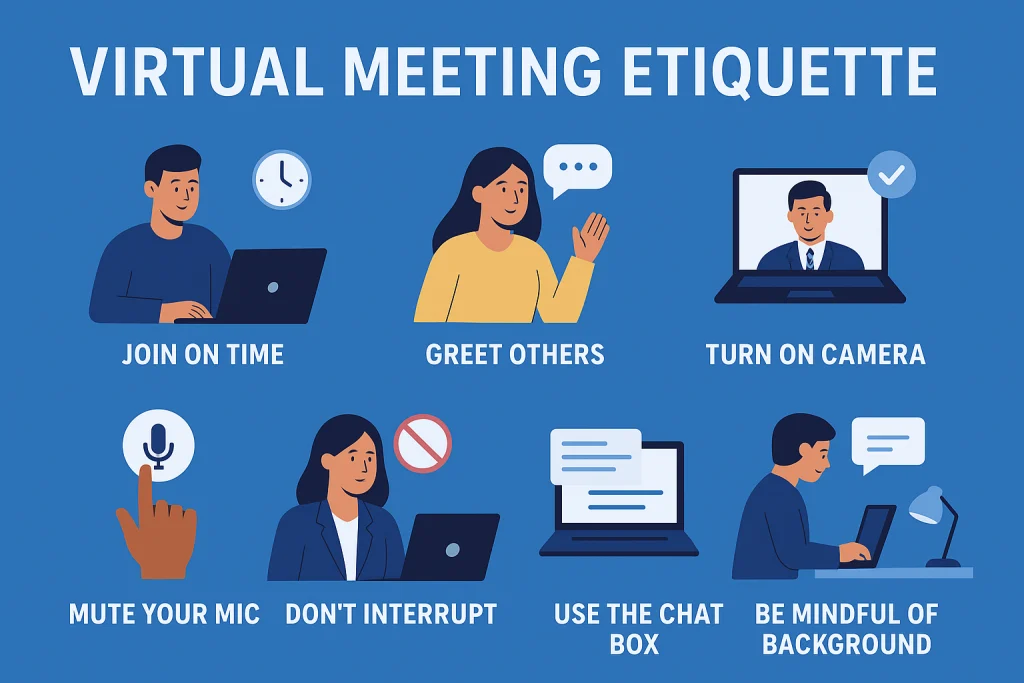
Even with the best intentions, mistakes happen. Here are a few behaviours to avoid:
- Talking over others.
- Forgetting to mute.
- Eating during the meeting.
- Checking your phone constantly.
- Logging in from noisy public spaces.
By steering clear of these, you keep your Virtual Meeting Etiquette strong.
Final Thoughts
Virtual meetings are here to stay, and so is the need for good behaviour online. Practising strong Virtual Meeting Etiquette makes meetings smoother, more productive, and more enjoyable for everyone involved.
By preparing ahead, being respectful, staying focused, and following up afterwards, you show professionalism and strengthen relationships. Remember, a little courtesy goes a long way, even through a screen.