If you’ve worked in a modern office, you’ve seen the paradox firsthand: companies are using more software than ever, yet teams are still slowed down by the same problems. Deadlines are missed, conversations are scattered, files live in multiple places, and project momentum fades. That’s why businesses keep searching for the best project management tools — not just to add another app, but to actually solve these issues.
The truth is, most tools only solve part of the puzzle. A chat app helps with quick messaging, but where does project data live? A video conferencing tool makes it easy to meet, but where do outcomes go? A task board looks neat, but what happens when approvals or documentation don’t live there, too?
Instead of fixing workflows, fragmented tools often create more friction. Teams spend valuable hours context-switching, digging for lost information, and stitching together platforms that don’t fit together naturally.
Lark takes a different approach. It’s not another app to add to the pile — it’s a unified workspace where communication, projects, documents, and workflows connect seamlessly. The goal is simple: stop ideas, updates, and decisions from slipping through the cracks. Here’s how Lark succeeds where others don’t.
1. Lark Base: Beyond spreadsheets and task boards
Many teams continue relying on spreadsheets for project management or adopt isolated task managers, only to encounter outdated information, management complexities, and disconnection from daily conversations and files.
Lark Base addresses these challenges by combining structural flexibility with powerful functionality:
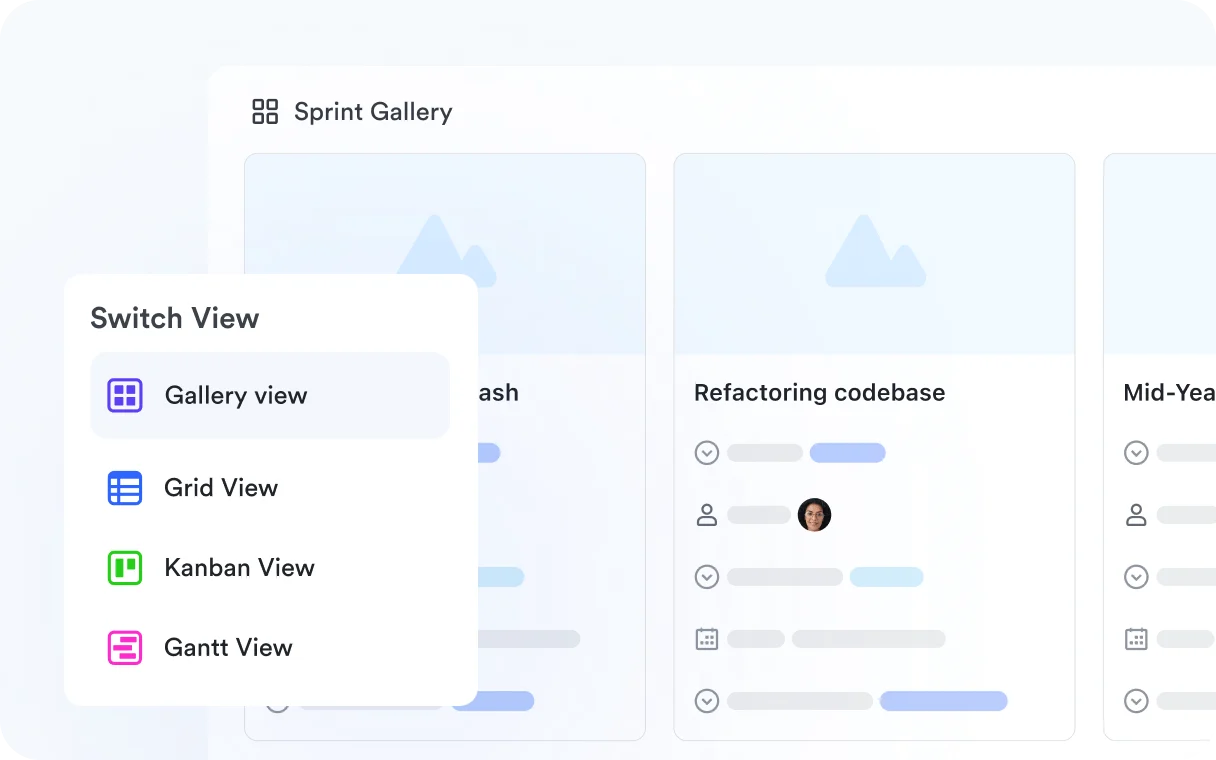
- Multiple viewing options including table, Kanban, calendar, and gallery formats adapt to your team’s preferred workflow style.
- Automation capabilities handle repetitive updates through customizable rules and triggers.
- Deep integration ensures all records connect directly to your team’s central workspace.
- Relational database features enable connections between different data sets.
Rather than creating another information silo, Base functions as your team’s mission control center—connecting strategy to execution while maintaining seamless information flow without manual intervention. Its ability to create sophisticated automated workflow systems transforms static data into dynamic operational assets.
2. Lark Approval: Where decisions don’t get stuck
In most organizations, decision delays represent the greatest project bottleneck. Approvals languish in endless email chains, unstructured chats, or poorly maintained spreadsheets—stalling campaigns, idling projects, and diminishing team morale.
Lark Approval eliminates these friction points through structured automation:
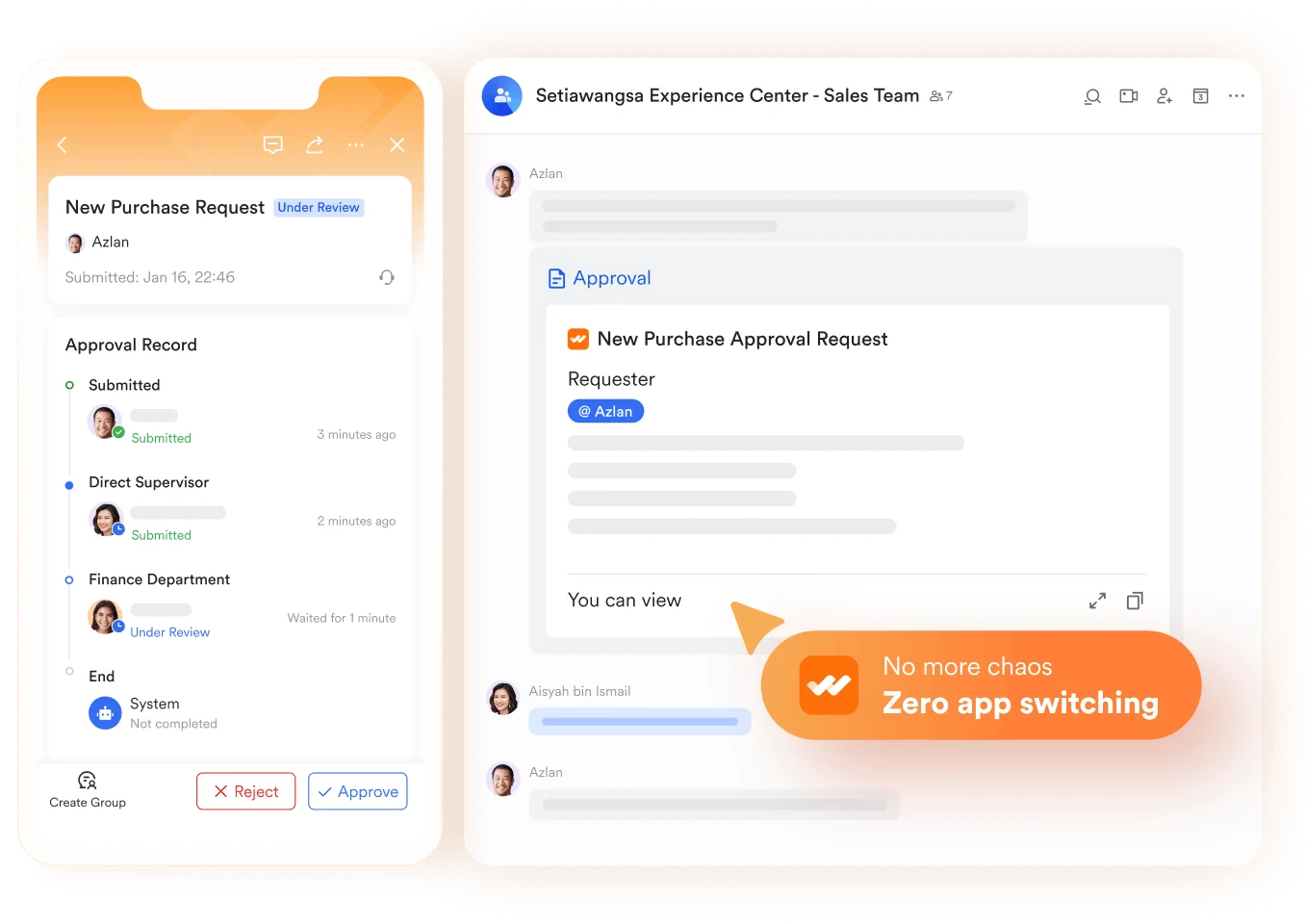
- Team members can submit standardized requests through customizable templates.
- Managers receive instant notifications and can approve or reject requests with one click.
- Comprehensive audit trails automatically document every decision and action.
- Mobile compatibility enables approvals from any device, anywhere.
This streamlined approach maintains project momentum by eliminating waiting periods for sign-offs. The automated workflow within Lark Approval ensures teams progress directly from conception to execution, removing the “did you see my email?” dilemma that plagues traditional approval processes.
3. Lark Docs + Wiki: Knowledge that doesn’t disappear
Information retrieval remains one of productivity’s greatest drains, with teams wasting countless hours searching for correct document versions across emails, drives, and chat histories.
Lark Docs and Wiki provide complementary knowledge management solutions:
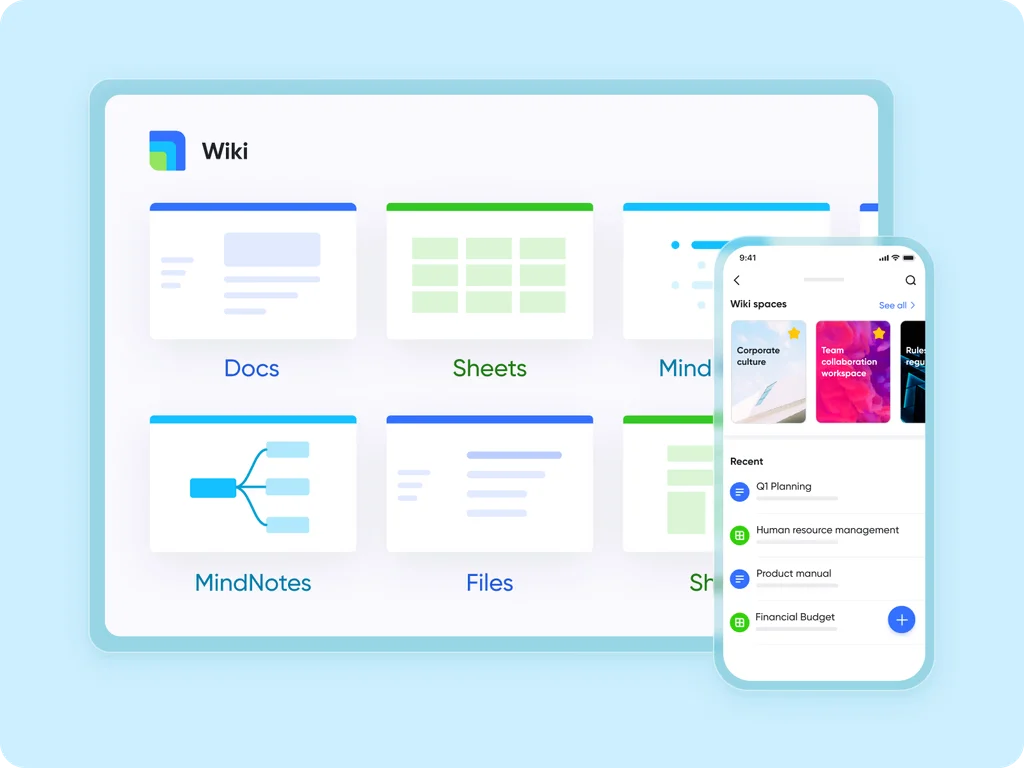
- Lark Docs enables real-time collaborative editing, version history tracking, and contextual commenting.
- Lark Wiki serves as the permanent knowledge repository for finalized policies, playbooks, and guidelines.
- Advanced search functionality connects information via Lark.
- An all-in-one platform ensures knowledge connects directly to relevant projects and discussions.
Instead of losing valuable institutional knowledge to digital oblivion, teams develop a living knowledge ecosystem that evolves alongside their projects and growth.
4. Lark Messenger: More than just chat
While chat platforms typically serve as idea birthplaces, most fail to prevent those ideas from drowning in notification overload. Conventional chat tools often amplify noise rather than enhancing focus.
Lark Messenger transforms communication into actionable outcomes:
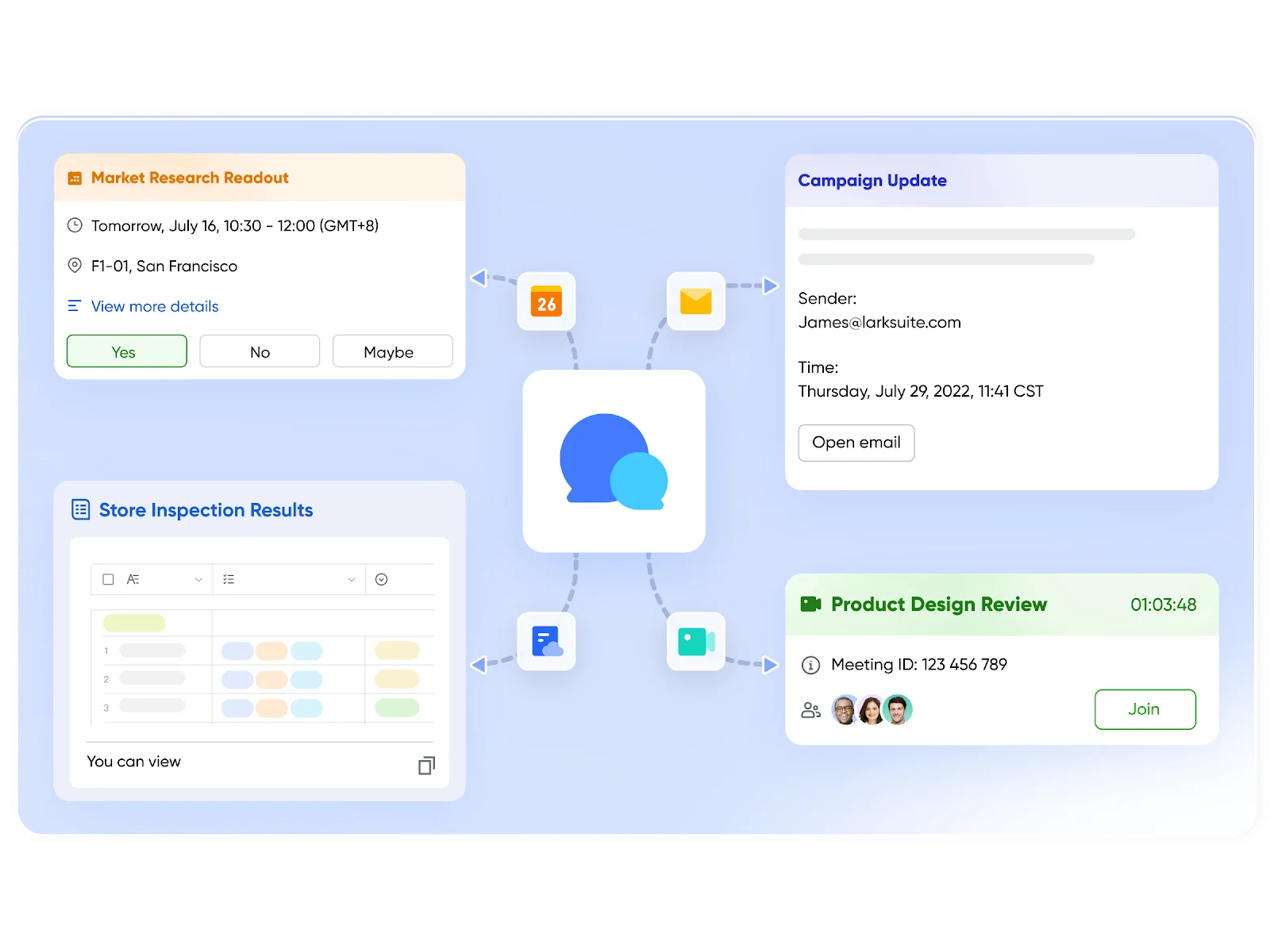
- Message pinning keeps critical information accessible and visible.
- One-click conversion turns messages into tasks or documents.
- Powerful search functionality instantly retrieves historical conversations.
- Translation support enables seamless communication across 24 languages.
This approach elevates Messenger beyond basic text exchange into a collaboration driver where ideas evolve into concrete actions rather than disappearing into digital noise.
5. Lark Forms: Capturing input without the hassle
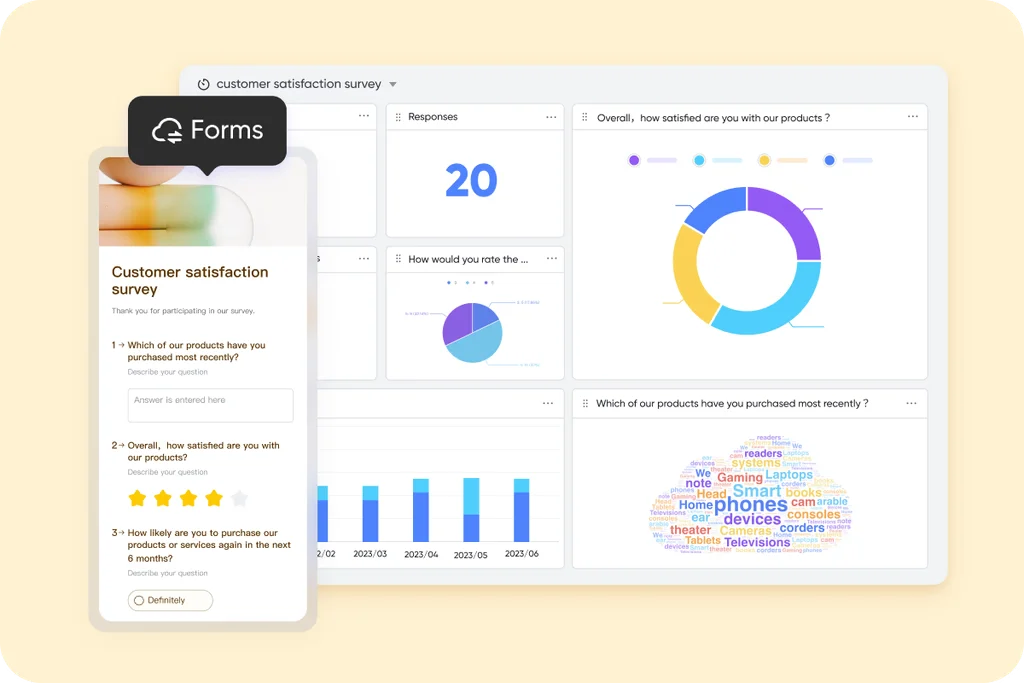
Though essential for improvement, feedback collection often becomes unnecessarily complex. Teams typically juggle multiple survey tools, event platforms, and check-in systems, resulting in scattered responses, delayed analysis, and outdated insights.
Lark Forms simplifies this process through seamless integration:
- Forms can be distributed directly within Messenger conversations.
- Real-time response tracking provides immediate visibility.
- Data automatically flows into Base for instant action and analysis.
- Customizable templates adapt to various feedback scenarios.
This all-in-one approach maintains feedback and action within the same environment, eliminating the delays and fragmentation that traditionally plague input collection.
Conclusion
Most tools fail not because they’re bad, but because they’re incomplete. They solve one slice of the problem and force teams to bridge the gaps themselves — that’s where momentum gets lost.
Lark takes the opposite route. By combining communication, project management, documentation, approvals, and feedback into one connected space, it ensures nothing slips through the cracks. Teams spend less time patching tools together and more time actually moving work forward.
When other platforms leave teams stitching together workflows, Lark delivers the kind of unified environment that modern companies need. That’s why many organizations now look to Lark as more than just a collaboration suite — they see it as a complete business process management software that replaces the need for juggling multiple apps.