Working with glass at high temperatures is one of the most technically demanding areas of modern manufacturing. The material behaves in ways that few other substances do under heat, and the equipment used to process it must account for these properties with extreme precision.
A small variation in temperature, pressure, or timing can change the optical, structural, or chemical properties of a finished component, often in ways that are invisible until the part fails in use. This is why high-temperature glass processing cannot rely on general-purpose industrial equipment. The thermal, mechanical, and control requirements are too specific. Manufacturers serving optics, photonics, semiconductor, and specialty glass markets depend on glass processing equipment designed specifically for the behavior of glass at elevated temperatures to deliver acceptable results.
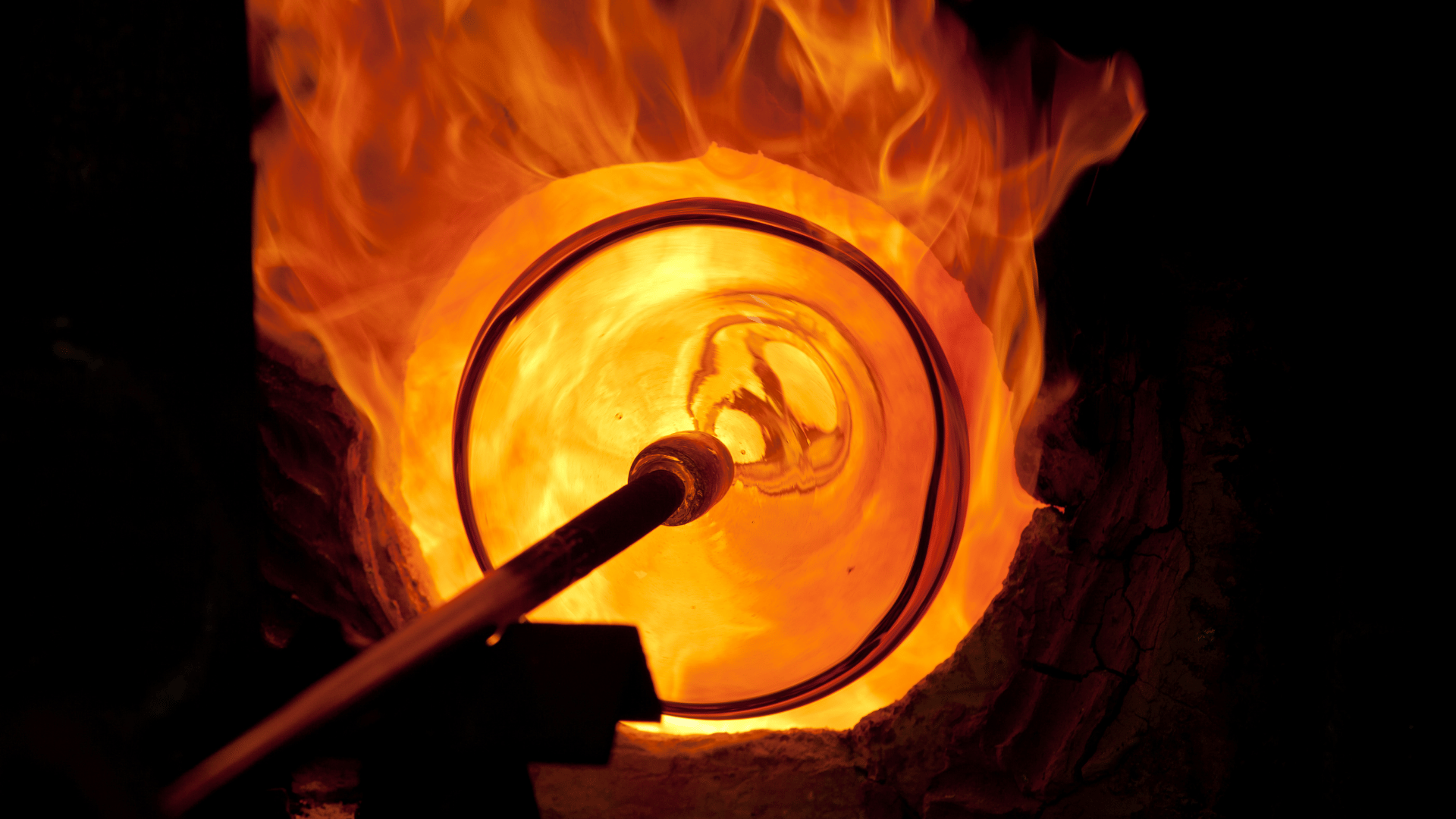
Glass Does Not Have a Melting Point
Unlike metals, which transition sharply from solid to liquid at a defined temperature, glass softens gradually across a range. As temperature rises, viscosity decreases continuously, moving the material through a series of working states. This behavior gives glass its versatility but creates challenges for the equipment processing it.
Heating systems must hold the glass within a narrow viscosity window long enough to shape it without overheating or cooling. Cooling systems must then return the material to room temperature along a controlled curve. The lack of a clean phase transition means that equipment designed for materials with sharp melting points cannot reproduce the conditions glass requires.
Cooling Rates Affect Optical Properties
In precision optics, the cooling phase of high-temperature processing is just as important as the heating phase. The refractive index of finished glass depends partly on how quickly it cooled through the transition temperature, and small variations in cooling rate produce measurable changes in optical performance.
Research has shown that refractive index variation occurs along the radial direction of glass components during compression molding due to thermal treatment. These variations directly affect optical performance, especially in lenses used in high-precision systems.
This finding underscores why thermal profiles in glass processing equipment must be controlled with such precision and why standard industrial ovens cannot meet the requirements of optical manufacturing.
Thermal Stress and Component Failure
Heating and cooling glass unevenly creates internal stress that can lead to cracking, warping, or delayed failure long after the part leaves the production line. The thicker the component, the harder it becomes to maintain uniform temperature across its volume, since the outer surfaces respond to ambient heat far more quickly than the interior.
Specialized equipment addresses these issues through multi-zone heating systems, programmable temperature ramps, and controlled atmosphere chambers that hold the glass at intermediate temperatures long enough for the interior to equalize. Standard heating systems lack the zone-by-zone control and the slow ramp rates required to prevent stress accumulation in larger or thicker components.
Material Compatibility at Elevated Temperatures
Few materials remain stable at the temperatures used in glass processing. Furnaces operating above 1,000°C require linings, heating elements, and structural components that can withstand thermal cycling without degrading or contaminating the workpiece.
Specialized equipment uses refractory ceramics, platinum-rhodium alloys, molybdenum, and other high-temperature materials selected for both thermal performance and chemical compatibility with glass.
Contamination from heating elements or chamber walls can introduce defects into the finished component, so material choices throughout the equipment must account for the entire thermal environment the glass will encounter.
Atmosphere Control
Many glass processing applications require controlled atmospheres to prevent oxidation, contamination, or undesired chemical reactions at elevated temperatures. Nitrogen, argon, or vacuum environments are common in precision molding, fiber drawing, and specialty glass forming.
Maintaining these atmospheres at high temperatures requires sealed chambers, gas flow control systems, and contamination monitoring that general-purpose furnaces do not provide. Even small leaks can introduce oxygen or moisture that changes the surface chemistry of the glass.
Precision Pressure and Motion at High Temperatures
In processes like precision glass molding and fusion splicing, the equipment must apply controlled mechanical force or alignment while the glass is at processing temperature. This is mechanically challenging because most actuators, sensors, and motion systems lose accuracy as ambient temperature rises.
Specialized equipment isolates motion components from the heated zone using cooled mounts, thermal barriers, and remote actuation. Position feedback systems compensate for thermal expansion of the machine itself, ensuring that the precision built into the system at room temperature carries through to the workpiece at elevated temperatures.
A Foundation for Demanding Applications
High-temperature glass processing supports applications where the cost of failure is significant, from medical lasers to aerospace optics. The specialized equipment that makes this work possible is the foundation on which these industries depend for components that perform reliably under demanding conditions.