It’s easy to get lost in all the buzzwords, but what exactly is technology? Think of it as the practical application of knowledge. It’s about using what we know to create things that help us solve problems or make life a bit easier. From the earliest stone tools to the complex computer systems we rely on today, technology has always been about human ingenuity meeting a need. This article will explore what technology means, how it has changed over time, and look at some common examples of what is technology examples in our world.
Key Takeaways
- Technology is fundamentally about applying knowledge to solve practical problems and achieve specific goals.
- It exists not only as physical tools and machines but also as the methods, systems, and knowledge used to create and operate them.
- From ancient innovations like fire to modern digital systems, technology has consistently driven societal change and development.
- Understanding different categories of technology, such as information, communication, and entertainment tech, helps clarify their roles in daily life.
- Beyond human creations, elements of technology, like tool use, can even be observed in the animal kingdom.
Understanding The Core Concept Of Technology
What Does Technology Mean?
At its heart, technology is about applying what we know to solve problems or achieve specific goals. The word itself comes from Greek roots: "techne," meaning craft or skill, and "logos," meaning study or word. So, it’s essentially the systematic study and application of skills. Think about it – from the earliest stone tools our ancestors used to the complex algorithms running our smartphones today, technology has always been about humans observing a need and creating something to meet it. It’s not just about the gadgets we hold; it’s the knowledge and methods behind them.
The Dual Nature Of Technology: Thing And Process
Technology isn’t just a physical object you can point to; it’s also the ‘how’ and ‘why’ behind it. Your laptop is a piece of technology, for sure. But so is the entire process that brought it into existence: the research and development, the design thinking that made it user-friendly, the manufacturing lines that assembled it, and even the software updates that continue to improve it. It exists both as the tangible tools we use and the intangible systems, knowledge, and methodologies we develop. This dual nature means technology is constantly evolving, not just in the things we create, but in the ways we create them and the understanding we gain along the way. This dynamic interplay is key to understanding its impact on business finance.
Key Elements That Define Technology
Several core components come together to define what technology is:
- Application of Knowledge: This is the practical use of scientific understanding or learned skills to create something useful. For instance, using principles of physics to build more efficient engines or applying biological knowledge to develop new medicines.
- Tools and Machines: These are the physical artifacts we create to make tasks easier or more efficient. This ranges from simple hand tools to complex robots and computers.
- Techniques and Methods: These are the specific procedures, skills, or practices used to create or operate technology. Think of coding languages, engineering blueprints, or even agricultural methods.
- Systems: Often, technologies work together in interconnected networks. The internet, power grids, and transportation networks are examples of complex systems that enable various technologies to function and interact.
Technology is fundamentally about bridging the gap between an idea and a practical outcome. It’s the bridge built from knowledge, skill, and ingenuity, allowing us to shape our environment and overcome limitations. This process is continuous, with each innovation building upon the last.
A Journey Through Technology’s Historical Evolution
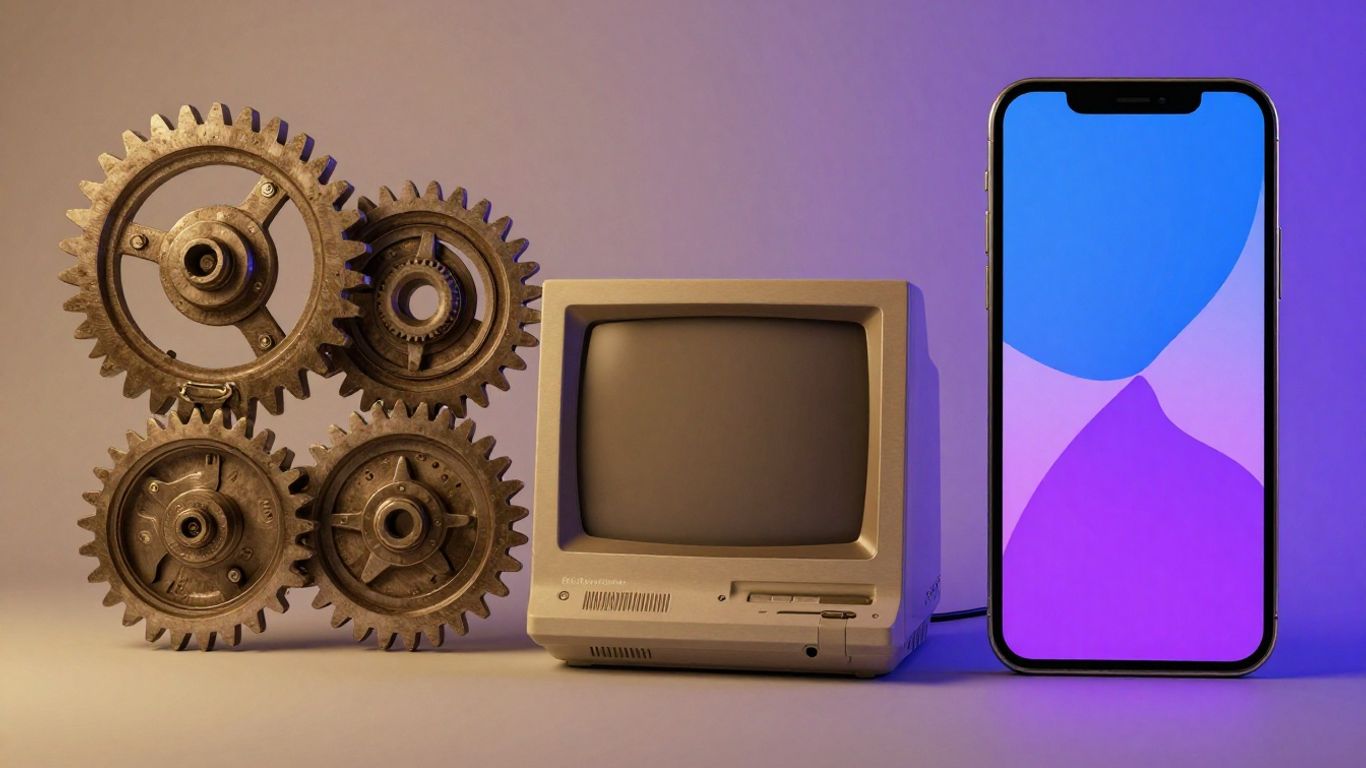
Thinking about technology often brings to mind shiny gadgets and complex computer systems, but its story is much, much older. It’s a narrative woven into the very fabric of human existence, stretching back to our earliest ancestors. This journey isn’t just about inventions; it’s about how we’ve used our ingenuity to solve problems, adapt to our surroundings, and shape the world around us.
Ancient Innovations and Their Impact
Long before the digital age, humans were already deep into technological development. Imagine our early ancestors, perhaps thousands of years ago, figuring out how to chip stones into sharp tools. This wasn’t just random banging; it was a deliberate process of understanding materials and applying knowledge to create something useful. These stone tools were revolutionary, allowing for better hunting, food preparation, and defense. Fire was another game-changer. Controlling fire provided warmth, light, and a way to cook food, which some scientists believe even helped our brains grow larger. These weren’t just simple tricks; they were the foundational technologies that allowed early human societies to thrive and expand.
The Wheel and the Dawn of Complex Machines
Fast forward a bit, and we encounter one of the most iconic inventions: the wheel. Appearing around the 4th millennium BCE, the wheel, initially used for pottery, soon found its way into transportation. Suddenly, moving heavy loads became significantly easier. This invention didn’t just make hauling things simpler; it paved the way for more complex machinery. Think about carts, chariots, and eventually, water wheels and gears. The wheel is a perfect example of how a single, elegant idea can cascade into a whole family of related technologies, fundamentally altering how societies function, trade, and build.
The Printing Press and the Information Revolution
Jumping ahead to the mid-15th century, we arrive at Johannes Gutenberg’s printing press. Before this, books were painstakingly copied by hand, making them rare, expensive, and accessible only to a select few. The printing press, with its movable type, changed everything. It allowed for the mass production of written materials, dramatically lowering costs and increasing availability.
This invention didn’t just spread information faster; it democratized knowledge. Ideas could travel further and reach more people than ever before, fueling intellectual movements, scientific discovery, and social change. It was, in many ways, the first great information revolution, laying the groundwork for the interconnected world we live in today.
This period saw a significant shift in how knowledge was created, shared, and preserved. The ability to reproduce texts accurately and efficiently meant that scholarship could build upon itself more rapidly. It was a catalyst for the Renaissance and the Scientific Revolution, proving that technology isn’t just about physical objects but also about the systems that allow ideas to flourish.
Exploring Diverse Categories Of Technology
Technology isn’t just one big thing; it’s a vast landscape made up of many different areas, each with its own focus and purpose. Think of it like different departments in a large company, all working towards different goals but contributing to the overall mission. Understanding these categories helps us see how technology touches nearly every part of our lives, from the moment we wake up to when we go to sleep.
Information Technology: The Digital Backbone
Information Technology, or IT, is all about systems that store, retrieve, manage, and process data. It’s the engine behind the digital world we interact with daily. When you use a computer, send an email, or access a website, you’re interacting with IT. It’s not just about the hardware, like servers and laptops, but also the software that makes them work and the networks that connect them.
IT is the foundation upon which much of our modern digital infrastructure is built. It enables businesses to operate, researchers to share findings, and individuals to connect across distances.
- Data Management: Organizing and storing vast amounts of information securely.
- Software Development: Creating the applications and programs we use.
- Network Infrastructure: Building and maintaining the connections that allow devices to communicate.
- Cybersecurity: Protecting digital information and systems from unauthorized access.
The sheer volume of data generated daily is staggering. IT systems are designed to handle this influx, making sense of it, and making it accessible when needed. This is crucial for everything from scientific discovery to running a small online shop.
Communication Technology: Connecting The World
Communication technology focuses on how we share information and interact with each other, regardless of physical distance. This category has evolved dramatically, from early forms of messaging to the sophisticated real-time communication tools we use today. It’s about bridging gaps and making the world feel smaller.
- Telephony: Landlines, mobile phones, and Voice over IP (VoIP) services.
- Internet-based Communication: Email, instant messaging, social media platforms, and video conferencing.
- Broadcasting: Radio and television, which transmit information to wide audiences.
Entertainment Technology: Enhancing Leisure Time
Entertainment technology is all about how we relax, have fun, and engage with media. This field has seen rapid innovation, transforming how we consume content and interact with entertainment. From the earliest forms of recorded sound to immersive virtual reality experiences, it aims to provide enjoyment and engagement.
- Audio and Video: Music players, televisions, streaming services, and home theater systems.
- Gaming: Video game consoles, personal computers, and mobile gaming applications.
- Interactive Media: Virtual reality (VR) and augmented reality (AR) experiences, interactive exhibits, and digital art installations.
These categories often overlap. For instance, a video call uses both communication technology to transmit the audio and video, and information technology to manage the data flow and the software running the application. Understanding these distinctions helps us appreciate the complexity and interconnectedness of the technological world around us.
Technology In Action: Practical Examples
Technology isn’t just an abstract idea; it’s woven into the fabric of our daily lives, often in ways we don’t even notice. Let’s look at some concrete examples across different areas.
Information Technology Examples In Daily Life
Information Technology (IT) is the engine behind our digital world. Think about how you access information, communicate, or manage your tasks. Cloud storage services, like Google Drive or Dropbox, are prime examples of IT making our lives easier by allowing us to store and access files from any device with an internet connection. This means your important documents or photos are safe and available wherever you are.
Here are a few more ways IT shows up:
- Learning Management Systems (LMS): Platforms such as Google Classroom or Canvas are used by schools and universities to share course materials, assign homework, and track student progress. This keeps education organized and accessible.
- E-commerce Platforms: Websites like Amazon or Etsy rely heavily on IT to manage vast product catalogs, process millions of transactions securely, and provide personalized recommendations to shoppers.
- Communication Tools: Video conferencing software (Zoom, Microsoft Teams) and instant messaging apps (WhatsApp, Slack) are IT-driven solutions that connect people across distances for work and personal reasons.
The constant flow of data, managed by complex IT systems, is what allows modern businesses to operate efficiently and individuals to stay connected globally.
Entertainment Technology Examples
When it comes to leisure, entertainment technology plays a huge role in how we relax and have fun. It’s all about creating engaging experiences.
- Streaming Services: Netflix, Spotify, and others use sophisticated algorithms to suggest movies, shows, and music based on your viewing and listening habits. This keeps content fresh and personalized.
- Video Games: The immersive worlds and interactive experiences in games like "Cyberpunk 2077" or "The Legend of Zelda: Tears of the Kingdom" are built using advanced graphics engines and programming, offering hours of engagement.
- Special Effects in Film: The breathtaking visuals in movies, from superhero battles to fantastical creatures, are often created using Computer-Generated Imagery (CGI) and other visual effects technologies, making the impossible seem real.
Operational Technology Examples
Operational Technology (OT) is the unsung hero that keeps our physical world running smoothly. It’s the tech that monitors and controls industrial processes and infrastructure.
- Smart Grids: These systems manage electricity distribution, optimizing power flow, detecting outages, and integrating renewable energy sources more effectively. They help ensure a stable power supply.
- Automated Manufacturing: In factories, robots and automated systems perform tasks like welding, assembly, and quality control with incredible speed and precision. This is how cars and electronics are produced efficiently.
- Traffic Management Systems: The coordinated traffic lights you see in cities, which adjust timing based on real-time traffic flow, are part of OT. They help reduce congestion and improve travel times.
These examples show that technology is not just about gadgets; it’s about the systems and processes that shape our environment and our daily routines.
The Broader Impact Of Technological Advancements
Technology doesn’t just sit in labs or on our desks; it actively shapes the world around us in profound ways. From how we live and work to the very structure of our societies, its influence is far-reaching. Technological change is a primary driver of long-term economic growth. Throughout history, overcoming limitations in energy availability has been key to development, and new technologies have consistently opened up possibilities.
Technology’s Role In Societal Change
New tools and systems can dramatically alter social dynamics. Think about how the printing press changed the spread of ideas, or how the internet has reshaped communication and access to information. While often bringing benefits, these shifts can also disrupt established ways of life and power structures. The rise of social media, for instance, has brought both unprecedented connectivity and new challenges related to information accuracy and public discourse. It’s a constant balancing act as societies adapt to these powerful forces.
Economic Growth Fueled By Innovation
Innovation is the engine of economic progress. Historically, advancements like the control of fire or the invention of the wheel didn’t just make life easier; they laid the groundwork for more complex societies and economies. Today, advancements in areas like renewable energy and advanced manufacturing continue to create new industries and opportunities. This cycle of invention and adoption drives productivity and can lead to increased prosperity for many.
The Ethical Considerations Of Technology
As technology becomes more integrated into our lives, we face important questions about its use. Concerns about privacy, security, and the potential for job displacement due to automation are becoming more prominent. For example, the increasing use of online payment systems, while convenient, also brings security challenges that require constant attention. We also see ongoing debates about the environmental impact of technological development, pushing for cleaner energy solutions and more sustainable practices. It’s vital to consider these aspects to guide technology’s development responsibly.
The development and adoption of new technologies often present a complex mix of advantages and disadvantages. While they can solve problems and improve quality of life, they can also introduce new challenges that require careful management and societal adaptation.
Beyond Human Innovation: Technology In The Animal Kingdom

Tool Use Among Primates
It might surprise you to learn that the use of tools isn’t exclusive to humans. For a long time, scientists thought that making and using tools was a defining trait of our species. However, research has shown that many other animals, especially primates, also exhibit this behavior. Chimpanzees, for instance, have been observed using sticks to get at insects or leaves to soak up water. Some even use stones as hammers and anvils to crack open nuts. It’s quite fascinating to see these complex actions in our closest relatives.
Dolphins, Crows, and Other Tool Users
Our exploration doesn’t stop with primates. Other animals show remarkable ingenuity. Dolphins have been seen using sponges to protect their noses while foraging on the seabed. Crows, known for their intelligence, have demonstrated tool use, like bending wire to create hooks for retrieving food. These examples show that the ability to create or use objects to achieve a goal is more widespread in the animal kingdom than previously thought.
Beaver Dams: Engineering Ecosystems
Perhaps one of the most impressive examples of animal technology is the beaver dam. Beavers meticulously build these structures using branches, mud, and stones. These dams aren’t just simple shelters; they fundamentally alter the environment, creating wetlands that support a diverse range of other species. The impact of a beaver’s work can be seen for miles, changing water flow and creating new habitats. It’s a clear demonstration of an animal’s ability to engineer its surroundings on a significant scale.
The natural world is full of examples where animals use their environment and available materials to solve problems, much like humans do with technology. This suggests that the drive to innovate and adapt isn’t solely a human characteristic.
Wrapping Up Our Tech Journey
So, we’ve looked at what technology really is. It’s not just the shiny new gadgets we see every day, but also the knowledge and methods behind them. From the very first tools our ancestors used to the complex systems running our world now, technology is all about using what we know to solve problems and make things work better. It’s a constant process of learning, creating, and adapting. As we’ve seen, technology touches almost every part of our lives, and understanding it helps us make sense of the world around us and how it keeps changing.
Frequently Asked Questions
What is the basic idea behind technology?
Technology is essentially about using what we know about the world to create tools, methods, or systems that help us solve problems or do things more easily. It’s about applying knowledge to make life better or more efficient.
Is technology just about computers and phones?
No, technology is much broader than just electronics. It includes everything from the very first stone tools and controlling fire to complex machines, software, and even new ways of doing things like farming or building.
What are some main parts that make up technology?
Key parts include using knowledge (like science) to create useful things, the actual tools and machines we build, the methods or techniques we use to create them (like coding), and the larger systems that connect everything, such as the internet.
How has technology changed over a very long time?
It started with simple tools and discoveries like fire. Then came inventions like the wheel, which led to more complex machines. Later, things like the printing press and the internet made it much easier to share information and connect with others.
Can you give examples of different kinds of technology we use often?
Sure! Information technology (like your smartphone or cloud storage) helps manage data. Communication technology connects us through phones and the internet. Entertainment technology makes leisure time fun, like through video games or streaming services.
Does technology only help humans, or do animals use it too?
Animals also show forms of technology. For instance, some primates use sticks to help them, dolphins use sponges to find food, and crows can use tools. Beaver dams are also a remarkable example of animals engineering their environment.