As artificial intelligence drives growing demand for computing infrastructure, communities across the United States are questioning the environmental and economic costs of new data centres. Concerns over electricity consumption, water usage and pressure on local infrastructure have become increasingly prominent, prompting technology executives and policymakers to reconsider how AI facilities should be developed.
On 19 October 2026, Deven Soni, CEO and founder of Vertical Data, called for a more balanced assessment of AI data centre projects. While acknowledging the legitimacy of community concerns, Soni argues that developments which reuse existing commercial properties and invest in local infrastructure should be distinguished from large-scale facilities that impose substantial costs on surrounding communities.
“There’s a lot of merit to the pushback on mega data centers,” said Soni. “When a project drains a county’s grid and water and gives nothing back, that criticism is fair.”
His comments come as the AI industry faces increasing scrutiny over the physical infrastructure required to support model training, inference and enterprise computing.
Rising AI Demand Puts Pressure on Electricity and Water Resources
The rapid expansion of AI infrastructure is contributing to substantial growth in global electricity demand. According to the International Energy Agency’s (IEA) Energy and AI report, data centres consumed approximately 415 terawatt-hours (TWh) of electricity in 2024, accounting for around 1.5% of global electricity consumption.
The agency’s base-case projection estimates that consumption could more than double to approximately 945 TWh by 2030, with AI becoming the largest driver of additional demand. Although data centres represent a relatively small share of global electricity use, their concentration in specific locations can create significant challenges for regional power networks.
In the United States, the Department of Energy previously estimated that data centres could account for between 6.7% and 12% of national electricity consumption by 2028, compared with approximately 4.4% in 2023. These projections have increased attention on the availability of electricity, transmission capacity and the infrastructure investments needed to support new facilities.
Water consumption is another source of concern, particularly where cooling systems compete with other local demands. The environmental impact of individual facilities can vary significantly depending on their cooling technologies, energy sources, location and operational requirements.
Soni argues that these differences should play a greater role in evaluating proposals rather than treating all AI infrastructure projects as environmentally or economically equivalent.
Repurposing Vacant Buildings for AI Infrastructure
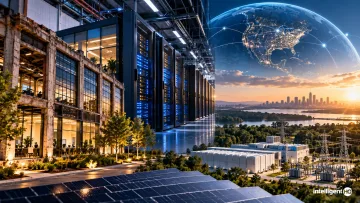
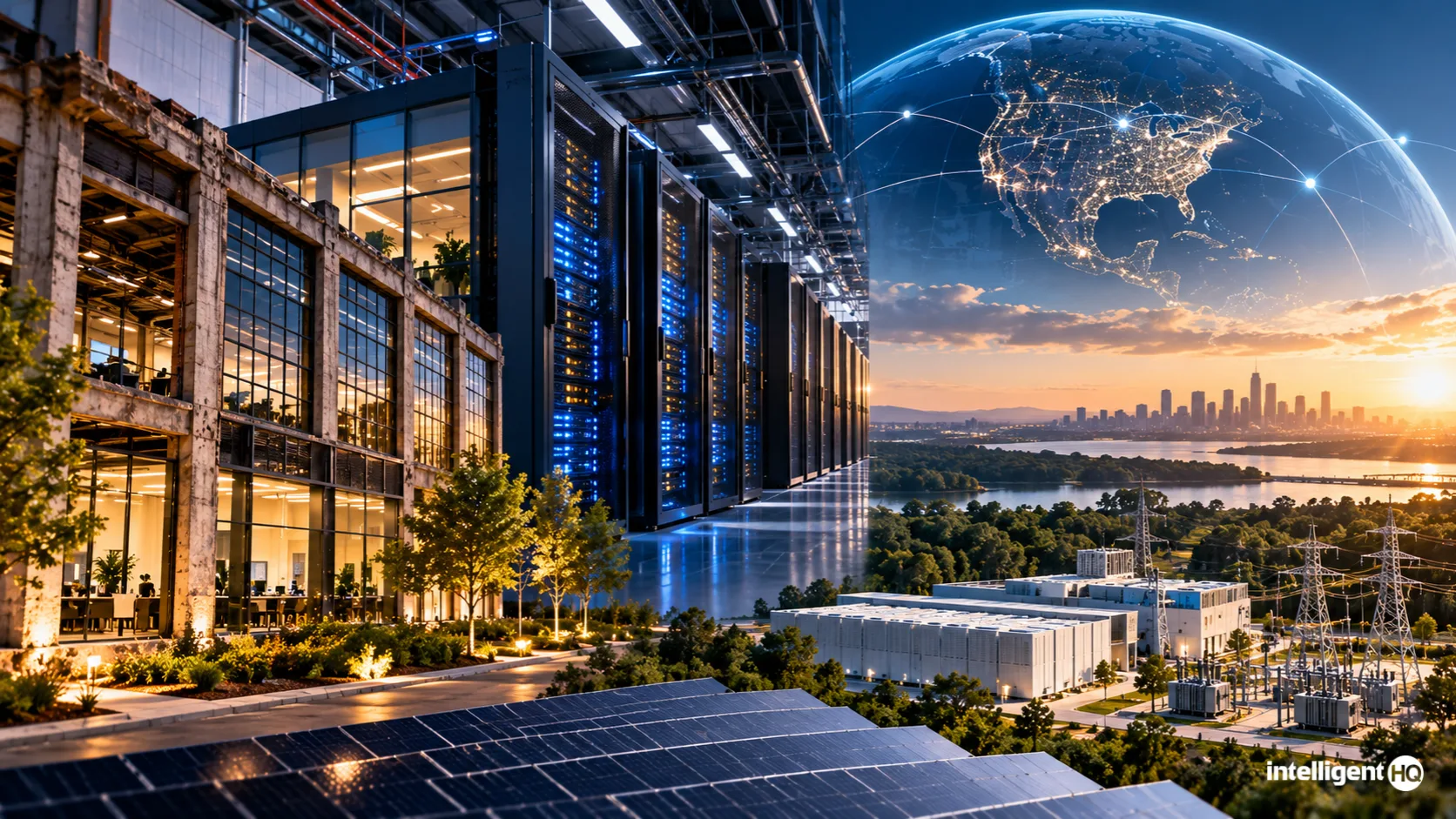
One of Soni’s central proposals involves converting underused commercial and industrial buildings into data centres. Vacant office towers, former factories and unused retail properties may offer opportunities for redevelopment, particularly where existing electrical connections and telecommunications infrastructure can be adapted.
According to Soni, these projects could restore economic activity to properties that have remained vacant while creating new sources of local tax revenue and employment.
“That’s not the farmland or backyard data center argument,” Soni said. “These sites can turn blight into tax dollars and highly skilled jobs.”
The approach could also reduce the need to develop entirely new sites in some locations. However, converting an existing building does not automatically make it suitable for AI computing. High-density GPU infrastructure requires considerable electrical capacity, cooling equipment, structural support and reliable network connectivity.
A former office or industrial property may still require major upgrades before it can accommodate modern AI hardware. Whether redevelopment offers environmental or economic advantages therefore depends on the condition of the building, its existing infrastructure and the resources required for conversion.
For technology developers, the reuse of commercial properties presents an alternative infrastructure strategy that could complement conventional purpose-built data centres.
Local AI Computing and Distributed Infrastructure
Beyond property redevelopment, Soni sees potential in placing computing resources closer to the organisations and communities that use them.
“The compute also often stays local—powering hospitals and city services, making roads safer and giving local businesses connectivity,” he said.
This approach reflects the concept of edge computing, where data processing takes place closer to users, connected devices and applications rather than relying exclusively on distant centralised facilities.
For enterprise AI systems, local computing infrastructure can support applications that require low latency, data sovereignty or reliable access to specialised processing capacity. Potential use cases include industrial automation, healthcare applications, video analytics and local business systems.
Vertical Data has expanded its activities in this area through Vertical Edge, an initiative focused on developing AI-ready edge data centre infrastructure across North America. The company says its site-selection strategy considers access to fibre networks, enterprise demand, interconnection capacity and available power.
However, the benefits described by Soni remain potential applications rather than demonstrated outcomes from specific community projects identified in the press release.
Can AI Data Centres Help Modernise the Power Grid?
The relationship between AI infrastructure and electricity networks is another important part of the debate.
Soni argues that investment associated with new data centre developments can help finance upgrades to ageing electricity infrastructure, including transmission systems and other components needed to support growing demand.
“The revenue from these centers is also funding upgrades to the U.S. grid, which is sorely needed and wasn’t getting paid for any other way,” Soni said. “Newer lines mean fewer wildfires and fewer outages.”
Such improvements may benefit surrounding communities when grid investments increase capacity, strengthen reliability or replace ageing equipment. However, the financial arrangements differ between projects and electricity markets.
Some upgrades are funded directly by developers, while others may involve utilities and costs allocated among different electricity consumers. Additional demand from data centres can also increase pressure on grids if new capacity is not delivered quickly enough.
The IEA has identified electricity supply and grid connectivity as major constraints on AI infrastructure expansion, noting that data centres can often be constructed more quickly than the transmission infrastructure required to supply them.
Consequently, assessing the benefits of a proposed data centre requires examining who finances grid improvements, how costs are distributed and whether local residents and businesses receive measurable benefits.
Responsible Development Becomes an Enterprise AI Infrastructure Priority
For technology companies and infrastructure investors, growing community opposition introduces considerations beyond hardware availability and computing performance. Site selection increasingly requires attention to energy supply, planning restrictions, water resources and local stakeholder expectations.
Soni believes that these factors should be assessed individually, allowing communities to distinguish projects with meaningful local investment from developments that place disproportionate pressure on public resources.
“The backlash is throwing the baby out with the bathwater,” he said. “Data centers became a hot-button topic because they’re an easy David versus Goliath story. Now every project gets treated like the Goliath.”
His position emphasises the potential for redevelopment, distributed computing and infrastructure investment to make AI expansion more compatible with local economic priorities.
However, the long-term sustainability of AI infrastructure will also depend on improvements in computing efficiency, transparent resource reporting and the ability of developers to demonstrate the actual benefits of individual projects.
For enterprises expanding their AI capabilities, the challenge is no longer limited to securing GPUs and computing capacity. Infrastructure decisions increasingly involve the relationship between technology investment, environmental resources and the communities hosting these facilities.
About Vertical Data
Vertical Data is an AI infrastructure company providing GPU hardware procurement, GPU financing, data centre colocation and managed services for organisations deploying large-scale computing systems.
The company supports enterprises, cloud infrastructure providers and other organisations seeking access to specialised AI computing capacity. Its services cover hardware acquisition, financing arrangements, data centre capacity and infrastructure operations.
Deven Soni, the company’s CEO and founder, previously worked in mergers and acquisitions at Lazard and technology private equity at Goldman Sachs and Highland Capital Partners. He has also co-founded businesses including Wired Investors, Snowball Industries and Acquira and served as founding chief operating officer of Tokens.com.