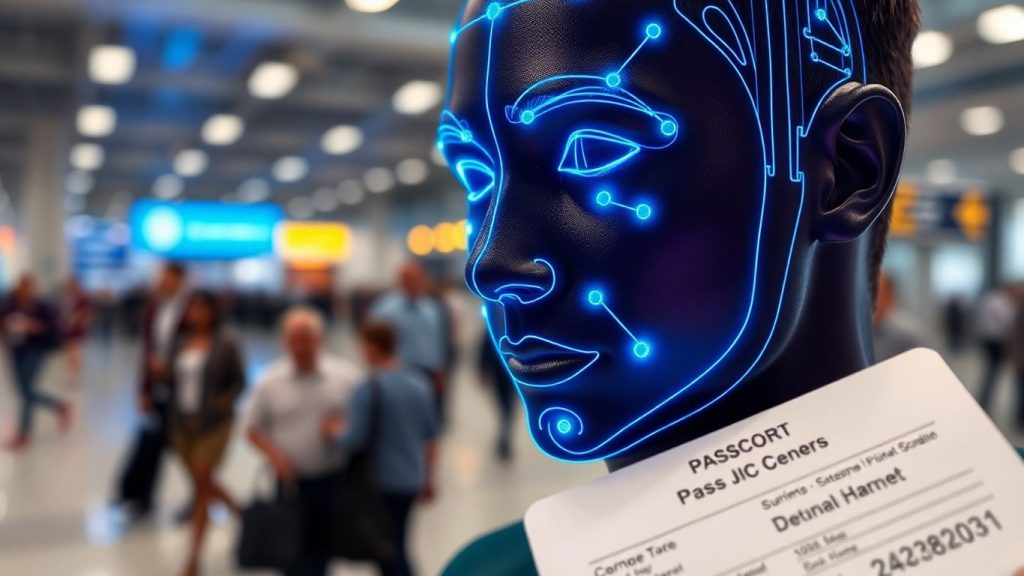
The United States is set to significantly expand its use of facial recognition technology at its borders, aiming to enhance the tracking of non-citizens and combat visa overstays and passport fraud. This move, detailed in a government document, will broaden the scope of biometric data collection, including for children and the elderly, who were previously exempt.
Key Takeaways
- New regulations will mandate facial recognition for non-citizens at all points of entry and departure.
- The technology will now be applied to children under 14 and individuals over 79.
- The expansion is part of a broader effort to tighten immigration controls and address visa overstays.
- Privacy advocates have raised concerns about potential overreach and inaccuracies, particularly for minority groups.
Expanded Biometric Collection
Starting December 26, US border authorities will be empowered to require non-citizens to submit to facial recognition scans at airports, seaports, land crossings, and other departure points. This initiative extends beyond an earlier pilot program, marking a significant escalation in the government’s biometric data collection efforts. The new regulation also permits the collection of other biometric data, such as fingerprints and DNA, from non-citizens.
Addressing Visa Overstays and Fraud
The expanded use of facial recognition is presented as a critical tool in the government’s strategy to curb illegal immigration and ensure compliance with visa regulations. A significant percentage of undocumented immigrants in the US are estimated to have overstayed their visas, a problem that has persisted despite legislative mandates for an automated entry-exit system that has yet to be fully implemented.
Privacy Concerns and Accuracy Issues
The increased reliance on facial recognition technology has ignited concerns among privacy watchdog groups. Worries about potential government overreach and the accuracy of the technology are prominent. A 2024 report by the US Commission on Civil Rights highlighted that facial recognition systems have shown a higher propensity to misidentify individuals from Black and other minority groups. While US Customs and Border Protection already utilizes facial recognition for commercial air entries, this expansion broadens its application to exit tracking and includes previously exempted age groups.
Sources
- US expands facial recognition technology at borders to track non-citizens | Technology, The Guardian.

Founder Dinis Guarda
IntelligentHQ Your New Business Network.
IntelligentHQ is a Business network and an expert source for finance, capital markets and intelligence for thousands of global business professionals, startups, and companies.
We exist at the point of intersection between technology, social media, finance and innovation.
IntelligentHQ leverages innovation and scale of social digital technology, analytics, news, and distribution to create an unparalleled, full digital medium and social business networks spectrum.
IntelligentHQ is working hard, to become a trusted, and indispensable source of business news and analytics, within financial services and its associated supply chains and ecosystems