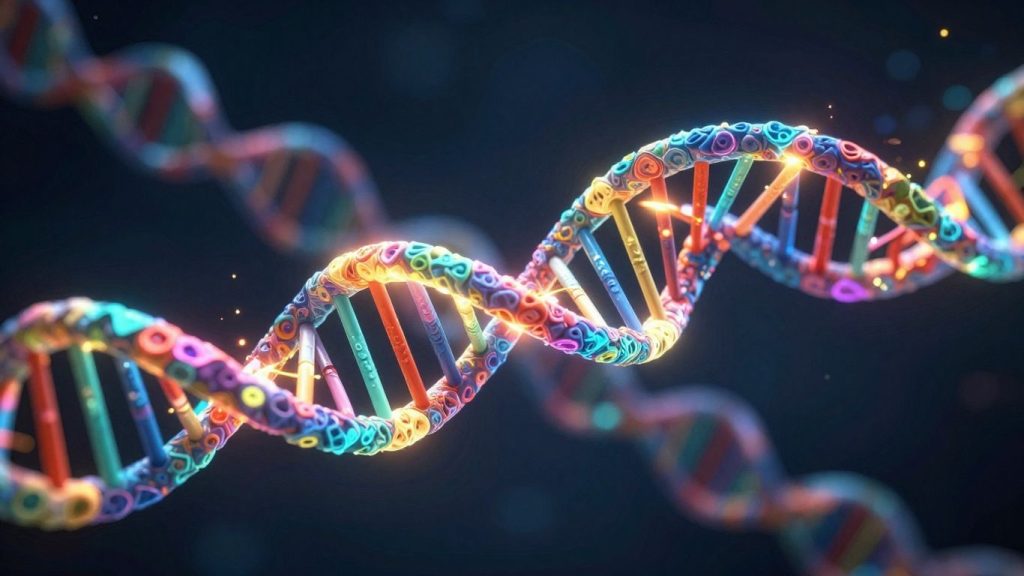
Scientists have developed a revolutionary new imaging technique that allows for unprecedented visualization of the intricate three-dimensional scaffolding that organizes DNA within cells. This breakthrough promises to deepen our understanding of gene regulation and cellular processes, potentially paving the way for new therapeutic strategies.
Key Takeaways
- A novel imaging technology has been developed to visualize DNA scaffolding.
- This advancement offers a clearer picture of how DNA is organized in 3D space.
- The findings could lead to new insights into gene regulation and disease.
A New Window into Cellular Architecture
For decades, researchers have known that DNA, the blueprint of life, is not simply a loose string within the cell. Instead, it is meticulously folded and organized by a complex network of proteins and RNA molecules, forming a structural framework often referred to as chromatin. However, visualizing this intricate architecture in its native state has been a significant challenge.
The newly developed technology, detailed in a recent study, overcomes these limitations by employing advanced imaging methods. This technique allows scientists to observe the spatial arrangement of DNA and its associated proteins with remarkable clarity, revealing the hidden scaffolding that dictates how genes are accessed and expressed.
Implications for Gene Regulation and Disease
The ability to see this DNA scaffolding in action has profound implications. The way DNA is packaged directly influences which genes are turned on or off. Aberrations in this packaging can lead to various diseases, including cancer and developmental disorders. By understanding the precise structure of this scaffolding, scientists can better decipher the mechanisms of gene regulation.
This deeper understanding could unlock new avenues for therapeutic intervention. For instance, researchers might be able to design drugs that specifically target and correct faulty DNA packaging, offering a novel approach to treating diseases at their genetic roots. The technology also opens doors for studying how this scaffolding changes during different cellular processes, such as cell division or in response to environmental stimuli.
Future Directions
The research team plans to further refine the technology and apply it to a wider range of biological questions. Future studies will likely focus on observing these DNA structures in living cells and exploring how they differ across various cell types and disease states. This ongoing work is expected to significantly advance our knowledge of fundamental biology and its connection to human health.

Founder Dinis Guarda
IntelligentHQ Your New Business Network.
IntelligentHQ is a Business network and an expert source for finance, capital markets and intelligence for thousands of global business professionals, startups, and companies.
We exist at the point of intersection between technology, social media, finance and innovation.
IntelligentHQ leverages innovation and scale of social digital technology, analytics, news, and distribution to create an unparalleled, full digital medium and social business networks spectrum.
IntelligentHQ is working hard, to become a trusted, and indispensable source of business news and analytics, within financial services and its associated supply chains and ecosystems