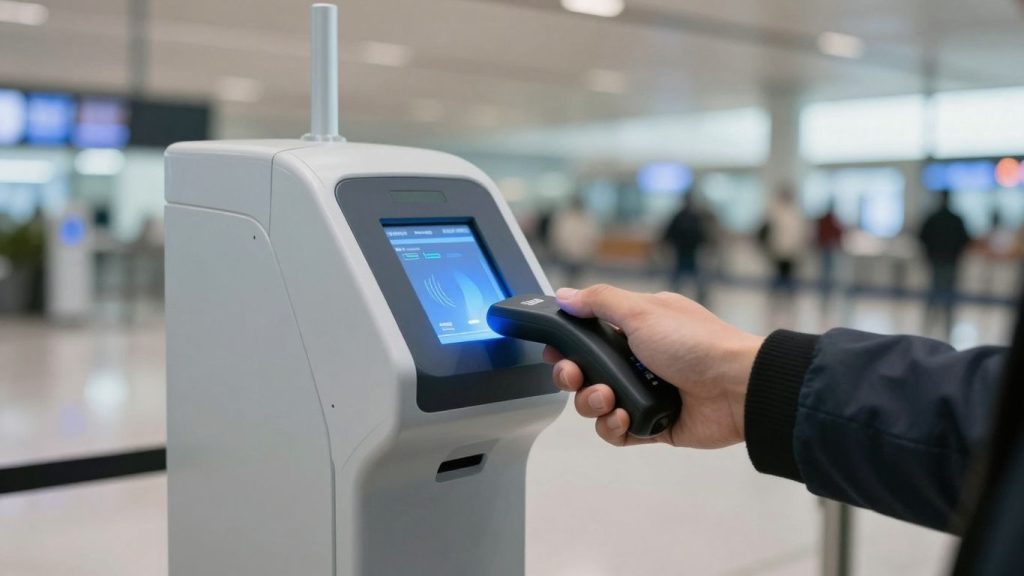
The Transportation Security Administration (TSA) is significantly expanding its Touchless ID program, aiming to enhance security checkpoint efficiency for travelers across the United States. This initiative, set to roll out at 50 new airports this spring, utilizes optional facial recognition technology to verify identities, potentially reducing wait times and the need to present physical identification.
Key Takeaways
- TSA’s Touchless ID program is expanding to 50 new airports.
- The technology uses optional facial recognition to verify traveler identities.
- Participants can pass through security in 10 seconds or less.
- The program is available to TSA PreCheck members flying with select airlines.
How Touchless ID Works
The Touchless ID program allows eligible passengers to use a special lane at TSA checkpoints. Instead of handing over a physical ID and boarding pass, travelers simply pause at a kiosk to look at a camera. A successful facial scan verifies their identity, allowing them to proceed to the screening area. This process typically takes 10 seconds or less, offering a faster and more seamless experience, especially during peak travel times like the upcoming summer rush.
Airport Expansion Details
Currently, the Touchless ID technology is operational at 15 U.S. airports, including major hubs like Atlanta (ATL), Los Angeles (LAX), and Chicago (ORD). The expansion will add 50 new locations, encompassing both large international airports and smaller regional facilities. The TSA has identified an initial list of airports to receive the technology first in spring 2026, with a further 35 airports to follow by the end of the spring season.
Eligibility and Opting In
Participation in the Touchless ID program is optional and currently reserved for travelers who meet specific criteria. Eligible individuals must possess a TSA PreCheck membership, be enrolled in a participating airline’s frequent flyer program (American Airlines, Alaska Airlines, Delta, Southwest, and United), and have a valid passport linked to their frequent flyer profile. To opt in, travelers need to update their airline frequent flyer profile. Once enrolled and meeting all requirements, a "Touchless ID" indicator will appear on their mobile boarding pass, granting access to the dedicated lane.
Important Considerations
While the Touchless ID technology aims to streamline the security process, travelers are still advised to carry a physical, Real ID-compliant form of identification. This is a precautionary measure in case of technical glitches or unavailability on connecting or return flights. The TSA emphasizes that the facial recognition data collected is not used for law enforcement or surveillance and is deleted within 24 hours of a scheduled flight departure. Passengers who prefer not to use the facial recognition system can continue to use the traditional TSA PreCheck lane and present their physical ID.
Sources
- TSA Is Expanding Touchless ID Technology to 50 New Airports, Condé Nast Traveler.

Founder Dinis Guarda
IntelligentHQ Your New Business Network.
IntelligentHQ is a Business network and an expert source for finance, capital markets and intelligence for thousands of global business professionals, startups, and companies.
We exist at the point of intersection between technology, social media, finance and innovation.
IntelligentHQ leverages innovation and scale of social digital technology, analytics, news, and distribution to create an unparalleled, full digital medium and social business networks spectrum.
IntelligentHQ is working hard, to become a trusted, and indispensable source of business news and analytics, within financial services and its associated supply chains and ecosystems