Over recent years, education has seen rapid transformation.
Schools shifted to online platforms worldwide in 2020 during the COVID-19 pandemic as it became essential to continue learning.
It reshaped how students learn, how teachers teach, and the way schools operate, accelerating the use of technology for education, also known as EdTech.
EdTech has become more influential in 2025, expanding even more than expected.
It’s wise to have a deeper look at the latest innovation, like virtual reality in education, and specifically examine how students and teachers have been and will be impacted by AI-personalized learning as well as hybrid models.
Personalized Learning Through AI and Data Analytics
Through the latest data analytics and AI, personal learning has become a reality; it’s no longer a dream for the future.
Students’ performance in lessons, quizzes, and feedback can now be analyzed in real time, providing instantaneous feedback.
Student engagement and comprehension are boosted through this approach.
Some good examples are Gemini for Education by Google, which can be integrated into Google Classroom.
Plus, with NotebookLM, each learner’s needs can be matched with generated personalized quizzes, diagrams, and explanations, according to the India Times.
To enable educators to focus on mentoring, some programs are designed to use AI agents to lighten the load of teachers when it comes to administrative work, grading, and lesson planning.
Academic studies reinforce these innovations.
By comparing generic online courses to AI-powered tutoring, it has been found that students retain more than twice the amount of learning, as well as complete their projects.
It has also been discovered that students not only learn more but also use the teaching apps more than expected, which is an indication that they most probably enjoy the process more.
Some benefits of using AI show that lessons are more adaptive and targeted, knowledge gaps can be identified much faster, and student retention and improved outcomes are evident.
Growth of Virtual and Augmented Reality in Classrooms
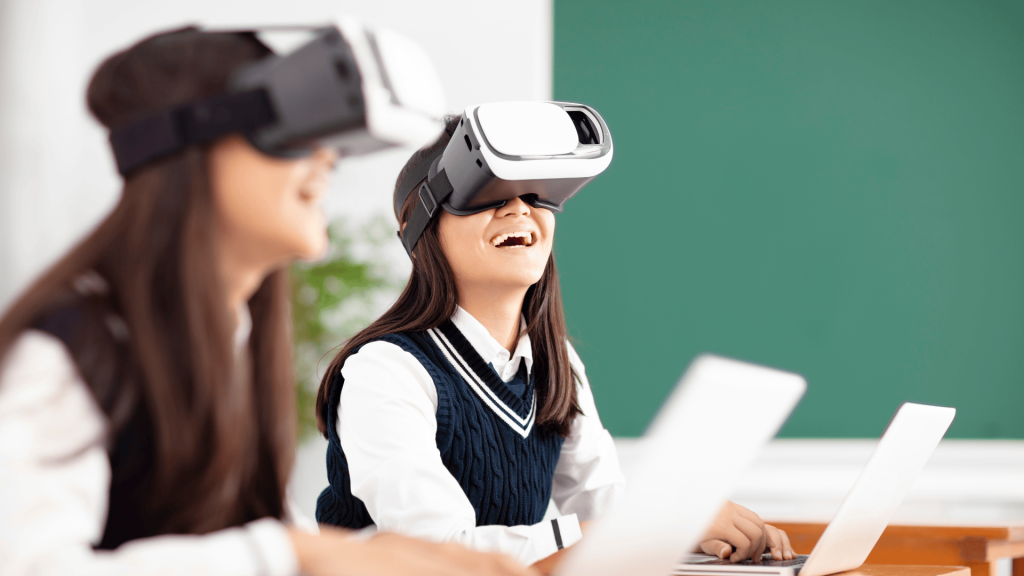
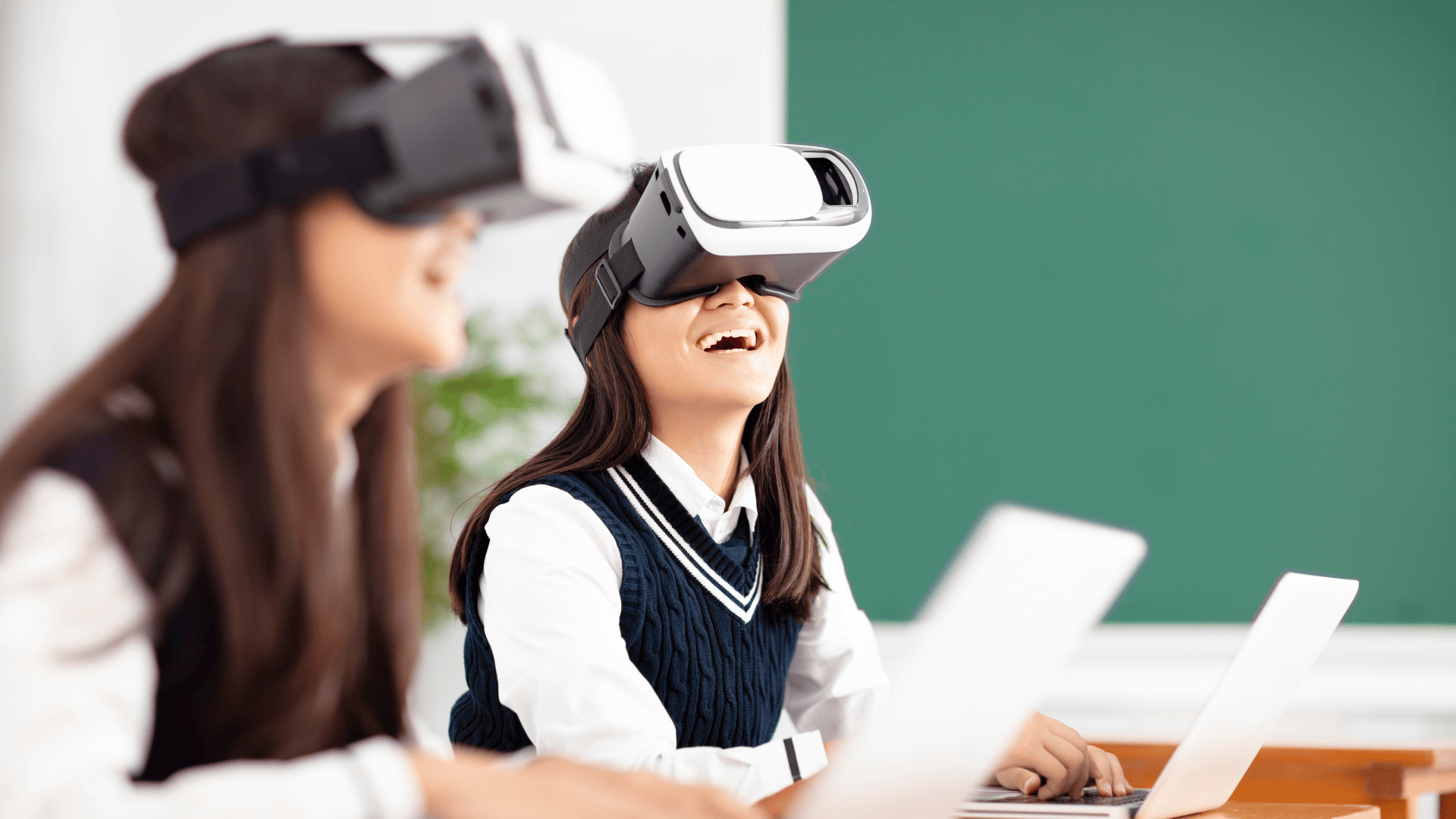
VR/AR technologies are revolutionizing how students experience learning, especially in STEM subjects.
Physics lab VR and VR chemistry bring laboratory experiences to the classroom without physical risks or costs.
More studies have shown that in Estonia, for example, VR chemistry lessons resulted in a 68% test score improvement, compared to traditional methods.
In virtual chemistry environments, students report feeling confident and safe experimenting without the fear of accidents.
Immersive VR boosts retention; experiments and exercises can be repeated in a risk-free setting; the understanding of abstract concepts is enhanced; and these positive results have been reviewed and are academically supported.
It stands to reason that with the visualizing aspect, VR chemistry has improved comprehension and engagement as opposed to using textbooks, etc.
Benefits:
- Visual, experiential understanding of complex topics
- Safe, repeatable virtual labs
- Heightened student motivation and autonomy
Hybrid and Remote Learning Models
Hybrid education (mixing online and face-to-face learning) has evolved into a mainstay, not just a backup option.
Many schools in the U.S. now plan to offer AI literacy training to teachers by fall 2025, and it’s supported by federal initiatives to enhance AI in classrooms.
Assignment management and feedback will be made easier by platforms like Schoology, integrated AI tools, Google Classroom, and Canvas.
Equity gaps are being bridged for rural as well as underserved communities because remote learning is expanding access to education.
Hybrid as well as remote models will continue to grow stronger in 2025, especially since broadband is steadily improving globally.
Gamification and Interactive Learning Experiences
Something else that is gaining momentum is gamified education, blending game mechanics.
This structure enhances student engagement through earning badges, rewards, and points as they progress through the material.
Students find it more immersive when combining VR and gamification, which are present in platforms like Prodigy and Kahoot.
The Estonian VR chemistry lessons created a “game-like” environment that students found engaging and fun.
VC chemistry that is game-based assists through interactive and immediate feedback.
A study on game-based VR chemistry (VC3B) reported increased understanding and grasping of concepts due to immediate feedback.
Benefits:
- Memory retention and problem-solving are enhanced.
- Immersive and active participation is enhanced.
- Engagement as well as motivation is increased.
Increased Focus on STEM and Skill-Based Learning
Strong STEM skills, teamwork, and creativity are a necessity for the workforce of the future.
EdTech companies are entering the arena to make these areas more interactive.
Coding platforms like Tynker and Blockly help students learn programming by building real games and apps.
Virtual science labs and VR chemistry tools provide hands-on experiences that develop critical thinking.
Studies on VR in chemistry highlight its role in intuitive learning and stronger performance.
Reviews report better academic achievement and higher student motivation.
EdTech for Equity and Inclusion
A powerful tool that is making a difference for equity is EdTech.
Students who need help because of disabilities or because they are non-native speakers can make use of accessibility features like language translation and text-to-speech.
For some learners with attention disorders, special needs, or who suffer from anxiety, the VR environment can be tailored to their needs.
Students from all locations are able to access high-quality personalized AI tools, even if they are in remote areas.
This means that during 2025, education will become:
- More personalized, with AI shaping content and pace
- More immersive, thanks to physics lab VR and VR chemistry
- More flexible, with hybrid and remote learning as standard
- More engaging, through gamified and interactive experiences
- More STEM‑oriented, with emphasis on real skills and higher-order thinking
- More inclusive, ensuring tool access for diverse learners
Conclusion
Classrooms are already being reshaped through AI, lab VR, and VR chemistry.
AI tutoring, hybrid pedagogies, and virtual reality tools for education should be explored by institutions and educators to stay ahead.
To ensure effective learning experiences, tech should not simply be taken on; it should also be fostered for the future.
Education in 2025 is moving along at a fast pace!

Founder Dinis Guarda
IntelligentHQ Your New Business Network.
IntelligentHQ is a Business network and an expert source for finance, capital markets and intelligence for thousands of global business professionals, startups, and companies.
We exist at the point of intersection between technology, social media, finance and innovation.
IntelligentHQ leverages innovation and scale of social digital technology, analytics, news, and distribution to create an unparalleled, full digital medium and social business networks spectrum.
IntelligentHQ is working hard, to become a trusted, and indispensable source of business news and analytics, within financial services and its associated supply chains and ecosystems