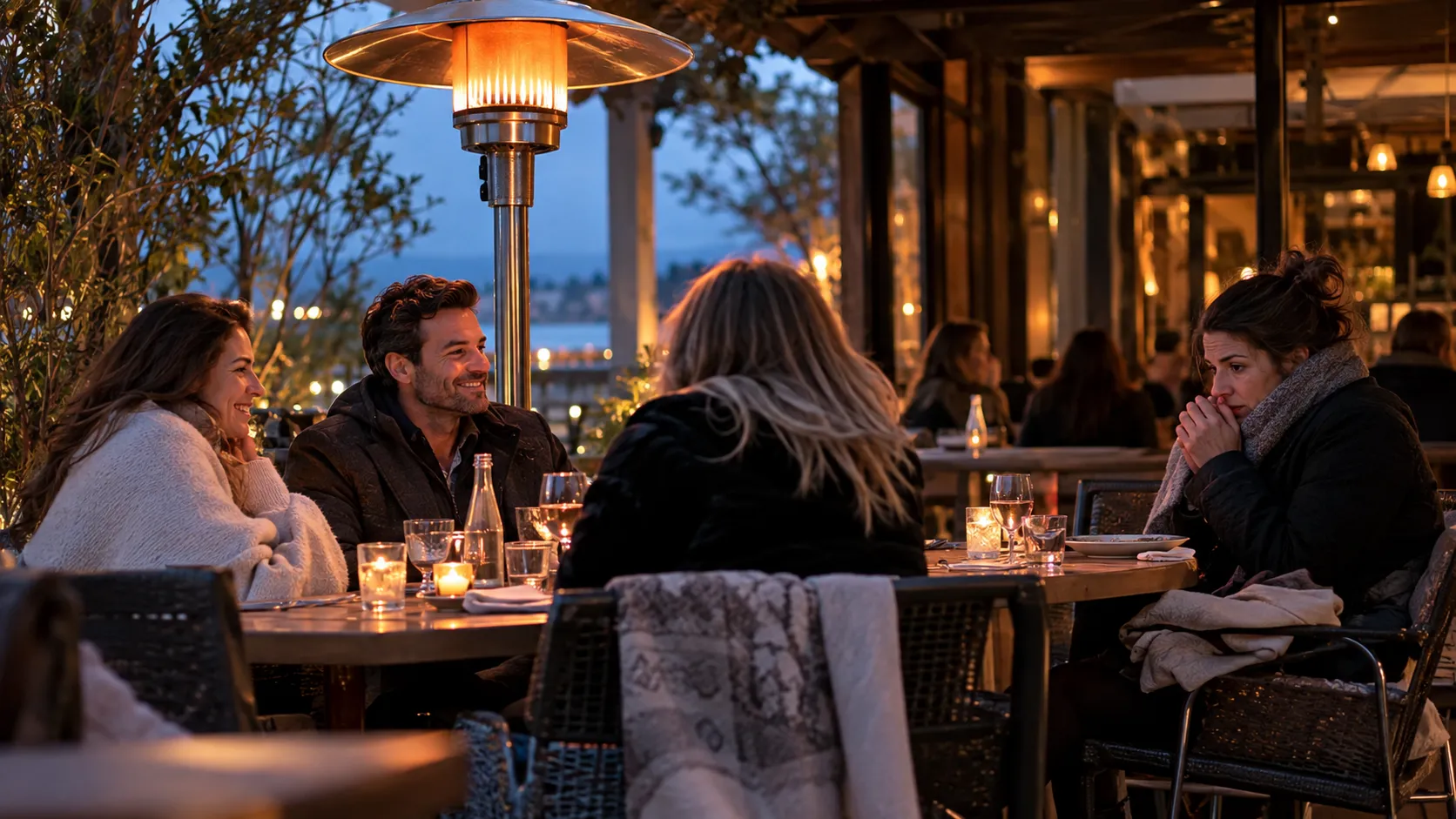
Your patio heater may be running on high, but your chair is still cold. It can be annoying as the host to seat guests outside for dinner or catch up with friends around the fire only to have them complain about being cold. You watch the flame and see nothing wrong. You look at the fuel tank and see it is full. Then one person at the table asks why they can’t feel any heat.
Sometimes, this problem is because there is a patio heating dead zone. Dead zones are areas near your heater that do not receive much heat. One seat, one side of a couch, or the entire opposite end of a table can get left out in the cold. Luckily, it doesn’t always mean your heater is malfunctioning. Chairs can stay cold because of your patio’s layout, wind, distance, or the type of heater you’re using.
What Is a Patio Heating Dead Zone?
A patio heating dead zone refers to a cold spot near your outdoor heater. It is where heat does not reach others well enough to keep them comfortable outdoors. Guests may sit down near you and immediately notice it. One person feels toasty while someone right next to them is freezing. The heater might be on, but its heat does not spread to every seat.
Heat does not distribute perfectly around your patio heater. Most outdoor heaters push heat in one main direction. Some direct heat down from above, while others point it forward in a straight line. Furniture, walls, wind, and even empty space can redirect patio heater warmth. Even if you buy a large heater that looks powerful, it can still leave some seats colder than others.
The Heater Is Too Far Away From the Seats
Distance is one reason why patio chairs stay cold even when the heater is on. Heat lessens as space increases between the heater and seating. Someone sitting close to your heater may feel comfortable while someone sitting at the opposite end of the table experiences barely any warmth. The chairs can be right next to each other on a small patio and still experience this issue.
Some people set their heater in the middle of the patio because it looks nice and balanced. However, this is not always ideal placement for your heater. If guests are sitting on only one side of the table, your heater may waste a lot of energy heating empty space. Those people who want and need the heat could be too far away from the heater to receive it.
Think about how people will sit on your patio before you place the heater. Move it closer to where most guests will sit but pay attention to safety distances in the owner’s manual. Keep your heater away from walls, furniture, umbrellas, and low hanging roofs. If you have a rectangular table that stretches across the patio, you might need two smaller heaters.
Wind Blows the Heat Away
Wind can make your patio heater appear much weaker than it should be. A slight breeze can carry heat away from where people sit. It can also cool down your skin, making you feel colder faster. That is why your heater may work perfectly one night but struggle the next.
Wind impacts tall propane heaters the most because they send heat up into the air around them. The warm air they produce can blow away from your seating area. Your heater can burn fuel all night long, but the heat does not concentrate where people are sitting. Instead, you end up with a dead zone on one side of your patio.
Take note of the wind before placing your heater on the patio. Observe tree leaves, outdoor curtains, or smoke coming from your grill. Those can help indicate what direction the wind is blowing that evening. If there is wind blowing directly across your patio, aim your heater so seating areas are on the least windy side of the patio.
Outdoor curtains, privacy screens, large planters, fences, and curtains can help block wind as well. Just ensure these sit far away from your heater and the propane tank or electric heater itself. Never cover your patio heater or trap air vents. You want to eliminate wind near seated guests, not trap heat next to the heater itself.
Furniture Blocks Heat From Reaching Everyone
Large pieces of furniture block heat before it ever reaches guests sitting down. Tall dining tables, outdoor bars, wide couches, and large planters can create patio heating dead zones. This issue happens often with electric infrared patio heaters because they send heat in a straight beam.
You can point an infrared heater toward your dining table, but only part of your body may warm up. Your face and shoulders may receive heat, but what about your legs? They may stay cold because they are sitting under the table. The table is blocking most of the heater’s path, so heat goes into the tabletop instead.
Walls, posts, grill islands, and storage boxes block heat the same way. A wall may even block wind from blowing across your patio, which is good. But if there is a chair located around the corner from the heater, the wall could also block heat from reaching it. Chairs may be close to a heater but still exist outside of its heating zone.
Look at your patio from your heater’s perspective. Can the heater effectively send heat towards every single chair? If not, move the furniture or adjust where the heater is aiming. It could take minor changes to improve the problem. You may only need to move one chair several feet to bring it back into the heat.
How to Eliminate Cold Seats
Test your patio heater before guests arrive that night. Turn it on and sit in every chair yourself. Identify which chairs feel hot and which ones don’t. Running this quick test will help you identify dead zones before your guest freezes throughout the night.
Move your heater a few feet in any direction and test the seats again. Bring chairs closer together if you have a small group visiting that night. Remove furniture blocking your heater’s heat path. Use safe wind screens to block wind if it is breezy outside. These small changes will do more than cranking your heater up to its highest setting.
You can also bring out outdoor rugs, cushions, and blankets. They will not provide heat, but they will make guests feel more comfortable. Outdoor rugs help decrease the cold from stone or concrete patio floors. Blankets and cushions can keep chairs from feeling cold on guests, especially if it is a cool night outside.
Case Study On Heater Placement & Patio Heating Dead Zones
Hickory Hams installed two LTU90’s horizontally above their outdoor eating area. These low intensity gas fired infrared tube heaters changed their seating area from 75 seats to 111 during the cooler months.
From the manufacturers case study they added 40% more outdoor seating during the cooler months. Their patio became unusable during these months. Instead of placing a heater in their seating area they used heaters above their eating area.
When planning your patio if you find you have cold seats it may not always mean you need more heat. Having your heater pointed in the right direction and proper seating placement can go a long way.
If your patio has a long table or many chairs to choose from it may be worth noting where your heater is covering and what it is not covering. You may have one area that’s nice and warm and the rest of your patio is left out in the cold.
Again this is a case study from the manufacturer. It may not yield these results when installing heaters but it goes to show. Plan your heater placement to fit around your patio. Not where it’s most convenient to place it.
https://spaceray.com/ltu-series-low-intensity-industrial-radiant-infrared-tube-heaters/
Patio Heating Dead Zone FAQ
Why is my seat colder than the others?
You could have your patio heater pointed in the wrong direction. Or you may just be too far away from it. There could be wind blowing at your seat that no one else is feeling or you have something blocking your seat. All of these things can cause one seat to be colder than others.
Why does my patio heater only heat one side?
There are many reasons your patio heater may only be heating one side of your patio. If you have a directional heater it’s designed to throw heat in one direction. There may be something on your patio that’s blocking heat from reaching one side.
Can furniture cause patio heater dead zones?
If your furniture is in the way of your heater’s ability to reach your body. Yes it can cause a dead zone. Try moving your chairs or the location of your heater to see if that improves your seating area.
Why are my legs cold when I’m sitting under my heater?
Similar to the question above your legs may not be receiving all the heat your heater is producing. Your table could be getting in the way of heat reaching your legs. Try relocating your heater or chairs.
Does wind affect my patio heater?
Yes, wind can greatly affect how comfortable you feel when sitting under a patio heater. Some types of heaters can be affected by wind dispersing the warm air they produce. Wind can also cool your skin down faster. Adding a wind barrier to your patio may help. Just make sure it doesn’t block any ventilation that your heater needs.
Should I increase my patio heater’s temperature if one chair is cold?
If one chair is cold and the rest are fine you may want to try relocating your heater or chairs before increasing your temperature. Increasing your temperature could make those who are warm feel warm.
How can I place my patio heater to eliminate cold spots?
Know your seating arrangement and place your heater according to the manufacturer’s recommendations. You may need more than one heater if you have a large patio or table.
Will two smaller heaters work better than one big heater?
Having two heaters can allow you to create more than one zone of heat. It does not mean two small heaters will be more efficient than one. It all depends on the size of your patio and heaters you choose.
Can my patio umbrella block heat?
Depending on what type of heater you have, yes. Your umbrella or canopy could be blocking heat from reaching you. Make sure to always follow manufactures instructions on how close your heater can be to objects.
Can a wall make my patio seat colder?
Yes. Walls can be your friend and they can cause you problems. If you have a directional heater and a wall in between it and your seat it won’t be as warm as others that don’t have that wall.
How can I determine what areas are cold on my patio?
Have your heater on before your guests arrive. Sit in each chair and notice if you feel cold. Look at your legs, arms and face to see if you’re feeling cold in any areas. If one chair feels colder then the rest look for what may be blocking your heater’s heat or if you’re exposed to more wind.
Should my infrared heater be pointed at my chairs?
Yes most likely if you have a directional heater you want it pointing at your seating area. But be sure to read your manual to know how to properly mount your heater.
Can I move my chairs to fix a patio heater dead zone?
Yes, moving your chairs can sometimes do wonders. Try moving your chair out of the shadow of your table or wall.
Do I have a bad patio heater if I have cold spots?
Not necessarily if your heater is working as it should. There may be factors causing your cold spots. If your heater isn’t working as it should follow your manufacturer’s instructions.
How can I make all of my seats warmer?
Try rearranging your seating area and moving your heater. Find where the cold spots are and see what you can do about them. Maybe you need more than one zone of heat on your patio.