
In today’s fast-paced business world, ready-made software often doesn’t meet the specific needs of modern companies. Businesses, no matter their size or industry, are realizing that general tools can slow down innovation, create problems, and make it hard to stay ahead. custom application development company This article will look closely at custom software, exploring its benefits, when it’s essential, how it’s made, and how it helps businesses be flexible, grow, and succeed long-term. We will show how custom software helps businesses meet current needs, adapt to future challenges, and use new opportunities.
The Strong Benefits of Custom Software
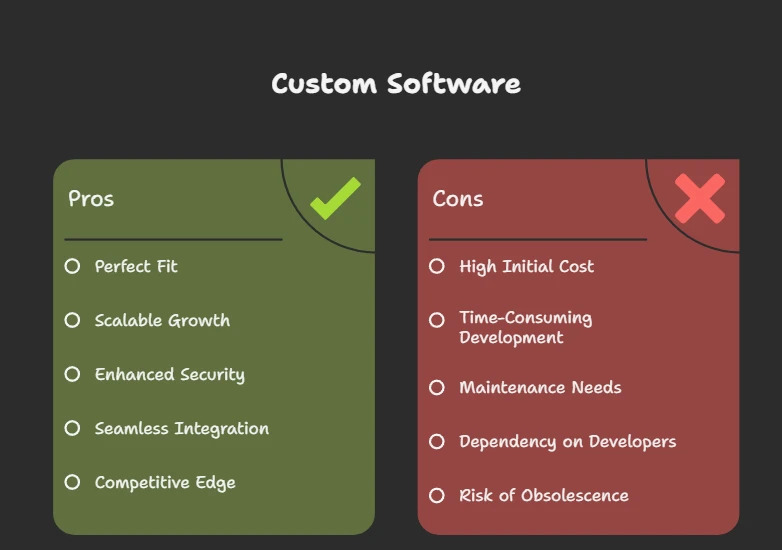
Choosing custom software has strong benefits that standard software can’t provide. These benefits cover many important parts of how a business works and its plans.
1. Fits Your Business Perfectly
One of the biggest benefits of custom software is its unique ability to perfectly fit a company’s specific ways of working and goals. Unlike ready-made products that make businesses change how they work to fit the software, custom solutions are built from scratch to match existing, improved ways of working or to help create new, innovative ones. This perfect fit removes the need for difficult workarounds, makes things smoother, and helps the software truly improve efficiency instead of limiting it. It allows for automating very specific tasks, connecting with older systems, and adding unique business rules that give a clear advantage.
2. Grows and Changes Easily
As businesses grow, their software needs change. Ready-made solutions often can’t grow easily or change with new needs, leading to expensive updates or even needing to be replaced entirely. Custom software is made with future growth and change in mind. Developers can build it in parts, allowing the system to easily grow or shrink, add new features, or adapt to market changes without stopping daily work. This built-in flexibility means the software stays useful for a long time, growing with the business.
3. Better Security and Data Protection
In a time of increasing cyber threats and strict data privacy rules, security is most important. General software, because many people use it, is often a bigger target for hackers, and its weaknesses are well-known. Custom software, on the other hand, offers much stronger security. It can be made with specific security rules for the company’s unique risks and industry rules. Also, only the development team and the client know the code, making it harder for unauthorized people to find and use weaknesses. This custom security protects against data leaks and follows all rules.
4. Connects Easily with Other Systems
Modern companies rarely work alone; they use many different software systems, like for customer relations (CRM), business planning (ERP), accounting, and marketing. Connecting ready-made software with these existing systems can be hard to do, often needing expensive tools or manual work, which can create separate data and slow things down. Custom software development focuses on easy integration. Developers can design the new solution to work smoothly with all other systems, creating one strong technology setup. This connection makes data move easily, improves accuracy, and gives a full picture of how the business runs.
5. Helps You Stand Out and Own Your Tech
By using custom software, businesses can create unique features that make them different from competitors. This unique technology can give a big competitive edge, allowing new services, better customer experiences, or top-notch efficiency that others can’t easily copy. Also, the client owns all rights to the software, giving full control over how it grows, is maintained, and makes money in the future. This ownership helps the company stay independent long-term and protects its software investment.
When Custom Software is Essential
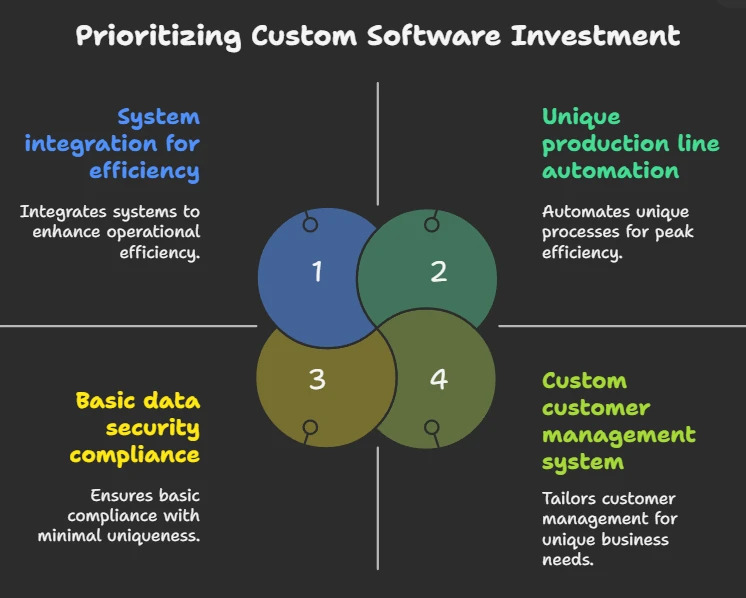
While custom software has clear benefits, it’s important to know when investing in a custom solution is not just good, but essential for business success.
1. For Unique Business Ways of Working
Many businesses have very specific or secret ways of working that help them beat competitors. Ready-made software, made for everyone, often can’t handle these unique ways of working without big problems or inefficient solutions. For example, a factory with a special production line, a shipping company with a unique delivery plan, or a healthcare provider with a distinct patient system will find that custom software can exactly automate and improve these main processes, making them super efficient and accurate. This is especially true for businesses in special markets or those creating new services.
2. To Fill Gaps in Existing Software
Even when a business uses several ready-made programs, there are often important missing features or connection problems that stop smooth operations. These gaps show up as needing to manually enter data, missing reports, or not being able to automate tasks between departments. Custom software can be developed to connect different systems, filling gaps and making them work together as one. This approach lets businesses use their current software better and fix their problems without replacing everything.
3. To Stand Out from Competitors
In competitive markets, being different is key to success. Custom software can be a strong way to do this. By creating unique features, services, or efficient operations that competitors can’t easily copy with standard software, a business can find a clear place in the market. This could mean creating a special customer management system that gives a better customer experience, an internal tool that greatly cuts down costs, or a new product made possible by custom technology. The unique ideas from custom software can become an important asset that can be protected.
4. For Data Security and Rules
Industries like finance, healthcare, and government must follow strict rules (like GDPR, HIPAA, PCI DSS). Ready-made software might not meet these changing rules, or need expensive changes to do so. Custom software development allows building strong security and rule-following features right into the software from the start. This makes sure sensitive data is handled correctly, reducing legal risks and protecting the company’s good name. Also, for businesses with very sensitive data, a custom solution offers control and privacy that shared, ready-made software can’t offer.
5. To Update Old Systems
Many older companies use old systems that are outdated, hard to keep up, and don’t work with new tech. A full update can be too expensive and causes too many problems. Custom software development offers a good way to update. New custom programs can be built to work with old systems, slowly moving data and features while keeping things running. This step-by-step approach lets businesses slowly update their tech, keeping old data and rules while using new software designs.
How Custom Software is Made: A Step-by-Step Process
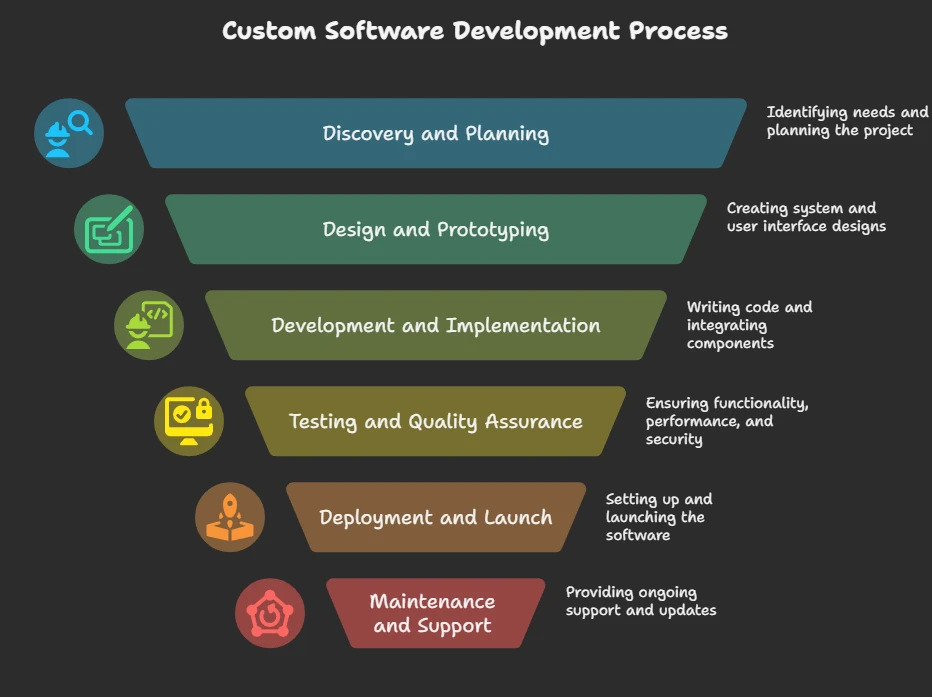
Making custom software is a planned process with steps to make sure the final product meets all needs, is delivered on time, and stays within budget. Different methods like Agile or Waterfall can be used, but the main steps are always the same.
1. Finding Out What You Need (Discovery and Planning)
This first step is very important. It means looking closely at the client’s business to understand their goals, problems, current ways of working, and what the software needs to fix. Key activities include:
•Talking to People: Talking to everyone involved, from users to managers, to get different ideas and needs.
•Checking if it’s Possible: Checking if the proposed solution is possible technically, practically, and financially.
•Writing Down What’s Needed: Writing down exactly what the software should do and how it should work, including user stories and technical details. This often involves creating simple drawings to see how the software will look and feel.
•Picking the Right Tools: Picking the best programming tools, databases, and cloud services based on what the project needs, how much it can grow, and how easy it will be to maintain.
•Planning the Project: Deciding the project’s size, timeline, budget, resources, and how success will be measured. This step ends with a full project plan that guides the whole development.
2. Designing and Making Prototypes
Once the needs are clear, the design step turns these details into a clear plan for how the software will be built. This involves:
•Designing the System: Planning the software’s overall structure, including its parts, how they connect, and how data moves. This makes sure it can grow, is secure, and easy to maintain.
•Designing the Database: Organizing the database to store and get data quickly, thinking about how data connects, how it’s found, and keeping it accurate.
•Designing How Users Interact (UI/UX): Making easy-to-use, interesting, and accessible designs. This often involves creating working models that let people see and try out the software’s design before coding, helping get early feedback and make improvements.
•Technical Design: Explaining how specific features will be made, including the rules, connections, and outside tools.
3. Building the Software (Development and Implementation)
This is where the actual coding happens. Developers write the software code based on the design plans, following good rules for clear code, separate parts, and fast performance. Key activities include:
•Coding: Writing the code for all parts and features.
•Testing Parts: Each part is tested alone to make sure it works right.
•Putting Parts Together: Different parts are put together and tested to make sure they work smoothly as a whole.
•Managing Changes: Using tools like Git to manage code changes, work together well, and keep track of versions.
•Regular Checks: Often building and testing all the code to find problems early.
4. Testing and Quality Check (QA)
Thorough testing is key to find and fix problems, and make sure it works well, is fast, secure, and easy to use. This step involves different kinds of testing:
•Checking Features: Checking that everything works as it should.
•Checking Performance: Checking how fast, stable, and scalable the software is, and how much power it uses under different conditions.
•Checking Security: Finding weak spots that hackers could use.
•Checking Usability: Testing how easy the software is to use with real users.
•User Approval Testing (UAT): The client or users test the software in real situations to confirm it meets their needs. This is a very important step before launching.
5. Launching the Software (Deployment and Launch)
Once the software has passed all tests and the client approves, it is launched for use. This involves:
•Setting Up: Setting up servers, databases, and other necessary parts.
•Moving Code: Moving the tested code to where it will be used.
•Moving Data: Moving old data to the new software, if needed.
•Launch Support: Giving quick help during and after launch for any unexpected problems.
6. Keeping it Running (Maintenance and Support)
Software development is a never-ending process. After launch, constant maintenance and support are important to keep the software working, secure, and current. This includes:
•Fixing Bugs: Fixing any problems that come up after launch.
•Watching Performance: Always checking how the software is working.
•Security Updates: Adding fixes and updates to protect against new weaknesses.
•New Features: Making new features or improvements based on what users say or what the business needs.
•Handling Growth: Making sure the system can handle more users and data.
This planned approach, especially with agile methods that focus on small steps and constant feedback, helps custom software projects succeed and give the most value to the client.
How Custom Software Helps Businesses Be Flexible and Innovative
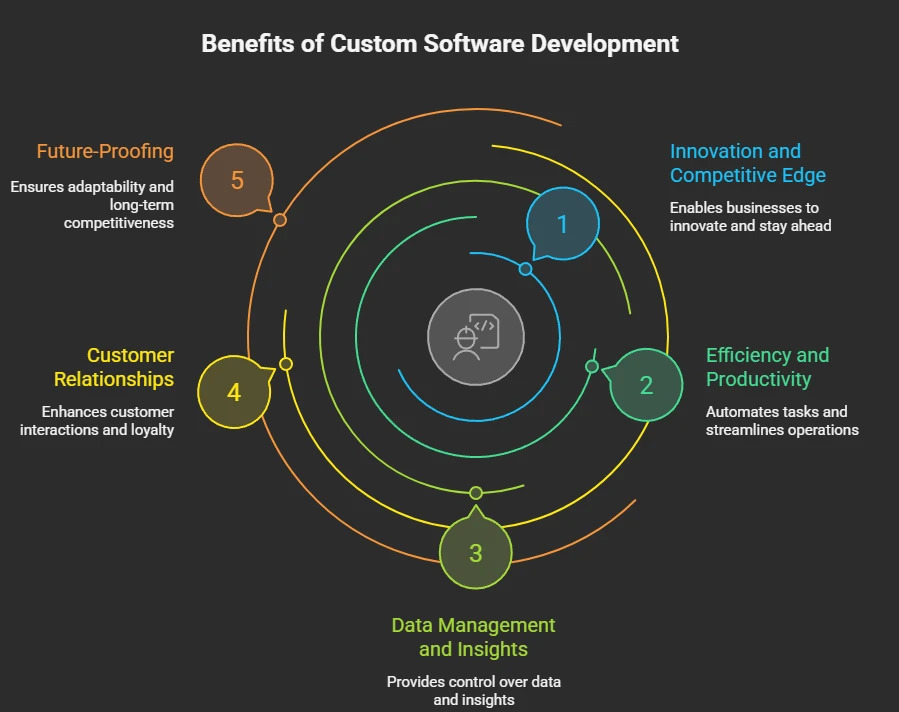
Beyond its direct benefits and how it’s made, custom software greatly changes how flexible, innovative, and successful a company can be long-term. It’s more than just a tool; it drives big changes.
1. Helps with New Ideas and Staying Ahead
Custom software helps businesses innovate in ways ready-made software can’t. custom application development This ability to quickly build and launch custom solutions allows businesses to stay ahead, stand out from competitors, and set new industry standards. It changes the focus from just using existing tools to actively creating new technology in their industries.
2. Makes Work More Efficient and Productive
One of the quickest and clearest benefits of custom software is a big increase in how well and how much work gets done. By automating tasks that are done by hand, repeated, or often have mistakes, custom solutions let people focus on more important work. Custom ways of working remove problems, make talking between departments easier, and keep data the same everywhere. This improvement means faster work, lower costs, and quicker reactions to market needs. For example, a custom customer management system (CRM) can automate lead nurturing, a special inventory system can make stock levels better, and a custom data analysis tool can give quick insights for faster decisions.
3. Better Data Management and Business Insights
Data is very important today, and custom software gives businesses full control over their data. Unlike general solutions that might limit how you can use or see data, custom programs can be made to collect, save, use, and look at data in the best way for the company. This leads to better data quality, consistency, and easy access. Also, custom business intelligence (BI) dashboards and reports can be built right into the software, giving quick, useful information for specific business questions. This better data management helps leaders make smart choices, find trends, and discover new chances.
4. Builds Stronger Customer Relationships
In today’s world focused on customers, giving a great customer experience is key. Custom software can play a key role by allowing personal interactions, making customer service smoother, and offering special self-service options. Whether it’s a custom online store with custom suggestions, a special customer support system that combines all ways of talking, or a mobile app made for customer interaction, these solutions can greatly improve customer happiness, build loyalty, and get more repeat sales. Fast changes based on customer feedback mean the business stays very responsive to market needs.
5. Prepares Your Business for the Future and Avoids Being Stuck
Using ready-made software often means you’re stuck with one provider for updates, help, and new features. This can lead to less flexibility, rising costs, and no control over the software’s future. Custom software development, however, helps prepare for the future. By owning the software and controlling its code, businesses can make sure their software changes with their needs, not just what a vendor decides. This being independent helps them react faster to new tech and market changes, keeping the company strong and competitive long-term.
Conclusion: Custom Software Helps Your Business Succeed
In short, custom software development is not just an option, but a key investment for businesses aiming for steady growth, great operations, and standing out from competitors in the digital age. While ready-made solutions are easy to get, their limits in how much you can change it, how much it can grow, its security, and how it connects often lead to long-term problems and missed chances. Custom software, on the other hand, has a unique ability to perfectly fit business processes, fill important missing features, and encourage constant new ideas.
The careful process of custom software development, from planning to testing and maintenance, makes sure the final product is technically good and fits the client’s changing needs. The big impact of custom software goes beyond just working; it makes operations much better, manages data well, improves customer ties with personal experiences, and prepares the business for fast tech changes and market problems. By choosing custom software development, companies can turn their tech setup from something that costs money into a strong driver for new ideas, flexibility, and lasting success, really helping them reach their full potential in today’s complex global economy.

Founder Dinis Guarda
IntelligentHQ Your New Business Network.
IntelligentHQ is a Business network and an expert source for finance, capital markets and intelligence for thousands of global business professionals, startups, and companies.
We exist at the point of intersection between technology, social media, finance and innovation.
IntelligentHQ leverages innovation and scale of social digital technology, analytics, news, and distribution to create an unparalleled, full digital medium and social business networks spectrum.
IntelligentHQ is working hard, to become a trusted, and indispensable source of business news and analytics, within financial services and its associated supply chains and ecosystems