
Portfolio diversification is a well-known and widely used tactic for reducing risks in investment and creating more opportunities for building wealth in the long run. This strategy works well in every market and should be applied by all investors, regardless of how experienced or confident they are. By spreading funds across a diverse set of assets, you can minimize the impact of potential losses on the health of your portfolio and ensure your investments will continue to grow sustainably.
But diversification is particularly important when navigating highly unpredictable markets like crypto. While the value of all financial instruments can oscillate and cause you to lose money, crypto is the most volatile of them all and, consequently, the riskiest. We’re talking about an asset class where sudden double-digit price swings are normal and prices can spike or drop in a matter of hours.
Even established currencies like Bitcoin, which tend to be a bit more stable thanks to their larger market caps and increased liquidity, can fluctuate significantly. So, seeing the Solana to USD exchange rate go up or down with no prior warning is not in the least unusual.
The moral of the story here is that diversification is a must. Therefore, if your crypto portfolio is primarily made up of Bitcoin, you might want to turn your attention to altcoins and use them to balance your holdings. But with tens of thousands of different altcoins in the market right now, it can be difficult to decide which ones to choose.
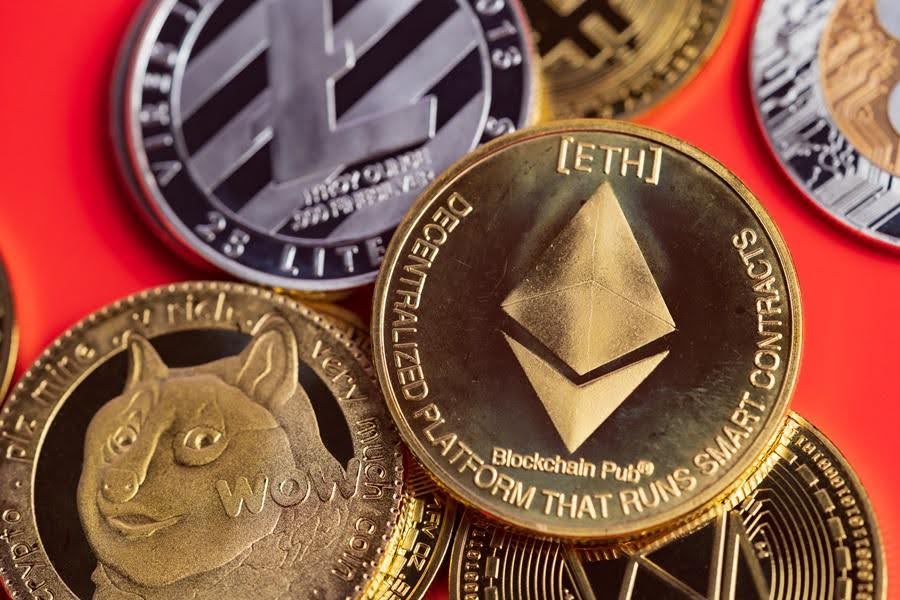
Different types of altcoins
The term altcoin designates a specific crypto category that encompasses all assets except for Bitcoin. Basically, every digital currency that emerged after Bitcoin is considered an altcoin, although some analysts also exclude Ethereum from this group.
It’s also important to make the distinction between coins and tokens. The first are native to the blockchains they run on, being typically used for fees and network security, while the latter are built on top of existing blockchains.
Since both tokens and coins are thrown together in the same bucket, one would be tempted to believe that all altcoins are more or less the same. This couldn’t be further from the truth since crypto projects vary vastly from one another, with many altcoins boasting unique and innovative features. In fact, altcoins are such a diverse bunch that they can be further separated into several subcategories, such as:
- Stablecoins – these coins have their value tied to that of more stable assets like fiat or gold, making them the least volatile coins in the altcoins class. Examples include Tether’s USDT, MakerDAO’s DAI, and the USD Coin (USDC).
- Utility tokens – these are tokens that help facilitate a certain activity within a specific ecosystem, such as paying fees, providing access to network resources and services, and so on. ETH, BNB, and Filecoin (FIL) fall in this category.
- Meme coins – they started out as a joke, combining internet humor with blockchain technology, and have been propelled to the forefront of the crypto market by their active communities, social media virality, and the fear of missing out or FOMO. However, the lack of real-world utility makes meme tokens like Dogecoins or Shiba Inu extremely volatile and risky.
- Security tokens – these tokens have been created with the purpose of representing ownership of real-world assets, such as stocks or real estate, a process known as tokenization. tZERO is one of the most popular tokens in this category.
- Governance tokens – holding governance tokens like Uniswap (UNI), Aave (AAVE), and Maker (MKR) gives owners the right to actively participate in the management and development of these crypto projects, allowing them to vote on changes and get involved in the decision-making process.
- Privacy coins – the purpose of privacy coins, such as Monero (XMR) and Zcash (ZEC), is to maintain user anonymity and confidentiality by keeping transaction details private.
Altcoins that would make a great addition to your portfolio
While knowing about the different types of altcoins can help you decide on the best assets for your crypto portfolio, it’s much more convenient to have a shortlist of altcoins to focus on. So, here are some options worth considering.
Ethereum (ETH)
Although not everyone agrees that Ethereum is an altcoin because of the gap that exists between it and the rest of the altcoins, it does fit the definition of the term. Ethereum can be a great coin to add to your holdings, not only because of its reputation and value, which have appreciated significantly over time, but also because of its innovative nature, the smart contract functionality of its blockchain, and the support it has been getting from institutional investors.
Solana (SOL)
Ranking sixth in the crypto market, Solana is another asset that deserves a spot in your collection. The coin is underpinned by one of the most performant blockchains in existence, renowned for its impressive speed, scalability, and low transaction costs. Just like Ethereum, the Solana network also boasts smart contract functionality, which enhances SOL’s utility and its appeal as an investment.
XRP (XRP)
XRP is the native coin of the XRP Ledger (XRPL), developed by the Ripple company. The asset is mostly known for being embroiled in one of the most high-profile legal battles in the crypto space, between the United States Securities and Exchange Commission (SEC) and Ripple. However, beyond its legal hurdles, XRP holds significant value for being tied to Ripple’s ecosystem, where it serves as a bridge currency and settlement layer.
Tether (USDT)
Tether is one of the most popular stablecoins in the market, being pegged to the US dollar. Most investors are drawn to it because of its ability to maintain a relatively stable value during times of intense volatility.
Most crypto investors choose Bitcoin as their primary asset, but one should also consider diversifying into other cryptocurrencies to balance risks and increase earning potential. Altcoins, with their diverse features and use cases, are perfect for gaining exposure to innovative technologies and offsetting the inherent volatility of the crypto market.

Himani Verma is a seasoned content writer and SEO expert, with experience in digital media. She has held various senior writing positions at enterprises like CloudTDMS (Synthetic Data Factory), Barrownz Group, and ATZA. Himani has also been Editorial Writer at Hindustan Time, a leading Indian English language news platform. She excels in content creation, proofreading, and editing, ensuring that every piece is polished and impactful. Her expertise in crafting SEO-friendly content for multiple verticals of businesses, including technology, healthcare, finance, sports, innovation, and more.










