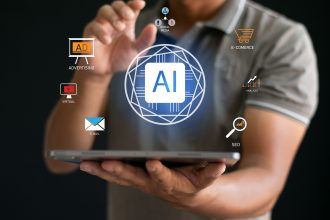
This article aims to shed light on the technology topic in English, breaking down complex ideas into simpler terms. We’ll look at what’s happening in the world of tech, from how computers work to keeping your information safe online. Think of this as a friendly guide to understanding the digital stuff that’s all around us. It’s for anyone who wants to get a better handle on technology without feeling overwhelmed by big words.
Key Takeaways
- Data mining helps find useful patterns in large amounts of information.
- Vector databases are useful for managing data used in AI.
- Chatbots can have conversations that seem human-like.
- DDoS attacks and phishing scams are common online threats to watch out for.
- Quantum computing offers new ways to solve very hard problems.
Understanding Key Technology Concepts
Let’s talk about some of the building blocks that make our digital world tick. It’s easy to get lost in all the new gadgets and apps, but understanding the core ideas behind them can make a big difference. We’re going to look at a few topics that are pretty important right now.
What Is Data Mining?
Think of data mining like being a detective, but instead of a crime scene, you’re looking through huge piles of information. The goal is to find patterns and useful bits of knowledge that you wouldn’t see just by glancing at the data. It uses smart computer methods, kind of like artificial intelligence and statistics, to sift through massive amounts of data. This helps businesses understand what customers want, predict trends, or even spot unusual activity. It’s not just about finding numbers; it’s about turning raw data into actionable insights.
Exploring Vector Databases
When we talk about things like AI creating art or answering questions, there’s a special kind of database working behind the scenes: a vector database. These databases are built to handle data that’s represented as lists of numbers, called vectors. These vectors capture the meaning or characteristics of things like images, text, or sounds. Vector databases are really good at finding similar items quickly, which is exactly what AI needs when it’s trying to understand complex information or generate new content. They’re becoming a big deal for anything involving generative AI.
The Fundamentals of Chatbots
Chatbots are those programs you often interact with online, whether it’s for customer service or just to get information. At their heart, they’re designed to have conversations that feel a bit like talking to a person. They use something called Natural Language Processing (NLP) to figure out what you’re typing or saying. Then, they use AI to come up with a response. Some chatbots are quite simple, following set rules, while others are much more advanced, able to generate creative and context-aware answers. They’re changing how we get help and information.
These technologies, while sounding complex, are designed to make our interactions with computers and information smoother and more intelligent. They are the engines that power many of the digital services we use daily.
Here’s a quick look at what they do:
- Data Mining: Finds hidden patterns in large datasets.
- Vector Databases: Stores and searches data represented as numerical lists (vectors), key for AI.
- Chatbots: Simulates human conversation using AI and language processing.
Navigating the Digital Landscape
A Comprehensive Guide to the Digital Age
The world we live in today is deeply intertwined with digital technology. Understanding this digital age isn’t just about knowing how to use a smartphone; it’s about grasping the underlying principles that shape our interactions, our work, and our society. This section aims to provide a clear overview of what it means to be part of this era, covering its historical roots and the various forms digital technology takes.
We’ll look at how computing has evolved from massive machines to the devices we carry in our pockets. It’s a journey that has fundamentally changed how information is created, shared, and consumed. Think about how quickly things change; it’s a bit like how small fashion brands are currently navigating a particularly challenging financial landscape in 2026, facing significant economic hurdles that make thriving difficult. The pace of digital advancement requires constant adaptation.
Here are some key aspects of the digital age:
- The Internet: The backbone of modern communication and information access.
- Digital Devices: From computers and smartphones to smart home gadgets, these are our primary tools for interacting with the digital world.
- Data: The raw material of the digital age, constantly being generated, collected, and analyzed.
- Connectivity: The ability for devices and people to communicate and share information instantly.
Essential Concepts for Digital Literacy
Being digitally literate means more than just being able to operate a device. It’s about having the skills and knowledge to use digital tools effectively, critically, and safely. In today’s world, this literacy is as important as reading and writing. It helps us make informed decisions, protect ourselves from online risks, and participate fully in society.
We’ll explore some of the core ideas that build this literacy. This includes understanding how information is presented online, recognizing different types of digital content, and knowing how to find reliable sources. It’s also about being aware of our digital footprint and how our online activities can have real-world consequences.
Consider these points for building your digital literacy:
- Information Evaluation: Learning to question the source and accuracy of online information.
- Online Safety: Understanding how to protect personal data and avoid online threats.
- Digital Citizenship: Behaving responsibly and ethically in online communities.
- Technological Awareness: Having a basic grasp of how digital tools and platforms work.
Developing strong digital literacy skills is an ongoing process. As technology evolves, so too must our understanding and our approach to using it responsibly and effectively. It’s about staying curious and adaptable in a world that’s always changing.
This journey through the digital landscape is designed to equip you with the knowledge to not just exist in this era, but to thrive within it. We’ll break down complex ideas into understandable parts, making sure you feel more confident about your place in our increasingly connected world. Understanding the digital age is the first step.
Demystifying Advanced Technologies

This section looks at some of the more complex technologies shaping our world. We’ll break down what they are and why they matter, making them easier to grasp.
An Introduction to Quantum Computing
Quantum computing is a field that uses principles from quantum mechanics to perform calculations. Unlike classical computers that use bits representing either 0 or 1, quantum computers use qubits. Qubits can represent 0, 1, or a combination of both simultaneously, a state known as superposition. This allows quantum computers to explore many possibilities at once, making them potentially much faster for certain types of problems.
The power of quantum computing lies in its ability to tackle problems that are currently impossible for even the most powerful supercomputers. This includes areas like drug discovery, materials science, and complex financial modeling. While still in its early stages, the potential impact is enormous.
Here are some key differences:
- Classical Computers: Use bits (0 or 1). Process information sequentially. Well-suited for everyday tasks.
- Quantum Computers: Use qubits (0, 1, or superposition). Can process information in parallel. Promising for complex simulations and optimizations.
Decoding Transformative Technologies
Transformative technologies are innovations that significantly change how we live, work, and interact. They often have broad applications and can lead to new industries and ways of doing things. Think about how the internet changed communication or how smartphones altered daily life. These are examples of transformative technologies.
Some current examples include:
- Artificial Intelligence (AI): Systems that can perform tasks typically requiring human intelligence, like learning, problem-solving, and decision-making.
- Blockchain: A decentralized, distributed ledger technology that records transactions across many computers, making them transparent and secure.
- Internet of Things (IoT): A network of physical devices embedded with sensors, software, and other technologies that enable them to connect and exchange data over the internet.
These technologies are not just about new gadgets; they represent shifts in how societies function and economies operate. Understanding them helps us prepare for the future and make informed decisions about their development and use. For instance, understanding how businesses manage their money is important, and finance in accounting explains this process.
It’s important to keep up with these advancements. They are changing industries rapidly and creating new opportunities. Staying informed is key to adapting and thriving in this evolving landscape.
Staying Secure in the Digital Realm

In today’s connected world, understanding how to protect yourself online is as important as knowing how to use the technology itself. It’s not just about keeping your personal photos safe; it’s about safeguarding sensitive information, preventing financial loss, and maintaining your digital identity. Let’s look at some common threats and how to deal with them.
Understanding Distributed Denial of Service Attacks
A Distributed Denial of Service (DDoS) attack is like a massive traffic jam deliberately created on a highway, but for the internet. Instead of cars, it’s a flood of fake requests aimed at overwhelming a website or online service. The goal is to make the service unavailable to its intended users. Imagine trying to visit your favorite online store, only to find it’s down because thousands of bots are bombarding it with requests. This can disrupt businesses and cause significant frustration for everyone.
Recognizing and Preventing Phishing Scams
Phishing is a type of online fraud where attackers try to trick you into giving up personal information, like passwords, credit card numbers, or social security numbers. They often do this by pretending to be a legitimate company or person, usually through email, text messages, or fake websites. You might get an email that looks like it’s from your bank, asking you to verify your account details. Clicking a link in such an email could lead you to a fake login page designed to steal your credentials.
Here are some ways to spot and avoid phishing attempts:
- Check the sender’s email address carefully. Look for misspellings or unusual domain names.
- Be wary of urgent requests. Scammers often create a sense of panic to make you act without thinking.
- Don’t click on suspicious links or download attachments. If you’re unsure, go directly to the company’s official website instead of using the link provided.
- Look for poor grammar and spelling. While not always present, these can be red flags.
Protecting your digital life requires a proactive approach. Staying informed about common threats and practicing safe online habits are your best defenses against cybercriminals.
It’s also wise to keep your software updated, as updates often include security patches that fix vulnerabilities. Think of it like reinforcing the locks on your digital doors. For those looking to understand more about digital systems and their evolution, resources like a guide to the digital age can provide valuable context.
The Evolution of Digital Technology
A Journey Through the History of Computing
It’s pretty wild to think about how far we’ve come with computers. We’ve gone from room-sized machines that did little more than basic calculations to the sleek devices we carry in our pockets today. This journey wasn’t a straight line, though; it was a series of big leaps and clever inventions.
Early computers, like ENIAC, were massive. They used vacuum tubes and took up a whole lot of space. Imagine trying to fit one of those in your living room! They were expensive to run and prone to breaking down. But they were groundbreaking for their time, showing what was possible.
Then came the transistor, a game-changer. It was smaller, more reliable, and used less power than vacuum tubes. This led to smaller, more practical computers. The invention of the integrated circuit, or microchip, was another huge step. It allowed us to pack even more power into smaller spaces. This paved the way for personal computers, which really started changing things for everyday people.
Here’s a quick look at some key milestones:
- 1940s-1950s: Vacuum tube computers (ENIAC, UNIVAC)
- 1950s-1960s: Transistorized computers
- 1960s-1970s: Integrated circuits and early microprocessors
- 1970s-1980s: The rise of personal computers (Apple II, IBM PC)
- 1990s-2000s: The internet boom and mobile computing
- 2010s-Present: Cloud computing, AI, and ubiquitous connectivity
The development of digital technology is a story of continuous miniaturization and increased power. Each innovation built upon the last, making computing more accessible and integrated into our lives.
The Impact of Digital Devices
Digital devices have reshaped almost every aspect of our lives. Think about how you communicate, work, learn, and even entertain yourself. It’s all been transformed by these gadgets.
Smartphones, for instance, are more than just phones. They’re mini-computers that connect us to a world of information and services. Laptops and tablets have made work and education more flexible. Even smart home devices are changing how we manage our living spaces. The sheer convenience and capability these devices offer are undeniable.
However, this widespread use also brings challenges. We’re more connected than ever, but sometimes that can feel overwhelming. Managing our digital footprint and staying safe online are important considerations as these devices become even more integrated into our daily routines.
Wrapping Up Our Tech Talk
So, we’ve covered quite a bit about technology topics in English. It’s a big world out there, full of new ideas and tools that change how we live and work. Whether you’re just starting to learn about computers or you’re already pretty comfortable with digital stuff, there’s always something more to explore. Think about how data mining helps us find patterns, or how chatbots are changing how we get information. Even complex ideas like quantum computing are becoming more understandable. Keeping up with technology can seem like a lot, but breaking it down into smaller pieces makes it much easier. We hope this guide has given you a good starting point and maybe even sparked some curiosity to learn more about the tech that shapes our lives. Thanks for joining us on this exploration!
Frequently Asked Questions
What is data mining, and why is it important?
Data mining is like digging for treasure in a huge pile of information. It uses smart computer programs to find hidden patterns and useful facts in large amounts of data. This helps us understand things better and make smarter decisions.
How do chatbots help us communicate with computers?
Chatbots are computer programs designed to talk with people, kind of like texting a friend. They use special language tools to understand what you’re asking and can give helpful answers or complete tasks for you.
What’s the difference between the digital age and older times?
The digital age is all about computers and the internet. Things like smartphones, online shopping, and social media are part of it. It’s a time when technology has changed how we live, work, and play much faster than before.
What is a ‘distributed denial of service’ attack, and how can I avoid it?
A DDoS attack is like a massive traffic jam caused by bad actors trying to block a website or online service from working. They overwhelm it with fake visitors. To avoid being a victim, keep your devices updated and be careful about clicking on strange links.
Can you explain what quantum computing is in simple terms?
Quantum computing is a super-advanced type of computer that uses the strange rules of tiny particles to solve problems that regular computers can’t even imagine tackling. It could lead to amazing new discoveries in medicine and science.
What does ‘digital literacy’ mean for students today?
Digital literacy means knowing how to use computers and the internet safely and smartly. It includes understanding how to find good information online, protect your privacy, and use technology responsibly for school and fun.

Peyman Khosravani is a seasoned expert in blockchain, digital transformation, and emerging technologies, with a strong focus on innovation in finance, business, and marketing. With a robust background in blockchain and decentralized finance (DeFi), Peyman has successfully guided global organizations in refining digital strategies and optimizing data-driven decision-making. His work emphasizes leveraging technology for societal impact, focusing on fairness, justice, and transparency. A passionate advocate for the transformative power of digital tools, Peyman’s expertise spans across helping startups and established businesses navigate digital landscapes, drive growth, and stay ahead of industry trends. His insights into analytics and communication empower companies to effectively connect with customers and harness data to fuel their success in an ever-evolving digital world.