Artificial intelligence, or AI, is everywhere these days. It’s in our phones, our cars, and even helping us write articles. It’s pretty amazing what it can do, from handling boring tasks to figuring out complex stuff. But, like anything new and powerful, it’s not all sunshine and rainbows. There are some real downsides to this technology that we should probably talk about. It’s not about being against AI, but more about understanding the problems so we can use it smarter. Let’s look at some of the not-so-great aspects of AI.
Key Takeaways
- Automation can lead to job losses and make the gap between the rich and poor wider. Developing countries might struggle even more.
- AI can be biased because it learns from biased data. Also, figuring out who’s responsible when an AI messes up is tricky, and our privacy is a big concern.
- Relying too much on AI might make us lose important skills, like thinking for ourselves and being creative. We might also feel less connected to others.
- AI systems can be hacked or fail, which could cause big problems. Attackers can also use AI to create new kinds of cyber threats.
- Building and keeping AI systems running costs a lot of money. This makes it hard for smaller businesses to compete and can create a divide between those who have access and those who don’t.
Job Displacement And Economic Inequality
It’s easy to get caught up in the excitement of new technology, but we also need to talk about the real-world impact on jobs and how people make a living. When machines and software can do tasks faster, cheaper, and sometimes even better than humans, businesses naturally look to adopt them. This isn’t just a future possibility; it’s a trend that’s already reshaping many industries.
Automation’s Impact On Human Roles
Many jobs, especially those that involve doing the same thing over and over or physical labor, are prime candidates for automation. Think about assembly lines, basic data entry, or even some customer service roles. AI-powered systems are increasingly taking over these functions. While some argue that new jobs will emerge, the transition isn’t always smooth. It often requires different skills and training, leaving many workers needing to adapt quickly or face being left behind.
Widening The Rich-Poor Divide
The economic consequences of automation extend beyond just job losses. The efficiency gains from AI can lead to increased profits, but these benefits might not be shared equally. If the owners and investors of AI technology capture most of the gains, it could make the gap between the wealthy and everyone else even wider. We might end up with a situation where a small group of highly skilled individuals manage advanced systems, while a larger population struggles to find stable, well-paying work.
Challenges For Developing Nations
This shift presents particular difficulties for countries that are still developing or rely heavily on manual labor. They may find it harder to compete and adapt to an automated global economy. Without access to the same level of education and technological infrastructure, the gap between developed and developing nations could grow, creating new forms of global inequality.
The economic benefits of automation are not automatically distributed. Without careful planning and policy, they risk concentrating wealth and opportunity, potentially leaving many behind.
Here’s a look at how different sectors might be affected:
- Manufacturing: High potential for automation in assembly and quality control.
- Customer Service: Chatbots and automated response systems handling inquiries.
- Transportation: Autonomous vehicles impacting driving-related jobs.
- Data Entry & Administration: Software automating routine clerical tasks.
Ethical Concerns And Algorithmic Bias
As we bring more artificial intelligence into our daily lives, it’s important to talk about the tricky ethical questions that come up. It’s not just about whether the tech works, but how it affects people and society. Two big areas here are bias in the algorithms themselves and how we handle privacy.
The Shadow Of Algorithmic Bias
Algorithms are basically sets of rules that computers follow to make decisions or predictions. When these algorithms are trained on data that reflects existing societal biases, they can end up making unfair decisions. This means that certain groups of people might be treated differently, often in a negative way, without anyone even realizing it.
- Perpetuating Inequality: AI systems can unintentionally reinforce existing social inequalities. If the data used to train an AI shows historical disadvantages for certain communities, the AI might continue to disadvantage them.
- Data Diversity Matters: A lack of diverse data is a major culprit. If the information fed into an AI doesn’t represent everyone, the AI’s outputs will likely be skewed.
- Unfair Outcomes: This can lead to unfair treatment in areas like job applications, loan approvals, or even how people are policed.
It’s easy to think of algorithms as purely logical and objective, but they are created by humans and trained on human-generated data, which means they can easily pick up and amplify our own blind spots and prejudices.
Accountability For Autonomous Decisions
When an AI makes a decision, especially one with significant consequences, who is responsible if something goes wrong? This is a complex question. If an autonomous vehicle causes an accident, or an AI medical diagnosis is incorrect, figuring out accountability can be tough. Is it the programmer, the company that deployed the AI, or the AI itself?
- The Black Box Problem: Many advanced AI systems are so complex that even their creators don’t fully understand how they arrive at specific decisions. This lack of transparency makes it hard to assign blame.
- Legal Frameworks Lagging: Current laws and regulations weren’t really designed for situations where non-human entities make critical choices.
- Need for Clear Guidelines: We need clear rules about who is liable when AI systems err, especially in high-stakes fields like healthcare and transportation.
Privacy Concerns And Data Misuse
AI systems often require massive amounts of data to function effectively. This data frequently includes personal information, raising significant privacy concerns. How is this data collected, stored, and used? Is it protected from breaches or misuse?
- Extensive Data Collection: AI tools, especially in areas like education or personalized marketing, can collect vast amounts of user data, sometimes without full awareness or consent.
- Risk of Breaches: Centralized data repositories are attractive targets for cyberattacks, and a breach could expose sensitive personal details.
- Informed Consent: Ensuring individuals truly understand what data is being collected and how it will be used is a challenge. Obtaining genuine informed consent for data usage in AI applications remains a significant hurdle.
These ethical considerations are not just theoretical; they have real-world impacts on individuals and communities. Addressing them requires careful thought, open discussion, and the development of robust safeguards.
Over-Dependency And Erosion Of Human Skills
The Deskilling Effect
Think about how often we reach for a calculator, even for simple math. Over time, our mental math abilities can fade. The same thing can happen with AI. When machines handle complex problem-solving, data analysis, and decision-making, people might find their own skills in these areas weakening. It’s a bit like pilots in highly automated cockpits who, some argue, can become too reliant on the technology, potentially losing some of their manual flying skills. This isn’t about stopping progress, but about being smart about how and when we hand tasks over to AI. We need to keep our own abilities sharp and adaptable.
Reduced Critical Thinking And Creativity
When AI tools provide ready-made answers or guide learning processes too rigidly, it can limit opportunities for independent thought. Students might not get as many chances to figure things out for themselves or come up with unique solutions. This reliance can mean less practice in questioning information, evaluating different viewpoints, and developing original ideas. It’s like always being given the answer without having to work through the problem first.
Loss Of Human Connection
As AI takes on more roles, especially in areas like education or customer service, there’s a risk of losing that personal touch. Interactions can become less about genuine connection and more about efficient transactions. This can affect how motivated people feel, how well they develop social skills, and their overall sense of belonging. When we interact mostly with machines, we miss out on the nuances of human communication and empathy that are so important for our development and well-being.
Relying too much on AI can make us less capable and less connected. It’s a trade-off we need to watch carefully.
Security Risks And System Vulnerabilities
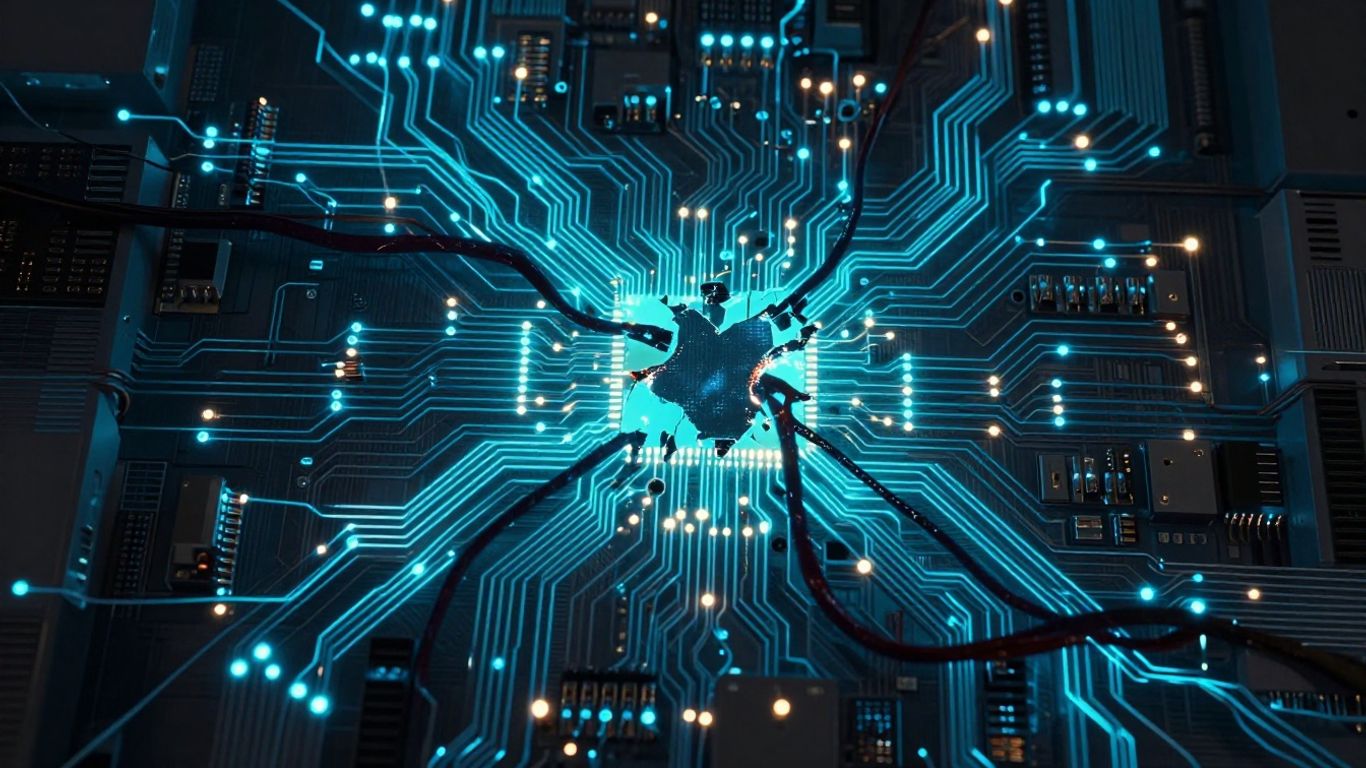
As artificial intelligence becomes more woven into the fabric of our daily lives and critical systems, it also opens up new doors for those with bad intentions. Think about it: the more complex and interconnected these AI systems get, the more attractive they become as targets for cyberattacks. This isn’t just about losing some data; it’s about the potential for widespread disruption.
New Avenues For Cyberattacks
AI systems, especially the really advanced ones, can have hidden weaknesses that are tough to spot. Attackers are getting smarter, too. They might try to trick AI systems in a few ways:
- Data Poisoning: This involves feeding bad or misleading data to an AI while it’s learning. The result? The AI might make biased or just plain wrong decisions later on.
- Evasion Attacks: Attackers can craft inputs, like slightly changed images, that can fool AI systems. This could mean bypassing security cameras or getting spam emails through filters.
- Output Manipulation: The goal here is to make the AI produce incorrect information or take actions that are harmful.
Imagine an AI system managing financial trades. A clever attack could cause serious economic chaos. Even worse, AI can actually help cybercriminals by automating things like phishing scams or creating more sophisticated malware.
Vulnerability To System Failures
What happens when the AI system goes down? Whether it’s a crash, a hack, or just a simple error, if we’re completely reliant on it, the fallout could be huge. Businesses could stop, essential services might fail, and even national security could be at risk. We’ve seen hints of this with major platform outages that brought daily life to a halt for many. This reliance creates a single point of failure, which is a pretty big risk.
The increasing complexity of AI systems, while offering powerful capabilities, also introduces new and challenging vulnerabilities. These systems can be susceptible to novel forms of attack and unexpected failures, demanding robust security measures and contingency planning.
Exploiting AI Weaknesses
Beyond direct attacks, there’s the risk of exploiting how AI works. For instance, AI models can sometimes be tricked into revealing sensitive information they were trained on, or their decision-making processes might be predictable enough to be exploited. This means that even if a system isn’t directly hacked, its inherent characteristics could be used against it. Understanding and addressing these potential weaknesses is just as important as building strong defenses.
High Development And Maintenance Costs
While the promise of artificial intelligence often centers on future efficiencies and groundbreaking capabilities, the reality for many organizations is that getting AI off the ground and keeping it running smoothly comes with a significant price tag. This isn’t a small investment; it’s a substantial commitment that can present a real hurdle, especially for smaller companies or those with tighter budgets.
The Price of Innovation
Building advanced AI systems from scratch is a complex undertaking. It requires a blend of specialized knowledge, powerful tools, and a lot of data. Think about the core components:
- Talent: You need skilled professionals like AI engineers, data scientists, and machine learning experts. These individuals are in high demand and their salaries reflect that.
- Infrastructure: Running AI often means investing in robust computing hardware, extensive data storage solutions, and potentially significant cloud service fees.
- Data: Gathering, cleaning, and preparing the massive datasets AI models learn from is a labor-intensive and costly process.
- Research: The AI field moves fast. Continuous investment in research and development is necessary to keep systems up-to-date with the latest algorithms and techniques.
Ongoing Upkeep and Explainability
Once an AI system is developed, the costs don’t stop. These systems need constant attention to remain effective. This includes:
- Monitoring: Regularly checking the AI’s performance to catch any issues early.
- Retraining: Updating the AI with new data to ensure it stays relevant and accurate as the world changes.
- Optimization: Fine-tuning the system to improve its speed and efficiency.
Furthermore, some AI models, particularly deep learning networks, operate like "black boxes." Their internal workings are so intricate that even their creators can struggle to explain exactly why a specific decision was made. This lack of transparency can be a major problem, especially in fields where accountability and clear reasoning are legally or ethically required. Making these complex systems understandable and auditable adds another layer of expense and difficulty to their maintenance.
The substantial financial requirements for both initial development and ongoing maintenance can create a significant barrier to entry. This disparity can lead to a widening gap between large, well-funded organizations that can afford to adopt advanced AI and smaller businesses that may be left behind, unable to compete with the technological capabilities of their larger counterparts.
Accuracy, Reliability, And Misinformation
While the capabilities of AI are impressive, it’s important to look at the other side of the coin. When AI systems generate content or make decisions, how accurate and reliable are they? This is a big question, especially when we rely on this technology for important tasks.
The Hallucination Problem
One of the most talked-about issues is what’s called "hallucination." This happens when an AI, particularly language models, makes up information that sounds convincing but is completely false. It’s not that the AI is intentionally lying; it’s more like it’s filling in gaps in its knowledge with plausible-sounding but incorrect data. This can be a real problem if people trust this fabricated information without checking it.
Bias In Generated Content
AI systems learn from the data they are trained on. If that data contains biases, the AI will likely reflect those biases in its output. This means AI-generated content can sometimes be unfair, discriminatory, or simply not representative of reality. For example, an AI trained on historical texts might perpetuate outdated stereotypes.
Lack Of True Understanding
Even when AI produces accurate information, it doesn’t truly "understand" the concepts in the way humans do. It’s pattern matching on a massive scale. This lack of genuine comprehension means AI can struggle with nuance, context, and common sense. It might give a technically correct answer that’s inappropriate for the situation, or fail to grasp the implications of the information it’s providing.
The challenge lies in distinguishing between AI output that is factually correct and AI output that is merely plausible.
Here are some key concerns regarding AI accuracy and reliability:
- Factual Inaccuracies: AI can present incorrect information as fact, leading to misunderstandings or poor decisions.
- Outdated Information: AI models are only as current as their last training data, meaning they might not have the latest information.
- Contextual Errors: AI may misinterpret the context of a query, leading to irrelevant or misleading responses.
- Overconfidence in Output: Users may place too much trust in AI-generated content, assuming it is always correct.
The development of AI has brought about incredible advancements, but we must remain vigilant about its limitations. The potential for AI to generate misinformation, reflect societal biases, and operate without true comprehension poses significant risks that require careful consideration and mitigation strategies.
Unequal Access And The Technological Divide

As technology advances, a significant concern emerges: not everyone has the same level of access. This creates a gap, often called the technological divide, which can make existing inequalities even worse, especially in education. When new AI tools and resources become available, they often benefit those who already have good internet, up-to-date devices, and the skills to use them. This leaves others, particularly those in lower-income communities or developing nations, further behind.
Exacerbating Educational Inequalities
When AI becomes a standard part of learning, students without access to these tools are at a distinct disadvantage. Imagine a classroom where some students use AI tutors for personalized help, while others rely solely on traditional methods. This difference can lead to varied learning outcomes, making it harder for disadvantaged students to keep up. The promise of AI in education is diminished if it only serves a select few.
Disparities Between Nations
Globally, the gap between developed and developing countries in terms of technological infrastructure and digital literacy is substantial. AI integration in education requires significant investment in hardware, software, and training. Countries that cannot afford these investments will struggle to implement AI-driven educational programs, potentially widening the economic and educational gap between nations.
Access To Advanced Resources
Even within countries, access can be uneven. Schools in wealthier districts might have the latest AI-powered learning platforms, while schools in poorer areas might struggle with basic computer access. This disparity means that students from different backgrounds receive vastly different educational experiences, simply because of the technology they can or cannot access.
Here’s a look at how participants in a study viewed these disparities:
| Statement | Mean Score | Standard Deviation |
|---|---|---|
| AI integration may worsen existing inequalities in access to advanced tech. | 4.03 | 1.34 |
| Students without AI access may be disadvantaged in educational opportunities. | 3.79 | 1.42 |
| Disadvantaged students may face barriers in accessing AI resources. | 3.74 | 1.45 |
| Equal AI access should be ensured to avoid further educational inequities. | 3.71 | 1.41 |
| Schools should address disparities in AI access among students. | 3.70 | 1.39 |
| The technological divide between privileged students and others could widen. | 3.70 | 1.41 |
| Bridging the digital divide is crucial to empower certain student populations. | 3.68 | 1.41 |
| Efforts should be made to provide equitable access to AI-driven tools. | 3.35 | 1.40 |
The unequal distribution of technological resources means that the benefits of AI in education might not be shared broadly. This situation calls for deliberate efforts to ensure that AI serves as a tool for inclusion rather than exclusion, requiring thoughtful planning and investment to bridge the digital divide.
Looking Ahead: Balancing Progress with Caution
So, we’ve looked at some of the less-than-perfect aspects of AI and other advanced tech. It’s easy to get caught up in all the amazing things these tools can do, but it’s also really important to remember the downsides. Things like jobs changing, potential for unfairness, and even just becoming too reliant on machines are real issues we need to think about. It’s not about stopping progress, not at all. It’s more about being smart about how we use these powerful tools. We need to keep asking questions, make sure we’re building things responsibly, and always keep a human touch in the loop. That way, we can hopefully get the best of both worlds – the power of technology and the best of what makes us human.
Frequently Asked Questions
Can AI really take away people’s jobs?
AI can do many tasks that people used to do, especially jobs that are repetitive. This means some jobs might change or disappear. However, AI can also create new jobs and help people do their jobs better. It’s more about changing the kinds of work people do rather than getting rid of jobs completely.
Are AI systems always fair and unbiased?
No, AI systems can be unfair if the information they learn from is unfair. If the data used to train AI has biases, the AI might make biased decisions too. This can lead to unfair treatment for some groups of people. Developers are working hard to make AI fairer.
What are the biggest worries about AI’s ethics?
Some major worries include AI collecting too much personal information, the possibility of AI being used in weapons that make decisions on their own, figuring out who is responsible when AI makes a mistake, and how AI might affect people’s ability to make their own choices.
How can we deal with the risks that come with AI?
We can help manage AI’s risks by creating clear rules for how to use it ethically, making sure we understand how AI makes decisions, building strong security to protect against hackers, having different kinds of people help build AI, and teaching everyone more about what AI can and cannot do.
Is it a problem if we rely too much on AI?
Yes, relying too much on AI can make it harder for us to think for ourselves and solve problems. If AI systems stop working or get hacked, we might be in trouble if we don’t have other ways to do things. It’s important to find a good balance and still use our own skills.
What happens if AI makes a mistake?
When an AI makes a mistake, it can be tricky to know who is to blame. Is it the people who made the AI, the people who use it, or the AI itself? This is a difficult question that is still being figured out, especially when AI makes important decisions on its own.

Peyman Khosravani is a seasoned expert in blockchain, digital transformation, and emerging technologies, with a strong focus on innovation in finance, business, and marketing. With a robust background in blockchain and decentralized finance (DeFi), Peyman has successfully guided global organizations in refining digital strategies and optimizing data-driven decision-making. His work emphasizes leveraging technology for societal impact, focusing on fairness, justice, and transparency. A passionate advocate for the transformative power of digital tools, Peyman’s expertise spans across helping startups and established businesses navigate digital landscapes, drive growth, and stay ahead of industry trends. His insights into analytics and communication empower companies to effectively connect with customers and harness data to fuel their success in an ever-evolving digital world.