We often use the word ‘technology’ without really thinking about what it means. It’s easy to just point to a smartphone or a computer. But the technology definition of something is much wider than just gadgets. It’s about how we interact with the world, how we shape it, and how it shapes us. This exploration looks beyond the surface to understand the deeper meanings and implications of technology, especially as we face new advancements like artificial intelligence.
Key Takeaways
- The technology definition goes beyond mere tools; it encompasses our relationship with the world and how we use resources.
- Philosophers like Heidegger viewed technology not as objects, but as a way of revealing and ordering the world, sometimes turning nature into a ‘standing reserve’.
- Rethinking technology can involve seeing it as an art or craft, emphasizing a more mindful and ethical way of relating to our environment and each other.
- Artificial intelligence, while technically based on algorithms, raises profound questions about intelligence itself and its potential to augment or replace human capabilities.
- The impact of AI and the broader technology definition are shaped by ethical considerations, including bias, power concentration, and the need for responsible governance.
Understanding the Core Technology Definition
Beyond Simple Tools: A Broader Perspective
When we talk about technology, our minds often jump straight to the latest smartphones, complex software, or maybe even robots. It’s easy to think of technology as just the shiny gadgets we use every day. But if we stop and think about it, that’s a pretty narrow view. Think about a hammer, a pencil, or even a book. These are all technologies, too, right? They help us do things we couldn’t do otherwise, or at least, not as easily. So, the first step in really understanding technology is to broaden our perspective beyond just the modern, electronic stuff. It’s about recognizing that technology has always been a part of human life, evolving from the simplest of tools to the most sophisticated systems we have today.
The Essence of Technology: More Than Just Devices
So, what’s the real heart of technology? It’s not just about the physical objects themselves. It’s more about the how and the why behind them. Technology is fundamentally about human ingenuity – our ability to solve problems and shape our environment. It’s the application of knowledge, skills, and processes to create tools, systems, or methods that serve a purpose. This purpose could be anything from making work easier, communicating across distances, or even understanding the world around us. The essence of technology lies in its function and its impact, not just its form.
Technology as a Relationship, Not Just a Thing
Philosophers like Martin Heidegger have offered a different way to look at technology. Instead of seeing it as a collection of objects or tools, he suggested we think of it as a way of relating to the world. When we use technology, we’re not just holding a device; we’re engaging with it, and through it, with the world. This relationship can change how we perceive things. For example, a river might be seen as a beautiful natural landscape, or it could be viewed as a source of hydroelectric power. This shift in perspective, driven by how we choose to use technology, highlights that technology is deeply intertwined with our understanding and interaction with reality itself.
- Tools: Simple instruments that extend human capabilities (e.g., a knife, a wheel).
- Systems: Interconnected components working together to achieve a goal (e.g., a transportation network, a power grid).
- Processes: Methods and procedures for accomplishing tasks (e.g., scientific research, manufacturing techniques).
Understanding technology requires looking beyond the surface. It involves recognizing the underlying principles, the human intentions, and the ways in which these creations shape our interactions with the world and each other.
Heidegger’s Philosophical Lens on Technology
The Concept of ‘Enframing’ in Modern Technology
Martin Heidegger, a 20th-century philosopher, offered a way to think about technology that goes beyond just looking at gadgets. He suggested that the real ‘essence’ of modern technology isn’t the machines themselves, but a specific way of relating to the world. He called this ‘enframing’ (Gestell in German). Think of it as a framework or a way of ordering things. Enframing is how modern technology compels us to see everything, including nature, as a resource ready for use and exploitation. It’s like putting the world into a specific box, defined by efficiency and utility.
Nature as a ‘Standing Reserve’
Within this enframing, nature isn’t seen as something to be appreciated or understood in its own right. Instead, it becomes a ‘standing reserve’ (Bestand). This means nature is treated as a collection of raw materials, waiting to be ordered, stored, and used when needed. For example, a river isn’t just a river; it’s a potential source of hydroelectric power. A forest isn’t just a forest; it’s timber waiting to be harvested. This perspective objectifies the natural world, reducing its complexity and inherent value to its usefulness for human purposes.
This way of seeing things challenges nature, not in a confrontational way, but by unlocking its energies and exposing its resources for our benefit. It’s a process driven by the desire for maximum output with minimum input.
Challenging Nature: The Power of Expediting
Heidegger described this process of enframing and turning nature into a standing reserve as ‘expediting’ (Fordern). This expediting happens in two main ways: it unlocks what is hidden, and it exposes what is concealed. But this isn’t a neutral act; it’s always directed towards driving forward a particular goal – usually, getting the most yield for the least expense. This means that technology, in its modern form, is fundamentally about ordering and controlling the world to serve human needs and desires, often at the expense of a deeper, more respectful relationship with what we are ordering.
Rethinking Technology’s Purpose and Meaning
Technology as Art and Craftsmanship
Technology isn’t just cold metal and blinking screens—it was once closely linked to the act of making and expressing. If we go back in time, technology was deeply tied to art and craft. Craftsmanship, be it in building a violin or painting a mural, was as much technology as software programming today. The idea is that every act of creating—whether shaping clay on a wheel or designing a web app—carries a sense of care and skill.
- Creativity is at the core of both artistic and technical work.
- Good craftsmanship values the process, not just the final product.
- Artistic skills allow us to shape technology to fit our world, not the other way around.
When we treat technology as a series of expressive acts rather than just tools, it becomes a way to connect with materials, people, and our own intentions.
Reviving an Earlier Understanding of Techne
The word "technology" actually comes from the Greek "techne," which means knowing how to make or do things. This includes both mechanical skills and the arts. That older view saw technology as a kind of wisdom—knowing how to work with nature while respecting its limits, rather than just extracting what we want.
- Modern technology often thinks first about efficiency or output.
- The old sense of "techne" values the harmony between the maker and what they make.
- Recognizing both aspects can help us avoid treating everything as just a resource.
An Aesthetic and Ethical Way of Relating
If we only see technology as a means to an end, we risk losing touch—with not just the world, but each other. Bringing the idea of art and the ancient sense of skill back into our definition can help.
- Ethical relationships: Technology shouldn’t just solve problems, but should also care for communities and environments.
- Aesthetic experience: There’s meaning in how things look, feel, and work together—beauty isn’t separate from usefulness.
- Reflection: It’s important to pause and question if we’re using technology to enrich life or just to get things done faster.
Seeing technology through art and ethics gives us a chance to slow down, appreciate the act of making, and ask—what kind of world do we want this technology to help create?
This shift in thinking reminds us that technology, at its best, is not just about making things happen faster or cheaper. It’s about bringing human values, intentions, and care back into what we build and how we live with our inventions.
The Human Element in the Technology Definition
From Natural Resources to Human Resources
When we talk about technology, it’s easy to get caught up in the gadgets and the code. But at its heart, technology is about how we interact with the world, and that includes how we interact with each other. Martin Heidegger, a philosopher who thought a lot about this stuff, pointed out that modern technology often pushes us to see everything, including people, as "standing reserve." This means we start treating them like resources that can be used up and replaced, rather than individuals with inherent worth. Think about how we talk about "human resources" in the workplace. It’s a term that, intentionally or not, frames people as a commodity, much like raw materials.
The Danger of Becoming ‘Standing Reserve’
This way of thinking can be quite damaging. When technology’s primary goal becomes efficiency and resource extraction, people can get sidelined. We risk becoming mere cogs in a larger machine, our unique contributions overlooked in favor of predictable output. This reduction of human beings to mere instruments or resources is a significant ethical concern. It can lead to a feeling of detachment and a loss of purpose, not just in our work but in our broader engagement with the world. It’s a subtle shift, but one that can profoundly alter our sense of self and our relationships.
Disengagement in High-Tech Workplaces
This idea of people becoming "standing reserve" isn’t just abstract philosophy; it has real-world consequences. Many people working in high-tech environments report feeling disconnected from their work. They might be performing highly specialized tasks, but without a clear sense of how their individual efforts contribute to a larger, meaningful whole. This disengagement can manifest in various ways:
- A lack of personal investment in the final product.
- Reduced creativity and initiative.
- Increased stress and burnout.
- A feeling of being easily replaceable.
It’s as if the very technologies designed to improve our lives inadvertently create environments where human connection and individual meaning are diminished. This highlights the need to consider the human impact when we define and implement new technologies.
Exploring the Nuances of Artificial Intelligence
Artificial Intelligence, or AI, is a term we hear constantly these days. It’s more than just a buzzword; it’s a rapidly developing field that’s changing how we live and work. But what does AI really mean? It’s not just about robots or supercomputers. At its heart, AI is about creating systems that can perform tasks that usually need human intelligence. This includes things like learning, solving problems, understanding language, and even recognizing objects.
The Technical Core: Algorithms and Machine Learning
When we talk about the technical side of AI, we’re often talking about algorithms and machine learning. Early AI systems were built on strict rules – if this happens, then do that. These systems were good at specific jobs, like playing chess, but they struggled with the messy, unpredictable nature of the real world. The big shift came with machine learning. Instead of telling the computer exactly what to do for every situation, we now train AI systems on huge amounts of data. The AI learns to find patterns and make predictions on its own. Think of it like teaching a child by showing them lots of examples. Deep learning, a more advanced form of machine learning, uses structures inspired by the human brain to process even more complex data. This is what powers many of the impressive AI applications we see today, from generating realistic images to translating languages.
The Philosophical Debate: Intelligence vs. Simulation
This brings us to a big question: is AI truly intelligent, or is it just really good at pretending? Some AI systems can produce text that sounds incredibly human, even empathetic. This leads some to believe they are developing a form of understanding. Others argue that these systems are just incredibly sophisticated at mimicking patterns they’ve seen in their training data, without any real comprehension of what they’re saying. The core of this debate is whether appearing intelligent is the same as being intelligent. Many philosophers believe that true intelligence requires experiences, consciousness, and interaction with the physical world, which current AI lacks. So, are we building tools that simulate intelligence, or are we creating something new?
The Spectrum of Artificial Intelligence
It’s helpful to think about AI on a spectrum. Right now, most AI we encounter is what we call Artificial Narrow Intelligence (ANI). This is AI designed for one specific task. Your phone’s voice assistant, the recommendation engine on a streaming service, or the system that optimizes traffic lights are all examples of ANI. They are excellent at their single job but can’t do anything else. The next step, which is still largely in the realm of theory and research, is Artificial General Intelligence (AGI). This would be an AI with the ability to understand, learn, and apply its intelligence to any problem a human can. It would be adaptable and capable across many different domains. AGI doesn’t exist yet, and there’s a lot of discussion about if and when it might.
The Dual Nature of AI’s Impact
AI has the potential to be a powerful force for good. It can help us tackle complex problems like disease, climate change, and resource management. It can augment human abilities, making us more productive and creative. However, there are also significant risks. We need to consider the potential for job displacement, the concentration of power, and the ethical implications of creating increasingly capable machines. The meaning of AI is therefore a duality: it’s a tool with immense potential for progress, but also one that carries significant responsibilities.
The true meaning of AI isn’t just about the technology itself, but about how we choose to develop and use it. It’s a reflection of our own values and aspirations, and it requires careful consideration and ongoing dialogue to ensure it benefits humanity.
Ethical Considerations in the Technology Definition
As AI becomes more integrated into our lives, ethical considerations become paramount. We need to address issues like bias in AI systems, which can perpetuate existing societal inequalities. Concerns about privacy and surveillance are also growing as AI systems collect and analyze vast amounts of data. Establishing clear governance, accountability, and oversight mechanisms is vital to ensure that AI is developed and deployed responsibly. The definition of AI must therefore extend beyond its technical capabilities to encompass its societal and ethical implications.
The Spectrum of Artificial Intelligence
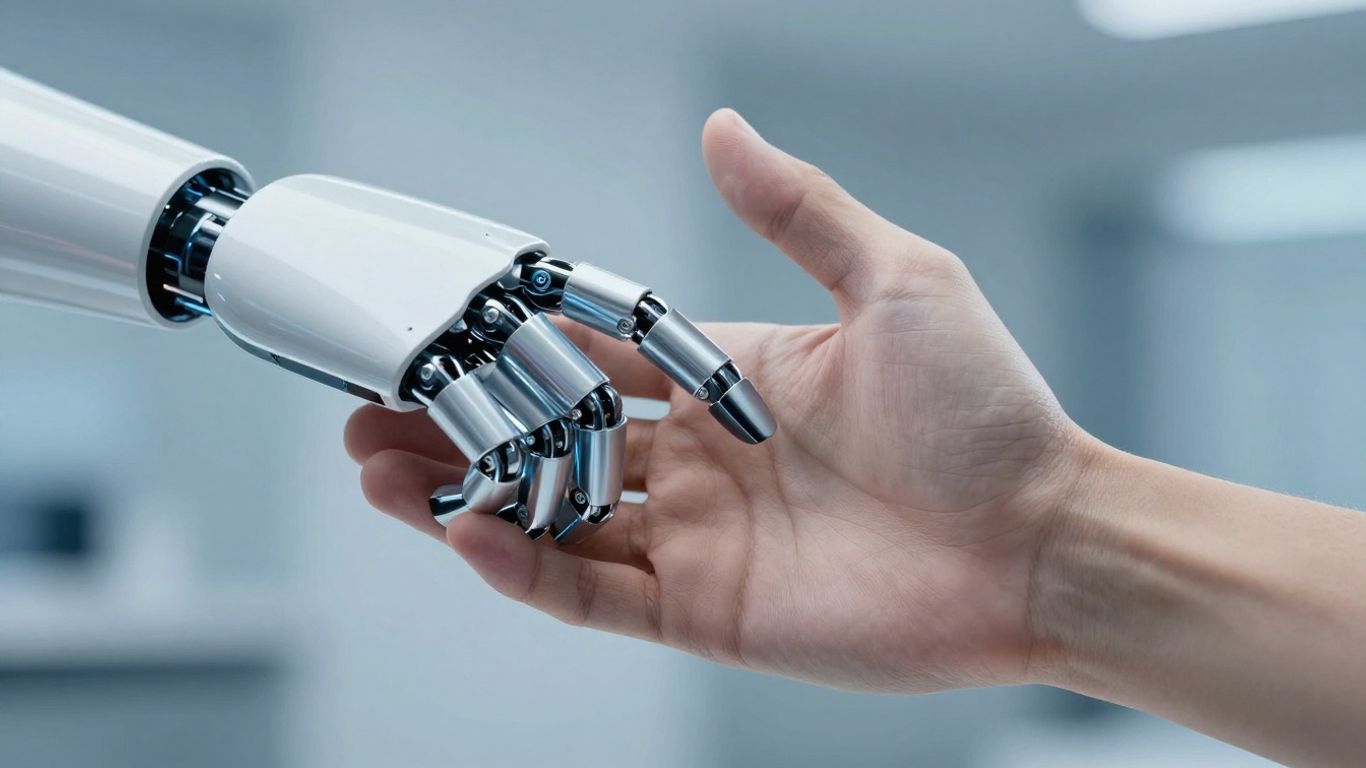
Artificial intelligence, or AI, isn’t a single, monolithic entity. Instead, it exists across a spectrum, much like human intelligence itself. Understanding this spectrum is key to grasping what AI truly means today and what it might become. We can broadly categorize AI into different levels based on its capabilities and how it compares to human cognitive abilities.
Artificial Narrow Intelligence (ANI)
This is the AI we encounter every single day. ANI, sometimes called ‘weak AI,’ is designed and trained for one specific task or a very limited set of tasks. Think of the algorithms that recommend movies on streaming services, the voice assistants that set timers or answer simple questions, or the systems that optimize traffic flow in a city. These systems can be incredibly proficient, even superhuman, within their designated domain. However, they lack any general understanding or the ability to apply their ‘intelligence’ to a problem outside their training. An ANI system designed to play chess cannot suddenly learn to drive a car or write a poem.
- Recommendation Engines: Suggesting products or content based on past behavior.
- Image and Speech Recognition: Identifying objects in photos or transcribing spoken words.
- Game Playing AI: Excelling at specific games like chess or Go.
- Navigation Systems: Calculating the fastest routes.
The vast majority of AI applications currently in use fall under the umbrella of Artificial Narrow Intelligence.
Artificial General Intelligence (AGI)
This is the AI that often captures our imagination, the kind you see in science fiction. Artificial General Intelligence, or ‘strong AI,’ refers to a hypothetical machine that possesses the ability to understand, learn, and apply its intelligence to solve any problem that a human being can. An AGI would have adaptive reasoning, the capacity for abstract thought, and the ability to transfer knowledge and skills across vastly different domains. It would, in essence, be as intellectually flexible and capable as a human. It’s important to note that AGI does not currently exist, and its development remains a significant research goal, with considerable debate about its feasibility and timeline.
The Meaning of Intelligence Itself
Grappling with the spectrum of AI inevitably leads us to a deeper question: what does ‘intelligence’ actually mean? This isn’t just a computer science problem; it’s a philosophical one. Does true intelligence require consciousness, self-awareness, or subjective experience? Or is it purely about the ability to process information, learn, and solve problems effectively? Current AI systems, particularly advanced language models, can mimic human-like conversation and reasoning to an astonishing degree. They can generate creative text, summarize complex information, and even appear empathetic. This has sparked a lively debate: are these systems genuinely intelligent, or are they simply incredibly sophisticated at recognizing and replicating patterns from the massive datasets they were trained on? The answer to this question shapes how we perceive and interact with AI, and it has profound implications for its future development and integration into society.
The Dual Nature of AI’s Impact

Artificial intelligence, as it rapidly evolves, presents a fascinating duality in its impact on our world. It’s not simply a tool with a single purpose; rather, it’s a complex force that holds the potential for both immense benefit and significant challenges. Understanding this dual nature is key to navigating its integration into our lives responsibly.
AI as a Force for Good and Human Augmentation
On one hand, AI is proving to be an incredible partner in augmenting human capabilities. Think about healthcare, where AI algorithms can analyze medical scans with remarkable precision, often spotting subtle indicators of disease that might be missed by the human eye. This doesn’t replace the doctor; it makes them better at their job, allowing them to focus on more complex cases and patient interaction. In scientific research, AI can sift through mountains of data, identifying patterns that could lead to breakthroughs in medicine or materials science much faster than before. For creative professionals, generative AI can act as a collaborator, sparking new ideas and helping overcome creative blocks.
- Healthcare: Assisting in diagnostics and drug discovery.
- Research: Accelerating scientific breakthroughs by analyzing vast datasets.
- Creativity: Serving as a co-pilot for artists and writers.
- Efficiency: Automating repetitive tasks, freeing up human time for more meaningful work.
This perspective shifts the conversation from AI replacing humans to AI working alongside us, amplifying our strengths. The most impactful applications often arise when human ingenuity, empathy, and ethical judgment are combined with AI’s computational power and pattern recognition abilities.
The most powerful applications of AI will likely be those that combine the unique strengths of humans—creativity, empathy, ethical judgment, and contextual understanding—with the brute-force computational power and pattern recognition of machines.
Risks and Responsibilities of Powerful AI
However, the immense power of AI also brings considerable risks and responsibilities. The data used to train AI systems often reflects existing societal biases, meaning AI can inadvertently perpetuate or even amplify discrimination. For instance, an AI trained on historical hiring data might learn to favor certain demographics, leading to unfair outcomes. Facial recognition systems that perform poorly on certain ethnic groups can lead to real-world harm and misidentification. This highlights that the ‘intelligence’ we build is a reflection of the data we feed it, and that data is not always neutral or fair.
Furthermore, the concentration of AI development and control within a few large corporations and governments raises significant concerns about power, surveillance, and privacy. The ability to analyze behavior, predict outcomes, and automate decisions at scale is a potent form of influence. This necessitates careful consideration of governance and oversight to ensure AI serves the public good rather than concentrating power.
| Risk Area | Potential Negative Impact |
|---|---|
| Bias and Discrimination | Unfair treatment in hiring, lending, or justice systems. |
| Privacy | Increased surveillance and misuse of personal data. |
| Job Displacement | Automation leading to unemployment in certain sectors. |
| Misinformation | AI-generated fake content spreading rapidly. |
| Autonomous Systems | Unintended consequences from AI operating without oversight. |
Defining AI Through Human Values and Policies
Ultimately, the true meaning and impact of AI will not be determined solely by its technical capabilities. It will be shaped by the choices we make as a society. This involves establishing clear ethical frameworks, implementing thoughtful policies, and actively engaging in discussions about AI’s role. We must ask ourselves: whose values are embedded in these systems? For whose benefit are they being developed? The ongoing development of AI is not just a technological endeavor; it is a profoundly human one, requiring our collective wisdom and foresight to steer it toward a future that benefits all of humanity.
- Ethical Guidelines: Developing clear principles for AI development and deployment.
- Regulatory Frameworks: Creating laws and policies to govern AI use.
- Public Discourse: Encouraging open conversations about AI’s societal implications.
- Education: Promoting AI literacy to enable informed participation.
Ethical Considerations in the Technology Definition
When we talk about technology, especially the advanced forms like AI, it’s easy to get caught up in the "how" and the "what." But we really need to spend more time thinking about the "should." This is where ethics comes into play, and it’s a massive part of what technology truly means.
Bias and Fairness in AI Systems
Think about the data that goes into training AI. If that data reflects existing societal biases – and let’s be honest, most of it does – then the AI will learn those biases. This can lead to unfair outcomes. For example, an AI used for hiring might unfairly screen out certain groups of people because the historical data it learned from showed a preference for others. Similarly, facial recognition systems have shown problems when trained on data that doesn’t represent everyone equally. This means the AI’s "intelligence" is really a reflection of the data it’s fed, and we have to be careful about whose patterns we’re replicating and for whose benefit. It forces us to ask tough questions about justice and equality in the digital age.
Concentration of Power and Surveillance Concerns
Another big ethical point is who controls this powerful technology. Right now, a lot of AI development is happening within a few large companies and governments. This concentration of power raises concerns. When a small number of entities can process vast amounts of information, predict behavior, and automate decisions on a large scale, it’s a significant shift. It brings up questions about privacy and the potential for widespread surveillance. We need to consider if this technology will be used to help people and solve problems, or if it will lead to more control and less personal freedom.
Governance, Accountability, and Oversight
Because of these issues, we can’t just let technology develop without rules. We need clear ways to govern how AI is made and used. This involves figuring out who is responsible when something goes wrong – is it the programmer, the company, or the AI itself? Establishing accountability is tricky but necessary. We also need oversight mechanisms to make sure that AI systems are being used ethically and responsibly. This isn’t just about preventing harm; it’s about shaping the future of technology in a way that aligns with human values and benefits society as a whole.
Bringing It All Together
So, what have we learned about technology? It’s more than just the gadgets we use every day. As we’ve seen, thinkers like Heidegger suggest it’s about how we relate to the world around us, how we shape it, and how it shapes us. Whether we see it as a tool for progress, a form of art, or something else entirely, technology is deeply tied to our values and our choices. The conversation about what technology means, especially with new developments like AI, is ongoing. It’s a story we’re all writing together, and understanding its different layers helps us make better decisions about the future we want to build. Ultimately, the most important intelligence in this whole picture is still our own.
Frequently Asked Questions
What is technology, really?
Technology is more than just gadgets like phones or computers. It’s about how we use tools and ideas to solve problems or do things. Think of it as a way we connect with and shape the world around us, from a simple hammer to complex computer programs.
What did the philosopher Heidegger mean by ‘enframing’?
Heidegger believed modern technology has a way of looking at nature as just a resource to be used efficiently. He called this ‘enframing.’ It’s like seeing a river not as a living part of nature, but as a source of power to be captured and stored for later.
Can technology be thought of as art?
Yes, some people, like Heidegger, suggest we can see technology differently. Instead of just using it to get resources, we can see it as a skill or craft, similar to art. This means thinking about how we use technology and making sure it’s done in a way that respects nature and people.
What does it mean if people become ‘standing reserve’?
This is a warning from Heidegger. It means that if we only see everything, including ourselves, as resources to be used, we might start treating people like parts in a machine. This can make us feel like we’re just doing repetitive tasks without much meaning or control.
What is Artificial Intelligence (AI)?
AI is when computers or machines can do tasks that usually need human thinking, like learning, solving problems, or understanding language. It’s not just one thing; it’s a whole field of study that’s growing fast and changing how we live and work.
What are the main types of AI?
There are two main ideas. ‘Narrow AI’ is what we have now – AI that’s really good at one specific job, like recommending a movie. ‘General AI’ is a future idea of AI that could do any task a human can. We also have to think about what ‘intelligence’ itself really means.