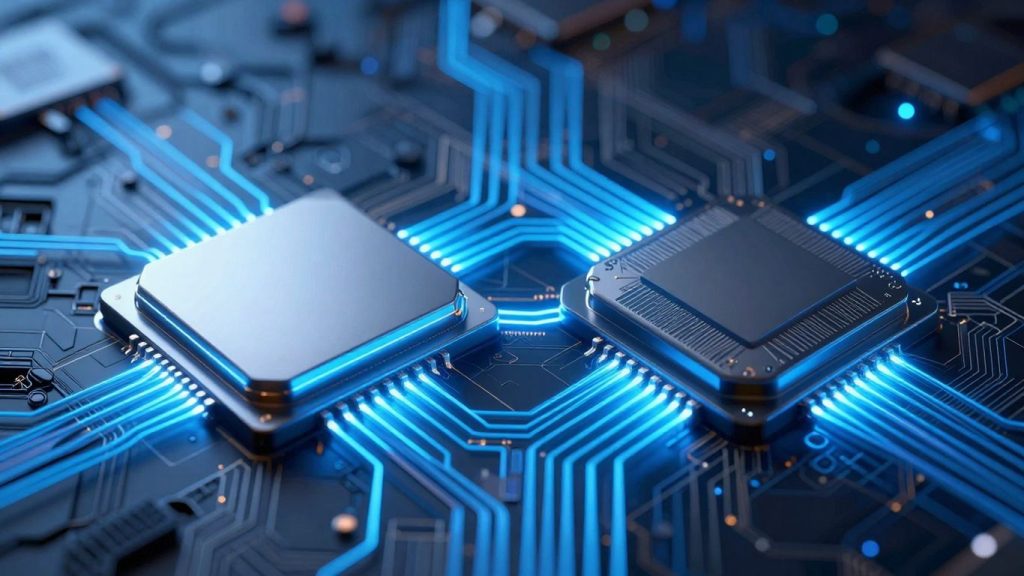
SiFive, a leader in RISC-V processor design, has announced a significant collaboration with Nvidia, integrating the latter’s high-speed interconnect technology into its own chip architectures. This partnership aims to dramatically accelerate data transfer between processors and other components, a critical factor for performance in modern computing systems.
Key Takeaways
- SiFive will adopt Nvidia’s NVLink-C2C technology.
- The integration is expected to enhance performance for AI, data centers, and high-performance computing.
- This move signals a growing trend towards specialized interconnect solutions.
Boosting Performance with NVLink-C2C
SiFive’s decision to incorporate Nvidia’s NVLink-C2C technology is a strategic move to address the increasing demand for faster and more efficient communication pathways within complex chip systems. NVLink-C2C is designed to provide a high-bandwidth, low-latency connection between different chips, including CPUs, GPUs, and accelerators. This is particularly crucial for workloads like artificial intelligence training and inference, as well as demanding data center operations.
By leveraging Nvidia’s established interconnect technology, SiFive aims to offer its customers, who often build custom silicon solutions, a significant performance advantage. This could translate into faster processing times, reduced power consumption, and the ability to handle larger and more complex datasets.
The RISC-V Ecosystem and Interconnects
This collaboration also highlights the evolving landscape of the RISC-V ecosystem. As RISC-V processors become more prevalent in various applications, the need for robust and high-performance interconnect solutions becomes paramount. SiFive’s integration of NVLink-C2C demonstrates a commitment to ensuring that RISC-V-based designs are not hindered by communication bottlenecks.
Industry analysts view this partnership as a positive development, suggesting that it could pave the way for more specialized and optimized chip designs across the industry. The ability to seamlessly connect diverse processing units with high-speed links is becoming a key differentiator in the competitive semiconductor market.

Founder Dinis Guarda
IntelligentHQ Your New Business Network.
IntelligentHQ is a Business network and an expert source for finance, capital markets and intelligence for thousands of global business professionals, startups, and companies.
We exist at the point of intersection between technology, social media, finance and innovation.
IntelligentHQ leverages innovation and scale of social digital technology, analytics, news, and distribution to create an unparalleled, full digital medium and social business networks spectrum.
IntelligentHQ is working hard, to become a trusted, and indispensable source of business news and analytics, within financial services and its associated supply chains and ecosystems