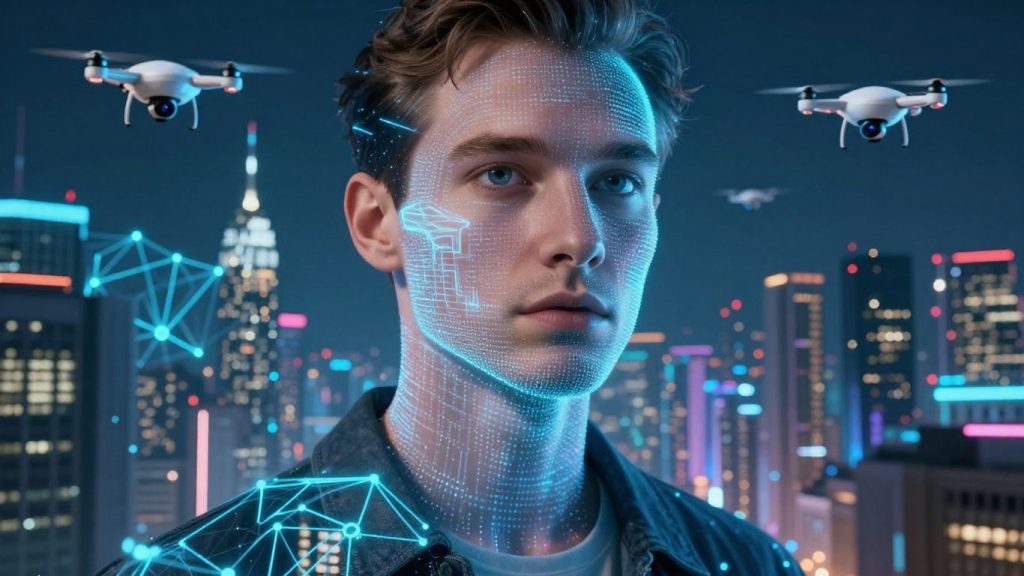
The year 2026 marks a significant point in the evolution of artificial intelligence, particularly in its visual applications. What began as experimental technology has rapidly matured into a powerful toolset, changing how we create, consume, and think about images. This exploration offers a picture of AI in 2026, highlighting its current capabilities, its integration into creative workflows, and its broader impact on industries and professionals alike. We’ll examine how AI is not just generating images, but also acting as a collaborator, pushing the boundaries of visual expression.
Key Takeaways
- AI image generation has moved from novelty to a vital tool, democratizing visual creation and enabling rapid ideation across various fields.
- The dominant trend in 2026 is AI as a creative partner, augmenting human skills rather than replacing them, leading to more efficient and authentic workflows.
- Industries like e-commerce, journalism, and design are seeing practical benefits, from product visualization to concept development, driven by AI’s ability to generate diverse visuals.
- Mastering prompt engineering is now a core skill for effectively communicating with AI, guiding style, composition, and specific details for desired outcomes.
- The future of AI in visuals points towards context-aware generation, multimodal creation, personalized content at scale, and a growing emphasis on ethical considerations and transparency.
The Evolving Landscape Of AI Image Generation
It feels like just yesterday we were marveling at AI creating a recognizable cat in a space helmet. Now, in 2026, the world of AI image generation has moved far beyond those early experiments. We’re talking about tools that are now a regular part of many creative workflows, not just a novelty. This technology has fundamentally changed how we think about bringing visual ideas to life.
A Transformative Leap In Visual Creation
Remember when creating professional-looking images meant years of training and expensive software? That’s largely a thing of the past. AI image generators have made it possible for almost anyone to create compelling visuals. This shift has democratized the creation of images, moving it from a specialized skill to something accessible to a much wider audience. Think about it: a small business owner can now generate product photos without hiring a photographer, or a writer can visualize book cover concepts in minutes. It’s about bridging the gap between an idea and its visual form.
Democratizing Creativity For All
This accessibility is more than just convenient; it’s a catalyst for new forms of creativity. When the barriers to visual creation are lowered, people tend to experiment more. They can try out more ideas, explore different styles, and push creative boundaries without the usual time or cost constraints. This has opened doors for individuals and small teams who previously couldn’t afford professional visual content.
- Small Businesses: Generate marketing materials and product shots affordably.
- Content Creators: Quickly visualize concepts for articles, social media, and videos.
- Hobbyists: Bring personal creative projects to life with professional-quality visuals.
The ability to iterate on visual concepts as rapidly as one can think them fundamentally alters the creative process itself. It encourages bolder experimentation and a willingness to explore avenues that were once impractical due to resource limitations.
Navigating The Diverse AI Platform Ecosystem
While the technology is exciting, the landscape of AI image generation platforms can seem a bit crowded. As of 2026, there are numerous options available, each with its own strengths and quirks. Understanding these differences is key to finding the right tool for your needs.
| Platform | Strengths | Considerations |
|---|---|---|
| Midjourney | Artistic, high-quality visuals | Primarily accessed via Discord |
| DALL-E | Seamless integration with other tools | Customization can be more limited |
| Stable Diffusion | High control, open-source community | Steeper learning curve, requires more technical setup |
Choosing the right platform often depends on your specific goals, technical comfort level, and desired output quality. The market is growing rapidly, with significant investments pouring in, indicating that these tools are here to stay and will continue to evolve.
AI As A Creative Collaborator
In 2026, artificial intelligence is no longer just a tool for automation; it’s becoming a genuine partner in the creative process. Think of it less as a replacement for human ingenuity and more as an amplifier, a brainstorming buddy, or a tireless assistant that can explore visual possibilities at speeds previously unimaginable. This shift is fundamentally changing how artists, designers, and content creators bring their ideas to life.
Augmenting Human Ingenuity
AI’s ability to process vast datasets and generate novel visual concepts means it can present creators with starting points or variations they might not have considered. This isn’t about the AI having its own ‘ideas’ in the human sense, but rather its capacity to remix and extrapolate from existing visual information in surprising ways. For a designer working on a new product line, AI can quickly generate dozens of aesthetic directions, color palettes, or material textures. For an illustrator, it can offer a multitude of character poses or environmental backdrops, saving hours of initial sketching and ideation.
The ‘AI Plus Human’ Workflow
The most effective approach in 2026 is the "AI Plus Human" workflow. This model combines the rapid iteration and broad exploration capabilities of AI with the critical judgment, emotional intelligence, and unique artistic vision of a human creator. AI can handle the heavy lifting – generating initial concepts, exploring countless variations, or producing base assets. The human creator then steps in to refine, curate, and imbue the work with personal style, brand identity, and the nuanced storytelling that truly connects with an audience. This collaborative method allows for greater efficiency without sacrificing originality or the distinct human touch that makes visuals memorable.
- Ideation Acceleration: AI rapidly generates multiple visual concepts, speeding up the initial brainstorming phase.
- Exploration of Possibilities: Creators can test wilder, more experimental ideas that might be too time-consuming or costly to mock up traditionally.
- Refinement and Curation: Human artists select the most promising AI outputs and apply their skills for final polish and artistic direction.
- Efficiency Gains: Tasks like generating background elements or variations of a theme can be offloaded to AI, freeing up human creators for higher-level creative decisions.
Balancing Efficiency With Authenticity
While AI offers incredible efficiency, the key challenge for creators in 2026 is maintaining authenticity. The goal isn’t simply to produce more visuals, but to produce better, more impactful ones. This means using AI strategically to augment, not replace, human creativity. The visuals that stand out are those where the AI’s contribution is a stepping stone, not the final destination. It’s about using AI to overcome technical limitations or explore creative territories, while ensuring the final output still feels genuine and reflects a distinct human perspective. The audience can often sense when a piece is purely machine-generated versus when it’s the product of human-AI collaboration.
The most successful creators in 2026 aren’t those generating hundreds of untouched AI images. They’re the ones using AI to accelerate their process while maintaining full creative authority over the final result. This approach produces content that’s both efficient and authentic, leveraging technology without sacrificing the human touch that makes visuals memorable.
Practical Applications Across Industries
AI image generation is moving beyond novelty and becoming a practical tool across many fields. It’s not just about creating pretty pictures; it’s about solving real problems and opening up new possibilities. From making products look their best online to helping tell stories more effectively, AI is changing how we visualize ideas.
Revolutionizing E-commerce Visuals
Online shopping relies heavily on visuals. AI is stepping in to create a wider range of product imagery than ever before. Think about generating lifestyle shots that show a product in different settings, or creating multiple angles and lighting conditions without needing a full photo studio. This isn’t meant to replace the main product photos for listings, but it provides supplementary visuals that would otherwise be too expensive to produce. For instance, a small fashion brand could use AI to generate images of their clothing on diverse models in various settings, helping them stand out in competitive markets. This allows businesses to test different visual themes and promotional graphics quickly, adapting to trends and customer preferences with unprecedented speed.
Enhancing Visual Storytelling And Journalism
In the fast-paced world of media, timely visuals are key. AI image generation can produce custom illustrations for articles, blog posts, and social media content almost instantly. This means news outlets and content creators can have imagery that perfectly matches their story, rather than relying on generic stock photos. For self-published authors, AI has also made creating professional-looking book covers more accessible. While it doesn’t replace the nuanced skill of a professional designer, it offers a significant step up from amateur attempts, democratizing visual presentation.
- Blog and Article Imagery: Generate custom visuals that directly relate to your content, making posts more engaging.
- Social Media Content: Quickly create dozens of on-brand images for platforms like Instagram, Twitter, and LinkedIn, allowing for rapid testing and iteration.
- Ad Creative Testing: Produce numerous visual variations for advertisements to identify the most effective approaches before investing heavily.
The ability to rapidly generate and test visual concepts significantly reduces the risk and cost associated with traditional content production, allowing for more experimentation and data-driven creative decisions.
Fueling Concept Development In Design
For designers and product developers, AI acts as a powerful brainstorming partner. It can generate numerous concept variations for products, architectural designs, or interior spaces in minutes. This allows for quick exploration of different styles, color schemes, and layouts before committing to expensive physical prototypes or detailed renderings. For example, architects can visualize how a building might look with different materials or in various weather conditions, and interior designers can show clients how a room would appear with different furniture arrangements. This iterative process speeds up ideation and helps refine ideas early in the development cycle.
Mastering The Art Of Prompt Engineering
Communicating Effectively With AI
Getting the AI to generate the image you have in mind isn’t always straightforward. It’s like trying to explain a complex idea to someone who doesn’t share your exact frame of reference. The key is learning how to talk to these tools. This means moving beyond simple descriptions and understanding what kind of information the AI actually processes. Think of it as learning a new language, one built on visual concepts and specific details.
Structuring Your Image Generation Requests
When you start typing into an AI image generator, you’re essentially giving it instructions. A good set of instructions usually has a few parts. First, you need to state the main subject clearly. What is the image supposed to be about? After that, you can add details about the style you want. Are you aiming for a photograph, a painting, or something else entirely? Finally, you can include information about how the image should be arranged, like the camera angle or the overall composition.
Here’s a basic structure that often works:
- Subject: What is the main focus of the image? (e.g., "a cat", "a city street", "a forest clearing")
- Details: Specific attributes of the subject or scene. (e.g., "fluffy orange cat", "rainy city street at night", "sunlit forest clearing with wildflowers")
- Style: The artistic or photographic look. (e.g., "photorealistic", "watercolor painting", "cyberpunk illustration", "vintage photograph")
- Composition/Atmosphere: How the image is framed and its mood. (e.g., "close-up portrait", "wide-angle landscape", "dramatic lighting", "soft, diffused light")
Guiding Style And Composition
Simply asking for "a nice picture" won’t get you very far. You need to be more specific about the look and feel. For instance, if you want a cozy atmosphere, you might mention "warm lighting," "soft focus," or "evening glow." If you’re going for a dramatic effect, terms like "high contrast," "deep shadows," or "cinematic lighting" can help. Similarly, for composition, specifying "overhead view," "eye-level shot," or "rule of thirds" gives the AI clearer direction on how to arrange the elements within the frame. The more precise you are with descriptive terms, the closer the AI can get to your vision.
It’s important to remember that AI models learn from vast amounts of data. They associate certain words and phrases with specific visual characteristics. Therefore, using descriptive language that aligns with these learned associations is key to effective prompting. Think about how you would describe an image to someone who can’t see it, focusing on concrete visual elements rather than abstract concepts.
The Future Trajectory Of AI In Visuals
Looking ahead to what’s next for AI in visual creation, it’s clear the technology is moving beyond simple image generation. We’re seeing a shift towards AI becoming a more integrated partner in the creative process, rather than just a tool for producing standalone images. The focus is increasingly on how AI can understand creative intent and accelerate the journey from idea to final visual, opening up possibilities that were once limited by time or resources.
Context-Aware Generation And Multimodal Creation
Future AI systems are expected to grasp creative direction more intuitively. Imagine AI tools that understand not just what you ask for, but the underlying narrative, brand guidelines, or artistic vision. This means AI could suggest visual solutions that align with your broader goals, much like a human collaborator would. Furthermore, image generation is set to blend more fluidly with other media. Creating a static image might become just the first step in developing a full multimedia experience, where visuals can adapt to different contexts, respond to user input, or evolve across various platforms. This move towards multimodal creation means visuals will be more dynamic and interactive.
Personalization At Scale
AI is poised to enable hyper-personalization of visual content. This involves generating tailored image variations for individual viewers while maintaining a consistent brand identity. Think of marketing campaigns where visuals automatically adjust based on viewer demographics, the platform they’re using, or even cultural nuances. This level of personalization can make content feel more authentic and relevant to each person, moving away from generic outputs.
Ethical Considerations And Transparency
As AI becomes more central to visual creation, transparency and ethical practices are becoming non-negotiable. Future tools will likely provide clearer indications of AI involvement in image creation. There’s also a growing emphasis on respecting copyright, addressing potential biases within AI models, and ensuring that creators retain control over their outputs and intellectual property. This ethical framework is vital for building trust and ensuring responsible development in the field.
The evolution of AI in visuals isn’t just about technological advancement; it’s about a philosophical shift. The most impactful tools will be those that amplify human creativity, respecting the irreplaceable value of human judgment and artistic taste. The goal is to create better, more engaging visuals, not just more of them.
Here’s a look at some key trends shaping the future:
- Deeper Workflow Integration: AI will become a standard part of creative pipelines, assisting in ideation, iteration, and refinement.
- Enhanced Interactivity: Visuals will become more dynamic, responding to user actions and adapting to different environments.
- Responsible Development: A strong focus on ethical AI, including transparency, bias mitigation, and creator rights.
- Bridging Modalities: Seamless connection between text, image, video, and audio generation for richer content experiences.
Impact On Creative Professionals
New Opportunities and Evolving Roles
The landscape for creative professionals is definitely shifting. It’s not quite a case of AI replacing everyone, but more like a significant change in how work gets done. For some, especially those doing more routine visual tasks like generating basic stock images or simple illustrations, AI tools are presenting a new kind of competition. However, this shift is also opening doors. Think about art directors who can now explore many more visual ideas in a short amount of time, or graphic designers who can use AI to quickly mock up different versions of a logo before refining it. The key is adapting.
Adapting To A Changing Creative Economy
It’s becoming clear that the creative economy in 2026 is one where AI is a tool, not just a novelty. Professionals who learn to work with these AI systems are finding themselves in a stronger position. This means understanding how to craft effective prompts, how to integrate AI-generated elements into a larger project, and how to maintain a unique artistic voice. It’s about becoming a conductor of AI, rather than just a painter.
Here’s a look at how roles are evolving:
- Concept Artists: Using AI for rapid ideation and exploring visual directions that would be time-consuming to sketch manually.
- Illustrators: Employing AI to generate initial concepts or reference material, then applying their own artistic skill for the final piece.
- Content Creators: Leveraging AI for generating diverse visual assets for social media, blogs, and marketing campaigns at a faster pace.
- Art Directors: Utilizing AI to quickly visualize multiple campaign concepts and styles for client presentations.
The Nuanced Reality Of AI’s Influence
It’s easy to get caught up in the hype or the fear surrounding AI in creative fields. The truth is more complex. While AI can automate certain tasks and produce impressive visuals, it often lacks the nuanced understanding, emotional depth, and personal experience that human creators bring. The most successful workflows in 2026 are often those that blend AI’s speed and generative power with human judgment, creativity, and artistic direction.
The conversation is moving beyond whether AI can create art, to how human artists can best collaborate with AI to push creative boundaries and achieve results that were previously unimaginable or economically unfeasible. This partnership is redefining creative output across many sectors.
This means that skills like critical thinking, problem-solving, and a strong artistic vision are becoming even more important. The ability to guide AI, curate its outputs, and imbue them with meaning is where the real value lies for creative professionals moving forward.
Looking Ahead: The Evolving Canvas
As we wrap up our exploration of AI in the visual landscape of 2026, it’s clear that this technology has moved far beyond novelty. It’s now a practical tool, woven into the fabric of creative work for businesses and individuals alike. While the rapid advancements bring exciting possibilities for efficiency and new forms of expression, they also prompt important conversations about adaptation, ethics, and the future role of human creativity. The journey ahead will likely involve a continued partnership between human ingenuity and artificial intelligence, shaping how we see and create the world around us in ways we’re only beginning to understand.
Frequently Asked Questions
What is AI image generation and how has it changed things?
AI image generation is like having a super-smart computer that can create pictures from just words you type. Think of it like telling a story and the computer draws it for you! It’s changed things a lot because now, anyone can make amazing pictures really fast, even if they don’t know how to draw or use fancy art programs. It used to take a lot of skill and time, but now, ideas can become pictures in seconds, making art creation easier for everyone.
Can AI really create art that looks professional?
Yes, it really can! In 2026, AI tools are so good that the pictures they make can look like they were created by professional artists. The lighting, the details, and the overall look can be stunning. While it’s not always perfect, AI can produce images that are beautiful and high-quality, sometimes even better than what a person could make quickly.
How do people use AI to make pictures for work or school?
People use AI to make pictures for all sorts of things! For example, businesses use it to create cool pictures of their products for websites or ads without needing expensive photoshoots. Writers might use it to imagine what characters or scenes look like for their stories. Designers can use it to quickly try out many different ideas for logos or graphics. It helps make projects look better and saves time and money.
What does ‘prompt engineering’ mean for AI images?
Prompt engineering is like learning how to talk to the AI so it understands exactly what kind of picture you want. It means using the right words to describe what you imagine – like the main thing in the picture, the style (like cartoon or realistic), and how it should be arranged. The better you are at telling the AI what you want, the better the picture it will create for you.
Is AI going to take away jobs from artists?
It’s a bit complicated. Some jobs that involve making very common or simple pictures might change because AI can do them quickly. But, AI is also creating new jobs and helping artists in new ways. Many artists use AI as a tool to help them create even more amazing art, like getting ideas faster or trying out different styles. It’s more about artists learning to work with AI, not AI replacing them completely.
What’s next for AI in making pictures?
AI is always getting better! Soon, AI won’t just make still pictures, but also videos. It will also get much better at understanding what you mean without you having to explain every little detail. Plus, AI will be able to create pictures that are just right for each person looking at them, making things feel more personal. There’s also a big focus on making sure AI is used fairly and honestly.
Peyman Khosravani is a seasoned expert in blockchain, digital transformation, and emerging technologies, with a strong focus on innovation in finance, business, and marketing. With a robust background in blockchain and decentralized finance (DeFi), Peyman has successfully guided global organizations in refining digital strategies and optimizing data-driven decision-making. His work emphasizes leveraging technology for societal impact, focusing on fairness, justice, and transparency. A passionate advocate for the transformative power of digital tools, Peyman’s expertise spans across helping startups and established businesses navigate digital landscapes, drive growth, and stay ahead of industry trends. His insights into analytics and communication empower companies to effectively connect with customers and harness data to fuel their success in an ever-evolving digital world.