
A career shaped by systems, people, and long-term thinking
Paul Arrendell’s career was never about chasing titles or quick wins. It was about building things that work. And making sure they keep working as organisations grow, rules change, and pressure increases.
With more than 30 years in the medical device and manufacturing industries, Paul has led quality and engineering functions at companies such as Abbott Diagnostics, Wright Medical, KCI Medical, and Becton Dickinson. His work has touched products used in hospitals and labs around the world. But he rarely talks about products first.
“I’ve always been more interested in the system behind the product,” Paul says. “If the system is right, the outcome usually follows.”

Early foundations: engineering, music, and leadership
Paul studied Mechanical Engineering at the University of Texas at Arlington. He earned both his bachelor’s and master’s degrees, with a focus on Automatic Control Systems. That training shaped how he thinks today.
“Control systems teach you how things respond under pressure,” he explains. “That applies to machines, but it also applies to organisations.”
Outside the classroom, Paul stayed busy. He sang in A Cappella Choir and Chamber Singers. He played in Jazz Band and Marching Band. He also joined Student Congress and several honour societies.
“Music taught me timing and teamwork,” he says. “Student Congress taught me how to listen. Those lessons mattered later, when I was leading teams instead of rehearsals.”
Early career: moving from parts to processes
Paul began his career in engineering roles within the medical device sector. At first, the work focused on solving technical problems. But over time, he noticed a pattern.
“We kept fixing the same issues over and over,” he recalls. “That’s when I realised the problem wasn’t the part. It was the process.”
At Wright Medical, Paul moved deeper into quality engineering. He worked on systems that supported orthopaedic products, where consistency and traceability were critical. Later, at KCI Medical, he faced a new challenge. The company was growing fast.
“Scaling production without losing quality is hard,” he says. “That’s where weak systems show up.”
His focus shifted fully to building processes that could hold up under growth.
Global roles and bigger systems
Paul’s move to Abbott Diagnostics marked a turning point. His work became global. Different countries. Different regulations. Different expectations.
“You can’t design a system for one site and hope it works everywhere,” he says. “You need a common backbone, with room for local reality.”
That thinking carried into his role at Becton Dickinson, where he led global quality strategy. The scale was large. So were the stakes.
“If every site has its own version of the truth, audits become chaos,” Paul explains. “We worked hard to create one clear flow that everyone could follow.”
One example stands out. During a major rollout, Paul’s team replaced scattered forms with a single standard workflow. Local teams could adapt details, but the core stayed the same.
“It slowed things down at first,” he says. “But once it was in place, errors dropped and reviews moved faster.”
A calm approach to leadership
Paul is known for staying steady when problems arise. He does not rush to assign blame.
“Systems break. People panic. Leaders stay,” he says.
That approach earned him respect across organisations. It also earned recognition. Paul has been featured in Fortune Magazine, named among San Antonio’s Top 25 Healthcare Technology Leaders, and honoured as Top Chief Quality Officer of the Year by the International Association of Top Professionals.
But for Paul, recognition is secondary.
“The real test is whether the system still works when you’re not in the room,” he says.
Mentorship and giving back
Alongside his professional roles, Paul serves on the College of Engineering Advisory Board at UT Arlington. He mentors students and early-career engineers.
“There’s this belief that leaders need all the answers,” he says. “I don’t agree. Leaders need good questions and systems that can learn.”
He often encourages young engineers to focus on ownership.
“If something breaks and you didn’t cause it, but you still fix it, that’s leadership,” Paul says.
Systems over speed
One of Paul’s strongest views is that productivity does not come from moving faster. It comes from clarity.
He once tested a sprint-style approach for a complex rollout. It failed.
“We had multiple teams, multiple versions of the same documents, and no clear path,” he says. “It felt fast, but it created rework.”
He shifted to a system with clear stages, shared tracking, and visible hand-offs. The pace was steadier. The results were better.
“Speed without structure costs more later,” Paul explains.
Looking ahead
Today, Paul Arrendell is still focused on the same goal he had early in his career. Build systems that work. Support the people who use them. And design processes that can grow without breaking.
“You don’t build trust overnight,” he says. “But if your system is fair and clear, people will improve it over time.”
That belief has guided his career. And it continues to shape the way he leads.
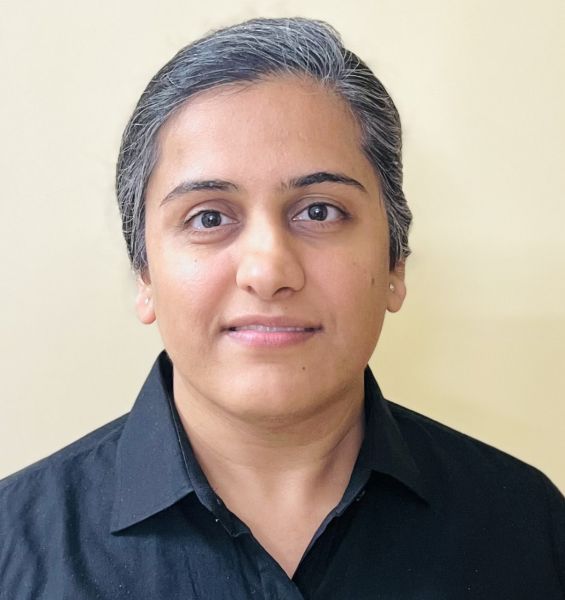
Pallavi Singal is the Vice President of Content at ztudium, where she leads innovative content strategies and oversees the development of high-impact editorial initiatives. With a strong background in digital media and a passion for storytelling, Pallavi plays a pivotal role in scaling the content operations for ztudium’s platforms, including Businessabc, Citiesabc, and IntelligentHQ, Wisdomia.ai, MStores, and many others. Her expertise spans content creation, SEO, and digital marketing, driving engagement and growth across multiple channels. Pallavi’s work is characterised by a keen insight into emerging trends in business, technologies like AI, blockchain, metaverse and others, and society, making her a trusted voice in the industry.