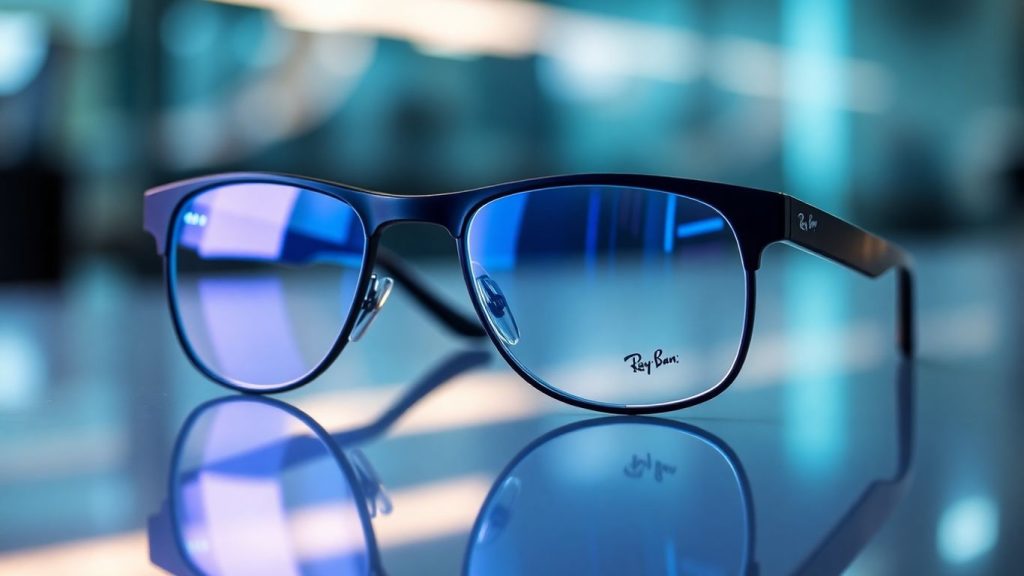
Meta has pushed smart eyewear a step forward with its latest Ray-Ban display glasses, integrating breakthrough geometric waveguide technology for a crisper, more immersive visual experience. As teardown experts examine the gadgets’ inner workings, users and tech aficionados alike are keen to see whether these glasses will shape the future of augmented reality.
Key Takeaways
- Meta’s Ray-Ban display glasses employ innovative geometric waveguide lenses
- The technology uses a reflective waveguide by Schott, enhanced by Lumus
- A compact LCoS (Liquid Crystal on Silicon) projector generates the display
- Repairability is limited, with few replaceable components beyond the battery
Inside the Cutting-Edge Waveguide Display
While smart glasses have made headlines for years, Meta’s partnership with Ray-Ban introduces new visual fidelity thanks to a geometric reflective waveguide. Departing from the diffractive waveguides traditionally used in products like Google Glass, this approach channels images generated by a miniaturized LCoS projector through a carefully engineered optical path in the right lens. The result: brighter virtual overlays with minimized light loss and reduced visibility of display elements to bystanders.
How the Technology Works
The geometric waveguide, manufactured by Schott and developed with Lumus, directs light much more efficiently than past AR glasses. Here’s a simplified overview:
- The LCoS projector beams a digital image into the lens.
- Specialized mirrors and lenses within the waveguide channel and “bounce” the image along a precise path.
- The embedded optical elements reflect the picture to the wearer’s eye, creating the illusion that digital information is floating in front of the real world.
This approach enhances the overall clarity and brightness of the display, a common shortcoming in earlier wearable devices.
Repairability and Practical Concerns
With any smart device, practical considerations like longevity and repair play a major role in user adoption. iFixit’s teardown revealed that while the battery (a 960 mWh unit) can be swapped with some effort, most internal parts—including the complex lens system—are impossible to replace without specialist tools. This limits the glasses’ lifespan if faults arise outside the limited replaceable components.
The stylish design, iconic of Ray-Ban, does allow for subtlety, but the appearance still divides opinion. And, as with previous smart eyewear, some users face skepticism or privacy concerns from the public.
The Road Ahead for AR Eyewear
Meta’s use of geometric waveguides echoes a wider tech industry push toward more discreet, higher-performing augmented reality hardware. If the display clarity, brightness, and comfort prove to meet everyday user demands, these glasses could pave the way for mainstream adoption of wearable displays—not just for novelty, but as practical, everyday tools. Still, repairability limitations and social acceptance remain hurdles to overcome as the technology matures.
References

Founder Dinis Guarda
IntelligentHQ Your New Business Network.
IntelligentHQ is a Business network and an expert source for finance, capital markets and intelligence for thousands of global business professionals, startups, and companies.
We exist at the point of intersection between technology, social media, finance and innovation.
IntelligentHQ leverages innovation and scale of social digital technology, analytics, news, and distribution to create an unparalleled, full digital medium and social business networks spectrum.
IntelligentHQ is working hard, to become a trusted, and indispensable source of business news and analytics, within financial services and its associated supply chains and ecosystems